
Fixed RFID Reader
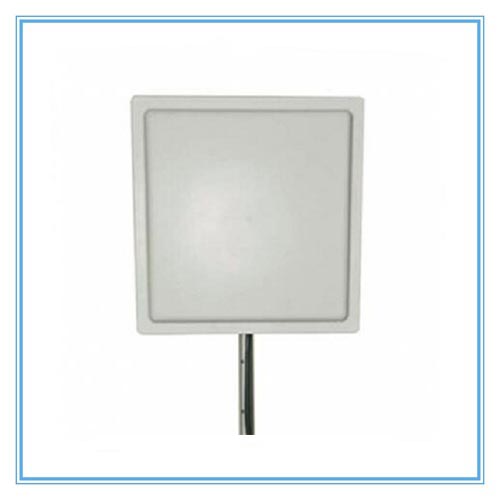
Fixed RFID readers with an antenna inside, it is a radio frequency transmitter and receiver. RFID-fixed Readers can read and write information on an RFID tag. you can quickly and accurately read large volumes of RFID-tagged cases, pallets, and items.
Fixed RFID Readers are designed to thrive in many types of environments. They are ideal for use in high-density tag environments, high throughput applications, and RF-challenging materials.
How Fixed Readers Work?
Fixed readers have ports for antennas that allow the reader to be set to ceilings, walls, doorways, carts, etc. Generally speaking, fixed readers are not mobile so they should be placed in a central location. Fixed readers can identify objects as they move through a specific location, for example, a loading dock.
Fixed RFID readers work with antennas. Antennas provide the vital link between the fixed reader and tag, serving as the conduit that moves data back and forth. Antennas are what allow communication to occur, enabling organizations to capture, move, and manage critical information to and from every point of business activity. That being said, antennas are an essential part of any fixed RFID system. The great thing about using fixed readers is that there is no need for human intervention. Fixed RFID readers can read tags without a person having to press a button.
How to choose Fixed RFID reader for your application?
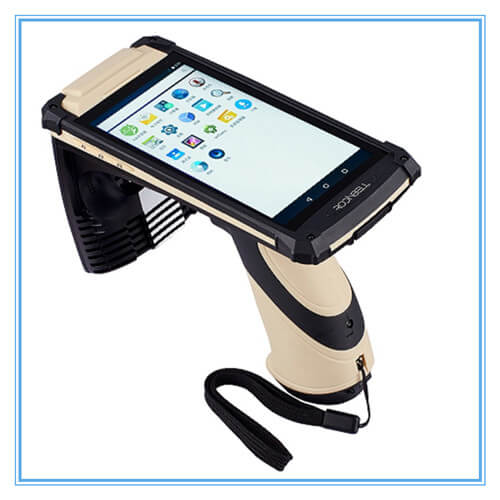
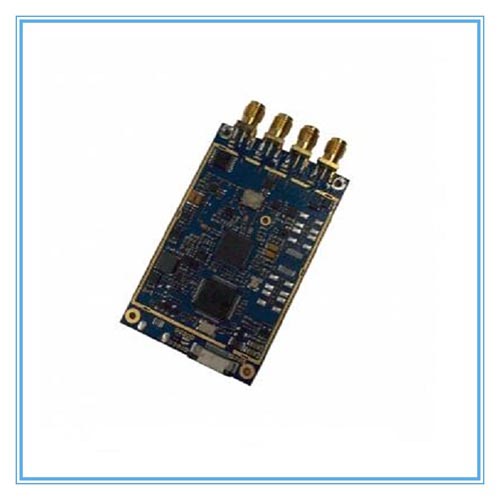
All options available can be overwhelming if you’re considering implementing a Fixed RFID reader. But, don’t worry. Our RFID specialists and solutions architects can work with you to identify your specific needs and determine the best RFID hardware, RFID software, and RFID supplies combination to best fit your application.When selecting the right fixed RFID reader for your application, please consider:Number of antenna ports (1-16) Type of network connections (Ethernet, Serial, USB, Wi-Fi) Type of power (Power Supply, Power-Over-Ethernet POE) Region (USA, EU, specific country) Size and mounting Ruggedness and IP rating To find out more about RFID readers, please review the information about RFID Interrogation Zones.Within passive fixed RFID reader, there are three main tag/reader technologies on the market today, named after their respective frequency bands: low-frequency (LF, 125 kHz or 134 kHz), high-frequency (HF, 13.56 MHz), and ultra-high-frequency (UHF, 860-960 MHz). In most instances, each type of passive RFID tag (LF, HF, or UHF) can only be read by the SAME type of passive RFID reader. For instance, usually, an LF reader will only be able to read an LF tag; it will not able to read an HF or a UHF tag.Selection of Fixed RFID Reader
Let's us know if you didn't find out what you need.





Request A Quote or Samples

A Fixed RFID Reader is a stationary RFID device designed for continuous, automatic tag identification in a fixed location. Unlike handheld readers, it is permanently installed at entrances, gates, production lines, or conveyor systems to read RFID tags as they pass through a defined read zone. Fixed RFID readers commonly operate in UHF (860–960 MHz), HF (13.56 MHz), or LF bands and support standard protocols such as EPC Class 1 Gen 2 / ISO 18000-6C, ensuring fast, accurate, and long-range tag detection.
Built for 24/7 operation, fixed RFID readers offer high reading speed, strong anti-interference capability, and stable performance in industrial environments. They typically support multiple antennas, network interfaces (TCP/IP, RS232, RS485), and system integration with WMS, MES, ERP, or IoT platforms. In simple terms, once installed, they work quietly in the background—capturing data without human intervention.
Applications and Uses
Fixed RFID readers are widely used in logistics and warehousing for pallet, carton, and container tracking. In manufacturing, they support production line monitoring, work-in-process tracking, and automation control. In access control and vehicle identification, fixed readers enable automatic gate management for parking lots, toll systems, and secure facilities.
They are also essential in retail inventory management, asset tracking, healthcare equipment control, and smart city projects. By enabling real-time data collection and automation, fixed RFID readers form the backbone of modern RFID and IoT solutions, improving efficiency, accuracy, and operational visibility across industries.