Connected apparel · NFC buttons and labels · Brand procurement
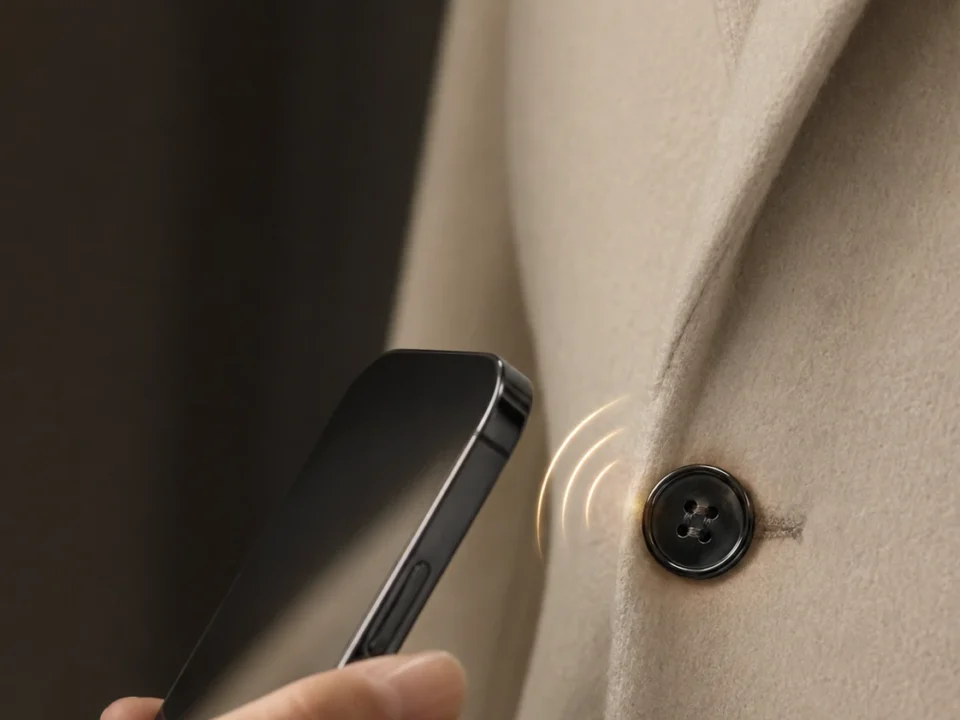
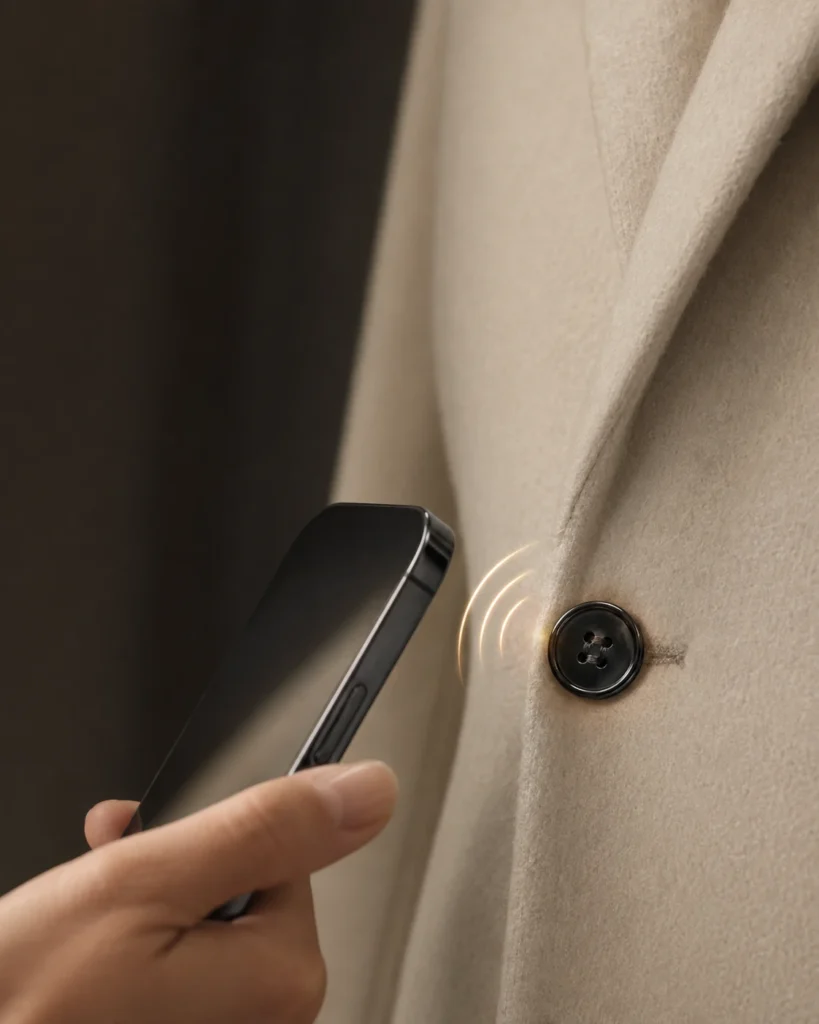
A customer buys a jacket and later wants its care instructions, repair options or product story. An NFC tag in the garment gives that information a physical entry point: bring a compatible phone close to the marked location, read the tag and open the brand’s page.
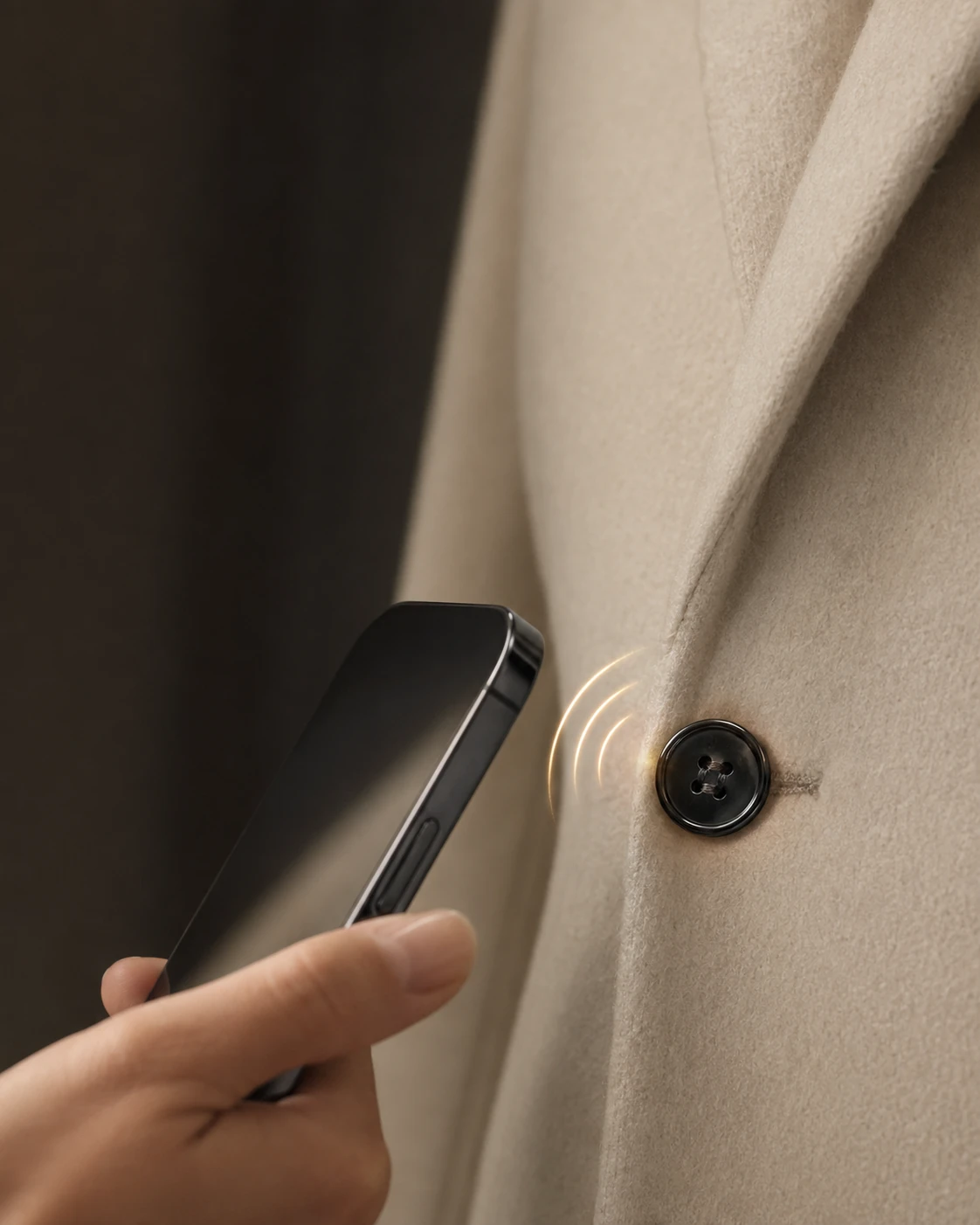
NFC clothing combines a physical garment, a short-range electronic tag and a digital experience. The tag can be concealed in a button, sewn into a textile label or incorporated into a retail hang tag. The best choice depends on when the customer should tap, how the garment will be cared for and what the brand wants the interaction to achieve.
At DO RFID TAG, we supply NFC garment-button and textile formats alongside retail NFC tags. This guide explains how they work, compares concrete product options and shows how to define the hardware, data and customer journey before ordering a batch.
How does NFC in clothing work?
A passive NFC tag contains a chip and antenna. The NFC reader in a compatible phone generates a field that powers the tag at close range; the tag needs no battery for this interaction. The phone reads the supported information stored on the tag.
For a simple web experience, that information is usually a URL stored as an NFC Data Exchange Format, or NDEF, record. The phone presents the link or a notification, and the customer opens the destination in a browser. A standard web-link experience generally does not need a dedicated brand app. Phone settings, operating-system behavior and the installed tag still affect the interaction.
- Find the tap pointA visible prompt directs the customer to the button or label.
- Read the NFC recordThe nearby phone powers the passive tag and reads its URL.
- Open the brand pageThe customer follows the phone’s prompt to view the content.
- Use the informationCare guidance, registration or another intended action follows.
The distinction between tag data and web content is useful. A garment tag can store a short address while detailed instructions, videos and support information stay on the website. The brand can maintain that online material without rewriting every physical tag, provided it controls and maintains the destination.
The NFC read itself does not require the tag to connect to the internet. Loading online content does require a usable connection on the phone. A passive NFC button also does not continuously broadcast its location or provide GPS tracking.
Choose the garment experience before the tag format
A successful NFC clothes project starts with a specific customer action. “Make the clothing smart” does not yet define what to manufacture or what the customer will see.
| Customer task | What the tap should open | Placement to compare |
|---|---|---|
| Find care or repair information after purchase | A maintained page for the garment or collection | A permanent button or sewn label that remains accessible |
| Learn the product story while shopping | Materials, design information or a product demonstration | A clearly marked hang tag or accessible garment label |
| Register an individual item | A page associated with that item’s record | A carrier with the correct per-item URL and installation |
| Return for styling, membership or a later purchase | A relevant collection, owner or service page maintained by the brand | A permanent button or label the owner can find again |
| Check a protected digital identity | A verification service designed for the selected secure chip | A suitable secure NFC format with a defined physical attachment |
For example, a collection-wide care page may be sufficient for a basic garment launch. A repair or registration program may need to distinguish one item from another. Both can use a similar physical button, while requiring different encoding and website records.
For a repair or resale journey, an individual garment record can bring together product details and service history when the item is presented and read. A care page answers a different need: the owner taps to find instructions for that product. The button provides the connection in both cases; the brand decides what information and actions the page contains.
The NFC carrier and the digital service should therefore be specified together. A tag does not itself create a membership program, warranty workflow, resale service or product-passport platform. Those functions need the relevant website, records and operational process.
DO NFC buttons, textile labels and hang tags
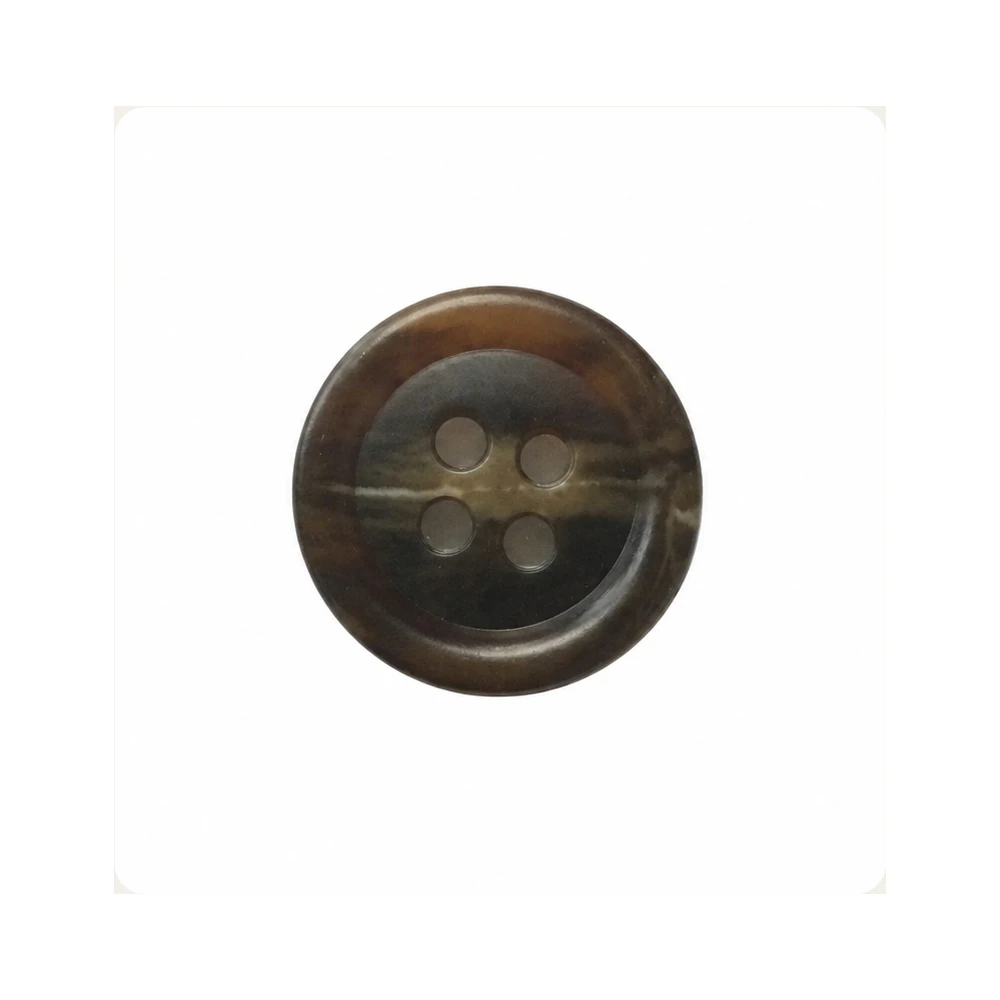
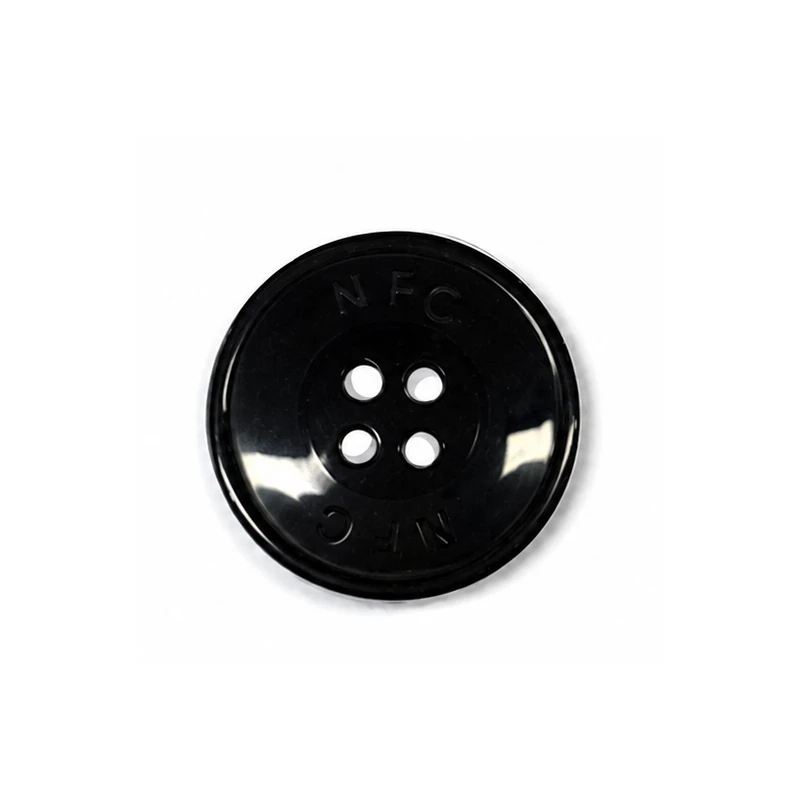
Our NFC fashion buttons are sewn through four holes like conventional garment buttons, with the NFC connection concealed inside. The catalogue offers two profiles: the compact DO-NFB15 for lightweight garments and discreet brand touchpoints, and the more substantial DO-NFB23 for jackets, uniforms, statement garments and premium accessories. Choose the profile alongside the fabric, button position and overall garment design.
| Option | Reference construction | Why compare it? |
|---|---|---|
| DO-NFB15 fashion button | Ø15 × 3 mm; ABS/resin; four-hole sewing; catalogue default NTAG213 | A compact profile for lightweight garments and discreet customer tap points. |
| DO-NFB23 fashion button | Ø23 × 4.5 mm; unsaturated polyester; four-hole sewing; catalogue default NTAG213 | A more substantial profile for jackets, uniforms and statement garments. |
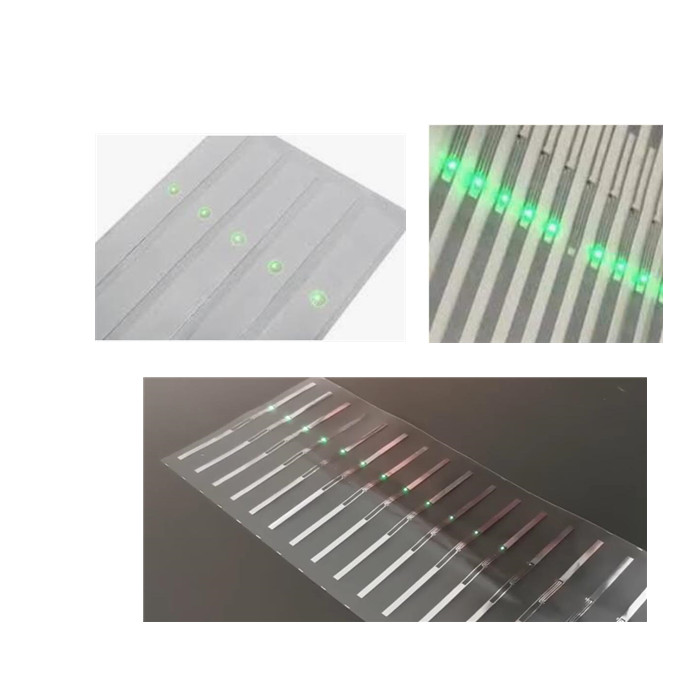
| Fabric NFC label | Textile format with an embedded tag, selected for the garment and attachment | Place the tap point in a seam, hem or label area rather than in a button. |
| NTAG424 DNA hang tag | A customizable retail tag carrying a secure NFC inlay | Combine printed retail information with a configured digital verification or engagement route. |
See our garment NFC button product for the button route, or our fabric NFC clothing tag for a textile carrier. The NTAG424 DNA hang tag provides a separate retail-format choice. These are company product destinations; final material, chip and installation follow the selected configuration.
A removable hang tag suits the retail stage, but it will not remain available after the customer discards it. A sewn button or label can stay with the garment. That difference affects aftercare, repeat visits and where to print the tap instruction.
Placement, comfort and care conditions matter together
A concealed NFC tag still needs a discoverable tap point. Place the instruction where a customer can find it, and show which part of the garment to approach. A small NFC symbol, short instruction or printed label can reduce uncertainty about what to do.
Compare the position on a real garment. Consider phone access, fabric thickness, folds, linings, metal fasteners and the way a person naturally holds the item. Metal close to the antenna can change the reading result. A readable loose sample does not establish the performance of the same tag installed next to a zipper or hidden beneath several layers.
For a button, check its mechanical role and sewing arrangement as well as its electronic function. For a textile label, compare the feel, edge construction, attachment and tap visibility. Heat attachment requires a label and adhesive system intended for that process; it is not an interchangeable instruction for every sewn NFC format.
Care requirements should describe the garment’s actual process: domestic washing or a commercial cycle, water temperature, detergent, drying, ironing and any dry cleaning. A waterproof encapsulation statement alone does not specify resistance to the entire sequence of heat, chemicals, bending and mechanical action.
Use the limits for the chosen product and final assembly. Industrial laundry-button temperature claims should not be transferred to fashion buttons simply because both are called NFC buttons. This guide does not assign one wash-cycle count or heat-press recipe to all clothing formats.
Choose the chip for the intended digital action
For a basic product-information or care link, a suitable NFC tag can carry an NDEF URL. The record must fit the selected chip, and the finished construction must work with the target phones. Buying more memory does not by itself improve phone reading or make a URL secure.
Our fashion-button catalogue lists NTAG213 as the typical default IC. Custom options include NTAG215/216, NTAG424 DNA, MIFARE and ICODE families, depending on the antenna, button construction and order configuration. The chosen IC determines the supported interface and phone or reader requirements; the family names do not imply identical compatibility. Start with the intended URL, memory and security function. A different chip inside the same housing is a configuration choice, rather than a new garment style.
| Requirement | Approach | Project responsibility |
|---|---|---|
| Open a care, product or campaign page | A compatible NFC chip carrying a standard URL record | Prepare the destination, encode the record and verify the installed tag. |
| Identify an individual garment online | A different URL or record reference for each item | Maintain the tag-to-item association and the online database. |
| Verify a cryptographic NFC message | A secure chip such as NTAG424 DNA, correctly configured for the service | Manage keys, validate messages and define the physical attachment and verification rules. |
A static URL and a cryptographic verification result are different. A normal tag can open an authentic brand website, but opening that site alone does not prove the garment is genuine. Secure NFC designs can generate authentication data for a verification service to check. The chip must be configured, and the service must perform the verification.
Physical attachment remains part of the design: a button or tag may be removed or transferred. The project needs to consider that alongside its digital checks. Selecting a secure chip alone does not create a complete anti-counterfeiting system.
One shared link or a different record for every garment?
Choose the data structure before producing the batch. A shared URL is straightforward when all items should open the same collection page. An individual URL can connect each garment to its own information, registration or service record.
Collection-level: every tag opens a maintained page such as /care/collection-a.
Item-level: garment A-104 opens its own record, while garment A-105 opens another. An encoding file keeps each URL associated with the correct physical item and any printed identifier.
These are examples of data organization, not active product URLs or a customer case.
A chip’s UID is not automatically a web address that a phone browser knows how to resolve. If the intended experience is a standard web link, prepare the URL record that directs the phone to the right service. An application that reads identifiers directly is a different integration.
Also distinguish changing the tag from changing the destination. A brand-controlled URL can keep working while the page behind it changes. If the tag has been permanently locked against rewriting, that does not prevent an authorized website owner from updating the online content. It does mean the physical URL cannot simply be replaced on that locked tag.
For item-level work, keep the encoding file, printed IDs, garment records and packing sequence coordinated. Otherwise, perfectly readable tags can lead to the wrong product records. Store customer or service details in the appropriate system rather than treating a publicly readable garment label as a private customer database.
Move from sample to a repeatable clothing batch
A useful sample combines the intended carrier, chip, encoded record and installation. Evaluate the full customer action, not just whether an NFC app detects an uninstalled tag.
- Define the tap result. Prepare a realistic care, product or item page and the record that opens it.
- Install the selected format. Use the intended position, sewing or approved attachment, linings and nearby trim.
- Try the relevant phones. Check discovery, reading and the actual browser journey, including the tap instruction a customer will see.
- Repeat after the intended care process. Examine attachment and appearance as well as reading and the online result.
- Verify item associations. For unique records, compare the physical garment, visible code and destination before packing.
Record what changed between samples so that the approved arrangement can be repeated. A different button location, label adhesive, encoded URL or garment material can change the result even when the NFC chip remains the same.
For a DO RFID TAG inquiry, share the garment type, desired carrier and placement, required appearance, quantity and destination country. Include artwork, care conditions, target phone use and whether data is shared or unique per item. For authentication, describe the intended chip and verification-service arrangement separately.
For our fashion buttons, color, surface finish and branding can be developed around the collection. The catalogue also includes common or individual URL/NDEF encoding, UID lists and serial-to-record mappings delivered in CSV or Excel format. For example, an item-level order can associate each encoded URL with its garment identifier, so the brand can load the same mapping into its service system. Logo or collection-mark options follow the selected artwork and production process. The brand or its integration provider should also identify who maintains the online destination, item records and any secure verification service. This makes the handoff between hardware and digital experience clear.
Questions about NFC clothes
Is NFC the same as the RFID used for bulk clothing inventory?
NFC is a form of short-range RFID commonly used for deliberate phone interaction. UHF inventory systems use a different radio interface and reader arrangement for tasks such as stock counting. A phone’s built-in NFC reader should not be assumed to read a UHF inventory label. A project may use both technologies for different jobs.
Can NFC replace a printed care label or QR code?
NFC offers another way to reach information. Printed care information and a QR code can remain useful for visibility and alternative access. Decide what stays readable without a phone, and where each digital route leads, rather than removing existing information solely because NFC has been added.
Will a sewn NFC tag last as long as the clothing?
Service life depends on the tag construction, attachment and garment care. Compare the selected product’s conditions with the intended process and check the finished sample. The passive design removes a battery-replacement task, but does not establish a universal garment lifetime.
Can the content be updated after the garments are sold?
Yes, when the brand maintains the destination website or an appropriate managed redirect. The online material can change while the tag continues to provide its original URL. Keep ownership and maintenance of that destination in the project plan.