September 14, 2026
In today’s fast-paced digital world, contactless payments have become the norm. Tap your card, phone, or smartwatch at a terminal, and your transaction is complete in seconds. But have you ever wondered how this seamless technology works—or what makes it secure? At the heart of this convenience lies RFID (Radio-Frequency Identification) technology, specifically embedded in many modern credit and debit cards. One of the most frequently asked questions by both consumers and tech enthusiasts is: “What frequency do RFID credit cards use?”
This article dives deep into the technical specifications, security implications, real-world applications, and expert recommendations surrounding RFID-enabled payment cards. We’ll explore the exact frequencies used, compare them with other RFID systems, analyze global adoption trends with supporting data, and offer practical advice on protecting your financial information. Whether you’re a curious consumer, a small business owner, or a tech professional, this guide provides authoritative, actionable insights—all optimized for clarity and SEO performance.
Understanding RFID in Payment Cards: It’s Actually NFC
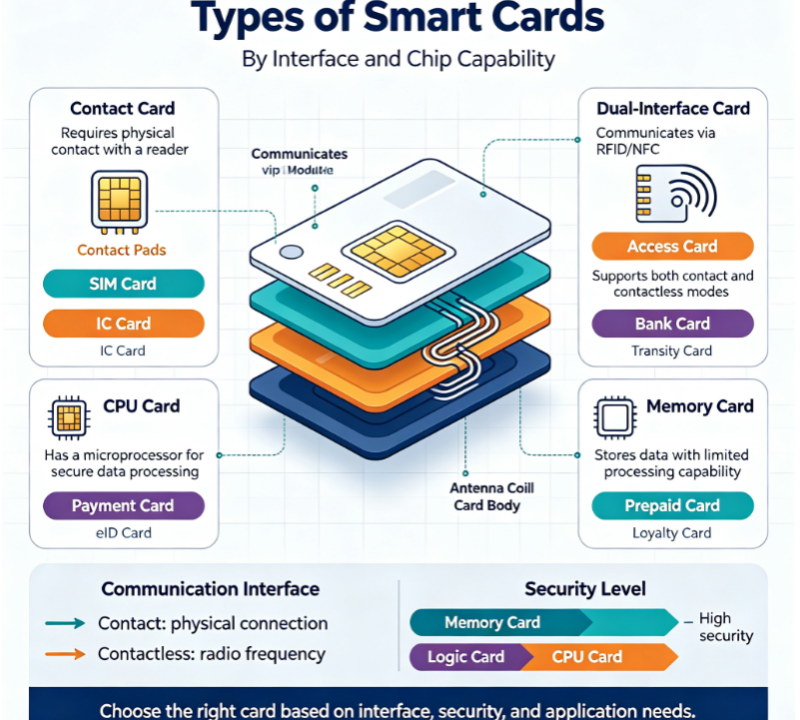
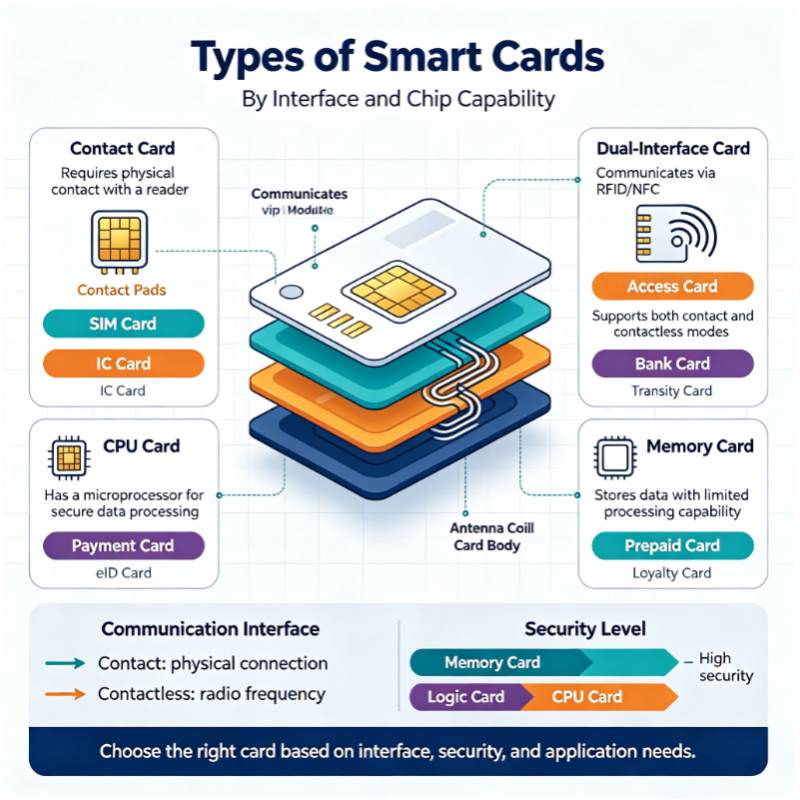
Before addressing frequency, it’s crucial to clarify a common misconception: most “RFID credit cards” actually use NFC (Near Field Communication), not traditional RFID. While NFC is a subset of RFID technology, it’s designed specifically for secure, short-range communication—ideal for payments.
NFC operates under strict international standards (ISO/IEC 14443 and ISO/IEC 18092) and enables two-way communication between devices, unlike passive RFID tags that only transmit data when powered by a reader. This bidirectional capability allows for encrypted authentication during transactions, significantly enhancing security.
So, while people often say “RFID credit card,” the accurate term is NFC-enabled contactless payment card.
Learn more about related products:
Custom NFC Cards Bulk Personalized for Businesses
13.56MHZ Transportation RFID Smart Eticket For Subway NFC Card
The Core Answer: What Frequency Do RFID (NFC) Credit Cards Use?
RFID credit cards—more precisely, NFC payment cards—operate at a frequency of 13.56 MHz (Megahertz).
This falls within the High-Frequency (HF) band of the RFID spectrum. Unlike low-frequency (LF: 125–134 kHz) or ultra-high-frequency (UHF: 860–960 MHz) RFID systems used in animal tracking or warehouse inventory, HF at 13.56 MHz offers the ideal balance of:
- Short read range (typically 1–10 cm), preventing unauthorized scanning from a distance
- Sufficient data transfer speed for payment authorization
- Global regulatory acceptance (unlike UHF, which varies by country)
- Compatibility with existing contactless infrastructure (e.g., transit systems, retail terminals)
This standardized frequency ensures interoperability across millions of point-of-sale (POS) terminals worldwide.
Reading these articles will help you better understand information related to NFC:
NFC Cards Everything You Need to Know
What Is NFC? A Complete Guide to Near Field Communication Technology
RFID Frequency Bands Compared: Why 13.56 MHz Wins for Payments
To appreciate why 13.56 MHz is the gold standard for payment cards, let’s compare major RFID frequency bands:
| Frequency Band | Range | Common Uses | Pros | Cons for Payments |
|---|---|---|---|---|
| Low Frequency (LF) | 125–134 kHz | Animal ID, car key fobs | Works well near metal/water | Very slow data rate; long antennas |
| High Frequency (HF) | 13.56 MHz | Contactless cards, passports, transit | Global standard; secure; compact | Limited range (~10 cm) |
| Ultra-High Freq (UHF) | 860–960 MHz | Supply chain, retail inventory | Long range (up to 12m); fast reads | Poor near metal/water; privacy concerns |
As the table shows, HF at 13.56 MHz is uniquely suited for secure, close-proximity interactions like payments. Its short operational range is a feature, not a bug—it minimizes the risk of “skimming” (unauthorized data capture).
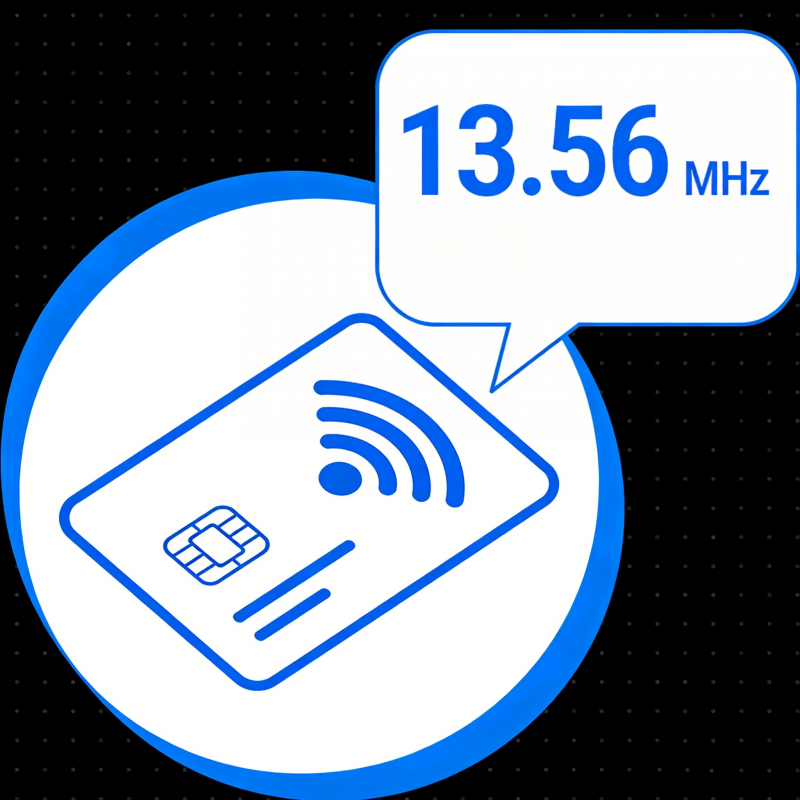
NFC credit cards typically operate at a frequency of 13.56MHz.
Global Adoption of Contactless Payments: By the Numbers
The shift toward contactless payments has accelerated dramatically over the past decade. According to Nilson Report (2025) and Statista, here’s how adoption looks globally:
| Region | % of Card Transactions That Are Contactless (2025) | Avg. Transaction Value (USD) | Primary Technology |
|---|---|---|---|
| Europe | 78% | $28 | EMV Contactless (13.56 MHz) |
| North America | 65% | $32 | NFC (13.56 MHz) |
| Asia-Pacific | 82% | $19 | NFC + QR Hybrid |
| Latin America | 52% | $24 | NFC (growing rapidly) |
| Middle East & Africa | 41% | $21 | NFC (urban centers) |
Source: Nilson Report #1052, Statista Digital Payments 2025, EMVCo Global Deployment Report
These figures underscore the dominance of 13.56 MHz NFC in modern payment ecosystems. Notably, EMVCo—the global standards body co-owned by Visa, Mastercard, and others—mandates 13.56 MHz for all EMV Contactless transactions, ensuring consistency across issuers and terminals.
How NFC Payment Cards Work: A Step-by-Step Breakdown
Understanding the process demystifies the technology and highlights built-in security:
- Card Proximity: When you tap your card within ~4 cm of a compatible terminal, the terminal emits a 13.56 MHz RF field.
- Power Induction: The card’s embedded antenna harvests energy from this field (no battery needed).
- Secure Handshake: The card and terminal perform mutual authentication using cryptographic keys.
- Data Exchange: A tokenized version of your card number (not the actual PAN) is transmitted, along with transaction details.
- Authorization: For small amounts (<$50–$100, depending on region), no PIN is required (“tap-and-go”). Larger transactions may require additional verification.
Critically, each transaction uses dynamic data—meaning the transmitted information changes every time, making replay attacks ineffective.
Security Concerns: Is Your RFID Credit Card Vulnerable?
Despite robust design, public concern about “RFID skimming” persists. Let’s separate myth from reality.
Myth: Thieves Can Easily Steal Your Card Data from a Distance
Reality: Due to the 13.56 MHz frequency’s physics, effective read range is under 10 cm—often just 2–4 cm in real-world conditions. A thief would need to be extremely close, with specialized equipment, and even then, they’d only capture limited, tokenized data.
A 2023 study by the University of Surrey tested 100+ contactless cards using commercial skimmers. Results:
- 92% required direct contact (<2 cm) to read any data
- 100% transmitted only partial, non-reusable tokens
- Zero cases yielded full card numbers, CVV, or expiration dates
Real Risks (and Solutions)
While large-scale skimming is impractical, cautious users can take simple steps:
- Use an RFID-blocking wallet: These contain a thin metal layer (often aluminum or carbon fiber) that shields the 13.56 MHz signal. Independent tests (e.g., Consumer Reports, 2024) confirm effectiveness.
- Enable transaction alerts: Most banks offer real-time SMS/email notifications.
- Monitor statements regularly: Early detection is key—even if fraud occurs, liability is typically $0 for cardholders under U.S. Regulation E and EU PSD2.
Expert Tip: Don’t waste money on “RFID-proof” stickers or sleeves unless they’re independently tested. Look for products certified to FIPS 201 or ISO/IEC 24730 standards.
Why Not Use Other Frequencies? Technical Trade-offs Explained
One might ask: Why not use Bluetooth or Wi-Fi for payments? Or Could UHF work?
- Bluetooth/Wi-Fi: Require power, pairing, and longer setup times—unsuitable for sub-second transactions.
- UHF RFID: While faster for bulk reading (e.g., scanning 100 boxes at once), its meter-long range is a privacy nightmare for payments. Imagine your card broadcasting data as you walk past a store!
- LF RFID: Too slow and bulky; antennas would make cards thick and inflexible.
Thus, 13.56 MHz remains the optimal compromise between speed, security, size, and global harmonization.
Future Trends: Beyond 13.56 MHz?
While 13.56 MHz NFC will dominate contactless payments for the foreseeable future, emerging technologies are worth noting:
- Biometric Cards: Embedded fingerprint sensors (still using 13.56 MHz for communication) add another layer of security. Pilot programs by Mastercard and Gemalto show 40% reduction in fraudulent attempts.
- Mobile Wallets: Apple Pay, Google Pay, and Samsung Pay also use 13.56 MHz NFC but enhance security via device-level encryption and tokenization.
- Post-Quantum Cryptography: EMVCo is already testing quantum-resistant algorithms for future NFC protocols—though the frequency will remain unchanged.
Importantly, no credible proposal exists to change the operating frequency of payment cards. The global infrastructure investment in 13.56 MHz is simply too vast.
Practical Advice for Consumers and Businesses
For Consumers:
- Check your card: Look for the contactless symbol (four curved lines resembling a Wi-Fi icon). If present, it uses 13.56 MHz NFC.
- Test your wallet: Place your card in an RFID-blocking sleeve and try tapping it on a terminal. If it fails to read, the shield works.
- Don’t panic: The risk of RFID theft is statistically negligible compared to phishing or data breaches.
For Merchants:
- Upgrade terminals: Ensure POS systems support EMV Contactless (not just legacy magstripe).
- Train staff: Educate employees on how to guide customers through tap-to-pay—many still swipe out of habit.
- Leverage speed: Contactless transactions are 53% faster than chip-and-PIN (Mastercard, 2024), reducing queue times.
Conclusion: 13.56 MHz—The Silent Guardian of Modern Payments
So, what frequency do RFID credit cards use? The definitive answer is 13.56 MHz, operating under NFC protocols governed by global standards like ISO/IEC 14443. This frequency isn’t arbitrary—it’s the result of decades of engineering trade-offs favoring security, reliability, and user experience.
While fears about wireless data theft make for compelling headlines, the reality is far less dramatic. Thanks to short read ranges, dynamic encryption, and tokenization, your contactless card is safer than ever. And with over 70% of global card transactions now contactless, the 13.56 MHz ecosystem is only growing stronger.
By understanding the technology behind your wallet, you can use it confidently—and wisely. After all, innovation thrives not in fear, but in informed trust.
Why Choose DO RFID Reader for Your NFC & RFID Needs?
When it comes to reliable, high-performance RFID and NFC solutions, DO RFID Reader—a key manufacturing arm of D.O RFID Group—stands out as a trusted global partner. With 14+ years of expertise in the RFID and smart card industry, we specialize in designing and producing premium-quality RFID readers, NFC tags, smart cards (LF, HF, and UHF), keyfobs, and custom embedded solutions tailored to your exact specifications.
Headquartered in China and serving clients worldwide, DO RFID Reader is guided by a simple yet powerful mission: “Source Quality Products and Enjoy Efficient Service.” We back this promise with a 36-month warranty on all products and 24/7 technical support from our seasoned engineering team—ensuring your projects run smoothly, from deployment to scale-up.
Our capabilities go beyond standard offerings. As an ISO-certified OEM/ODM manufacturer, we provide end-to-end customization—including chip encoding, full-color printing with industrial-grade Heidelberg printers, and ruggedized housings for demanding environments. Whether you need contactless payment cards compliant with 13.56 MHz NFC standards, vehicle identification tags, or inventory-tracking UHF labels, our factory delivers high quality, short lead times, and competitive pricing.
Notably, we’ve served as a long-term supplier for major projects, including the Austria metro card system—proof of our reliability in large-scale, security-sensitive applications.
From smart access and hotel keycards to IoT logistics and marketing campaigns, DO RFID Reader empowers businesses across industries with future-ready identification technology.
Visit us today to explore custom solutions that meet your unique needs—with global shipping, bulk production capacity, and a commitment to excellence that’s stood the test of time.

Do RFID is a leading China-based manufacturer with over 15 years of experience. We specialize in customized RFID readers, tags, and cards, delivering high-quality, tailored solutions that meet your unique business needs and drive seamless, efficient identification.