October 21, 2026
13.56MHZ Transportation RFID Smart Eticket For Subway NFC Card
The MIFARE Ultralight® C contactless IC is a cost-effective solution using the open 3DES cryptographic standard for chip authentication and data access.
The widely adopted 3DES standard enables easy integration into existing infrastructures, and the integrated authentication command set provides an effective cloning protection that helps to prevent counterfeiting of tags.
Tickets, vouchers, or tags based on MIFARE Ultralight C can act as single-trip mass transit tickets, event tickets, or as low-cost loyalty cards and are also used for device authentication.
Key features
- Fully ISO/IEC 14443 A 1-3 compliant
- NFC Forum Type 2 Tag compliant
- 106 Kbit/s communication speed
- Anti-collision support
- 1536 bits (192 bytes) EEPROM memory
- Protected data access via 3DES authentication
- Cloning protection
- Command set compatible to MIFARE Ultralight
- Memory structure as in MIFARE Ultralight (pages)
- 16 bit counter
- Unique 7 bytes serial number
- Number of single write operations: 10,000
| Item | Cashless Payment MIFARE Ultralight® C NFC Card |
| Chip | MIFARE Ultralight® C |
| Chip Memory | 192 bytes |
| Size | 85*54*0.84mm or customized |
| Printing | CMYK Digital/Offset printing |
| Silk-screen printing | |
| Available craft | Glossy/matt/frosted surface finish |
| Numbering: Laser engrave | |
| Barcode/QR Code printing | |
| Hot stamp: gold or silver | |
| URL,text,number,etc encoding/lock to read only | |
| Application | Event management, Festivel, concert ticket, Access control etc |

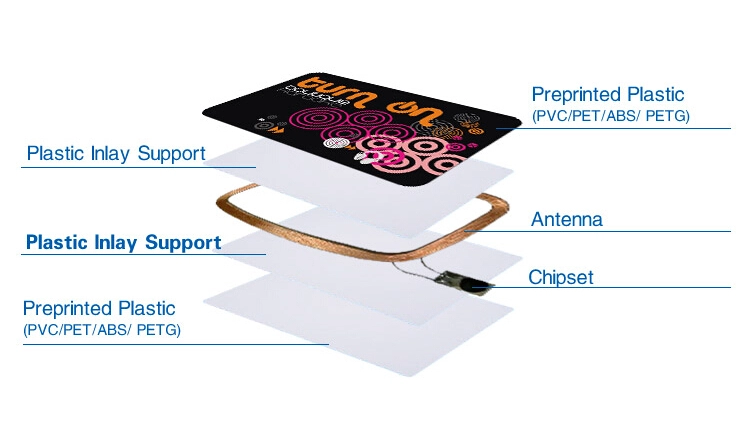
| Chip Options | |
| ISO14443A | MIFARE Classic® 1K, MIFARE Classic ® 4K |
| MIFARE® Mini | |
| MIFARE Ultralight ®, MIFARE Ultralight ® EV1, MIFARE Ultralight® C | |
| Ntag213 / Ntag215 / Ntag216 | |
| MIFARE ® DESFire ® EV1 (2K/4K/8K) | |
| MIFARE ® DESFire® EV2 (2K/4K/8K) | |
| MIFARE Plus® (2K/4K) | |
| Topaz 512 | |
| ISO15693 | ICODE SLI-X, ICODE SLI-S |
| 125KHZ | TK4100, EM4200,EM4305, T5577 |
| 860~960Mhz | Alien H3, Impinj M4/M5 |
Remark:
MIFARE and MIFARE Classic are trademarks of NXP B.V.
MIFARE DESFire are registered trademarks of NXP B.V. and are used under license.
MIFARE and MIFARE Plus are registered trademarks of NXP B.V. and are used under license.
MIFARE and MIFARE Ultralight are registered trademarks of NXP B.V. and are used under license.

Packing & Delivery
Normal package :
200pcs rfid cards into white box .
5 boxes /10boxes /15boxes into one carton.
Customized Package based on your request.
For example below package picture:


The evolution of urban transportation is inextricably linked to the evolution of payment technologies. As metropolitan areas swell and the demand for efficient mass transit grows, the humble paper ticket is rapidly becoming a relic of the past. In its place stands a sophisticated technological ecosystem anchored by the 13.56MHz Radio Frequency Identification (RFID) smart card and Near Field Communication (NFC) e-ticket. These unassuming plastic cards and digital tokens are the linchpins of modern Smart City infrastructure, facilitating the seamless movement of millions of people daily. This comprehensive analysis explores the technical architecture, operational workflows, critical pain points resolved, and the competitive landscape of 13.56MHz transportation solutions, offering a deep dive into the technology that keeps the world moving.
The Technical Backbone: Understanding 13.56MHz and NFC Architecture
To appreciate the efficacy of the modern transit card, one must first understand the physics and protocols that govern it. The 13.56 MHz frequency is the global standard for High-Frequency (HF) RFID and the foundation on which NFC is built. This frequency was chosen for transportation applications due to its optimal balance between read range, data transfer speed, and resistance to environmental interference. Unlike Low-Frequency (LF) systems, which offer short range and slow data rates, or Ultra-High-Frequency (UHF) systems, which offer long range but suffer from signal reflection issues in crowded, metallic environments like subway cars, 13.56MHz operates effectively within a range of 0 to 10 centimeters. This “close proximity” requirement is a feature, not a bug, ensuring that a passenger intentionally interacts with the validator, preventing accidental double-charging.
At the heart of this system lies the Integrated Circuit (IC) card standard, most commonly adhering to the ISO/IEC 14443 protocol. This standard defines the physical characteristics, radio frequency power and signal interface, and initialization and anti-collision protocols. Within this ecosystem, we see distinct types of cards. The most basic are memory cards, which simply store a value—essentially a digital purse. When a user taps the card, the reader subtracts the fare from the stored value. However, modern systems have largely migrated to CPU cards and dual-interface smart cards. These contain a microprocessor capable of performing cryptographic operations. This is crucial for security; it prevents cloning and fraud by ensuring that communication between the card and the reader is encrypted using standards such as AES or 3DES.
NFC is essentially a subset of RFID technology that allows for two-way communication. While traditional RFID is often read-only or read-write from a distance, NFC enables the “tap” functionality we see in smartphones. A 13.56MHz transportation card acts as a passive target, powered by the electromagnetic field generated by the active reader (the gate or validator). This inductive coupling instantly powers the chip, enabling it to transmit its unique identifier and encrypted balance data within milliseconds. The sophistication of modern chips, such as the MIFARE DESFire EV3 or the FeliCa standard used extensively in Asia, allows for multiple applications on a single card. This means a single 13.56 MHz credential can serve as a subway pass, a library card, and a secure door-access key for a corporate office, all partitioned securely within the chip’s file structure.
The Operational Workflow: From Tap to Transit
The user experience of tapping a card to enter a subway station belies the complex handshake occurring in the background. The process begins when the transit card enters the electromagnetic field of the Point-of-Sale (POS) validator. The reader wakes the card and initiates an anti-collision protocol, ensuring it is communicating with only one card even if a user has a wallet full of them. Once the specific transit application is selected, a mutual authentication process occurs. The reader challenges the card to prove its authenticity using encrypted keys, and the card does the same to the reader to prevent skimming attacks.
Once authenticated, the transaction logic executes. In an offline system, the reader calculates the fare based on the entry point or a flat rate and deducts it from the card’s electronic purse. The card updates its balance and generates a transaction log. This entire exchange must happen in under 300 milliseconds to maintain passenger flow. In more advanced Account-Based Ticketing (ABT) systems, the card may simply transmit a token to the backend server, which calculates the fare and manages the balance in the cloud. This enables “best fare” calculations and automatically caps daily spending.
Upon successful validation, the reader signals the gate controller to open the barrier and provides visual (green light) and auditory (beep) feedback. Simultaneously, the transaction data is stored in the validator’s buffer. Periodically, usually in real-time via 4G/5G or Wi-Fi, these transaction logs are uploaded to the central clearinghouse. This backend system reconciles accounts, manages blacklists of stolen cards, and handles financial settlements between transport operators—a critical function in cities where subways, buses, and light rail may be operated by different entities.
Solving Critical Industry Pain Points
The migration to 13.56MHz RFID and NFC e-tickets addresses several systemic failures inherent in legacy transit systems. The most immediate impact is on operational efficiency and passenger throughput. Paper tickets and magnetic stripes are notoriously slow; they require precise insertion, are prone to jamming, and degrade quickly. A magnetic stripe transaction can take 1-2 seconds; an RFID tap takes a fraction of that. In high-volume stations processing thousands of passengers per hour, this micro-optimization prevents bottlenecks and reduces queue times significantly.
Furthermore, the durability and lifecycle costs of 13.56 MHz smart cards offer a significant advantage. A plastic PVC or PET card with an embedded antenna can withstand roughly 100,000 read/write cycles and has a lifespan of 5 to 10 years. They are resistant to water, dust, and physical stress. This contrasts sharply with paper thermal tickets or magnetic cards, which are prone to demagnetization or tearing. For the transport authority, this reduces waste associated with single-use tickets and lowers validator maintenance costs, as validators no longer need complex mechanical readers to pull in and spit out tickets.
Security and revenue protection are other major pain points resolved by this technology. Legacy systems were plagued by token fraud, coin slugs, and magnetic stripe cloning. The cryptographic capabilities of modern 13.56MHz CPU cards make cloning virtually impossible without the master encryption keys. Moreover, the shift to NFC mobile e-tickets (Host Card Emulation) enables dynamic encryption keys that change with each transaction. This drastically reduces fare evasion, ensuring that revenue reaches the operators. Additionally, the data generated by these systems provides granular insights into passenger behavior, allowing authorities to optimize route planning and scheduling based on actual demand rather than estimates.
Competitive Landscape and Technology Comparison
While 13.56 MHz NFC/RFID is the current dominant force, it competes with other identification and payment technologies. Understanding where it stands relative to its competitors is vital for a complete market analysis.
1. Legacy Magnetic Stripe and Barcode/QR Codes: Magnetic stripe technology is effectively obsolete for high-volume transit due to slow transaction times and high wear rates. However, 2D barcodes and QR codes on smartphone screens have seen a resurgence as a “low-cost” competitor. They require no specialized hardware in the user’s hand (just a screen) and no embedded chip in the card. However, QR codes suffer from significant latency; the scanner must focus, capture the image, and decode it, which is slower than the instantaneous RF handshake of NFC. Furthermore, QR codes are difficult to use in low light and can be easily screenshotted and shared illicitly, posing security challenges.
2. Low-Frequency (125kHz) RFID: Often found in older access control systems, 125kHz technology is cheaper but technically inferior for transit. It has very low data transfer rates, making it unsuitable for storing value or complex cryptographic keys. It is also unencrypted and easily cloned. While it might suffice for a simple gym entry, it lacks the security and speed required for a subway turnstile handling high-value transactions.
3. Ultra-High-Frequency (UHF) RFID: UHF (860-960MHz) offers long-range reading (up to 10 meters). While excellent for logistics and tolling (like E-ZPass), it is generally unsuitable for dense subway environments. The “far-field” nature of UHF makes it difficult to isolate a specific passenger’s card in a crowded carriage, leading to accidental reads and charging errors. However, UHF is gaining traction in “free-flow” tolling for buses where the vehicle itself is tagged, rather than the individual passengers.
4. Biometrics: Facial recognition and fingerprint scanning are the emerging “premium” competitors. They offer the ultimate convenience—no card or phone required. However, they raise significant privacy concerns and require expensive, high-maintenance optical hardware at every entry point. Biometrics also struggle with environmental factors (masks, lighting, dirt). Consequently, biometrics are currently serving as a complement to, rather than a replacement for, 13.56MHz NFC systems.
5. EMV Open Loop (Contactless Bank Cards): This is the most significant competitor. Instead of issuing a proprietary transit card, systems accept standard Visa/Mastercard contactless payments. While convenient for tourists, closed-loop 13.56 MHz transit cards still offer advantages for daily commuters. They can be processed offline (vital when network connectivity is spotty underground), they support complex fare capping and concession logic (student/senior discounts) more easily than standard bank rails, and they have lower transaction fees for the operator.
Future Trends: The Mobile Integration and Beyond
As we look toward the future, the 13.56MHz standard is not standing still; it is migrating into the devices we already carry. The era of the physical plastic card is slowly yielding to the era of the mobile wallet. Through technologies like Host Card Emulation (HCE) and embedded Secure Elements (eSE) in smartphones and wearables, the 13.56 MHz antenna inside a phone can emulate a physical smart card. This allows users to top up their transit pass via an app and tap their phone—or even their smartwatch—to ride.
This shift also enables “Account-Based Ticketing” (ABT) to reach its full potential. In an ABT model, the fare logic moves from the card to the cloud. The physical token (card or phone) is just an identifier. This allows for seamless intermodality: a passenger could tap a credit card for the bus, an Apple Watch for the subway, and a QR code for a bike share, and the backend system would aggregate these trips to automatically apply the correct daily cap or monthly pass discount.
Moreover, the integration of 13.56 MHz technology with blockchain is being explored for decentralized identity management and transparent settlement among multi-operator transit networks. By creating an immutable ledger of rides and payments, operators can reduce reconciliation costs and increase trust in the system.
Conclusion
The 13.56MHz transportation RFID smart e-ticket and NFC card represent a triumph of engineering pragmatism. By leveraging a frequency that balances range and speed, and protocols that ensure robust security, this technology has solved the critical “last mile” problems of payment latency and fraud in mass transit. While it faces competition from QR codes and biometrics, its reliability, speed, and deep integration into the ISO standards make it the backbone of global urban mobility. As cities continue to grow, the humble 13.56MHz chip will remain the silent conductor, orchestrating the complex dance of modern transportation with a simple, secure tap.