
The pharmaceutical industry and modern manufacturing are under increasing pressure to improve product traceability, prevent counterfeiting, enhance production efficiency, and comply with strict regulatory requirements. Traditional barcode systems have long been used for product identification, but they require line-of-sight scanning, are susceptible to damage, and offer limited security. As a result, many pharmaceutical companies and smart factories are adopting NFC-based RFID technology to enable secure, contactless, and intelligent identification.
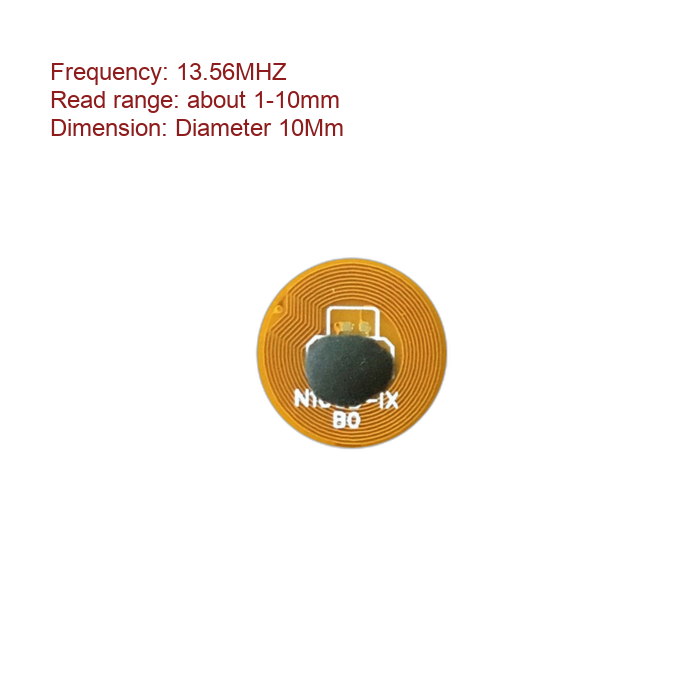
One of the most innovative solutions is the Diameter 10mm FPC NFC ICODE DNA tag. Combining an ultra-compact 10 mm Flexible Printed Circuit (FPC) antenna with the advanced NXP ICODE DNA chip, this RFID tag delivers high security, excellent durability, and reliable performance even in space-constrained industrial environments.
Its compact size, cryptographic authentication, and smartphone compatibility make it an ideal choice for pharmaceutical packaging, medical devices, automated production lines, and Industry 4.0 applications.
This guide explains what a Diameter 10mm FPC NFC ICODE DNA tag is, how it works, the challenges it solves, its application scenarios, and how it compares with competing RFID technologies.
What Is a Diameter 10mm FPC NFC ICODE DNA Tag?
A Diameter 10mm FPC NFC ICODE DNA tag is a miniature passive RFID tag built on a Flexible Printed Circuit (FPC) substrate and integrated with the NXP ICODE DNA chip.
Unlike ordinary NFC stickers, this tag is designed for industrial environments where durability, security, and miniaturization are critical.
The tag consists of:
- A 10 mm circular FPC antenna
- NXP ICODE DNA RFID IC
- Flexible copper circuitry
- High-temperature-resistant encapsulation
- Industrial-grade adhesive or embedding structure
Despite its compact size, the tag provides advanced cryptographic authentication, making it suitable for high-value products that require secure identification and anti-counterfeiting protection.
How Does It Work?
The Diameter 10mm FPC NFC ICODE DNA tag operates using 13.56 MHz High Frequency (HF) RFID technology.
Step 1: Reader Generates an Electromagnetic Field
An RFID reader or NFC-enabled device creates a 13.56 MHz electromagnetic field.
Step 2: Wireless Power Transfer
The FPC antenna captures RF energy through electromagnetic induction, powering the chip without a battery.
Step 3: Mutual Authentication
Unlike standard NFC tags that simply transmit stored information, the ICODE DNA chip performs cryptographic authentication.
Using AES-based challenge-response technology, the reader verifies that the tag is genuine before accessing sensitive data.
Step 4: Secure Data Exchange
After successful authentication, encrypted information such as product IDs, batch numbers, production data, or logistics records can be securely exchanged.
This process prevents unauthorized cloning and protects sensitive product information throughout the supply chain.
Product Overview
The 10mm FPC NFC Tag with ICODE DNA chip represents a precision-engineered identification solution tailored for demanding industrial environments. Manufactured by DO RFID Reader, this ultra-compact tag supports high-temperature exposure, secure data authentication, and reliable performance in automated supply chains, factory floors, and pharmaceutical tracking systems. System integrators, project contractors, and wholesale distributors choose this tag when they require a durable, miniature NFC label that withstands extreme processing conditions while delivering AES-encrypted originality verification.
Key Features
- Ultra-Compact Form Factor – 10mm diameter suitable for embedding into small assets, consumables, and medical packaging where space is constrained.
- ICODE DNA Chip – Delivers 32-byte ECC-based originality signature, three 128-bit keys for bidirectional authentication, and AES encryption for label security.
- High-Temperature Resistance – Withstands 200°C for 2 hours and 260°C for 10–30 seconds, enabling PCB embedding and industrial curing processes.
- Extended Operating Range – Reliable performance from -30°C to +85°C, suitable for cold chain logistics and high-heat manufacturing zones.
- 16-Bit Counter Function – The last user memory block supports a write-increment counter protected by bidirectional authentication for usage tracking.
- EAS and AFI Protection – Electronic Article Surveillance and Application Family Identifier functions secured through authentication.
- Privacy and Destruct Feature – Bidirectional authentication enables privacy protection and permanent tag disabling when required.
Technical Specifications
| Category | FPC NFC Tag |
| Manufacturer | DO RFID Reader |
| Model | DO-FPC10-ICODE |
| Size | Diameter 10 mm |
| Thickness | 0.05 – 0.07 mm |
| Standard | ISO 15693 |
| Chip | ICODE DNA |
| Frequency | 13.56 MHz |
| Data Transfer Rate | 53 kbit/s |
| Data Integrity | 16-bit CRC, framing |
| Temperature Resistance | 200°C / 2 hours, 260°C / 10–30 seconds |
| Operating Temperature | -30°C to +85°C |
| Read Distance | Approximately 1 – 10 mm |
| UID | Unique, non-modifiable identifier per tag |
| Originality Signature | 32-byte ECC signature for anti-counterfeiting |
| Authentication Keys | Three 128-bit keys for label and bidirectional AES authentication |
| Certifications | RoHS, REACH, CE |
| Port | Shenzhen |
| Payment Terms | T/T |
Product Advantages
Secure Authentication for Anti-Counterfeiting
The ICODE DNA chip provides a 32-byte ECC originality signature and AES-based bidirectional authentication. This ensures that each tag can be verified as genuine, making it ideal for pharmaceutical supply chains, brand protection, and high-value asset tracking where counterfeit prevention is critical.
Miniature Size for Space-Constrained Applications
With a 10 mm diameter and thickness of only 0.05–0.07 mm, this tag can be embedded into labels, consumables, medical devices, and industrial components where larger tags cannot fit. System integrators use it for item-level tagging in pharmaceutical packaging, tool tracking, and small assembly parts.
High-Temperature Tolerance for Industrial Processes
The tag withstands 200°C for two hours and 260°C for short bursts, allowing it to survive solder reflow, PCB embedding, epoxy curing, and high-temperature sterilization. This makes it suitable for automotive manufacturing, electronics production, and medical device labeling.
Robust Memory and Security Features
The 16-bit counter, combined with authentication-protected EAS and AFI functions, enables usage tracking, tamper detection, and privacy control. Distributors and project integrators benefit from a single tag that supports multiple security layers without requiring additional hardware.
Industrial Applications
- Pharmaceutical Supply Chain – Item-level tagging with originality verification prevents counterfeiting and enables track-and-trace compliance. The small size fits onto blister packs and vials.
- Factory Automation – Embedded into jigs, tools, and work-in-progress components for automated identification on assembly lines. High-temperature resistance supports exposure to soldering and curing ovens.
- Library and Document Management – Reliable UID and authentication protect sensitive assets while the thin form factor allows insertion into book spines or folder sleeves.
- Consumable and Accessory Identification – Printer cartridges, medical consumables, and industrial spare parts benefit from secure, miniature tagging that prevents unauthorized reuse.
- Laundry and Textile Tracking – FPC construction withstands repeated washing and ironing cycles, making it suitable for industrial laundry asset management.
- Supply Chain Visibility – Real-time tracking of pallets, containers, and high-value items with authentication ensures data integrity from manufacturer to end user.
- Asset and Document Tracking – Permanent secure tagging for laptops, servers, medical equipment, and confidential files with privacy destruct capability.
Problems It Solves
1. Counterfeit Pharmaceuticals
Counterfeit medicine is a major global challenge that threatens patient safety and pharmaceutical brands.
ICODE DNA supports cryptographic authentication, enabling every product to carry a unique digital identity that cannot simply be copied like a barcode.
Healthcare providers and distributors can verify authenticity before dispensing medication.
2. Lack of End-to-End Traceability
Drug manufacturers need complete visibility throughout production and distribution.
The RFID tag enables every product to be identified automatically during:
- Manufacturing
- Packaging
- Warehousing
- Distribution
- Hospital inventory
- Retail dispensing
This improves compliance with pharmaceutical serialization regulations.
3. Manual Scanning Inefficiency
Traditional barcode systems require direct visibility and manual positioning.
RFID allows contactless reading without precise alignment, significantly improving automation efficiency.
Production lines can process large volumes of products with minimal human intervention.
4. Limited Installation Space
Many pharmaceutical devices, medical instruments, and electronic components offer very limited mounting space.
The 10 mm FPC design easily fits into:
- Medical devices
- Drug packaging
- Diagnostic equipment
- Laboratory instruments
- Electronic modules
Its flexibility also allows installation on curved surfaces.
5. Harsh Manufacturing Environments
Industrial production often involves elevated temperatures, vibration, chemicals, and mechanical stress.
The FPC structure provides greater durability than conventional paper or PET RFID labels, ensuring reliable performance throughout manufacturing and product life.
Application Scenarios
The versatility of the Diameter 10mm FPC NFC ICODE DNA tag makes it suitable for a wide range of industries.
Pharmaceutical Supply Chain
The tag supports secure identification from production to patient delivery.
Typical applications include:
- Medicine packaging
- Vaccine tracking
- Prescription drugs
- Clinical trial samples
- Pharmaceutical logistics
Secure authentication helps reduce counterfeit risks and improves regulatory compliance.
Factory Automation
Industry 4.0 production environments require reliable product identification.
ICODE DNA tags enable:
- Automated workpiece tracking
- Production process monitoring
- Component identification
- Robotic assembly verification
- Manufacturing quality control
Real-time identification improves productivity while reducing manual errors.
Medical Devices
Medical equipment manufacturers increasingly embed RFID tags into:
- Surgical instruments
- Diagnostic devices
- Reusable medical tools
- Laboratory equipment
- Sterilization containers
Secure identification supports maintenance records and lifecycle management.
Electronic Manufacturing
Because of its small size and heat resistance, the tag is well suited for:
- PCB assemblies
- Smart sensors
- IoT devices
- Consumer electronics
- Industrial control equipment
Embedded RFID simplifies inventory management and after-sales service.
Asset Tracking
Enterprises can securely identify valuable assets such as:
- Test instruments
- Calibration equipment
- Manufacturing tools
- Laboratory assets
- IT equipment
Contactless identification speeds up audits and reduces asset loss.
Competitive Analysis
Selecting the right RFID technology depends on security requirements, environmental conditions, and application complexity.
Diameter 10mm FPC ICODE DNA vs Standard NFC Stickers
| Feature | ICODE DNA FPC | Standard NFC Sticker |
|---|---|---|
| Security | AES Authentication | Basic UID |
| Anti-Counterfeiting | Excellent | Limited |
| Durability | High | Moderate |
| Heat Resistance | Excellent | Limited |
| Industrial Use | Yes | Mainly Consumer |
| Authentication | Cryptographic | None |
ICODE DNA provides significantly stronger protection for high-value products.
ICODE DNA vs NTAG213/215/216
NTAG chips are widely used for marketing, smart posters, and product information.
However, they rely primarily on unique IDs and optional password protection rather than enterprise-grade authentication.
ICODE DNA offers:
- Cryptographic challenge-response
- Secure authentication
- Better anti-cloning protection
- Higher suitability for regulated industries
For pharmaceutical and industrial applications, ICODE DNA is generally the preferred choice.
ICODE DNA vs UHF RFID
UHF RFID provides longer reading distances and is ideal for pallet or warehouse management.
ICODE DNA, operating at 13.56 MHz, offers shorter read ranges but significantly stronger security and better performance around liquids and metal-rich environments.
For drug authentication and factory automation, HF NFC technology often provides a better balance of security and reliability.
OEM / ODM Manufacturing Support
DO RFID Reader offers comprehensive OEM and ODM customization for the 10mm FPC NFC tag. Buyers can specify chip encoding, custom UID ranges, printed logos, barcode or QR code integration, adhesive backing options, and packaging formats tailored to project deployment. Our engineering team works directly with system integrators and distributors to ensure the tag design is compatible with existing reader infrastructure and production workflows. Whether you require a standard tag for bulk distribution or a fully customized form factor for a proprietary system, we support fast prototype turnaround and production scaling without compromising technical integrity.
Bulk Supply & Project Deployment Support
Wholesale buyers and project contractors benefit from stable production capacity and consistent batch quality. DO RFID Reader maintains dedicated production lines for FPC NFC tags, enabling lead times of 7–20 days for mass orders. Each batch undergoes read-range verification, authentication testing, and dimensional inspection before shipment. Long-term supply agreements are available for distributors and system integrators who require predictable pricing and guaranteed availability for multi-phase deployments. For large-scale rollouts across multiple sites, we provide technical documentation, sample kits, and on-call engineering support to ensure smooth integration.
Factory Production Advantages
- Stable Manufacturing Capacity – Dedicated FPC production lines with volume output capable of supporting both sample runs and high-volume wholesale orders.
- Batch Consistency – Each production lot is tested for frequency response, read distance, and authentication performance to ensure uniform behavior across the entire order.
- Fast Lead Time – Samples ship within 1–7 days; mass production completes within 7–20 days depending on customization complexity.
- Customization Flexibility – Chip encoding, UID management, antenna tuning, material selection, and printing are all configurable to match project specifications.
- Quality Inspection – Incoming material verification, in-process testing, and final functional checks are performed for every batch before shipment.
- Export Experience – DO RFID Reader ships to integrators and distributors worldwide with proper packaging and documentation for customs clearance.
- Long-Term Cooperation – We support ongoing supply contracts, scheduled replenishment, and joint product development for system integrators and OEM partners.
FAQ
Q1: How can I get pricing for the 10mm FPC NFC tag?
Send your inquiry with target quantity and customization requirements. We will provide a quotation promptly.
Q2: Can I request free samples?
Yes. Stock samples are free; you only pay shipping. Customized samples require a reasonable production fee, which may be refunded upon order confirmation.
Q3: What is the typical lead time?
Samples: 1–7 days. Mass production: 7–20 days depending on volume and customization scope.
Q4: What payment options are available?
T/T for mass production orders. PayPal and Trade Assurance are also accepted for smaller orders.
Q5: How do I select the right chip for my application?
Review the chip specifications above or contact us with your application details. We will recommend the optimal chip and configuration for your project.
Q6: Does the tag support integration with existing RFID readers?
Yes. The tag operates at 13.56 MHz and complies with ISO 15693, ensuring compatibility with standard NFC-enabled readers and industrial RFID infrastructure.
Why Choose DO RFID Reader
DO RFID Reader focuses on delivering customized NFC solutions that solve real industrial identification and authentication challenges. Our engineering team understands the performance requirements of factory automation, pharmaceutical compliance, and supply chain visibility projects. We provide technical support throughout the design, testing, and deployment phases. For system integrators, distributors, and OEM buyers who need a reliable partner with production stability and customization expertise, DO RFID Reader offers a practical long-term cooperation path. Contact us for specifications, pricing, or project consultation at info@dorfidreader.com.
Conclusion
The Diameter 10mm FPC NFC ICODE DNA tag is a compact yet highly capable RFID solution designed for industries that demand secure identification, product authenticity, and reliable automation. By combining a miniature flexible printed circuit with advanced cryptographic authentication, it addresses many of the limitations of traditional barcodes and standard NFC labels.
Its ability to withstand industrial environments, fit into extremely small products, and provide secure end-to-end traceability makes it especially valuable for pharmaceutical supply chains, medical devices, factory automation, and Industry 4.0 manufacturing. Compared with conventional NFC tags, ICODE DNA offers stronger protection against counterfeiting, better data security, and improved lifecycle management.
As global industries continue to invest in smart manufacturing, digital traceability, and secure connected products, Diameter 10mm FPC NFC ICODE DNA tags will play an increasingly important role in delivering efficient, compliant, and future-ready identification solutions.