October 21, 2026
How Does an RFID Reader Work? A Complete Guide to RFID Reader Technology, Working Process, Manufacturing Steps, Applications, and Buying Guide
Radio Frequency Identification (RFID) technology has revolutionized the way businesses identify, track, and manage assets. From warehouse inventory and retail stores to hospitals, logistics centers, manufacturing plants, and smart cities, RFID systems are replacing traditional barcode solutions with faster, more accurate, and contactless identification.
At the heart of every RFID system is the RFID reader. Without it, RFID tags cannot communicate with management software or enterprise systems. Understanding how an RFID reader works helps businesses choose the right equipment for inventory management, access control, supply chain visibility, and industrial automation.
This comprehensive guide explains what an RFID reader is, how it works, its major components, manufacturing process, communication workflow, different reader types, applications, advantages, competitive comparison, and tips for selecting the right RFID reader.
What Is an RFID Reader?
An RFID reader is an electronic device that communicates with RFID tags via radio-frequency (RF) signals. It sends electromagnetic waves through an antenna, receives data from RFID tags, decodes it, and transfers it to a computer, PLC, cloud platform, or enterprise management system.
Unlike barcode scanners, RFID readers do not require a direct line of sight. Multiple RFID tags can be identified simultaneously, even when hidden inside boxes, pallets, or containers.
An RFID system typically consists of four major components:
- RFID Reader
- RFID Antenna
- RFID Tags (Passive, Active, or Semi-Passive)
- RFID Software or Middleware
Together, these components create a complete automatic identification system capable of tracking thousands of items in real time.
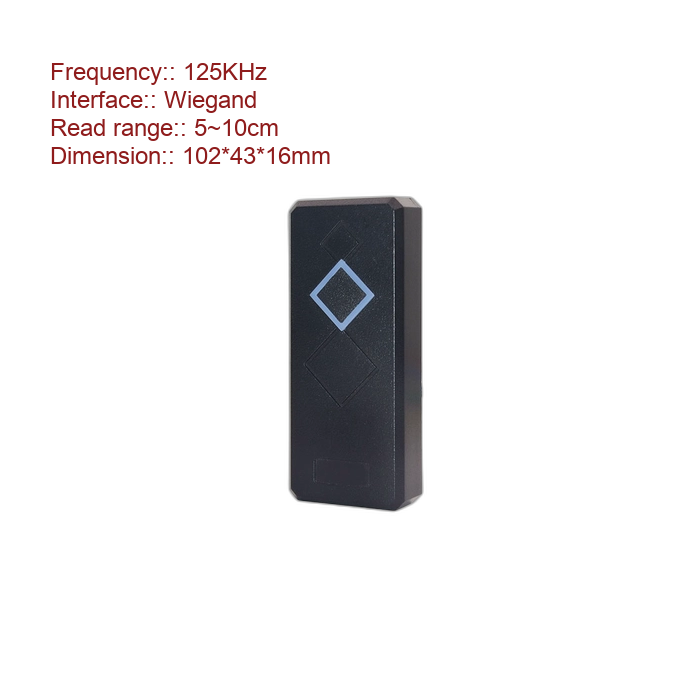
Main Components of an RFID Reader
A modern RFID reader integrates several hardware and software modules.
RF Transceiver Module
The RF transceiver generates radio-frequency signals to activate RFID tags and receives their responses.
Different readers operate at different frequencies, including:
- Low Frequency (LF): 125 kHz
- High Frequency (HF): 13.56 MHz
- Ultra High Frequency (UHF): 860–960 MHz
- Microwave: 2.45 GHz
Among these, UHF readers are the most widely used in logistics and warehouse management due to their long reading range.
RFID Antenna
The antenna transmits RF energy and receives signals reflected or transmitted by RFID tags.
Reader antennas may be:
- Circular polarized
- Linear polarized
- Internal antenna
- External antenna
- Multi-port antenna systems
Larger antennas generally provide longer reading distances.
Processor (CPU)
The processor controls all communication between the reader and RFID tags.
It performs tasks such as:
- Signal decoding
- Anti-collision processing
- Data encryption
- Protocol management
- Device communication
Communication Interface
After decoding RFID information, the reader sends data to external systems through interfaces such as:
- USB
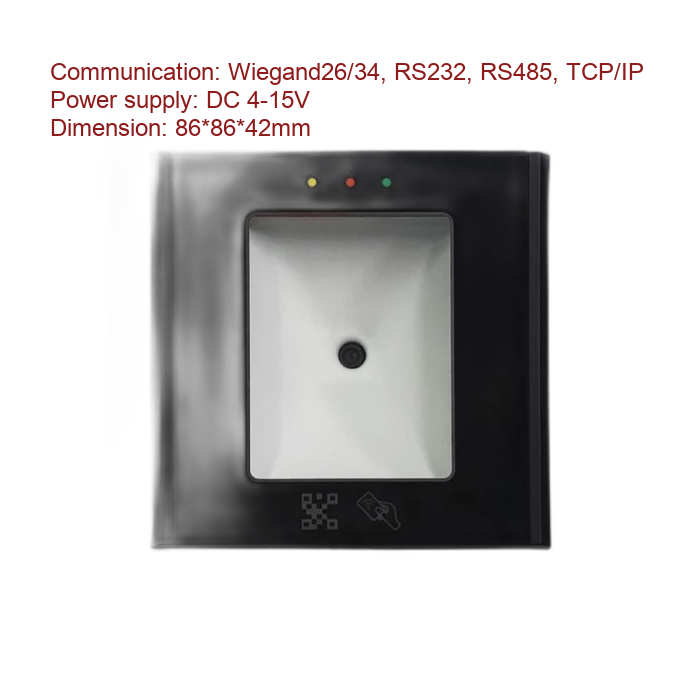
- RS232
- RS485
- Ethernet
- Wi-Fi
- Bluetooth
- TCP/IP
- PoE
Industrial RFID readers often support multiple communication methods simultaneously.
Power Supply
RFID readers may be powered by:
- DC adapters
- Battery packs
- Power over Ethernet (PoE)
- Industrial power supplies
Portable handheld readers typically use rechargeable lithium batteries.
How Does an RFID Reader Work?
The operation of an RFID reader follows a precise sequence of wireless communication.
Step 1: The reader generates radio frequency signals
The RFID reader continuously produces radio waves using its RF transmitter.
These signals travel through the antenna, creating an electromagnetic field around the reader.
Step 2: RFID Tag Enters the Reading Zone
When an RFID tag moves into this electromagnetic field, it detects the radio energy emitted by the reader.
For passive RFID tags, this energy powers the integrated circuit inside the tag.
Unlike active tags, passive tags do not require an internal battery.
Step 3: RFID Tag Becomes Activated
Once energized, the RFID chip wakes up and prepares to transmit its stored information.
Typical data includes:
- Unique ID number
- Product code
- Asset information
- Manufacturing date
- Serial number
- EPC (Electronic Product Code)
Step 4: Data Transmission
The RFID tag sends information back to the reader.
Passive tags use a technology called backscatter modulation, where they reflect and modulate the reader’s radio waves instead of generating their own signal.
Active RFID tags transmit their own radio signals using built-in batteries, allowing much longer reading distances.
Step 5: Signal Reception
The reader antenna receives the returning RF signal.
The receiver filters noise and amplifies weak signals before sending them to the processor.
Step 6: Data Decoding
The processor decodes the digital information contained in the radio signal.
It verifies:
- Signal integrity
- Error correction
- Data formatting
- Security authentication
If multiple RFID tags are present, the reader uses anti-collision algorithms to identify each tag individually without data conflicts.
Step 7: Data Transfer
Finally, the RFID reader sends decoded information to management software.
Typical destinations include:
- Warehouse Management Systems (WMS)
- Enterprise Resource Planning (ERP)
- Manufacturing Execution Systems (MES)
- Inventory software
- Cloud platforms
- Access control systems
The entire reading process typically takes only a few milliseconds.
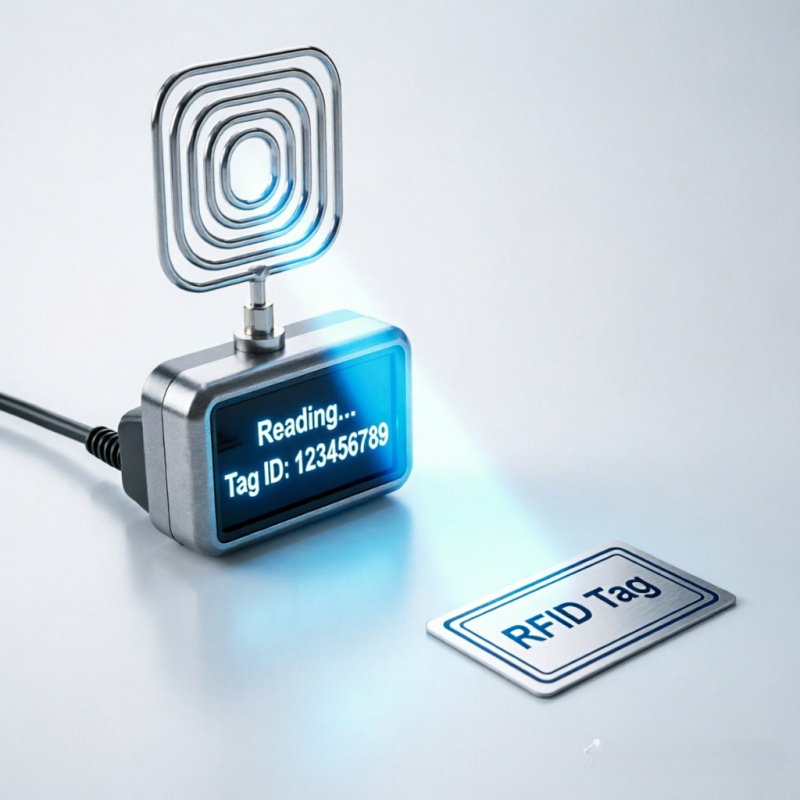
RFID Reader Communication Workflow
The communication process can be summarized as follows:
- RFID reader generates RF energy.
- Antenna broadcasts electromagnetic waves.
- RFID tag enters the reading field.
- Passive tag harvests energy from the RF field.
- RFID chip activates.
- Tag transmits stored information.
- Reader receives the signal.
- Processor decodes the data.
- Reader sends information to software.
- Database updates automatically.
This rapid workflow enables real-time asset visibility across warehouses, factories, retail stores, and transportation networks.
Types of RFID Readers
Different applications require different reader designs.
Fixed RFID Reader
Fixed readers are permanently installed in locations such as:
- Warehouse doors
- Production lines
- Conveyor systems
- Toll stations
- Smart cabinets
They provide continuous automatic tag reading with minimal human intervention.
Handheld RFID Reader
Portable readers combine an RFID antenna, display, processor, and battery into one device.
They are ideal for:
- Inventory counting
- Asset auditing
- Retail stock management
- Field service
- Library management
Their mobility allows operators to scan items quickly without the need for fixed infrastructure.
Integrated RFID Reader
Integrated readers feature built-in antennas in a compact enclosure, making installation simple for kiosks, vending machines, lockers, and access control terminals.
Multi-Port RFID Reader
Industrial applications often require readers with multiple antenna ports.
These systems can monitor several read zones simultaneously, improving coverage in warehouses and logistics hubs.
RFID Reader Manufacturing Process
High-quality RFID readers require precision manufacturing and rigorous testing.
Step 1: PCB Design
Engineers design multilayer printed circuit boards (PCBs) to integrate RF, digital, and power circuits while minimizing interference.
Step 2: Electronic Component Assembly
Surface-mount technology (SMT) machines place components such as:
- Microprocessors
- RF chips
- Memory
- Capacitors
- Resistors
- Oscillators
Automatic optical inspection (AOI) verifies assembly quality.
Step 3: RF Module Integration
The RF transmitter, receiver, and matching circuits are installed and calibrated to ensure stable signal performance across the target frequency band.
Step 4: Firmware Programming
Engineers load firmware that controls:
- Communication protocols
- Anti-collision algorithms
- Security functions
- Device interfaces
- Diagnostic features
Firmware can often be upgraded to support future standards.
Step 5: Antenna Installation
Depending on the design, internal or external antennas are connected and tuned for optimal impedance matching and reading performance.
Step 6: Functional Testing
Each reader undergoes extensive quality control, including:
- RF output power testing
- Frequency accuracy
- Reading distance verification
- Multi-tag performance
- Communication interface testing
- Environmental stress tests
Step 7: Final Assembly
The electronics are enclosed in durable housings made from industrial-grade ABS plastic, aluminum alloy, or IP-rated weatherproof materials.
Step 8: Packaging and Shipment
After final inspection, readers are packaged with:
- Power adapters
- Communication cables
- User manuals
- Mounting accessories
- Software or SDK documentation
They are then prepared for global distribution.
Applications of RFID Readers
RFID readers are widely used across numerous industries.
Warehouse Management
- Inventory tracking
- Pallet identification
- Receiving and shipping
- Cycle counting
Retail
- Smart checkout
- Stock visibility
- Anti-theft systems
- Shelf replenishment
Manufacturing
- Production tracking
- Work-in-process monitoring
- Tool management
- Quality control
Healthcare
- Patient identification
- Medical equipment tracking
- Pharmaceutical inventory
Logistics
- Parcel sorting
- Fleet management
- Container tracking
- Cold-chain monitoring
Access Control
- Employee authentication
- Parking systems
- Campus security
- Smart buildings
Libraries
- Self-service borrowing
- Book inventory
- Automated returns
RFID Reader vs Barcode Scanner
| Feature | RFID Reader | Barcode Scanner |
|---|---|---|
| Line of Sight Required | No | Yes |
| Read Multiple Items | Yes | No |
| Reading Speed | Very Fast | Moderate |
| Automation | Excellent | Limited |
| Read Through Packaging | Yes | No |
| Data Storage | High | Low |
| Environmental Resistance | Better | Moderate |
RFID readers provide greater efficiency for businesses managing large volumes of assets or inventory.
Advantages of RFID Readers
Modern RFID readers offer several important benefits:
- Contactless identification
- High-speed data collection
- Long reading distance
- Simultaneous multi-tag reading
- Real-time asset visibility
- Reduced labor costs
- Improved inventory accuracy
- Enhanced operational efficiency
- Easy integration with enterprise systems
- Reliable performance in demanding industrial environments
How to Choose the Right RFID Reader
Before purchasing an RFID reader, consider the following factors:
- Operating Frequency: Choose LF, HF, or UHF based on application requirements.
- Reading Distance: Ensure the reader provides adequate range for your workflow.
- Communication Interface: Select USB, Ethernet, RS485, Wi-Fi, or Bluetooth according to your existing infrastructure.
- Antenna Configuration: Integrated readers are compact, while multi-port readers offer broader coverage.
- Environmental Protection: For outdoor or industrial use, select readers with IP65 or higher protection ratings.
- Software Compatibility: Confirm compatibility with your WMS, ERP, MES, or custom applications.
- Certification: Look for CE, FCC, RoHS, and regional compliance certifications to ensure quality and regulatory approval.
Future Trends in RFID Reader Technology
RFID technology continues to evolve with innovations such as:
- AI-powered data analytics
- Edge computing
- Cloud connectivity
- IoT integration
- 5G communication
- Ultra-low-power chipsets
- Longer read ranges
- Improved anti-collision algorithms
- Enhanced cybersecurity
- Compact all-in-one industrial readers
These advancements are enabling smarter factories, autonomous warehouses, and more efficient global supply chains.
Conclusion
An RFID reader is the core device that enables wireless communication between RFID tags and digital management systems. By generating radio frequency signals, activating RFID tags, receiving their responses, decoding the data, and transmitting it to enterprise software, RFID readers provide fast, accurate, and contactless identification across countless industries.
From warehouses and manufacturing plants to retail stores, healthcare facilities, and logistics centers, RFID readers deliver significant improvements in efficiency, inventory accuracy, and operational visibility. Manufactured through precision PCB assembly, RF calibration, firmware programming, and rigorous quality testing, modern RFID readers are built for reliability and long-term performance.
As businesses continue embracing automation and the Industrial Internet of Things (IIoT), investing in the right RFID reader will play a crucial role in building intelligent, data-driven operations that are faster, more secure, and ready for the future.

Do RFID is a leading China-based manufacturer with over 15 years of experience. We specialize in customized RFID readers, tags, and cards, delivering high-quality, tailored solutions that meet your unique business needs and drive seamless, efficient identification.