October 21, 2026
If you’ve ever tapped a key fob to unlock your car, scanned a badge to enter your office, or tracked a package through the mail, you’ve used RFID technology. But have you ever wondered what’s inside those tiny tags that make all this possible? What are RFID tags actually made of?
This isn’t just a simple question about plastic and metal. The answer reveals a fascinating world of micro-engineering, material science, and clever design that balances cost, durability, performance, and application-specific needs. In this comprehensive guide, we’ll break down every component of an RFID tag—from the microscopic silicon chip to the outer packaging—explain how different materials affect performance, and show you exactly how to choose the right tag for your project.
Whether you’re an engineer, a supply chain manager, a student, or simply tech-curious, this article will give you the deep, practical knowledge you need, backed by current industry standards and real-world insights.
The Core Anatomy: Three Essential Parts of Every RFID Tag
At its heart, every RFID (Radio-Frequency Identification) tag is built from just three fundamental components working together:
- The Microchip (Integrated Circuit – IC): This is the brain of the tag. It stores the unique identification number (and sometimes additional data) and handles the communication protocol with the RFID reader.
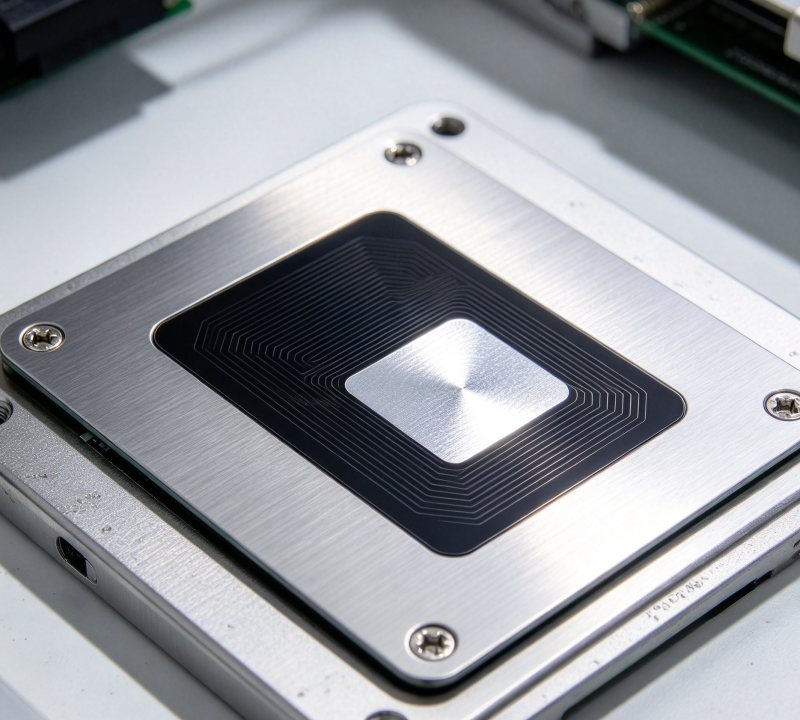
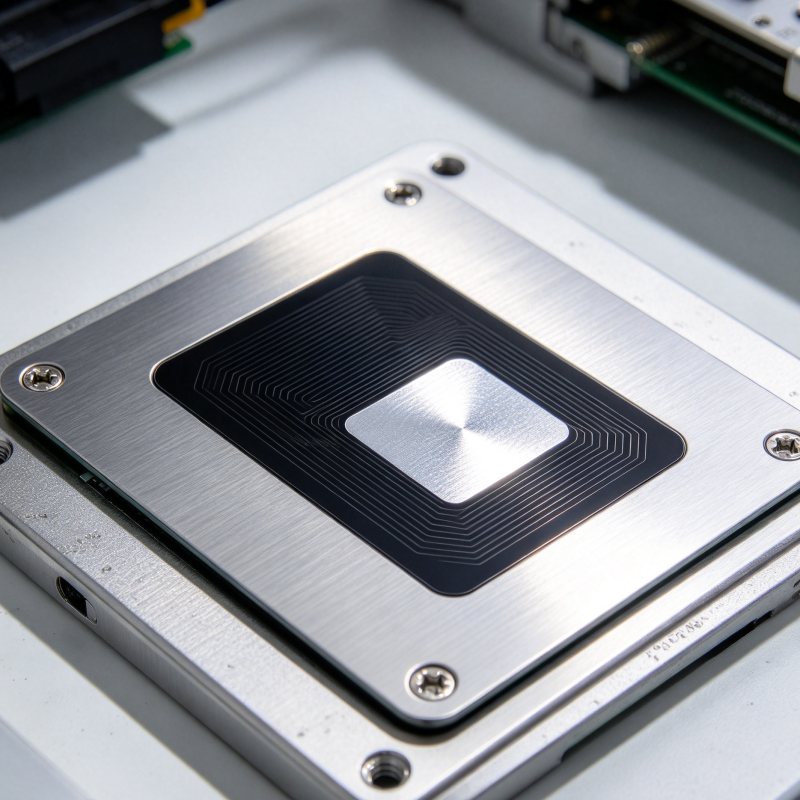
- The Antenna: This is the nervous system. It captures radio waves from the reader to power the chip (in passive tags) and sends back the stored data by modulating the reflected signal.
- The Substrate/Carrier/Packaging: This is the body. It physically holds the chip and antenna together, protects them from environmental damage, and provides a form factor suitable for the intended use (e.g., a sticker, a hard plastic card, or a ruggedized industrial tag).
Understanding what each of these parts is made from—and why—is the key to understanding RFID technology itself.
The Brain: Inside the RFID Microchip
The microchip is a marvel of modern semiconductor manufacturing. Despite being smaller than a grain of sand in many cases, it performs complex tasks.
What it’s made of: The core material of virtually all RFID chips is silicon (Si), the same foundational material used in computer processors and memory chips. Silicon is a semiconductor, meaning its electrical conductivity can be precisely controlled—a property essential for building transistors, the basic switches of any digital circuit.
The chip is fabricated on a thin slice of highly purified crystalline silicon called a wafer. Through a series of intricate processes involving photolithography, etching, and doping (adding tiny amounts of other elements like boron or phosphorus), millions of transistors and other electronic components are built onto the wafer. This wafer is then cut into thousands of individual die, each one becoming a single RFID chip.
What it does: The chip’s primary job is twofold:
- Power Management: For passive tags (which have no battery), the chip must be incredibly efficient at harvesting the tiny amount of energy induced in the antenna by the reader’s radio waves. It uses this minuscule power to “wake up” and operate.
- Data Handling & Communication: The chip contains non-volatile memory (usually EEPROM or, in newer tags, FRAM) to store its unique ID. It also has a small logic circuit that encodes this data and modulates the antenna’s load to send the information back to the reader using a technique called backscatter.
Key takeaway: While the material (silicon) is standard, the design of the chip varies greatly. Chips for low-frequency (LF) tags are simpler and cheaper, while those for ultra-high-frequency (UHF) tags are more complex to handle faster data rates and longer read ranges, making them more expensive.
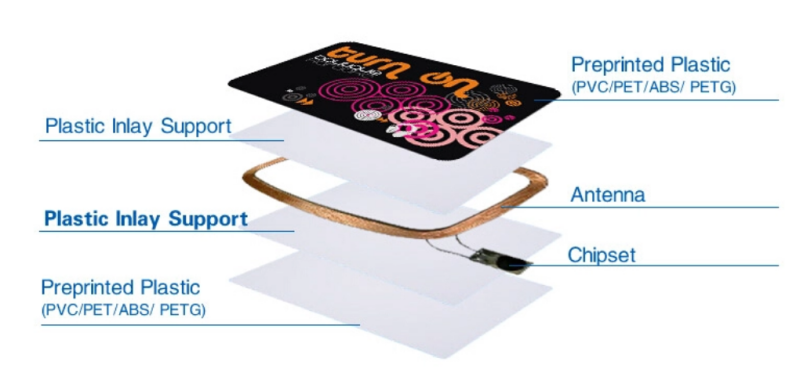
This diagram illustrates the layered structure of a typical RFID smart card: top and bottom layers are preprinted plastic (e.g., PVC/PET) for printing and protection; inner support layers (typically PET or PVC) hold the copper or aluminum antenna coil, which connects to the silicon chip (Chipset) to enable identification and communication—this precise integration ensures durability, printability, and reliable RF performance, reflecting DO RFID Reader’s expertise in high-quality, customized tag manufacturing.
The Nervous System: The RFID Antenna
The antenna is arguably the most critical component for a tag’s performance. Its design and material directly determine how far away a reader can detect the tag and how well it works near different materials (like metal or water).
What it’s made of: The choice of antenna material is a trade-off between electrical conductivity, cost, flexibility, and durability. Here are the three most common options:
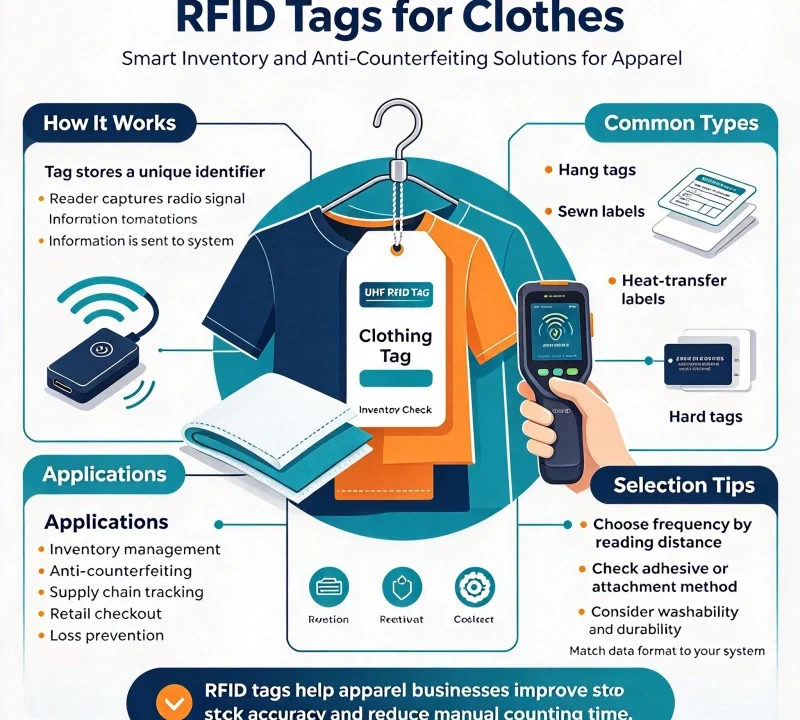
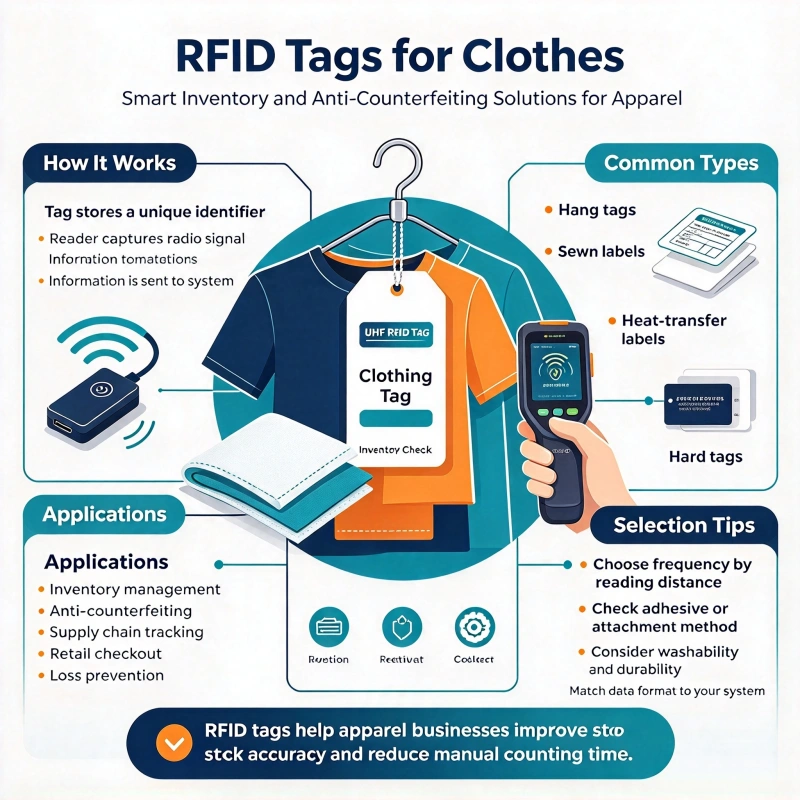
- Aluminum: This is the most popular choice for mass-produced UHF inlays (the “raw” tag before final packaging). It’s applied using a process called etching, where a thin layer of aluminum is deposited on a plastic film and then chemically removed in specific patterns to leave the antenna trace. Aluminum offers excellent conductivity at a very low cost, making it ideal for disposable item-level tagging (like retail clothing).
- Copper: Copper is the best common conductor, offering superior performance to aluminum, especially in challenging environments or for applications requiring maximum read range. However, it’s significantly more expensive. Copper antennas are typically used in high-performance or specialized tags, such as those embedded in metal or designed for harsh industrial settings. They are often created by printing or etching thicker copper layers.
- Conductive Ink: This is a newer, more flexible option. It consists of a liquid containing conductive particles (often silver, but sometimes carbon or copper) suspended in a polymer binder. The ink is printed directly onto the substrate (like paper or plastic) using methods similar to conventional printing. While its conductivity is lower than solid metal, it’s perfect for low-cost, flexible, and even biodegradable tags. It’s commonly used in HF (High-Frequency) applications like smart cards and tickets.
How it works: The antenna’s physical shape and size are meticulously designed to be resonant at the specific frequency the tag is meant to operate on (e.g., 13.56 MHz for HF, 860-960 MHz for UHF). When the reader emits a radio wave at this frequency, the antenna efficiently captures its energy. For a passive tag, this captured energy powers the chip. To send data back, the chip rapidly switches an electrical load on the antenna, which changes how much energy it reflects back to the reader. This pattern of reflection is the data signal.
The Body: Substrates, Carriers, and Packaging
This is where the raw electronic components—the chip and antenna bonded together, known as an inlay—are transformed into a usable product. The packaging material defines the tag’s physical characteristics and suitability for its environment.
Common Substrate and Packaging Materials:
| Material Type | Common Forms | Key Properties | Best For |
|---|---|---|---|
| Paper | Labels, tickets | Very low cost, printable, eco-friendly, but fragile and not water-resistant. | Short-term, indoor use like event tickets, library books, or promotional items. |
| PET (Polyethylene Terephthalate) | Flexible labels, wristbands | Durable, flexible, moisture-resistant, chemical-resistant, and has good dimensional stability. The most common substrate for UHF inlays. | General-purpose labels for logistics, retail, and asset tracking where some durability is needed. |
| PVC (Polyvinyl Chloride) | Cards, key fobs | Rigid or semi-rigid, durable, waterproof, and easily molded. Can be laminated for extra protection. | ID badges, access control cards, payment cards, and key fobs. |
| PPS (Polyphenylene Sulfide) | Hard plastic tags | Extremely high temperature resistance (up to 220°C+), chemical inertness, and mechanical strength. | Harsh industrial environments like automotive manufacturing (paint shops, under-hood), aerospace, and reusable container tracking. |
| Ceramic | Small, ruggedized tags | Exceptional heat resistance, hermetic sealing (completely waterproof), and stable performance on metal. | Embedding in metal tools, tracking assets in extreme heat (e.g., foundries), or medical/surgical instrument sterilization. |
| Epoxy/Encapsulants | Potting compound | A liquid resin that hardens to completely encase the inlay, providing maximum protection against shock, vibration, moisture, and chemicals. | Industrial tags that must survive heavy impacts, submersion, or exposure to solvents and oils. |
The choice of packaging is never arbitrary. Attaching a simple paper label to a metal surface will almost certainly kill its performance because the metal detunes the antenna. For such scenarios, you need a special on-metal tag, which has a built-in spacer (often made of foam or a specialized plastic) or a specially designed antenna that isolates it from the metal’s interference.
A Deep Dive into RFID Tag Types: How Composition Varies by Power Source
Not all RFID tags are created equal. Their internal composition changes dramatically based on their power source, which defines their capabilities and cost.
Passive RFID Tags: The Workhorses of the Industry
Composition: These tags contain only the three core components: a microchip, an antenna, and packaging. They have no internal power source (no battery).
How they work: They are entirely powered by the electromagnetic field generated by the RFID reader. The antenna harvests this energy, which is just enough to power the chip for a fraction of a second so it can send its data back via backscatter.
Materials focus: Because they are designed to be cheap and disposable, the materials are chosen for low cost and mass production. You’ll find aluminum antennas on PET substrates for UHF, or etched copper coils on PVC for HF cards.
Pros: Extremely low cost (as little as a few cents per tag), very long lifespan (decades, since there’s no battery to die), small and lightweight. Cons: Shorter read range (typically inches to 30-40 feet for UHF), performance can be degraded by liquids and metals.
Active RFID Tags: The Long-Range Powerhouses
Composition: These tags contain the standard chip and antenna, but crucially, they also include a built-in battery and often a more powerful transmitter.
How they work: The battery continuously powers the chip and allows the tag to actively broadcast its own signal, like a miniature radio beacon.
Materials focus: The materials are chosen for durability and longevity to protect the expensive battery and electronics. You’ll see robust plastic housings (like ABS or polycarbonate), high-quality copper antennas, and industrial-grade seals to prevent moisture ingress.
Pros: Very long read range (up to 300+ feet), consistent performance regardless of nearby materials, can include sensors (e.g., temperature, humidity). Cons: High cost ($20-$100+ per tag), limited battery life (typically 3-10 years), larger and heavier.
Semi-Passive (or Battery-Assisted Passive – BAP) RFID Tags: The Best of Both Worlds?
Composition: These tags have a battery to power the chip’s circuitry, but they still use backscatter to communicate with the reader. The battery does not power a transmitter.
How they work: The battery allows the chip to be always “awake” and ready, and it can power onboard sensors. However, communication still relies on the reader’s signal for the actual data transmission.
Materials focus: Similar to active tags in terms of needing a housing for the battery, but the antenna can be simpler since it doesn’t need to handle a broadcast signal.
Pros: Longer read range than passive tags (because the chip is always ready), ability to support sensors, better performance in challenging RF environments. Cons: Higher cost than passive tags, limited by battery life.
The Manufacturing Process: From Raw Materials to Finished Tag
Understanding what RFID tags are made of also means understanding how they are made. The manufacturing process is a sophisticated blend of electronics assembly and precision packaging.
Step 1: Inlay Production – Creating the Core
The first stage is creating the inlay, which is the functional heart of the tag. This involves two main processes:
Chip Attachment (Die Bonding): The microscopic silicon chip is picked up by a robotic arm and precisely placed onto the antenna substrate. It’s then bonded using either:
- Thermocompression Bonding: Heat and pressure are applied to create a solid connection.
- Anisotropic Conductive Adhesive (ACA): A special glue containing conductive particles is used, which only conducts electricity in the vertical direction, preventing short circuits.
Antenna Formation: As mentioned, the antenna can be created in several ways:
- Etching: A full sheet of metal (usually aluminum or copper) is laminated onto a PET film. A photoresist is applied, exposed to UV light through a mask, and developed. The unexposed metal is then chemically dissolved, leaving behind the precise antenna pattern. This method offers high precision and is ideal for high-volume production.
- Printing: Conductive ink is deposited directly onto the substrate using screen printing, flexographic printing, or inkjet printing. This is a lower-cost, more flexible method, suitable for shorter runs or more complex shapes, but with slightly lower conductivity.
- Plating: A seed layer is printed, and then metal (usually copper) is electroplated onto it to build up a thicker, more conductive trace. This is a hybrid approach that balances cost and performance.
Step 2: Conversion – From Inlay to Product
Once the inlay is complete, it’s converted into its final form. This stage is where the tag gets its identity and ruggedness.
Lamination: For card-based tags (like access cards), the inlay is sandwiched between two layers of PVC or another plastic and fused together under heat and pressure. Embedding: For rugged tags, the inlay is placed into a mold, and a protective material like PPS, ceramic, or epoxy is injected or poured around it, creating a solid, sealed unit. Labeling: For adhesive labels, the inlay is laminated onto a facestock (which could be paper, PET, or another material) with a pressure-sensitive adhesive on the back. This is then wound onto rolls for use in RFID printers.
This conversion process is critical. A poorly executed lamination can damage the delicate chip-to-antenna bond, while inadequate encapsulation can leave the tag vulnerable to its environment.
Competitive Landscape: What Sets High-Quality RFID Tags Apart?
The RFID market is crowded, but the top players differentiate themselves not just on price, but on the quality and innovation of their materials and construction.
Key Players & Their Focus:
- Impinj: A leader in UHF Gen2 chip design. Their focus is on creating highly sensitive, low-power silicon chips that maximize read range and reliability from a passive tag. Their success is in the brain.
- Alien Technology: Known for both innovative chip design and advanced manufacturing techniques for assembling inlays. They pioneered fluidic self-assembly, a high-speed method for placing chips onto antennas, driving down costs for the core assembly.
- DO RFID Reader: As a leading China-based manufacturer under the D.O RFID Group, DO RFID Reader stands out for its end-to-end capability and customer-centric approach. With over 14 years of experience in the RFID and smart card field, they don’t just assemble tags—they engineer solutions. Their factory is equipped with a top-tier Heidelberg printer, ensuring both high print quality and short lead times, a combination that’s rare in the industry. They are a trusted long-term supplier for demanding projects like the Austria metro card system. More importantly, their philosophy of “Source Quality Products and Enjoy Efficient Service” is backed by concrete commitments: a full 36-month warranty on all products and 24/7 technical support from experienced engineers. Whether you need standard NFC tags for access control or a custom-designed rugged tag for industrial vehicle identification, DO RFID Reader focuses on embedding the right RFID core into the perfect housing to meet your exact application requirements, all at a fair price.
What to Look for in a Quality Tag: When evaluating a tag from any vendor, ask about:
- Chip Sensitivity: Measured in dBm, a lower (more negative) number means the chip can operate with less power, leading to better performance.
- Antenna Design: Is it optimized for your specific use case (e.g., on-metal, near liquid)?
- Material Certifications: Does the packaging meet relevant standards for your industry (e.g., UL flammability ratings, FDA compliance for food contact, IP ratings for dust/water ingress)?
- Quality Control & Support: What testing is performed during manufacturing, and what kind of post-sale support is offered? A reliable partner like DO RFID Reader provides peace of mind with its long warranty and round-the-clock service.
A cheap tag might save you money upfront, but if it fails in the field, the cost of lost data, manual re-scans, and operational delays will far outweigh the initial savings.
Practical Guide: Choosing the Right Materials for Your Application
Now that you know what RFID tags are made of, how do you choose the right one? It all comes down to your specific environment and requirements.
Step 1: Define Your Environment
- Is there metal nearby? → You need an on-metal tag with a specialized design.
- Will it be exposed to water, chemicals, or extreme temperatures? → Look for tags with PPS, ceramic, or epoxy packaging with a high IP rating (e.g., IP68 for submersion).
- Is it for a person (like a wristband)? → Choose a flexible, comfortable, and hypoallergenic material like silicone or soft PET.
Step 2: Determine Your Performance Needs
- What read range do you need? Short range (inches) might be fine with a basic passive tag. Long range (tens of feet) demands a high-sensitivity chip and a well-designed antenna, possibly on a rigid substrate.
- Do you need to store more than just an ID? Some chips have user memory blocks for storing additional data, which may influence your choice.
Step 3: Consider Your Budget and Scale
- High-volume, disposable item tagging (e.g., retail apparel): A simple paper or PET label with an aluminum antenna is the only cost-effective solution.
- Low-volume, high-value asset tracking (e.g., IT equipment, surgical tools): Investing in a rugged PPS or ceramic tag makes sense for long-term ROI.
By matching the tag’s materials and construction to your specific challenge, you ensure a successful and reliable RFID deployment.
Specialized Materials for Extreme Conditions
For the most demanding applications, standard materials simply won’t suffice. This is where specialized engineering comes into play.
High-Temperature Environments (e.g., Automotive Paint Shops): In an automotive paint shop, a car body can be baked at temperatures exceeding 200°C (392°F). Standard PET or PVC would melt instantly. Here, PPS (Polyphenylene Sulfide) is the gold standard. PPS can withstand continuous exposure to temperatures up to 220°C and short bursts even higher. For the most extreme cases, like tracking metal parts in a foundry, ceramic tags are used, which can survive temperatures of 400°C or more.
Harsh Chemical Exposure (e.g., Industrial Cleaning): In industries where parts are regularly cleaned with strong solvents or acids, the tag’s encapsulation must be chemically inert. Epoxy potting creates a seamless, impermeable barrier that protects the internal electronics. PPS is also highly resistant to a wide range of chemicals, making it a popular choice for reusable containers in chemical plants.
Medical and Food Safety: Tags used in medical device sterilization (autoclaving) or in direct contact with food must meet stringent safety standards. Materials like medical-grade silicone or specific grades of PPS are used because they are non-toxic, can be sterilized repeatedly, and comply with regulations like FDA 21 CFR or EU food contact directives.
These specialized materials come at a higher cost, but they are essential for ensuring the tag survives its entire operational life in these punishing conditions.
In conclusion, an RFID tag is far more than just a piece of plastic with a sticker. It’s a carefully engineered system where the choice of silicon for the chip, metal for the antenna, and polymer or ceramic for the body all work in concert to solve a real-world problem. Understanding these materials is the first step to unlocking the full potential of this transformative technology. And when you’re ready to move from understanding to implementation, a partner like DO RFID Reader—with its deep expertise, commitment to quality, and unwavering support—can help turn your RFID vision into a seamless, efficient reality. Contact DO RFID Reader to discuss your ideas.

Do RFID is a leading China-based manufacturer with over 15 years of experience. We specialize in customized RFID readers, tags, and cards, delivering high-quality, tailored solutions that meet your unique business needs and drive seamless, efficient identification.