September 14, 2026
- SGS approved
- Lead time is 5~7 days
- Over 15 years manufacture experience .
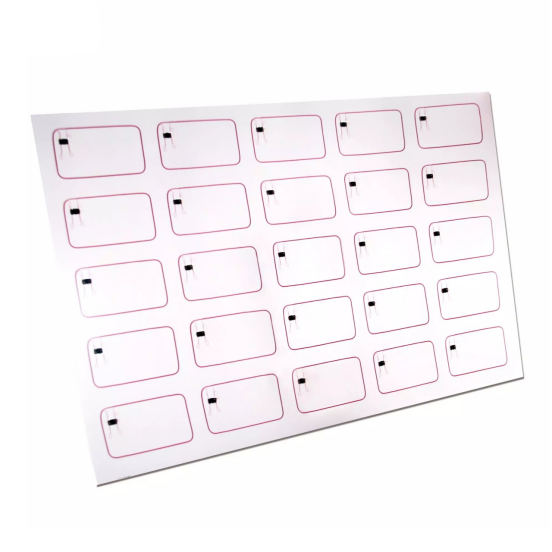
RFID Inlay sheet for card, also named rfid card prelim, contactless card inlay, it is the core part of RFID card.
We produce this plastic card inlay with three technologies:
1. Ultrasonic technology, features best working performance
2. Pre-winding technology, features low cost.
3. Flip-chip technology, features flat surface, and very thinner thickness
| Product | RFID Card Inlay Sheet PVC Sheet for ID Card/RFID Inlay/RFID Prelam Custom |
| Material | PVC, PC, PET, PETG |
| Color | White or Transparent |
| Standard | ISO11784/11785, ISO14443, ISO15693, ISO 18000, etc. |
| Dimension | 310*468mm, Max. size 520*420mm, A4 210*297mm, etc. |
| Layout | 2*5, 4*5, 5*5, 4*6, 4*7, 4*8, 4*10, 3*6, 3*7, 3*8, 6*7, 6*8, 6*14 or customized. |
| Thickness | HF: normal 0.45mm, 0.5mm, min.0.3mm LF: normal 0.6mm, Min. 0.5mm UHF: 0.6mm, 0.5mm |
| Antenna | LF: Pre-winding Copper Coli, AL Etching |
| HF: AL Etching, Pre-winding Copper Coil, Ultrasonic Embeding | |
| UHF: AL Etching | |
| Work Temperature | -25℃ ~ +55℃ |
| Store Temperature | -25℃ ~ +65℃ |
| Applications | Access Control & Security, Time Attendance, Logical Access, Public Transport, City Card, etc. |
| Chip Options | |
| ISO14443A | MIFARE Classic® 1K, MIFARE Classic ® 4K |
| MIFARE® Mini | |
| MIFARE Ultralight ®, MIFARE Ultralight ® EV1, MIFARE Ultralight® C | |
| Ntag213 / Ntag215 / Ntag216 | |
| MIFARE ® DESFire ® EV1 (2K/4K/8K) | |
| MIFARE ® DESFire® EV2 (2K/4K/8K) | |
| MIFARE Plus® (2K/4K) | |
| Topaz 512 | |
| ISO15693 | ICODE SLI-X, ICODE SLI-S |
| 125KHZ | TK4100, EM4200, T5577 |
| 860~960Mhz | Alien H3, Impinj M4/M5 |
Remark:
MIFARE and MIFARE Classic are trademarks of NXP B.V.
MIFARE DESFire are registered trademarks of NXP B.V. and are used under license.
MIFARE and MIFARE Plus are registered trademarks of NXP B.V. and are used under license.
MIFARE and MIFARE Ultralight are registered trademarks of NXP B.V. and are used under license.
As the demand for secure identification, cashless payment, access control, transportation ticketing, and smart city applications continues to grow, RFID technology has become the foundation of modern contactless systems. Among the most trusted RFID solutions available today, the MIFARE DESFire EV1 2K/4K/8K Contactless 13.56MHz Smart RFID Card Inlay Prelam Sheet stands out as one of the most secure and versatile platforms for smart card manufacturers and system integrators.
Designed by NXP Semiconductors, the MIFARE DESFire EV1 series delivers enterprise-grade security, high-speed communication, flexible memory structures, and multi-application support. When integrated into RFID card inlays and prelam sheets, these chips enable manufacturers to produce highly secure smart cards for transportation, banking, campus systems, corporate access control, government IDs, and hospitality applications.
This comprehensive guide explains what MIFARE DESFire EV1 RFID card inlays and prelam sheets are, how they work, the challenges they solve, practical application scenarios, comparisons with competing technologies, and why they remain a preferred choice for high-security contactless card projects worldwide.
What Is a MIFARE DESFire EV1 RFID Card Inlay Prelam Sheet?
A MIFARE DESFire EV1 RFID card inlay is a semi-finished RFID component consisting of:
- MIFARE DESFire EV1 chip
- Copper or aluminum antenna
- PET substrate
- Bonding materials
The inlay serves as the electronic core of a contactless smart card.
A prelam sheet is a laminated sheet containing multiple RFID inlays embedded between layers of PVC, PETG, ABS, or polycarbonate materials before final card punching and personalization.
Card manufacturers use prelam sheets to produce:
- Employee ID cards
- Hotel key cards
- Student cards
- Metro transit cards
- Government ID cards
- Membership cards
- Cashless payment cards
- Access control credentials
The DESFire EV1 chip operates at 13.56MHz and complies with international ISO standards, making it compatible with a wide range of RFID readers and smart card systems.
Understanding MIFARE DESFire EV1 Technology
MIFARE DESFire EV1 belongs to the High Frequency (HF) RFID family.
Operating frequency:
- 13.56 MHz
Standards supported:
- ISO/IEC 14443A
- NFC compatibility
- ISO/IEC 7816 commands
The chip was specifically developed for applications requiring:
- High security
- Fast transaction speed
- Multi-application support
- Long service life
Unlike simple RFID cards that only store an identification number, DESFire EV1 functions more like a secure microcomputer.
It can store multiple applications, files, and encrypted data structures within a single card.
What Do 2K, 4K, and 8K Mean?
The numbers refer to the available EEPROM memory capacity.
DESFire EV1 2K
Memory:
- 2 KB EEPROM
Suitable for:
- Access control
- Membership systems
- Employee identification
DESFire EV1 4K
Memory:
- 4 KB EEPROM
Suitable for:
- Campus cards
- Hotel systems
- Multi-function access cards
DESFire EV1 8K
Memory:
- 8 KB EEPROM
Suitable for:
- Transportation ticketing
- Smart city cards
- Multi-application payment systems
- Government projects
Larger memory enables more applications and data storage.
Structure of a DESFire EV1 Card Inlay
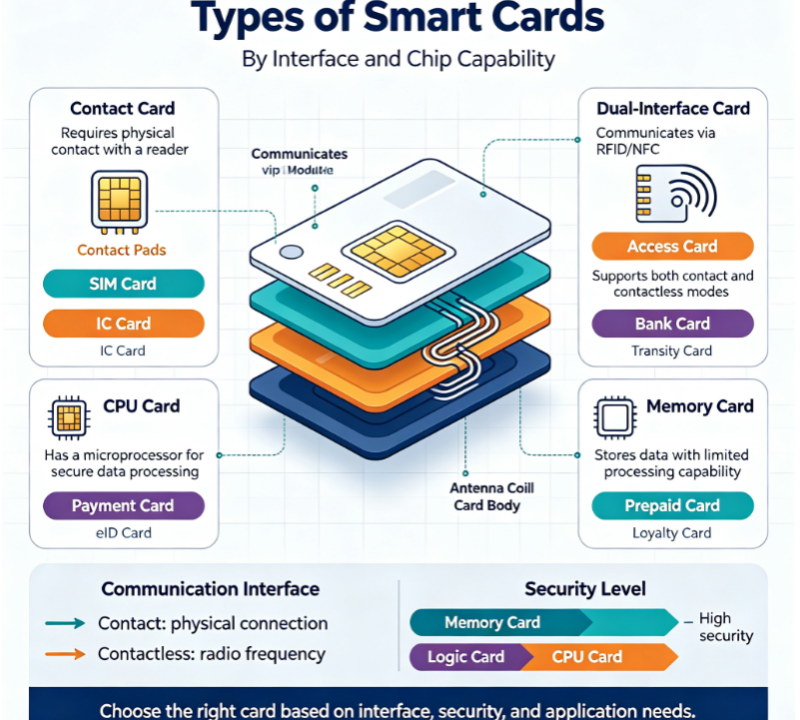
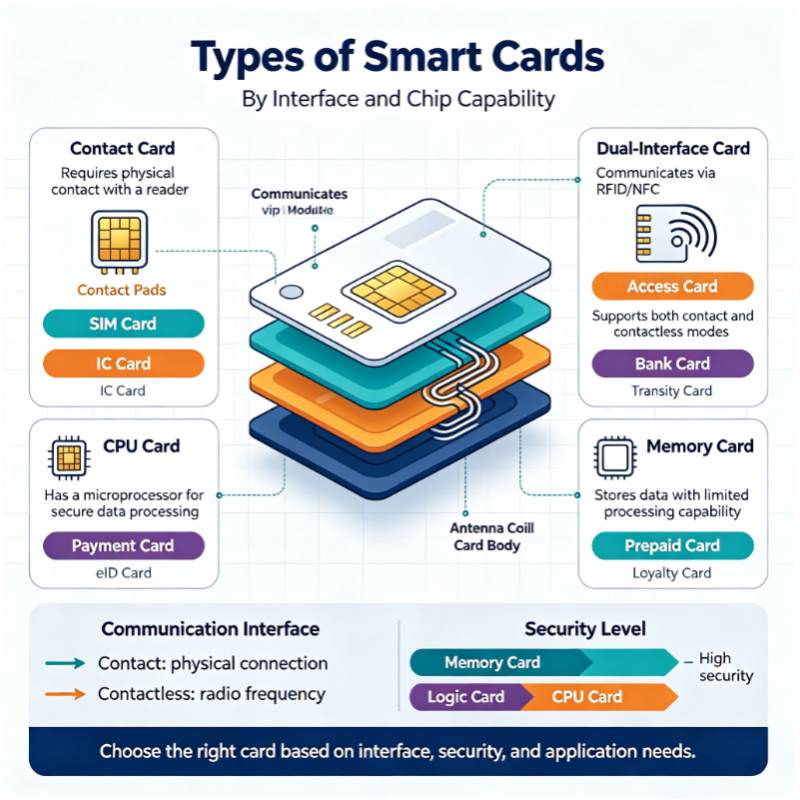
A typical RFID inlay contains:
RFID Chip
The DESFire EV1 integrated circuit stores encrypted data and executes security functions.
Antenna Coil
The antenna captures energy from the RFID reader and transmits data.
PET Carrier Layer
Provides structural support and flexibility.
Adhesive Layer
Secures the chip and antenna assembly.
Protective Coating
Protects electronic components during card production.
These elements form the foundation of a contactless smart card.
What Is a Prelam Sheet?
A prelam sheet is a partially manufactured card sheet containing embedded RFID inlays.
Before final card production, manufacturers laminate:
- PVC sheets
- RFID inlays
- Overlay films
into large sheets.
After lamination, the sheets are:
- Printed
- Personalized
- Die-cut into cards
Benefits include:
- Faster production
- Better consistency
- Higher yield rates
- Reduced manufacturing costs
Prelam sheets are widely used in large-volume smart card production.
How Does MIFARE DESFire EV1 Work?
The operating principle combines RFID communication and advanced cryptography.
Step 1: Reader Generates RF Field
The RFID reader emits a 13.56MHz electromagnetic field.
Step 2: Card Activation
When the card enters the field, the antenna harvests energy.
No battery is required.
Step 3: Chip Initialization
The DESFire EV1 chip powers up and establishes communication.
Step 4: Mutual Authentication
Reader and card verify each other’s authenticity using encryption keys.
Step 5: Secure Data Exchange
Encrypted data is transmitted between the card and the reader.
Step 6: Transaction Processing
The system performs actions such as:
- Opening a door
- Processing payment
- Recording attendance
- Validating transportation access
The entire process typically takes less than a second.
Security Features of DESFire EV1
One of the biggest reasons for DESFire EV1’s popularity is its advanced security architecture.
3DES Encryption
Supports Triple DES cryptography.
AES Encryption
Supports 128-bit AES encryption.
Mutual Authentication
Prevents unauthorized readers from accessing card data.
Secure Messaging
Protects data during transmission.
Unique Keys Per Application
Each application can have its own security keys.
Anti-Cloning Protection
Makes unauthorized duplication extremely difficult.
These capabilities significantly outperform standard RFID cards.
Problems Solved by DESFire EV1 RFID Inlays
Problem 1: Card Cloning
Basic RFID cards are vulnerable to copying.
DESFire EV1 uses strong encryption to reduce cloning risks.
Problem 2: Limited Data Storage
Older RFID cards often have minimal memory.
DESFire EV1 offers larger memory options.
Problem 3: Single-Purpose Cards
Traditional cards often support only one function.
DESFire EV1 supports multiple applications simultaneously.
Problem 4: Weak Security
Many low-cost RFID systems lack advanced protection.
DESFire EV1 provides enterprise-level security.
Problem 5: Slow Transaction Speeds
High-traffic systems require rapid authentication.
DESFire EV1 delivers fast transaction processing.
Real-World Application Scenarios
Public Transportation
DESFire EV1 is widely used in:
- Metro cards
- Bus ticketing
- Rail systems
- Smart transit networks
Fast authentication reduces passenger congestion.
Corporate Access Control
Companies use DESFire cards for:
- Building entry
- Department access
- Visitor management
- Employee identification
University Campus Cards
Students can use one card for:
- Library access
- Dormitory entry
- Cafeteria payments
- Attendance management
Government Identification
Government agencies deploy DESFire technology for:
- National IDs
- Employee credentials
- Secure authentication
Hospitality Industry
Hotels use DESFire cards for:
- Room access
- VIP membership
- Resort facilities
- Cashless services
Healthcare Systems
Hospitals utilize DESFire cards for:
- Staff access
- Patient identification
- Equipment tracking
Benefits for Smart Card Manufacturers
Higher Product Value
DESFire cards command premium pricing due to enhanced security.
Broad Market Demand
Used across numerous industries.
Strong Reader Compatibility
Works with many ISO14443A readers.
Flexible Manufacturing
Compatible with:
- PVC cards
- PETG cards
- ABS cards
- Polycarbonate cards
Long Product Lifespan
Designed for years of daily use.
MIFARE DESFire EV1 vs MIFARE Classic
MIFARE Classic
Advantages:
- Low cost
- Simple implementation
Disadvantages:
- Security vulnerabilities
- Limited protection against cloning
DESFire EV1
Advantages:
- AES encryption
- Strong authentication
- Multi-application support
For secure projects, DESFire EV1 is clearly superior.
| Feature | MIFARE Classic | DESFire EV1 |
|---|---|---|
| Security | Basic | Advanced |
| AES Encryption | No | Yes |
| Multi-Application | Limited | Excellent |
| Anti-Cloning | Weak | Strong |
| Enterprise Security | No | Yes |
DESFire EV1 vs DESFire EV2
DESFire EV2 is the next-generation platform.
EV1 Advantages
- Proven deployment history
- Lower cost
- Wide market adoption
EV2 Advantages
- Enhanced security
- Additional privacy features
- Improved transaction efficiency
Many projects still select EV1 due to its reliability and cost-effectiveness.
DESFire EV1 vs DESFire EV3
EV3 represents the newest generation.
EV3 Improvements
- Better mobile integration
- Enhanced cryptography
- Improved user experience
EV1 Advantages
- Lower implementation cost
- Mature ecosystem
- Stable performance
EV1 remains popular in many large-scale deployments.
DESFire EV1 vs T5577 RFID Cards
These technologies serve different markets.
T5577
- 125kHz
- Low-frequency RFID
- Basic access control
DESFire EV1
- 13.56MHz
- High-security applications
- Advanced encryption
Organizations requiring security typically choose DESFire EV1.
DESFire EV1 vs NFC Tags
NFC shares the same frequency but serves different purposes.
NFC Tags
- Consumer interaction
- Marketing campaigns
- Smartphone communication
DESFire EV1
- Secure transactions
- Access control
- Transportation systems
DESFire EV1 focuses on security-critical environments.
Manufacturing Process of RFID Prelam Sheets
Chip Attachment
The RFID chip is bonded to the antenna.
Inlay Testing
Electrical functionality is verified.
Sheet Assembly
Multiple inlays are positioned within a PVC or PET sheet.
Lamination
Heat and pressure create a durable structure.
Quality Inspection
Each sheet undergoes performance testing.
Personalization
Cards receive printing, encoding, and customization.
This process ensures consistent quality and reliability.
Future Trends of DESFire-Based Smart Cards
Several developments are driving market growth.
Smart Cities
Cities increasingly deploy integrated card systems.
Mobile Credential Integration
Physical cards work alongside smartphones.
Cashless Ecosystems
Cards support secure payment applications.
IoT Connectivity
RFID systems connect with cloud platforms.
Multi-Service Platforms
One card can support transportation, payments, access control, and identification simultaneously.
DESFire technology is well positioned to support these trends.
How to Choose the Right DESFire EV1 Inlay Supplier
Important evaluation criteria include:
- NXP original chip sourcing
- Inlay manufacturing quality
- Antenna performance
- Production consistency
- Lamination expertise
- Customization capabilities
- Quality control systems
- Global export experience
A reliable supplier ensures stable card performance and long-term project success.
Conclusion
MIFARE DESFire EV1 2K/4K/8K Contactless 13.56MHz Smart RFID Card Inlays and Prelam Sheets represent one of the most secure and versatile foundations for modern smart card manufacturing. Combining advanced encryption, fast contactless communication, flexible memory options, and multi-application capabilities, DESFire EV1 technology enables organizations to deploy highly secure access control, transportation ticketing, payment, identification, and smart city solutions.
Compared with traditional RFID technologies such as MIFARE Classic and T5577, DESFire EV1 delivers significantly stronger security, superior anti-cloning protection, larger memory capacity, and greater application flexibility. Whether used in corporate security systems, universities, government projects, transportation networks, hospitality environments, or healthcare facilities, DESFire EV1 remains a trusted platform for mission-critical contactless applications worldwide.
As digital transformation, smart cities, and secure identity management continue to expand globally, DESFire EV1 RFID card inlays and prelam sheets will remain an essential component in the next generation of intelligent card solutions.