
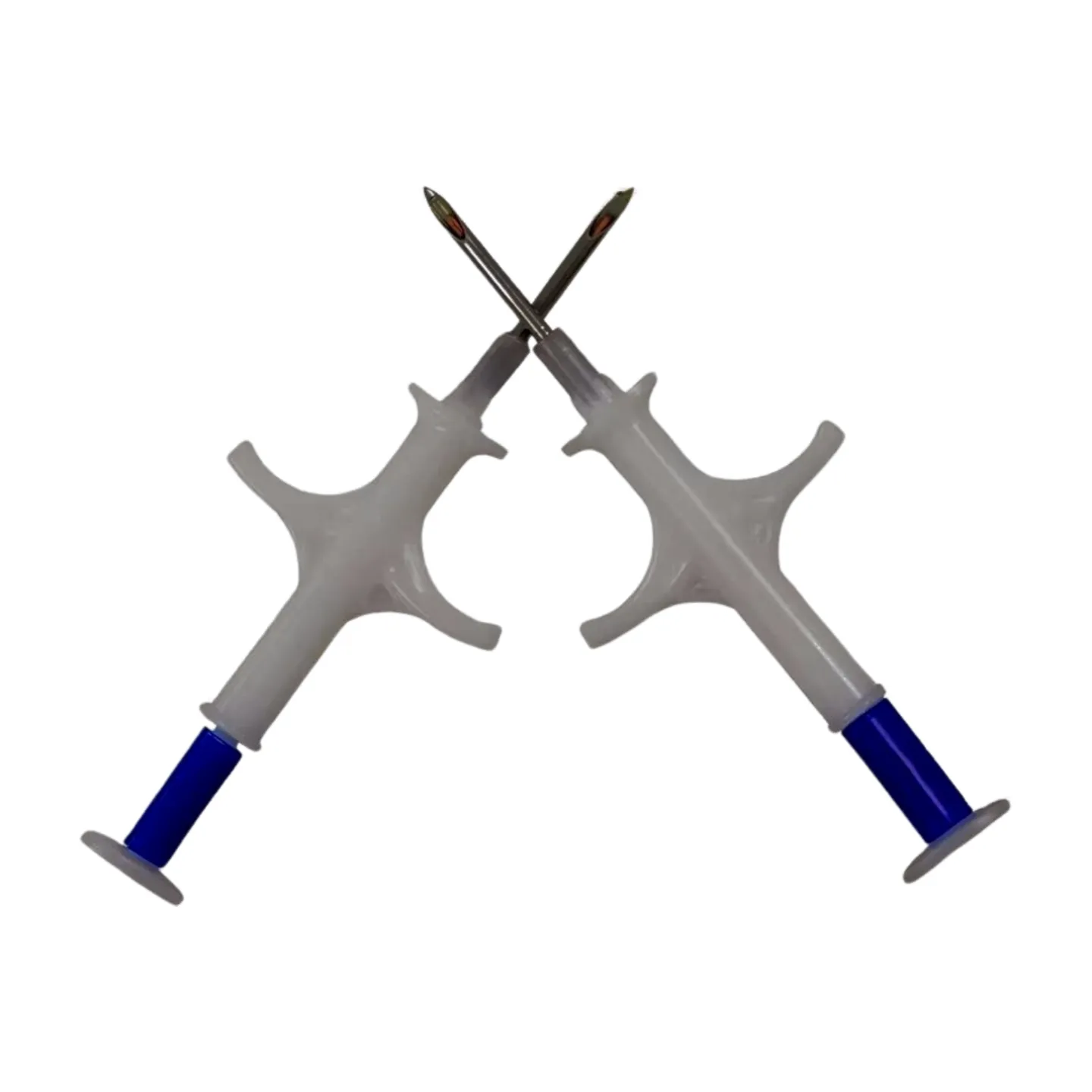
Professional RFID Temperature Sensor Microchip for Animal Monitoring
Product Overview
Transform animal management from simple identification to proactive health oversight. This specialized microchip integrates a precise temperature sensor with trusted RFID technology, delivering two critical data points—unique identity and core body temperature—instantly and non-invasively. Engineered for veterinary, livestock, and pet care professionals, it provides the actionable insights needed for early illness detection and enhanced welfare.
Beyond Identification: Proactive Animal Health Management
This product represents the evolution of animal RFID. It combines the permanent, unalterable identification mandated by global standards with the diagnostic capability of continuous temperature monitoring. This dual functionality empowers caretakers to move beyond record-keeping to active health surveillance, enabling earlier interventions and better outcomes.
Key Features and Benefits
Dual-Function Data Capture
A single scan with a compatible reader captures both the animal’s unique identification number and its current body temperature. This eliminates the need for separate identification and thermometry procedures, saving time and reducing stress for both animal and handler.
Global Standards Compliance
Fully compliant with ISO 11784 and ISO 11785 FDX-B standards. This ensures worldwide recognition of the identification code and guaranteed interoperability with a vast installed base of standard 134.2 kHz RFID readers used across veterinary and agricultural industries.
Biocompatible and Minimally Invasive
Encapsulated in a smooth, medical-grade bioglass shell designed for long-term tissue compatibility. Its ultra-compact form factor (1.4mm diameter, 8.5mm length) allows for quick and easy implantation via a pre-loaded sterile syringe, minimizing discomfort.
Passive and Maintenance-Free
As a passive RFID device, it contains no battery. It is powered entirely by the electromagnetic field generated by the compatible reader. This results in a functional lifespan exceeding 20 years with zero maintenance, providing a lifetime of service.
Reliable FDX-B Technology
Utilizes Full Duplex-B (FDX-B) communication, allowing the chip to transmit data continuously while receiving power from the reader. This provides stable, simultaneous transmission of the identification code and the dynamic temperature sensor reading.
How the RFID Temperature Microchip Works
The Integrated Sensor System
At its core is a custom integrated circuit that merges a standard RFID chip (based on EM4305 technology) with a microscopic digital temperature sensor. This single silicon die is responsible for managing power, communication, identification, and precise temperature measurement.
The Scanning Process
The operational sequence is straightforward. A compatible 134.2 kHz FDX-B reader is brought within range of the implanted animal. The reader’s RF field powers the microchip. The activated chip instantly measures the local temperature and transmits its pre-programmed unique identification number along with the temperature data packet back to the reader, which decodes and displays the information.
Technical Foundation: ISO 11784/11785 FDX-B
The product’s reliability is built on international standards. ISO 11784 defines the structure of the identification code, including country and animal ID. ISO 11785 defines the air interface protocol at 134.2 kHz. FDX-B is the specific communication method within this standard that supports the continuous, two-way data stream required for transmitting both static ID and dynamic sensor information.
Primary Applications and Use Cases
Veterinary Medicine
Streamline clinic workflow by automating patient identification during check-in and instantly capturing a baseline temperature as part of any examination. Monitor post-surgical or hospitalized animals for signs of infection or recovery progress without repeated handling.
Livestock Management
Enable herd-scale health monitoring for early detection of febrile conditions like bovine respiratory disease. Track individual temperature trends in breeding stock, valuable animals, or those undergoing treatment, linking this data directly to their permanent electronic ID for precise record-keeping.
Pet Breeding and Boarding
Maintain accurate health logs for entire litters and individual show or breeding animals. Kennels and boarding facilities can provide an added layer of care by routinely monitoring boarders for early signs of stress or illness, offering superior service to clients.
Animal Shelters and Research
Manage the health of transient or permanent animal populations efficiently. For research settings, it provides a reliable method for collecting core temperature data with minimal intervention, reducing stress-related variables in study results.
Detailed Technical Specifications
- Product Type: Temperature RFID Microchip / RFID Temperature Sensor Implant
- Chip Technology: Custom Integrated Circuit with Sensor
- Operating Frequency: 134.2 kHz (Low Frequency – LF)
- Communication Standard: ISO 11784 / ISO 11785 FDX-B
- Housing Material: Biocompatible Bioglass
- Dimensions: 1.4 mm (Diameter) × 8.5 mm (Length)
- Power Source: Passive (Inductively Coupled from Reader)
- Data Transmitted: Unique Identification Number (UID) and Real-time Temperature
- Expected Lifespan: 20+ Years
Benefits for Your Business or Practice
- Enhance Animal Welfare: Facilitate proactive healthcare by effortlessly monitoring a primary vital sign, allowing for earlier diagnosis and treatment.
- Improve Operational Efficiency: Combine two essential procedures into one swift, non-invasive scan, saving valuable staff time and minimizing animal stress during handling.
- Ensure Data Integrity and Traceability: Create an unbreakable link between an animal’s permanent digital identity and its health metrics, essential for medical records, breeding programs, and regulatory compliance.
- Future-Proof Investment: Adherence to global ISO standards guarantees that the identification function will remain readable for the animal’s lifetime, protecting your data investment.
Frequently Asked Questions (FAQ)
What is an RFID Temperature Sensor Microchip?
It is a passive, implantable RFID device that transmits both a unique identification number (UID) and real-time body temperature data when scanned by a compatible 134.2 kHz reader. It is a dual-purpose tool for identification and health monitoring.
How does the temperature sensing work?
The microchip contains an integrated circuit with a built-in digital temperature sensor. When activated by the reader’s RF field, the sensor measures the immediate local temperature (which equilibrates to body temperature) and transmits this digital value alongside its pre-programmed UID.
Is it compatible with my existing ISO reader?
Yes, for identification. Any reader compliant with ISO 11785 FDX-B at 134.2 kHz will be able to read the chip’s unique identification number. To successfully decode and display the temperature data, you must confirm that your specific reader model and its software support the extended data format used by sensor-enabled tags.
What animals is it suitable for?
It is designed for a wide range of companion animals, including dogs and cats, and livestock such as cattle, pigs, and sheep. The small size makes it suitable for many species. Always consult species-specific veterinary guidelines or regulations regarding implantation site and practice.
How accurate and reliable is the temperature reading?
The integrated sensor provides high precision for core body temperature monitoring. The reading reflects the temperature at the implantation site, which correlates directly with core temperature. For diagnostic purposes, always establish a baseline for the individual animal and consider the reading as a highly reliable trend indicator.