
Product Overview
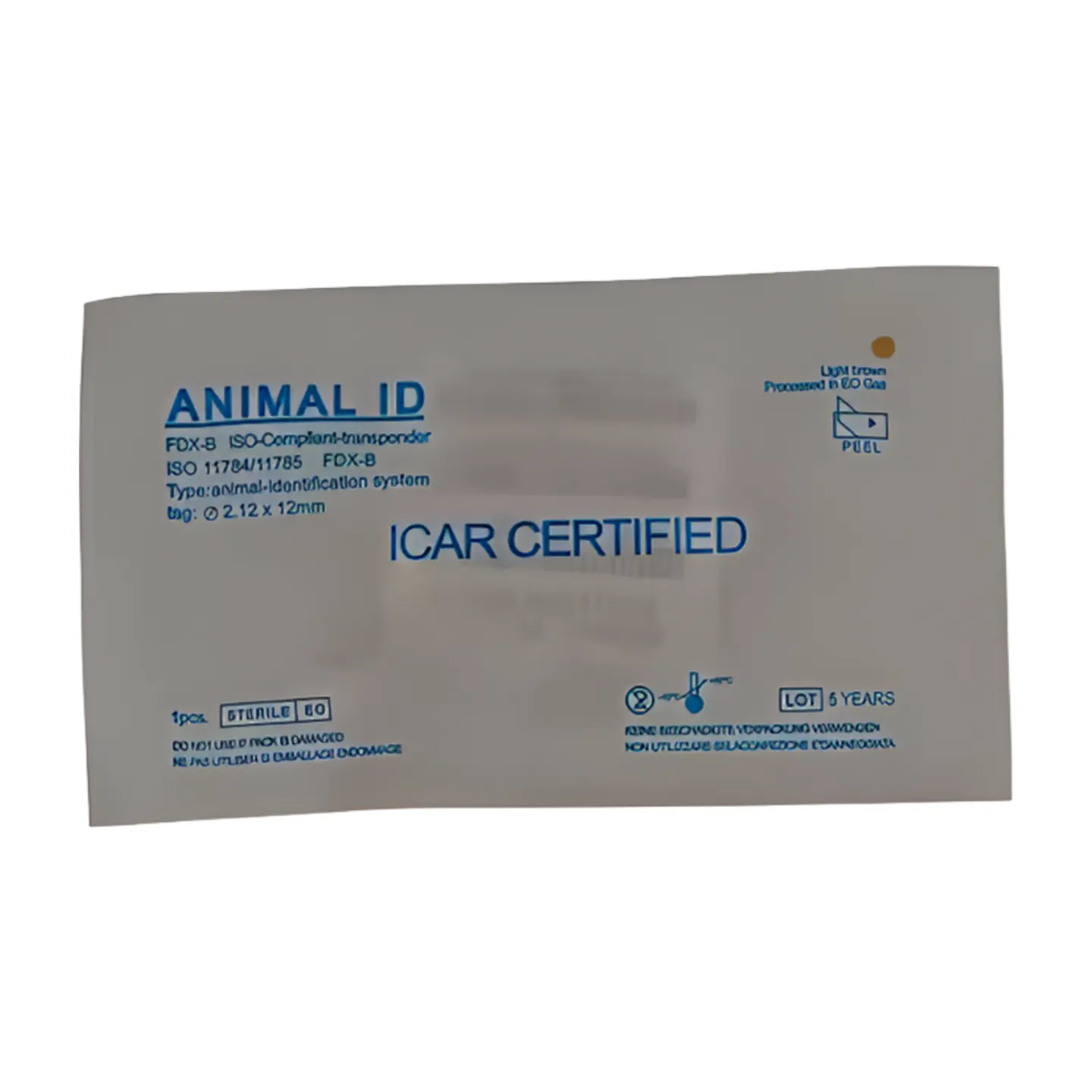
The RFID Implantable Temperature Sensor is a specialized microdevice that combines passive RFID identification with precise temperature measurement in a single, injectable unit. It is engineered for continuous, wireless monitoring of an animal’s core body temperature, eliminating the need for stressful and invasive manual checks. This technology enables proactive health management for livestock farmers, veterinarians, and researchers by providing immediate access to vital physiological data.
Key Features and Benefits
- Lifelong, Maintenance-Free Operation: As a passive RFID device, it has no battery to replace, ensuring a functional lifespan that matches the animal’s life.
- Minimized Animal Stress: Enables temperature data collection without physical restraint or handling, promoting better animal welfare.
- Early Disease Detection: Continuous monitoring allows for the immediate identification of fever, a primary indicator of infection or illness.
- Integrated Identification: Each sensor carries a unique, unalterable ID number, automatically linking all temperature data to the correct individual animal.
- Streamlined Data Collection: Temperature readings are captured in seconds with a simple pass of a compatible RFID reader.
How It Works
The Implantation Process
The sensor is implanted subcutaneously using a pre-loaded sterile applicator, a quick and minimally invasive procedure identical to standard RFID microchipping.
Data Collection and Communication
When a compatible RFID reader is brought within range, its radio frequency (RF) field provides the energy to power the implanted sensor. The sensor instantly responds by transmitting its unique identification number and the current precise temperature reading back to the reader.
Data Integration
The captured data can be viewed directly on the reader’s display, stored in its internal memory, or seamlessly uploaded to herd management software for trend analysis, historical logging, and automated health alerts.
Primary Applications and Use Cases
Smart Farming and Livestock Management
- Early Disease Detection: Monitor herds for fever spikes indicating conditions like mastitis, bovine respiratory disease, or swine fever, enabling rapid isolation and treatment.
- Estrus and Fertility Management: Detect subtle temperature changes associated with the ovulation cycle in dairy and breeding cattle to optimize artificial insemination timing.
- Overall Herd Health Surveillance: Proactively manage animal welfare, prevent disease outbreaks, and reduce antibiotic use through targeted treatment.
Veterinary Medicine and Animal Research
- Post-Operative and Critical Care Monitoring: Track patient recovery and core temperature continuously without disturbance.
- Research Data Collection: Obtain consistent, high-integrity physiological data in laboratory studies with minimal stress to the research subjects.
- Companion Animal Care: Monitor pets, sport horses, or zoo animals for early signs of infection, systemic illness, or adverse reactions to treatment.
Technical Specifications
- Operating Frequency: Available in Low Frequency (LF, e.g., 134.2 kHz) or Ultra-High Frequency (UHF, 840-960 MHz) options.
- Temperature Range: Designed to cover the biological range of relevant animal species.
- Temperature Accuracy: High precision suitable for detecting clinically significant changes.
- Read Range: Varies by frequency; from near-contact for LF to several meters for UHF with appropriate readers.
- Dimensions: Small, cylindrical form factor designed for injection (typical size: approx. 2mm diameter x 12mm length).
- Biocompatibility: Encapsulated in bio-inert glass or polymer compliant with international standards (ISO 11784/11785).
- Data Protocol: Transmits unique ID and current temperature value; some models provide logged minimum/maximum data.
Benefits for Stakeholders
For Farmers: Enables proactive herd health management, improves operational efficiency by saving labor on manual checks, and enhances productivity through better animal health and optimized breeding programs.
For Veterinarians: Provides a powerful tool for early diagnosis, remote patient monitoring, and delivering data-driven care, ultimately improving treatment outcomes.
For Researchers: Facilitates the collection of accurate, continuous physiological data with minimal experimental interference, increasing the validity of study results.
Getting Started and Implementation
Implementing a temperature monitoring system requires the implantable sensors, a compatible RFID reader (handheld or fixed), and optional herd or practice management software for advanced data analysis. The system integrates directly with existing RFID-based animal identification infrastructure. Comprehensive support is available for implantation best practices, reader configuration, and data management setup to ensure a smooth deployment.