
Product Overview
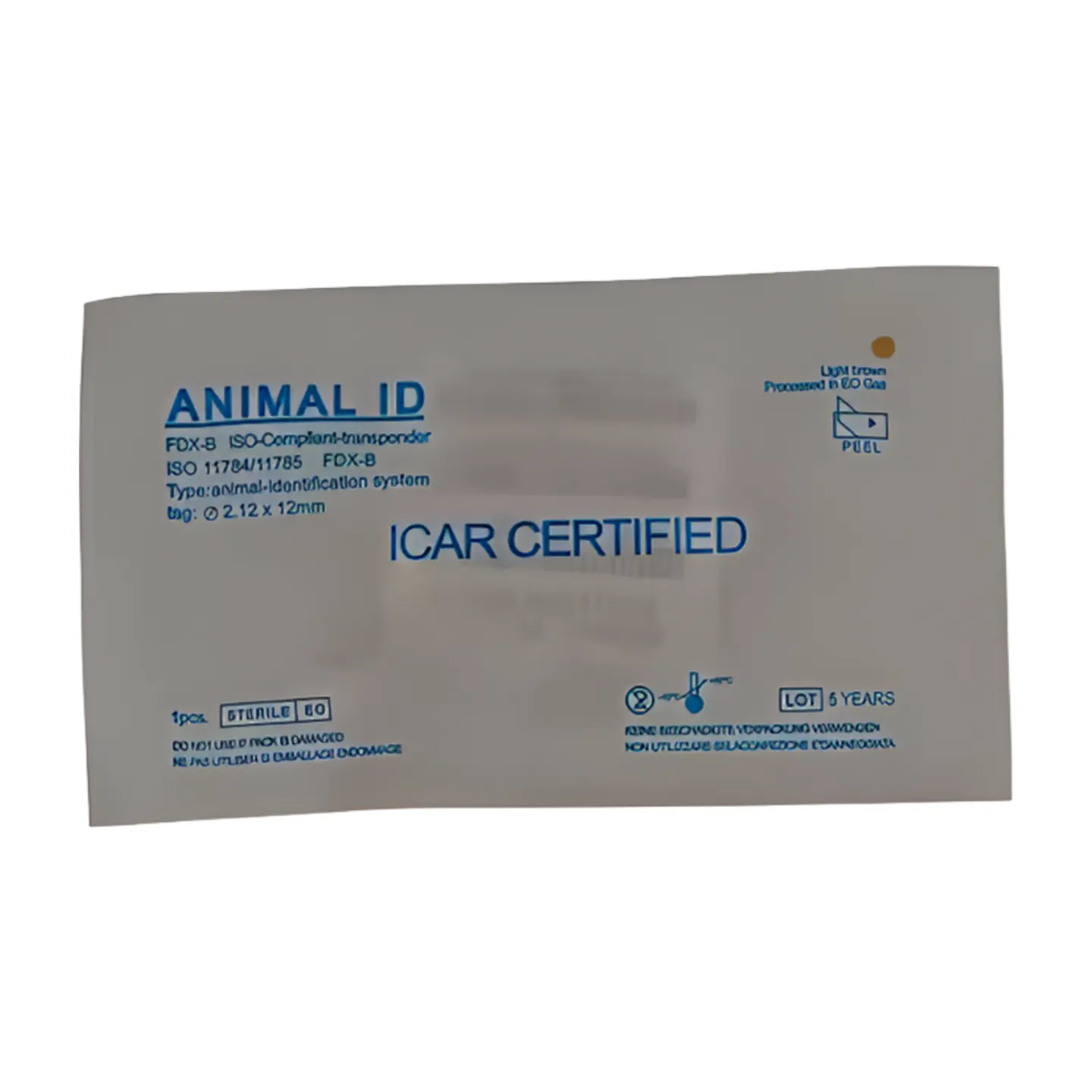
The RFID Implantable Temperature Sensor Microchip is a specialized, dual-function device engineered for modern animal management. It solves the critical challenge of requiring separate systems for permanent identification and health monitoring by integrating a unique ID with accurate core body temperature sensing into one miniaturized, implantable unit. Designed for veterinarians, livestock farmers, research facilities, and pet owners, its uniqueness lies in combining passive RFID technology with a micro-sensor within a biocompatible, ISO 11784/11785 FDX-B compliant format. This provides the core technical capability for seamless identification and physiological monitoring.
Key Features & Benefits
This microchip delivers significant advantages through its integrated design and robust construction.
- Dual-Function Design: Provides both permanent animal identification and accurate body temperature monitoring from a single device, streamlining data collection.
- Passive & ISO-Compliant: Utilizes battery-free, passive RFID technology for a lifelong operational lifespan and full compliance with global animal identification standards (ISO 11784/11785 FDX-B).
- Biocompatible Construction: Manufactured from Bioglass, a safe and inert material engineered specifically for long-term implantation in animal tissue.
- Miniaturized Form Factor: Features an ultra-compact size (1.4×8.5mm) for easy, minimally invasive implantation with associated quick healing times.
- Reliable Data Transmission: Operates at 134.2 kHz using the robust FDX-B protocol for consistent and simultaneous reading of identification and temperature data.
How the RFID Temperature Microchip Works
The functionality is based on passive RFID principles enhanced with integrated sensor technology.
The Passive RFID Core
The microchip remains inert until it enters the electromagnetic field generated by a compatible ISO 11785 reader. This field provides the necessary power to activate the chip’s circuitry.
Integrated Sensor Function
Alongside the standard RFID chip (such as an EM4305 or custom ASIC), a microscopic temperature sensor is integrated. When powered by the reader’s field, this sensor measures the immediate ambient temperature of the surrounding tissue.
Data Transmission
The chip digitally transmits its pre-programmed, unique identification number (UID) and the real-time temperature reading back to the scanner using the FDX-B (Full Duplex) communication protocol as defined by ISO 11785.
Primary Applications & Use Cases
This technology provides practical solutions across various animal-related sectors.
- Livestock Health & Management: Enables early fever detection in cattle, swine, or poultry, allowing for prompt intervention to prevent disease spread and supporting health monitoring in breeding programs.
- Companion Animal Veterinary Care: Offers veterinarians a stress-free method to obtain a pet’s core temperature during examinations, directly linked to its permanent identification.
- Research & Laboratory Animal Monitoring: Facilitates continuous, non-invasive temperature logging for studies in physiology, pharmacology, or disease modeling.
- Pet Safety & Recovery: Allows pet owners or shelters to conveniently monitor an animal’s health post-surgery or during illness by scanning for significant temperature changes.
Technical Specifications
| Specification | Detail |
|---|---|
| Product Name | RFID Temperature Sensor Microchip |
| Frequency | 134.2 kHz |
| Communication Protocol | ISO 11785 FDX-B |
| Data Standards | ISO 11784/11785 Compliant |
| Chip Type | Custom Sensor Chip / EM4305-based |
| Key Function | Unique Identification (UID) + Temperature Reading |
| Material | Bioglass (Biocompatible) |
| Size | 1.4 mm diameter × 8.5 mm length |
| Read Range | Varies by reader; typical for implantable FDX-B standards |
| Sensor Type | Integrated Passive Temperature Sensor |
Benefits for Veterinarians and Animal Managers
This device addresses key operational and welfare challenges in animal care.
- Efficiency: Streamlines clinical and management procedures by reading identification and temperature data in a single scan, saving valuable time.
- Animal Welfare: Enables temperature assessment without the stress and restraint associated with traditional methods like rectal thermometers.
- Early Intervention: Facilitates the prompt detection of infections or illness through proactive temperature monitoring, leading to improved treatment outcomes.
- Data Integrity: Permanently links vital health data (temperature) to an unchangeable animal ID, ensuring accurate and reliable medical or management records.
- Regulatory Compliance: ISO standard compliance ensures the device is suitable for official animal identification programs and supports documentation for international travel.
FAQ: RFID Implantable Temperature Sensors
What is an RFID implantable temperature sensor?
It is a passive, biocompatible microchip implanted subcutaneously in an animal. When scanned by a compatible reader, it transmits both a unique identification code and the animal’s real-time body temperature.
How is the temperature measured?
The microchip contains an integrated micro-sensor. When activated by the energy from a compatible reader, it measures the local tissue temperature and transmits this value digitally alongside the identification code.
Is it safe for my animal?
Yes. The device is manufactured from Bioglass, a medically safe implant material, and is fully encapsulated for biocompatibility. Its small size minimizes tissue reaction, and the passive, battery-free design ensures safety for the animal’s lifetime.
What reader do I need?
You require an ISO 11785 FDX-B compatible reader that is capable of decoding the specific temperature data block transmitted by the chip. Many modern veterinary and livestock management readers support this functionality.