
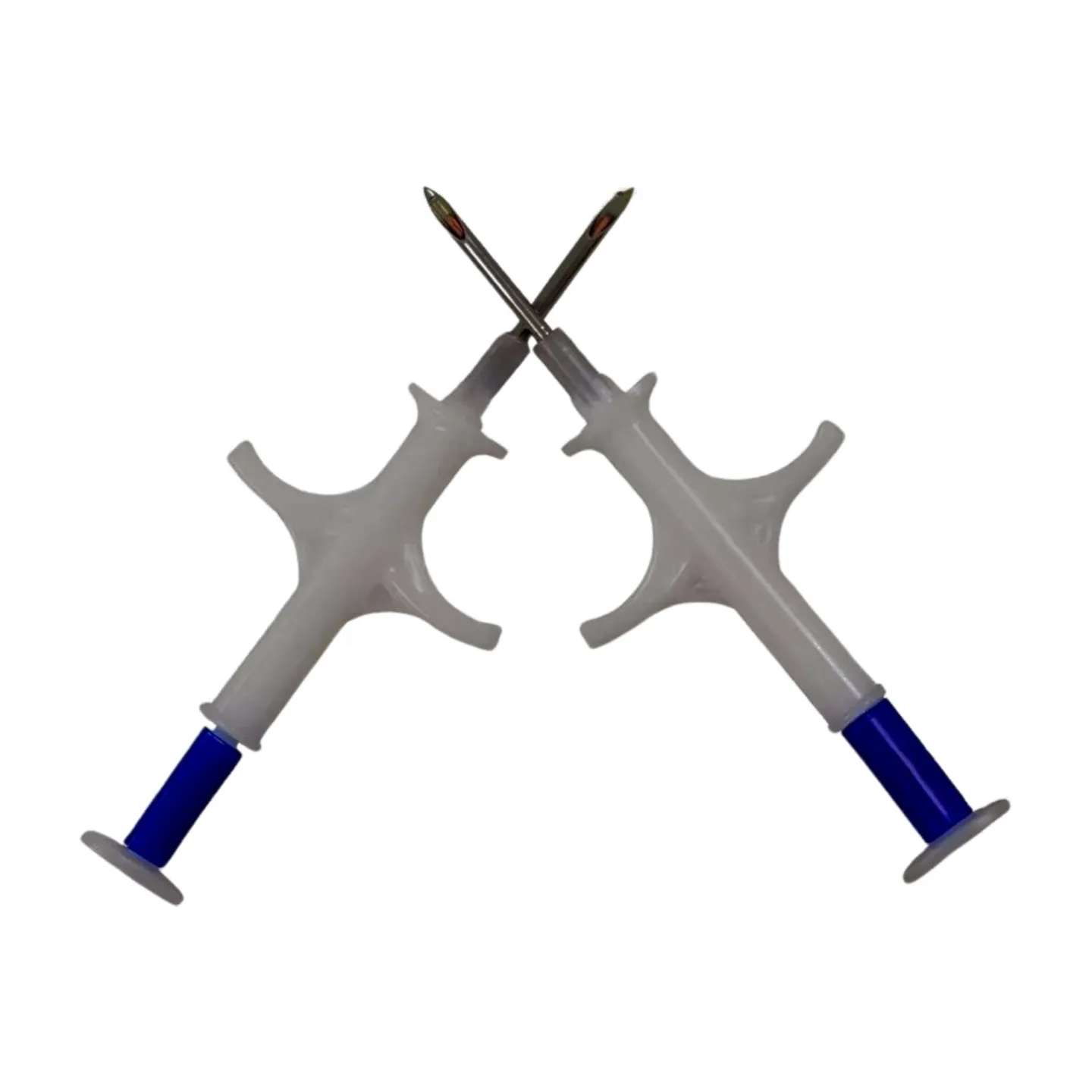
RFID Temperature Sensor Microchip: Implantable ID & Health Monitor
This advanced microchip represents a significant leap in animal care technology, combining the established reliability of RFID identification with integrated health monitoring. It is engineered for professionals seeking a permanent, non-invasive solution for tracking both identity and vital signs in pets, livestock, and research animals.
Product Overview
The RFID Temperature Sensor Microchip is a dual-function implantable device that addresses two critical needs in animal management: secure, permanent identification and accessible health data. By integrating a sensitive temperature sensor with a passive RFID transponder, this product enables immediate detection of fever or hypothermia—key indicators of illness or stress—simply by scanning the animal. This capability is invaluable for veterinarians conducting exams, farmers monitoring herd health, and researchers collecting physiological data.
Key Features & Benefits
Dual-Function Design
This microchip transmits two essential data points simultaneously: a unique, unalterable identification number (UID) and the current body temperature at the implant site. This eliminates the need for separate identification and temperature-taking procedures, streamlining animal handling and data collection.
Animal-Safe & Proven Technology
The sensor is hermetically sealed within a capsule of biocompatible bioglass, ensuring it is non-toxic and safe for lifelong implantation. As a passive RFID device, it requires no internal battery; it is powered entirely by the signal from a compatible reader. Its ultra-miniature dimensions (1.4mm x 8.5mm) allow for quick implantation with minimal discomfort.
Global Compliance & Reliability
Manufactured to the global ISO 11784/11785 FDX-B standard, this microchip guarantees interoperability with a vast array of existing animal RFID readers worldwide. Its robust design ensures reliable data transmission in demanding environments like farms and veterinary clinics.
How the RFID Temperature Microchip Works
The Implantation Process
A certified veterinarian or trained professional implants the microchip using a sterile, pre-loaded syringe applicator. The procedure is quick, similar to a standard vaccination, and typically requires no anesthesia.
Reading Data & Temperature
When an ISO-compliant FDX-B reader is brought near the animal, it emits a low-frequency radio wave that powers the microchip. The chip instantly responds by transmitting its unique ID number and the precise temperature reading from its integrated sensor to the reader’s display.
Data Integration
The scanned data can be manually recorded or, with compatible software, automatically logged into animal health records, practice management systems, or herd management platforms for trend analysis and historical tracking.
Primary Applications & Use Cases
Veterinary & Pet Care
In clinical settings, the chip provides a permanent ID for pet recovery while allowing veterinarians to check temperature effortlessly during routine visits. It is particularly useful for post-operative monitoring to detect signs of infection without causing additional stress to the recovering animal.
Livestock Management & Farming
For herd health, the implant enables early detection of illness by identifying individuals with elevated temperatures, allowing for prompt isolation and treatment. It also supports breeding programs by helping monitor health status and physiological cycles.
Research & Wildlife Conservation
Researchers benefit from the ability to collect accurate temperature data remotely and non-invasively, minimizing the need for repeated physical capture and handling of study subjects, which is crucial for both animal welfare and data integrity.
Technical Specifications
| Specification | Detail |
|---|---|
| Product Name | RFID Temperature Sensor Microchip |
| Chip Type | Custom Sensor Chip |
| Frequency | 134.2 kHz |
| Communication Protocol | ISO 11784 / 11785 FDX-B |
| Data Transmitted | Unique Identification Number (UID) + Temperature |
| Encapsulation Material | Bioglass |
| Dimensions | 1.4 mm (Diameter) × 8.5 mm (Length) |
| Technology | Passive RFID (No Battery) |
Why Choose Our Temperature Monitoring Implant?
This product delivers operational efficiency by consolidating two vital tasks into one simple scan. It significantly improves animal welfare by reducing the stress and restraint associated with conventional temperature measurement. By facilitating early illness detection, it empowers proactive health management, which can lead to better treatment outcomes and lower long-term care costs. Its adherence to international ISO standards represents a future-proof investment, ensuring compatibility with reader technology for years to come.
Frequently Asked Questions (FAQ)
What is an RFID temperature sensor implant?
An RFID temperature sensor tag is a passive RFID device that can transmit both identification data and temperature information when scanned by a compatible reader. This specific model is an implantable microchip designed for animal use.
How is the temperature measured?
The microchip contains an integrated sensor that measures the ambient temperature at the implant site. This temperature closely correlates with the animal’s core body temperature, providing an accurate health indicator.
Is it safe for my animal?
Yes. The chip is encased in biocompatible bioglass, a material specifically chosen for its safety and compatibility with animal tissue for long-term implantation. The implantation procedure is routine, quick, and minimally invasive.
What reader do I need?
You will need an animal RFID reader that supports the ISO 11785 FDX-B protocol. Most standard veterinary and livestock RFID readers are equipped to read this format and will display both the ID number and the temperature data.