April 28, 2026
In modern logistics and asset management, visibility is everything. Knowing what an item is, where it has been, and whether it has been tampered with is no longer a luxury—it is a baseline requirement. Traditional seals, labels, and barcodes struggle to keep up with the speed and scale of today’s supply chains. This is where the UHF RFID Cable Reusable Tie Seal Tag enters the picture.
Designed to combine physical sealing with wireless identification, the UHF RFID cable reusable tie seal tag offers a smart, durable, and reusable solution for tracking, securing, and managing assets across industries. From logistics and customs to utilities, manufacturing, and asset control, this tag quietly solves problems that used to require paperwork, manual checks, and a great deal of trust.
This article provides a comprehensive introduction to the UHF RFID Cable Reusable Tie Seal Tag—covering its technology, specifications, working principles, applications, advantages, and real-world deployment scenarios.
What Is a UHF RFID Cable Reusable Tie Seal Tag?
A UHF RFID Cable Reusable Tie Seal Tag is a smart RFID tag that combines:
- A UHF RFID chip and antenna
- A reusable cable tie–style locking mechanism
- A durable industrial housing
Unlike disposable RFID labels or one-time plastic seals, this tag is designed to be readable, writable, reusable, and physically secure.
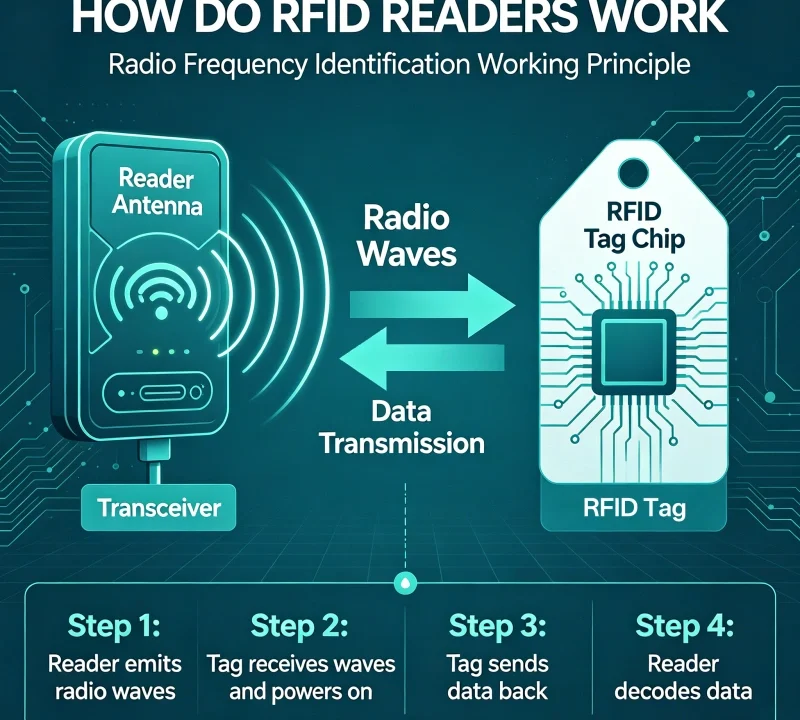
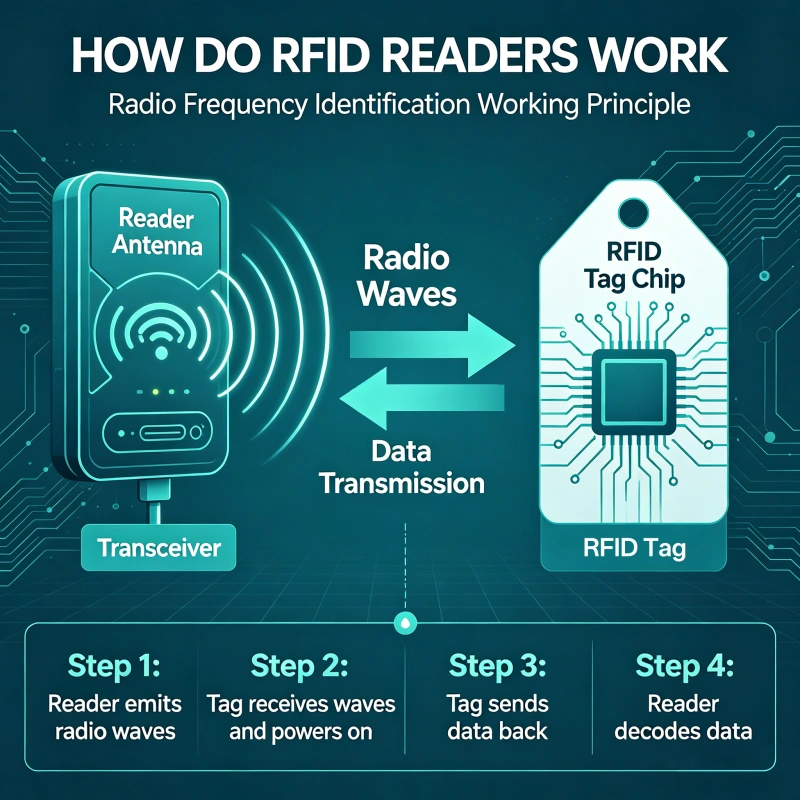
It works by fastening the tag around an object—such as a container door, cable bundle, valve handle, or asset frame—while simultaneously storing a unique digital identity in the RFID chip. This identity can be read or updated wirelessly using a UHF RFID reader, without direct contact or line of sight.
In simple terms, it is a seal that talks back.


| Working frequency | 860-960MHz |
| Protocol | EPC G2 ISO18000-6C |
| Size | 282x79x28mm |
| Chip | 9662 H3(EPC 96 Bits,User 512 Bits) |
| Material | ABS+nylon |
| Working Temp. | -25℃-65℃ |
| Storage Temp. | -35℃-70℃ |
| Working mode | Can read and write |
| Data storage time | >10 years |
| Rewritable times | 100,000 times |
| Reading range | 0-8m(related to environment and reader) |
Why UHF RFID Technology?
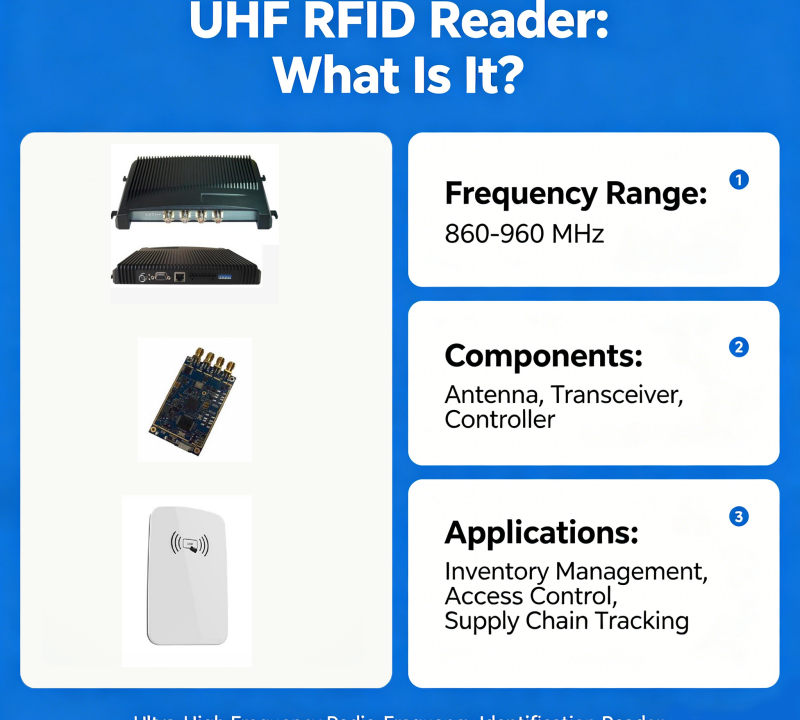
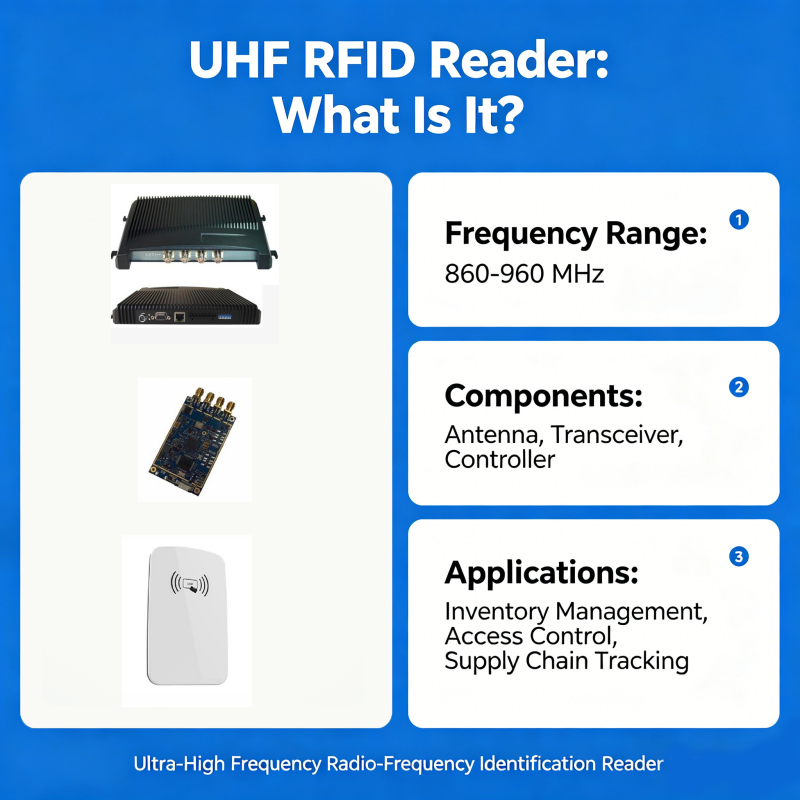
Understanding UHF RFID (860–960 MHz)
UHF RFID operates in the Ultra High Frequency band, typically between 860 MHz and 960 MHz, depending on regional regulations. This frequency range offers several critical advantages:
- Long reading distance (up to several meters)
- Fast data transmission
- Ability to read multiple tags simultaneously
- Strong compatibility with global RFID systems
The UHF RFID Cable Reusable Tie Seal Tag operates across the 860–960 MHz range, making it suitable for use in North America, Europe, and most international markets.
Supported RFID Protocol: EPC G2 / ISO18000-6C
This tag fully supports:
- EPC Class 1 Gen 2 (EPC G2)
- ISO18000-6C
These are the most widely adopted UHF RFID standards in the world. Compatibility with EPC G2 ensures seamless integration with existing RFID readers, middleware, and enterprise systems.
Key Technical Specifications Overview
Before diving deeper, here is a clear snapshot of the core specifications:
- Working Frequency: 860–960 MHz
- Protocol: EPC G2 / ISO18000-6C
- Chip: 9662 H3
- EPC Memory: 96 bits
- User Memory: 512 bits
- Size: 282 × 79 × 28 mm
- Material: ABS + Nylon
- Working Temperature: –25℃ to +65℃
- Storage Temperature: –35℃ to +70℃
- Working Mode: Read and write
- Data Storage Time: >10 years
- Rewritable Cycles: 100,000 times
- Reading Range: 0–8 meters (environment and reader dependent)
These numbers are not just technical trivia—they define where and how the tag can be reliably used.
Chip Technology: 9662 H3 Explained
At the heart of the UHF RFID cable reusable tie seal tag is the 9662 H3 RFID chip, a proven and widely used UHF RFID integrated circuit.
EPC Memory (96 Bits)
The 96-bit EPC memory provides a globally unique identifier for each tag. This is typically used for:
- Asset ID
- Container number
- Equipment serial number
- Tracking code
Once assigned, the EPC becomes the digital “nameplate” of the asset.
User Memory (512 Bits)
The 512-bit user memory allows additional data to be stored directly on the tag, such as:
- Inspection records
- Ownership information
- Maintenance status
- Location codes
- Security flags
This makes the tag more than an ID—it becomes a portable data carrier.
Read/Write Capability
The tag supports both reading and writing, enabling dynamic data updates throughout its lifecycle. Information can be modified without removing the tag or physically accessing it.
Physical Design and Materials
Size and Structure
With dimensions of 282 × 79 × 28 mm, the tag is large enough to house a stable antenna while remaining practical for field use. The elongated cable tie design allows it to wrap securely around a wide variety of objects.
ABS + Nylon Construction
The housing is made from ABS combined with nylon, offering:
- High mechanical strength
- Resistance to impact and vibration
- Good chemical resistance
- Stability across temperature extremes
This material combination ensures durability in both indoor and outdoor environments.
Reusable Cable Tie Mechanism
Unlike disposable seals, this tag is designed for repeated use. The reusable locking mechanism allows:
- Secure fastening
- Easy removal when authorized
- Reduced long-term cost
It strikes a balance between security and sustainability.
Environmental Performance
Working Temperature Range
- –25℃ to +65℃
This range allows the tag to operate reliably in:
- Cold storage facilities
- Outdoor logistics yards
- Industrial plants
- Seasonal climate variations
Storage Temperature Range
- –35℃ to +70℃
The tag remains stable during transport and long-term storage, even in harsh conditions.
Long-Term Data Stability
With a data storage life exceeding 10 years, the tag is suitable for long-term asset tracking and infrastructure projects where data persistence matters.
Reusability and Durability
High Rewrite Endurance
The tag supports up to 100,000 rewrite cycles, making it ideal for applications where data changes frequently, such as:
- Reusable containers
- Rental equipment
- Returnable transport items (RTIs)
- Maintenance-managed assets
Sustainable Cost Advantage
Reusability significantly lowers the cost per use, especially in closed-loop systems. Over time, the tag pays for itself by replacing hundreds or thousands of disposable labels or seals.
Reading Range and Performance
Reading Distance: 0–8 Meters
The tag offers a reading range of up to 8 meters, depending on:
- RFID reader output power
- Antenna configuration
- Installation environment
- Presence of metal or liquid
This range makes it suitable for both handheld reading and fixed reader installations.
Stable Multi-Tag Reading
When used with EPC G2–compliant readers, the tag supports anti-collision, allowing multiple tags to be read simultaneously. This is critical in bulk scanning scenarios.
Typical Applications of UHF RFID Cable Reusable Tie Seal Tags
Logistics and Transportation
In logistics operations, these tags are widely used for:
- Container sealing and tracking
- Pallet identification
- Roll cage management
- Cargo status monitoring
The combination of physical sealing and digital identity enhances both security and visibility.
Customs and Border Control
Reusable RFID tie seal tags are ideal for:
- Customs inspection seals
- Cross-border cargo monitoring
- Temporary transit security
Authorities can verify seal status and identity without opening containers.
Asset Management
For fixed and movable assets, the tag enables:
- Asset identification
- Inventory audits
- Lifecycle tracking
- Unauthorized movement detection
The reusable design is especially valuable for high-value assets.
Utilities and Energy Industry
In power, water, and telecom sectors, the tags are commonly used on:
- Cable bundles
- Valves and meters
- Equipment cabinets
RFID identification reduces manual inspection time and improves data accuracy.
Manufacturing and Industrial Equipment
Manufacturers use these tags for:
- Tool tracking
- Work-in-progress management
- Equipment maintenance records
The durable construction withstands harsh factory environments.
Rental and Leasing Equipment
For rental businesses, the tag helps track:
- Usage history
- Return status
- Maintenance schedules
The rewritable memory allows updates throughout each rental cycle.
Advantages Over Traditional Seals and Labels
Compared with conventional solutions, the UHF RFID cable reusable tie seal tag offers clear benefits:
- No line-of-sight required
- Faster identification
- Higher data capacity
- Reusability
- Improved security
- Reduced manual labor
It turns passive objects into digitally visible assets.
Integration with RFID Systems
Reader Compatibility
The tag works seamlessly with:
- Fixed UHF RFID readers
- Integrated RFID readers
- Handheld RFID terminals
As long as the reader supports EPC G2 / ISO18000-6C, integration is straightforward.
Software and Backend Systems
The tag can be integrated into:
- Warehouse management systems (WMS)
- Asset management platforms
- ERP systems
- Customs and logistics software
Data from the tag can be captured, analyzed, and acted upon in real time.
Installation and Usage Best Practices
To achieve optimal performance:
- Avoid placing the tag directly against large metal surfaces without spacing
- Ensure consistent orientation in fixed installations
- Test reading distance in the actual environment
- Match reader power to application needs
Small adjustments can significantly improve reliability.
Security and Data Protection
While RFID is wireless, security is not an afterthought:
- Unique EPC codes reduce duplication risk
- User memory can store encrypted or encoded data
- Physical tie mechanism provides tamper evidence
Together, digital and physical security reinforce each other.
Conclusion: A Smart Seal for a Smarter Supply Chain
The UHF RFID Cable Reusable Tie Seal Tag represents a practical evolution in identification and security technology. By combining UHF RFID performance, reusable physical sealing, and industrial durability, it delivers a solution that fits the realities of modern logistics and asset management.
With long reading range, high rewrite endurance, stable operation across temperatures, and compatibility with global RFID standards, this tag is not just a component—it is an enabler of smarter, faster, and more transparent operations.
In environments where assets move, data changes, and efficiency matters, this small device quietly does a very big job.