How Do Magnetic Stripe and Barcode Loyalty Cards Work?
Unlike RFID or NFC smart cards, magnetic stripe and barcode cards rely on physical reading technologies that are inexpensive and highly compatible with existing retail systems.
Magnetic Stripe Operation
A magnetic stripe stores digital information by magnetizing tiny particles embedded in the stripe.
When the card is swiped through a reader:
- The magnetic reader detects changes in magnetic polarity.
- The encoded data is converted into digital information.
- The POS or CRM system retrieves the customer’s account.
- Membership benefits, stored value, or loyalty points are processed.
The actual customer data is typically stored in a secure database rather than on the card itself.
Barcode Operation
Barcodes work differently.
Each barcode represents a unique identification number.
When scanned:
- The barcode scanner captures the code.
- The POS system searches the customer database.
- Member information appears instantly.
- Points, discounts, or balances are updated automatically.
Because only an ID number is stored in the barcode, database management remains centralized and secure.
Benefits of Custom Loyalty Card Printing
Custom printing transforms a simple plastic card into a valuable marketing and customer retention tool.
Strengthen Brand Identity
A professionally designed card reinforces your brand every time customers use it.
Printing options include:
- Full-color logos
- Brand colors
- Custom graphics
- Promotional messages
- Premium finishes
Well-designed cards create a more professional image and improve customer recognition.
Increase Customer Retention
Loyalty cards encourage customers to return by offering:
- Reward points
- Cashback
- Exclusive discounts
- Birthday promotions
- VIP pricing
- Special events
Research consistently shows that loyal customers spend more frequently than first-time buyers.
Improve Customer Data Management
Every transaction can be linked to an individual customer account.
Businesses can analyze:
- Purchase history
- Shopping frequency
- Preferred products
- Seasonal trends
- Customer lifetime value
These insights support more effective marketing strategies.
Affordable Marketing Tool
Compared with many advertising channels, plastic loyalty cards offer a low cost per customer and remain in circulation for years.
Custom Card Manufacturing Process
Professional card manufacturers follow a standardized production workflow.
Step 1: Design Consultation
Customers determine:
- Card dimensions
- Printing layout
- Logo placement
- Barcode type
- Magnetic stripe requirements
- Variable data
Artwork is reviewed before production begins.
Step 2: PVC Sheet Printing
Large PVC sheets are printed using:
- Heidelberg offset printing
- UV digital printing
- Screen printing
These methods provide sharp images and accurate color reproduction.
Step 3: Lamination
Multiple PVC layers are laminated under heat and pressure to create durable cards resistant to bending, moisture, and daily wear.
Step 4: Card Punching
Cards are cut into standard CR80 dimensions with smooth, rounded corners.
Custom shapes are also available for promotional campaigns.
Step 5: Magnetic Stripe Application
Magnetic stripes are bonded to the card surface and encoded according to customer specifications.
Available stripe types include:
- LoCo (Low Coercivity)
- HiCo (High Coercivity)
HiCo stripes offer better resistance to accidental erasure and are recommended for long-term use.
Step 6: Barcode and Variable Data Printing
Manufacturers can personalize every card with:
- Sequential numbers
- Customer names
- Barcodes
- QR codes
- Membership IDs
- Expiration dates
This process allows every card to be unique.
Step 7: Quality Inspection
Finished cards are tested for:
- Print quality
- Barcode readability
- Magnetic stripe functionality
- Dimension accuracy
- Surface quality
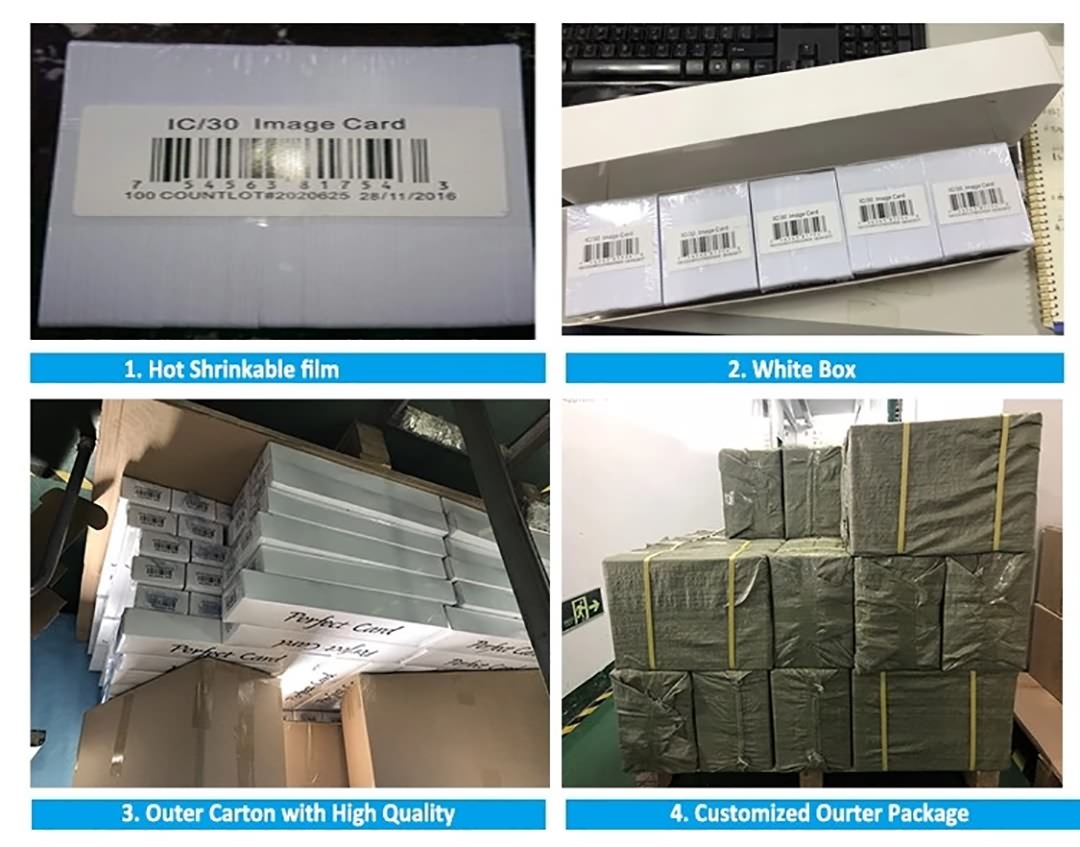
- Packaging integrity
Many professional manufacturers perform 100% barcode and magnetic stripe testing before shipment.
Popular Customization Options
Modern loyalty cards can be highly personalized.
Common options include:
- Matte finish
- Gloss finish
- Frosted finish
- Metallic foil stamping
- Spot UV coating
- Signature panel
- Scratch-off panel
- Embossed numbers
- Hot stamping
- Variable QR codes
- Transparent cards
- Colored PVC materials
These features help businesses create unique and memorable cards.
Common Application Environments
Plastic loyalty cards are used across numerous industries.
Retail Stores
Retailers use membership cards for:
- Customer rewards
- VIP discounts
- Purchase history
- Promotional campaigns
Supermarkets
Applications include:
- Point accumulation
- Coupon redemption
- Gift balances
- Digital promotions
Restaurants and Cafés
Restaurants reward repeat customers through:
- Membership discounts
- Birthday gifts
- Meal rewards
- Prepaid balances
Beauty Salons
Salons use membership cards for:
- Service packages
- Appointment history
- Customer retention
- VIP memberships
Fitness Centers
Gyms issue cards for:
- Member identification
- Check-in
- Membership renewal
- Access management
Hotels
Hotels integrate loyalty cards with:
- Guest rewards
- Promotional offers
- Membership levels
- Discount programs
Pharmacies
Pharmacy membership programs support:
- Customer rewards
- Purchase records
- Personalized promotions
- Prescription reminders
Problems Solved by Loyalty Cards
Traditional customer management often presents several challenges.
Low Customer Retention
Membership cards encourage repeat visits by rewarding loyal customers.
Limited Customer Data
Businesses gain valuable purchasing insights through card-based transactions.
Slow Checkout
Barcode scanning and magnetic stripe reading allow quick customer identification during checkout.
Weak Brand Recognition
Custom cards reinforce branding each time they are presented or used.
Inefficient Promotions
Membership systems enable businesses to target promotions based on purchasing behavior rather than broad advertising.
Magnetic Stripe & Barcode Cards vs Competing Technologies
Magnetic Stripe vs Barcode
Magnetic stripes store encoded digital information directly on the card.
Barcodes simply reference an identification number stored in a database.
Barcodes are less expensive to produce, while magnetic stripes support broader POS compatibility in many legacy systems.
Magnetic Stripe vs RFID Cards
RFID cards offer contactless operation and faster transactions but require specialized readers.
Magnetic stripe cards remain more economical for businesses with existing swipe-based POS infrastructure.
Magnetic Stripe vs NFC Cards
NFC cards enable smartphone interaction and contactless communication.
However, many small retailers continue to prefer magnetic stripe and barcode cards because of lower deployment costs and compatibility with existing hardware.
PVC Cards vs Paper Membership Cards
PVC cards are waterproof, durable, reusable, and far more professional than paper alternatives.
Their longer lifespan often results in lower total ownership costs.
Practical Experience from Membership Card Projects
After working with retailers, distributors, and promotional product companies, I’ve found that card quality significantly influences customer perception.
One common mistake is choosing the lowest-cost PVC material. Thin or low-grade PVC may crack, discolor, or delaminate after only a few months of regular use. Investing in high-quality laminated PVC typically results in a much longer service life.
Another overlooked detail is magnetic stripe selection. If cards will be used frequently, HiCo magnetic stripes are generally the better option because they resist accidental demagnetization from everyday exposure to magnets and electronic devices.
Always test barcode readability before approving mass production. Poor print contrast or low-resolution graphics can slow checkout and frustrate customers.
Finally, don’t underestimate the importance of card design. A clean layout with consistent branding, premium finishes, and durable printing often increases the perceived value of your loyalty program and encourages customers to keep the card in their wallet.
How to Choose a Reliable Plastic Card Manufacturer
When selecting a manufacturing partner, consider the following:
- High-quality PVC materials
- Advanced offset and UV printing equipment
- HiCo and LoCo magnetic stripe encoding capabilities
- Accurate barcode and QR code printing
- Variable data personalization
- Strict quality control procedures
- Fast sample production
- OEM and ODM services
- International export experience
- Responsive technical and after-sales support
A manufacturer with comprehensive production capabilities can provide design assistance, personalization, encoding, packaging, and logistics support under one roof.
Frequently Asked Questions
1. What is the standard size of a PVC loyalty card?
The standard CR80 size is 85.60 × 53.98 mm, the same size as a credit card.
2. What is the difference between HiCo and LoCo magnetic stripes?
HiCo (High Coercivity) stripes are more resistant to accidental erasure and are recommended for long-term membership or gift cards. LoCo (Low Coercivity) stripes are less expensive and suitable for short-term applications.
3. Can every card contain different customer information?
Yes. Manufacturers can personalize each card with unique names, membership numbers, barcodes, QR codes, and magnetic stripe data.
4. Can I print both a barcode and a magnetic stripe on the same card?
Absolutely. Many loyalty cards combine both technologies to maximize compatibility with different POS systems.
5. Are PVC loyalty cards waterproof?
Yes. Laminated PVC cards are water-resistant and designed for everyday handling.
6. Can loyalty cards include gift card functions?
Yes. Many businesses integrate stored-value balances, prepaid services, and gift card functionality into the same card.
7. What industries use loyalty cards?
Retail, supermarkets, restaurants, cafés, beauty salons, gyms, hotels, pharmacies, shopping malls, entertainment venues, and many other businesses use loyalty card programs.
8. Can special finishes be added?
Yes. Popular options include matte lamination, gloss coating, metallic foil, spot UV, transparent PVC, signature panels, scratch-off panels, and embossed numbers.
9. What is the typical lifespan of a PVC loyalty card?
With quality materials and proper handling, PVC loyalty cards typically last 3–5 years, while cards used less frequently may remain in good condition even longer.
10. How do I choose a reliable card manufacturer?
Look for a supplier with experience in OEM and ODM production, advanced printing equipment, precise magnetic stripe encoding, reliable barcode verification, strict quality control, flexible customization services, and a proven history of exporting plastic cards to international markets.
Conclusion
Custom Plastic PVC Magnetic Stripe Barcode Gift Member Loyalty Cards remain one of the most practical and cost-effective tools for building customer loyalty, improving brand recognition, and streamlining membership management. Their compatibility with existing POS systems, affordable production costs, durable PVC construction, and extensive customization options make them an ideal solution for retailers, restaurants, hotels, fitness centers, pharmacies, and service businesses.
While the design of the card is important, long-term success also depends on high-quality materials, reliable magnetic stripe encoding, accurate barcode printing, and professional manufacturing standards. By partnering with an experienced OEM plastic card manufacturer that offers complete customization, variable data personalization, and rigorous quality control, businesses can create loyalty cards that not only enhance the customer experience but also deliver measurable value through stronger engagement and repeat business.