October 21, 2026
Our Blank NFC PVC NTAG213 Card is a programmable contactless card built with an NXP NTAG213 NFC chip and a durable PVC card body. Designed for NFC applications that require a standard card format, reliable contactless communication, and flexible data encoding, it can be used for access control, identification, smart business cards, product information, membership programs, attendance systems, and other NFC-enabled applications.
The card operates at 13.56 MHz and complies with NFC Forum Type 2 Tag and ISO/IEC 14443 Type A specifications. The NTAG213 chip provides 144 bytes of user memory, making it a practical choice for applications such as URLs, digital contact information, short text, identification data, and other compact NDEF records.
Cards can be supplied blank for customer encoding or encoded according to your requirements. PVC, ABS, PET, different thicknesses, custom sizes, and printed designs are available for suitable projects and volume orders.
What Is an NTAG213 NFC Card?
An NTAG213 NFC card combines an NFC antenna with an NXP NTAG213 integrated circuit inside a physical card. Unlike a conventional magnetic stripe card or contact smart card, it communicates wirelessly when placed within the RF field of a compatible NFC reader.
The card does not require a battery. The NFC reader generates the RF field, which supplies the energy required for the NTAG213 chip to communicate and exchange data.
NTAG213 is compliant with NFC Forum Type 2 Tag and ISO/IEC 14443 Type A. This makes it suitable for a wide range of NFC readers and NFC-enabled mobile devices. NXP lists applications including smart advertising, product authentication, Bluetooth or Wi-Fi pairing, electronic shelf labels, mobile companion tags, vouchers, coupons, and business cards.
Specification
NTAG213 Card is designed to fully comply to NFC Forum Type 2 Tag and ISO/IEC14443 Type A specifications. Based on the NTAG213 chip from NXP, Ntag213 offers advanced security, anti-cloning features as well as a permanent lock features, therefore user data can be permanently configured read-only.
| Material | PVC/ABS/PET(high temperature resistance ) etc |
| Frequency | 13.56Mhz |
| Size | 85.5*54mm or customized size |
| Thickness | 0.76mm,0.8mm,0.9mm etc |
| Chip Memory | 144 Byte |
| Encode | Available |
| Printing | Offset ,silkscreen Printing |
| Read range | 1-10cm (depend on the reader and reading environment) |
| Operation temperature | PVC:-10°C -~+50°C;PET: -10°C~+100°C |
| Application | Access Control, Payment, hotel key card, resident key card, attendance system ect |
NTAG213 NFC Card is one of original NTAG® card. Seamlessly working with NFC readers as well ascompatible with all NFC enabled devices and conform to ISO 14443. The 213 chip has a read-write lockfunction that makes the cards can be edited repeatedly or read-only.
Due to the excellent safety performance and better RF performance of Ntag213 chip, Ntag213 print card is widely used in financial management, communications telecommunications, social security, transportation tourism, health care, government administration, retail, storage and transportation, member management, access control attendance, identification, highways, hotels, entertainment, school management, etc.
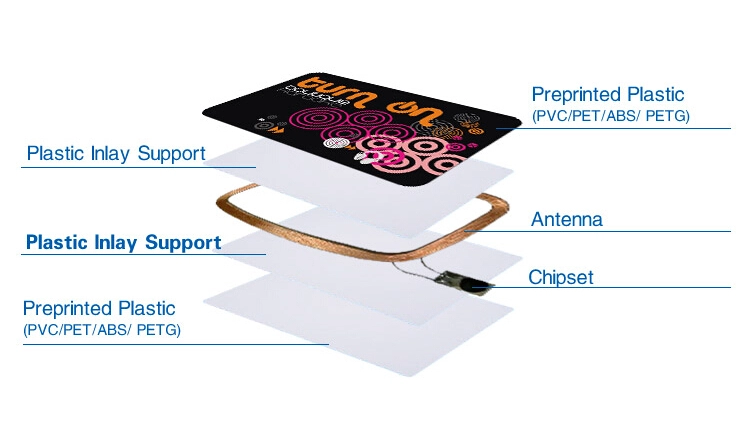


144 Bytes of User Memory for Everyday NFC Applications
The NTAG213 provides 144 bytes of freely available user memory. This capacity is well suited to compact NFC data rather than large files or multimedia content.
For example, an NTAG213 card can be encoded with a website URL, contact information, a short text message, a digital profile, or a small NDEF record. When a user taps the card with a compatible NFC-enabled smartphone, the stored information can trigger an appropriate action depending on the device and application.
| Example Data | NTAG213 Suitability |
|---|---|
| Website URL | Excellent |
| Digital business card | Excellent |
| Short text | Excellent |
| Contact information | Excellent |
| Social media profile link | Excellent |
| Product information URL | Excellent |
| Wi-Fi/Bluetooth pairing information | Suitable |
| Large documents | Not recommended |
| Photos or videos stored directly | Not recommended |
| Large application data | Consider NTAG215 or NTAG216 |
The 144-byte specification refers to the NTAG213’s user memory. Some of the chip’s total EEPROM is reserved for system functions, configuration, and security-related information, so the total chip memory should not be confused with the available user memory.
NTAG213 vs. NTAG215 vs. NTAG216
Choosing the right NFC chip depends primarily on how much user data the application needs. NTAG213, NTAG215, and NTAG216 belong to the same NTAG21x family and share the same basic NFC technology, but their user memory capacities are different.
| Feature | NTAG213 | NTAG215 | NTAG216 |
|---|---|---|---|
| User Memory | 144 bytes | 504 bytes | 888 bytes |
| Frequency | 13.56 MHz | 13.56 MHz | 13.56 MHz |
| NFC Forum Type 2 | Yes | Yes | Yes |
| ISO/IEC 14443 Type A | Yes | Yes | Yes |
| Typical Use | URLs, IDs, business cards | More complex NDEF data | Larger NFC data requirements |
| Best For | Compact NFC applications | Medium data requirements | Maximum memory in NTAG21x |
| Write Endurance | 100,000 cycles | 100,000 cycles | 100,000 cycles |
| Data Retention | 10 years | 10 years | 10 years |
NXP specifies 144, 504, and 888 bytes of user memory for NTAG213, NTAG215, and NTAG216 respectively. All three devices support a 13.56 MHz RF interface, 100,000 write cycles, and 10-year data retention under the conditions stated in the manufacturer’s datasheet.
For a simple URL or digital business card, NTAG213 is usually sufficient. If your application requires a larger NDEF record or more user data, NTAG215 or NTAG216 may be a better choice.
Reliable NFC Communication at 13.56 MHz
The NTAG213 operates at 13.56 MHz and uses contactless communication. It can exchange data at a rate of 106 kbit/s according to the NXP datasheet.
The practical read distance of an NFC card is not determined by the chip alone. Antenna size, reader power, card material, reader design, orientation, nearby metal, and the smartphone or NFC device can all affect performance.
For this reason, we describe the card’s typical practical read range as approximately 1–10 cm rather than guaranteeing a fixed distance for every installation. NXP specifies an operating distance of up to 100 mm under appropriate RF conditions.
Read-Write and Lockable NFC Memory
NTAG213 supports both writable and read-only configurations. During the development or encoding stage, data can be written to the card and updated when the application requires it.
Once the information is finalized, the relevant memory can be configured with the chip’s lock mechanism to prevent further changes. This is useful for applications where information should remain fixed after production.
The NTAG213 also includes password protection for memory operations. These features can help control access to the chip’s memory, but they should not be considered equivalent to the cryptographic security used in high-security payment or access-control credentials.
PVC, ABS and PET Card Materials
Different projects may require different card materials or temperature characteristics. Our NFC cards can be produced using PVC, ABS, PET, and other suitable materials depending on the application.
PVC is a practical option for standard cards used indoors and in general commercial environments. PET can be considered when higher temperature resistance is required. The current product specification lists an approximate operating temperature range of -10°C to +50°C for PVC and -10°C to +100°C for PET.
Material selection should be based on the complete application environment rather than temperature alone. If the card will be exposed to heat, chemicals, outdoor conditions, water, or mechanical stress, we recommend confirming the required material and construction before mass production.
Standard Card Size and Custom Dimensions
The standard card size is approximately 85.5 × 54 mm, similar to the dimensions commonly used for standard identification and business cards.
Custom dimensions are also possible for projects that require a different form factor. The antenna design must be considered together with the card dimensions because the antenna has a direct influence on NFC communication performance.
| Card Option | Available |
|---|---|
| Standard 85.5 × 54 mm | Yes |
| Custom dimensions | Available on request |
| 0.76 mm thickness | Available |
| 0.8 mm thickness | Available |
| 0.9 mm thickness | Available |
| Other thicknesses | Subject to production requirements |
| PVC | Available |
| ABS | Available |
| PET | Available |
Custom dimensions, materials, thicknesses, and antenna configurations should be confirmed according to the required quantity and application.
Custom NFC Card Printing
Blank NFC cards can be supplied without printed information for customers who prefer to encode and personalize the cards themselves.
For branded applications, we can also provide printed NFC PVC cards. Offset printing and silk screen printing are available for suitable designs.
Typical printed elements include:
- Company logos
- Brand colors
- Card numbers
- QR codes
- Website addresses
- Membership information
- Employee identification
- Product branding
- Event information
Printing does not replace NFC encoding. The visual information printed on the card and the digital information stored in the NTAG213 chip can be designed independently or used together.
For example, a card can display a company logo and QR code while the NFC chip contains the company’s website or digital profile. This gives users both a visual and contactless way to access the same information.
NFC Card Encoding and Personalization
NTAG213 cards can be supplied as blank cards or encoded according to project requirements.
Common NFC records include URL links, text, contact information, and other NDEF-compatible data. For large projects, encoding can be combined with card numbering, printing, packaging, and other personalization requirements.
A typical NFC card production workflow may include:
- Confirm the NTAG213 chip and card specifications.
- Confirm the card artwork and physical dimensions.
- Prepare the NFC data or NDEF records.
- Encode sample cards.
- Test the encoded cards with the target NFC readers or mobile devices.
- Approve the sample.
- Complete mass production and personalization.
- Perform quality control and package the finished cards.
Testing the complete card with the actual target reader is recommended before mass production.
Popular Applications for NTAG213 NFC Cards
NTAG213 is particularly useful when the application requires a small amount of contactless data rather than large memory capacity.
NFC Business Cards
An NFC business card can store a website or digital profile URL. Users can tap the card with a compatible smartphone to open the corresponding online information.
Because the information can be hosted online, the card does not need to store a complete digital profile. Instead, the NTAG213 stores a compact URL that points to the latest information.
Access Control and Identification
NTAG213 cards can be integrated into suitable NFC identification or access-control systems. The exact functionality depends on the reader, software, backend system, and security architecture.
For applications requiring high-security credentials, the appropriate secure chip should be selected based on the system’s security requirements rather than choosing NTAG213 solely because it is an NFC chip.
Hotel and Membership Applications
NFC cards can be used as part of hotel, membership, visitor, or resident systems when the underlying platform supports NTAG213 technology.
For these applications, the card can carry an identifier or URL that connects the user to a backend service. The complete system determines how authentication, authorization, and user data are handled.
Product Information and Smart Packaging
An NTAG213 NFC card or NFC-enabled product label can provide a quick connection between a physical product and online information.
Potential content includes product instructions, warranty registration, product pages, authenticity information, promotional content, or customer support.
Because the card stores a compact link instead of a large document, companies can update the online destination without replacing the physical NFC card.
Why Choose an NTAG213 NFC Card?
NTAG213 is a practical option for projects that need a balance between cost, compatibility, and functionality.
The main advantages include:
- 144 bytes of user memory
- 13.56 MHz contactless communication
- NFC Forum Type 2 Tag compliance
- ISO/IEC 14443 Type A compatibility
- Support for NDEF applications
- Read/write functionality
- Configurable read-only locking
- Password protection features
- 7-byte manufacturer-programmed UID
- 100,000 write-cycle endurance
- 10-year data retention under specified conditions
- Compatibility with many NFC readers and NFC-enabled devices
The combination of these features makes NTAG213 especially suitable for high-volume applications where each card only needs to store a relatively small amount of data.
NTAG213 vs. Other NFC Card Options
Not every NFC project should use NTAG213. The correct chip depends on the amount of data, security requirements, reader compatibility, and application environment.
| Requirement | Recommended Direction |
|---|---|
| Simple URL or digital profile | NTAG213 |
| Short text or contact data | NTAG213 |
| Basic NFC product information | NTAG213 |
| More NDEF data | NTAG215 |
| Larger user memory | NTAG216 |
| High-security credentials | Evaluate secure NFC ICs |
| Metal installation environment | Use a suitable on-metal NFC design |
| High-temperature application | Consider PET or another suitable material |
| Custom branding | NFC card with custom printing |
| Large-volume personalization | Pre-encoding and customized production |
This comparison is intended as a starting point. For security-sensitive applications, the complete system architecture should be evaluated before selecting the NFC chip.
Quality and Compatibility Considerations
NFC performance depends on more than the IC. The antenna, card construction, material, reader, smartphone, data format, and operating environment all influence the final result.
For example, placing an NFC card directly against metal can significantly affect the RF field. A custom antenna or on-metal NFC construction may therefore be required.
Before ordering a large quantity, we recommend testing samples with the actual readers and mobile devices used in your application. This helps confirm read range, orientation, encoding, printing, and overall system compatibility.
Custom NFC Card Manufacturing
As an NFC and RFID card supplier, we can support customized card requirements beyond the standard NTAG213 PVC card.
Depending on the project, customization can include:
| Customization | Options |
|---|---|
| NFC Chip | NTAG213 and other NFC chips |
| Material | PVC, PET, ABS and other options |
| Size | Standard or customized |
| Thickness | Multiple thickness options |
| Printing | Offset, silk screen and customized artwork |
| Encoding | Blank or pre-encoded |
| Data | URL, NDEF and application-specific data |
| Numbering | Customized identification options |
| Packaging | Customized packaging available |
| Sample | Available for project evaluation |
For OEM and bulk projects, specifications can be reviewed before production so that the card construction, antenna, chip, printing, and encoding requirements are matched to the intended application.
How to Order NTAG213 NFC Cards
To request a quotation or sample, provide the following information whenever possible:
- Required quantity
- Card size
- Preferred material
- Card thickness
- Printing requirements
- NTAG213 encoding requirements
- Required NFC data format
- Target NFC reader or smartphone
- Operating environment
- Delivery requirements
If you are unsure which NFC chip or card construction is appropriate, provide your application details first. We can help compare NTAG213 with other NFC chip options based on memory, security, read performance, material, and project requirements.
Frequently Asked Questions
How much data can an NTAG213 card store?
The NTAG213 provides 144 bytes of user memory. This is suitable for compact information such as URLs, short text, contact information, and other small NDEF records. It is not intended for storing large files such as photos or videos directly on the chip.
Can an NTAG213 card be rewritten?
Yes. NTAG213 supports writable memory, allowing information to be updated during the card’s usable lifecycle. Specific memory areas can also be locked to make them read-only.
Can an NTAG213 card be used with a smartphone?
NTAG213 is designed according to NFC Forum Type 2 Tag and ISO/IEC 14443 Type A specifications and is intended for use with NFC-enabled devices. Actual smartphone compatibility can depend on the device, operating system, NFC configuration, and application.
What is the read range of an NTAG213 card?
The typical practical read range for this card is approximately 1–10 cm, but actual performance depends on the reader, antenna, card construction, orientation, and environment. NXP specifies an operating distance of up to 100 mm under suitable conditions.
Is NTAG213 secure?
NTAG213 includes features such as a unique 7-byte UID, configurable locking, password protection, and an ECC-based originality signature. However, it should not automatically be treated as a high-security credential or payment-security chip. Security requirements should be evaluated at the complete system level.
Can the NFC card be printed with a custom logo?
Yes. Custom printing options such as offset printing and silk screen printing are available for suitable orders. Artwork and printing specifications should be confirmed before production.
Can the card be supplied pre-encoded?
Yes. The cards can be supplied blank or encoded according to the project requirements. For pre-encoded orders, the required data structure and encoding method should be confirmed before production.
What is the difference between NTAG213, NTAG215 and NTAG216?
The primary difference is user memory capacity. NTAG213 provides 144 bytes, NTAG215 provides 504 bytes, and NTAG216 provides 888 bytes of user memory. All three are part of the NTAG21x family and support NFC Forum Type 2 Tag and ISO/IEC 14443 Type A.
Can NTAG213 be used for payment cards?
NTAG213 is an NFC tag IC and should not be described as a general-purpose payment card chip. A payment application requires a compatible payment architecture, secure credential technology, certification, and supporting infrastructure. For payment projects, the required chip and system should be selected according to the payment platform’s specifications.
Can NTAG213 cards be used outdoors?
The NFC chip itself is only one part of the product. Outdoor suitability depends on the card material, printing, lamination, antenna construction, temperature, moisture, UV exposure, and mechanical conditions. PET or other specialized constructions may be considered for demanding environments.
Choose the Right NFC Card for Your Application
A Blank NFC PVC NTAG213 Card is a strong choice when you need a standard-size, programmable NFC card with compact user memory and broad NFC compatibility.
For simple URLs, digital business cards, product information, identification, membership applications, and similar use cases, 144 bytes of user memory can provide a practical balance between functionality and cost. If you need more memory, NTAG215 or NTAG216 can be considered. If your project requires advanced security, specialized environmental resistance, or a custom NFC architecture, a different chip or card construction may be more appropriate.
Contact us with your required card size, material, quantity, printing, and encoding specifications. We can provide a suitable NFC card configuration for sampling and mass production.