August 26, 2026
125kHz RFID proximity cards are a practical choice for identification, access control, parking systems, employee credentials, and other applications that use low-frequency RFID technology. Our blank 125kHz RFID proximity TK4100 ID clamshell cards are designed for organizations that need durable, printable cards that can work with compatible 125kHz RFID readers.
The cards are available with TK4100 and other low-frequency RFID chip options, with PVC, PET, or ABS materials and several surface finishes. They can also be customized with full-color printing, numbering, barcodes, signature panels, magnetic stripes, and encoding services.
Whether you need blank proximity cards for internal issuance or customized RFID cards for a large access control project, choosing the correct chip, card construction, and personalization method is essential for reliable system compatibility.
What Is a 125kHz RFID Proximity Card?
A 125kHz RFID proximity card is a contactless identification card that operates in the low-frequency RFID range. Unlike a contact card, it does not need to be inserted into a reader. The user simply presents the card within the reader’s operating range, and the compatible RFID system detects the card.
TK4100 is one of the commonly used chip types for 125kHz RFID identification cards. These cards are often used in systems where a simple proximity-based identification credential is required.
A typical 125kHz RFID proximity card consists of a plastic card body, an embedded RFID antenna, and an RFID chip. The antenna communicates with the reader, while the chip provides the identification information required by the compatible system.
The actual reading distance depends on the reader, antenna design, installation environment, card construction, and surrounding materials. For the 125kHz products listed on this page, the typical reading distance is approximately 3–10 cm under suitable conditions.
Specifications
Blank 125khz RFID Proximity TK4100 ID Clamshell Cards
Material: PVC, ABS,PET
Surface: glossy, matte, frosted
Size: 85.5*54*1.8mm, or customized
Frequency: 125khz
| Item: | 125khz RFID proximity clamshell id cards |
| Material: | PVC, PET, ABS |
| Surface: | glossy, matt, frosted |
| Size: | standard credit card size 85.5*54*0.84mm, or customized |
| Frequency: | 125khz/LF |
| Chip type: | -LF(125KHz), TK4100, EM4200, ATA5577, etc -HF(13.56MHz), NXP NTAG213, 215, 216, Mifare 1k, Mifare 4K, Mifare Ultralight, Ultralight C, Icode SLI, Ti2048, mifare desfire, SRIX 2K, SRIX 4k, etc -UHF(860-960MHz), Ucode G2XM, G2XL, Alien H3, IMPINJ Monza, etc |
| Reading distance: | 3-10cm for LF&HF, 1m-10m for UHF depends on the reader and envirnment |
| Printing: | silk screen and CMYK full color printing, digital printing |
| Available crafts: | -preprinting: CMYK full color & silk screen -signature panel -magnetic stripe: 300OE, 2750OE, 4000OE -barcode: 39,128, 13, etc -numbering: inkjet, Thermal printing, laser printing -encoding |
| Application: | Widely used in transportation, insurance, Telecom, hospital, school, supermarket, parking, access control, etc |
| Leadtime: | 7-9 working days |
| Package: | 200 pcs/box, 10 boxes/carton, 14 kg/carton |
| Shipping way: | by express, by air, by sea |
| Price term: | EXW, FOB, CIF, CNF |
| Payment: | by L/C, TT, western union, paypal, etc |
| Monthly capacity: | 8,000,000 pcs / month |
| Certificate: | ISO9001, SGS, ROHS, EN71 |

TK4100 RFID Card Features
The TK4100 version is intended for applications using compatible 125kHz RFID proximity technology. It provides a simple card-based identification solution without requiring a physical contact interface.
Key features include:
- 125kHz low-frequency RFID operation
- TK4100 chip option
- Contactless card reading
- Standard credit-card format
- PVC, PET, or ABS construction options
- Glossy, matte, or frosted surfaces
- Custom printing available
- Optional numbering and barcode printing
- Optional encoding service
- Suitable for access control and identification applications
- Custom dimensions and card configurations available
The card can be supplied as a blank RFID card or personalized according to the requirements of a specific project.
For system replacement projects, however, the card should always be matched to the existing RFID reader and access-control system. A card that operates at 125kHz is not automatically compatible with every 125kHz reader because chip protocol, data format, and system configuration can also affect compatibility.
TK4100 vs. EM4200 vs. T5577
Choosing the correct chip is one of the most important steps when ordering 125kHz RFID cards. TK4100, EM4200, and ATA5577 are not interchangeable in every RFID system.
| Feature | TK4100 | EM4200 | ATA5577 |
|---|---|---|---|
| Frequency | 125kHz | 125kHz | 125kHz / LF |
| Typical use | Basic RFID identification | Identification and proximity systems | Configurable LF applications |
| Data capability | Fixed identification use | Identification use | Rewritable/configurable |
| Typical project | Access cards, ID cards | Access and identification | Development, replacement, configurable credentials |
| Compatibility | TK4100-compatible systems | EM-compatible systems | Depends on reader/protocol configuration |
| Best for | Straightforward card replacement | Existing EM-based systems | Applications requiring configuration flexibility |
The important point is that 125kHz is the frequency, not the complete compatibility specification. Before placing an order, confirm the existing card type, reader model, chip protocol, data format, and any required card number or encoding format.
If your existing cards are already working with a TK4100-compatible reader, a TK4100 card is generally the most straightforward option to investigate. If the system uses a different LF protocol, another chip may be more appropriate.
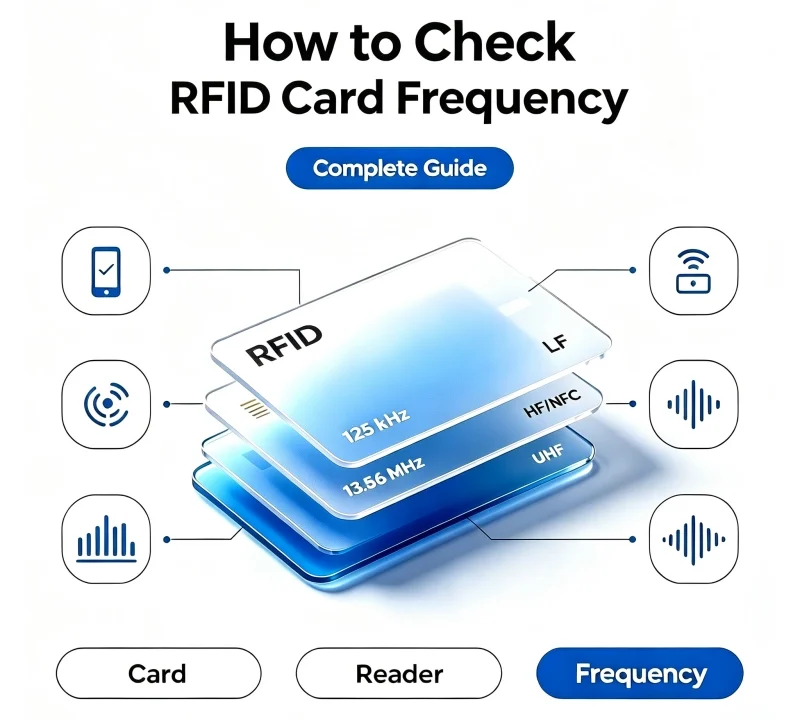
125kHz vs. 13.56MHz RFID Cards
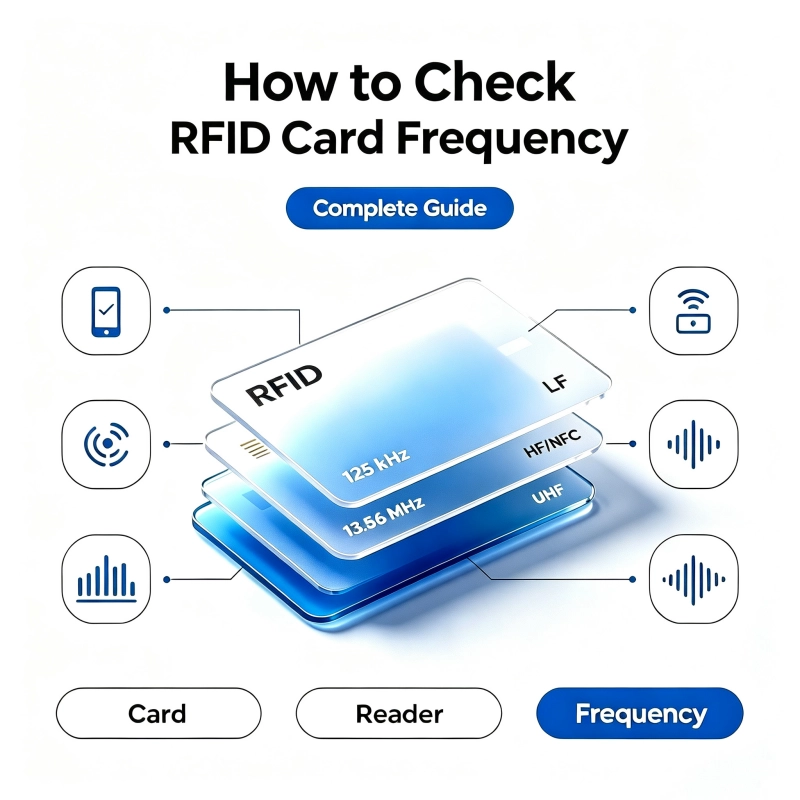
125kHz and 13.56MHz are two different RFID technology families. They should not be treated as interchangeable simply because both are contactless RFID products.
| Feature | 125kHz RFID | 13.56MHz RFID |
|---|---|---|
| Frequency | 125kHz | 13.56MHz |
| Technology | LF RFID | HF RFID |
| Common applications | Basic access control, proximity ID | Smart cards, NFC-related applications, advanced access control |
| Typical reading distance | Short range | Short range |
| Chip options | TK4100, EM4200, ATA5577 | NTAG, MIFARE, DESFire and others |
| Data/security capability | Depends on chip and system | Wide range, including advanced secure chips |
| Smartphone interaction | Generally not supported | Some 13.56MHz technologies can support NFC devices |
| Compatibility | Requires LF-compatible reader | Requires HF-compatible reader |
A 125kHz TK4100 card cannot simply replace a 13.56MHz MIFARE card, and a 13.56MHz card cannot replace a 125kHz proximity card without changing the reader and system configuration.
For a replacement project, always identify the existing technology before ordering new cards.
Why Choose a Clamshell RFID Card?
Clamshell RFID cards are designed for applications where durability and easy identification are important. Their thicker construction compared with thin RFID inlays or paper-based credentials can provide a practical format for daily-use access cards.
Common advantages include:
Durable Card Construction
PVC, PET, and ABS can be selected according to the intended application and required appearance. The appropriate material can help create a card suitable for regular handling.
Easy Visual Identification
The card surface can be customized with company logos, employee information, card numbers, photographs, or other visual elements.
Contactless Operation
Users can present the card to a compatible reader without inserting the card into a slot or making physical electrical contact.
Flexible Personalization
Cards can be supplied with printed numbers, barcodes, signature panels, magnetic stripes, and other optional features.
Custom Printing and Personalization
A blank RFID card does not have to remain visually blank. For organizations issuing cards to employees, students, visitors, members, or customers, customized printing can make card management easier and provide a more professional appearance.
Available customization options can include:
- CMYK full-color printing
- Digital printing
- Silk-screen printing
- Sequential numbering
- Barcode printing
- Signature panels
- Magnetic stripes
- Custom artwork
- Logo printing
- RFID encoding
RFID Card Printing Options
| Printing Method | Suitable For | Main Advantage |
|---|---|---|
| CMYK full color | Logos, photos, detailed designs | Detailed visual reproduction |
| Digital printing | Variable designs and smaller batches | Flexible personalization |
| Silk screen | Simple graphics and solid colors | Suitable for selected high-volume designs |
| Inkjet numbering | Sequential card numbers | Simple identification |
| Thermal printing | Variable information | Useful for personalized data |
| Laser printing | Durable numbering and markings | Professional identification |
Artwork requirements should be confirmed before production. For projects involving employee IDs or membership cards, it is also useful to define the relationship between the printed card number and the RFID chip number before manufacturing.
RFID Encoding and Numbering
Encoding is different from printing.
Printing puts visible information on the card, while encoding stores or configures identification data within the RFID chip when supported by the selected chip and system.
For example, a card may have:
- A printed card number on the front
- A barcode containing the same or related number
- An RFID identification number used by the access-control system
These three identifiers can be coordinated during card production to simplify administration.
For replacement orders, provide the supplier with the required encoding format and test specifications whenever possible. If the cards must match an existing access-control database, compatibility should be verified before mass production.
Applications of 125kHz RFID Proximity Cards
125kHz proximity cards are commonly used in systems where short-range contactless identification is sufficient.
Typical applications include:
| Application | Example Use |
|---|---|
| Access control | Employee and staff entry |
| Office security | Door identification |
| Parking | Vehicle or user identification |
| Schools | Student or staff access |
| Hospitals | Personnel identification |
| Membership | Clubs and facilities |
| Transportation | Identification credentials |
| Telecom | Personnel or facility access |
| Retail | Staff access and identification |
| Visitor management | Temporary or permanent credentials |
The appropriate chip and card format depend on the system used at each site.
125kHz RFID Cards for Access Control
Access control is one of the most common applications for proximity cards. A user presents the RFID card to a compatible reader, and the system checks the card’s identification information against its access database.
For a new access-control project, the card should be selected together with the reader and controller rather than independently.
For an existing system, identify:
- The current card frequency.
- The current chip type or protocol.
- The reader model.
- The card’s identification format.
- Whether the card contains printed or encoded information.
- The required card size and thickness.
- The quantity required.
- Whether custom printing is needed.
This information can significantly reduce the risk of ordering incompatible replacement cards.
How to Choose the Right 125kHz RFID Card
If you are not sure whether TK4100 is suitable for your project, use the following selection process.
Step 1: Identify the Existing Card
Check the existing card, packaging, reader documentation, or system supplier information. Look for terms such as TK4100, EM4100, EM4200, T5577, 125kHz, or LF.
Step 2: Confirm the Reader
The reader is often more useful than the card itself for determining compatibility. Check the reader’s supported frequency and RFID protocols.
Step 3: Decide Whether You Need a Fixed or Configurable Chip
For straightforward identification, a suitable fixed-ID LF chip may be sufficient. If your project requires configurable or rewritable LF credentials, discuss alternatives such as ATA5577 with the system provider.
Step 4: Choose the Card Construction
Select PVC, PET, or ABS based on the desired durability, appearance, thickness, and budget.
Step 5: Define Personalization
Decide whether you need full-color printing, sequential numbering, barcodes, signature panels, magnetic stripes, or RFID encoding.
Step 6: Test Before Mass Production
For large orders, request samples or conduct a compatibility test with the actual reader and access-control system before approving full production.
125kHz RFID Card Compatibility Checklist
Use this checklist before ordering replacement or customized RFID cards:
| Question | Why It Matters |
|---|---|
| Is the reader 125kHz? | Confirms the RFID frequency |
| What chip is currently used? | Determines chip compatibility |
| What protocol does the reader support? | Frequency alone is not enough |
| What is the required card number format? | Prevents database conflicts |
| Is encoding required? | Determines production requirements |
| What card thickness is required? | Ensures physical compatibility |
| Is custom printing required? | Affects artwork and production |
| What quantity is required? | Helps determine production and packaging |
| Are samples required? | Allows compatibility testing |
| Is a certificate required? | Helps meet project procurement requirements |
Production and Custom Order Options
The cards can be supplied for both standard and customized projects. According to the current product information, the listed production lead time is approximately 7–9 working days, while production capacity is stated at up to 8 million pieces per month.
Packaging is listed as 200 cards per box and 10 boxes per carton. Shipping can be arranged by express, air, or sea depending on the order quantity, destination, and required delivery time.
For larger projects, it is recommended to confirm the following before production:
- Final card dimensions
- Card thickness
- Material
- RFID chip
- Encoding requirements
- Printing artwork
- Card numbering
- Barcode requirements
- Packaging
- Quantity
- Delivery schedule
Quality and Certification
The product information lists ISO9001, SGS, RoHS, and EN71 among the relevant certifications or compliance documentation.
Certification requirements can vary by market and project. If a specific certificate or test report is mandatory for your application, request the applicable documentation before placing the order.
For commercial RFID projects, quality control should cover both the physical card and RFID performance. Sampling can include visual inspection, dimensional inspection, printing quality, card durability, and RFID reading tests.
Frequently Asked Questions
What is a TK4100 RFID card?
A TK4100 RFID card is a low-frequency proximity card designed for compatible 125kHz RFID readers. It is commonly used for identification and access-control applications.
Is TK4100 the same as 125kHz?
No. 125kHz describes the operating frequency, while TK4100 identifies a particular chip technology. Other chips can also operate in the 125kHz LF range.
Can a TK4100 card work with any 125kHz reader?
Not necessarily. The reader must support the card’s specific chip technology, protocol, and data format. Frequency compatibility alone does not guarantee system compatibility.
Can I print my company logo on a TK4100 card?
Yes. Custom printing options can include CMYK full-color printing, digital printing, and silk-screen printing, depending on the required design and production method.
Can these RFID cards include card numbers?
Yes. Numbering options can include inkjet, thermal, or laser printing. Sequential numbering can also be coordinated with RFID encoding when required.
Can I add a barcode?
Yes. Barcode options can include commonly used formats such as Code 39 and Code 128, subject to project requirements.
What is the typical reading distance?
The listed typical reading distance for LF and HF cards is approximately 3–10 cm. Actual performance depends on the reader, antenna, installation environment, card design, and surrounding materials.
Are 125kHz cards secure enough for every access-control system?
Not necessarily. Basic 125kHz proximity technology is suitable for many identification applications, but high-security applications may require more advanced RFID technologies with stronger security features. The security requirements of the complete access-control system should be evaluated before selecting a card.
Can I order a custom size?
Custom dimensions can be discussed. The standard card format is approximately 85.5 × 54 mm, while the final thickness and construction should be confirmed according to the selected product configuration.
How should I test compatibility?
The best approach is to test sample cards with the actual RFID reader and access-control system before placing a large production order. If possible, provide the supplier with the existing card type and reader model.
Why Order Custom 125kHz RFID Proximity Cards?
For organizations replacing existing proximity cards or launching a new identification program, a customized RFID card can combine electronic identification with clear visual branding.
A well-designed card program can provide:
- Consistent employee or member identification
- Professional company branding
- Easy card-number management
- Barcode or magnetic-stripe integration
- Contactless user identification
- Flexible material and surface options
- Bulk production for large projects
The most important consideration is compatibility. Before selecting a TK4100 RFID card, confirm the frequency, chip type, reader protocol, and required identification format.
Get a Quote for TK4100 RFID Cards
If you need 125kHz RFID proximity cards for access control, employee identification, parking, membership, school, hospital, or other applications, provide your required quantity, card design, existing reader information, and chip requirements.
For replacement projects, sending a photo of the existing card and reader model can help determine the appropriate RFID card configuration. For new projects, we can help you compare TK4100 and other LF RFID chip options based on the required application.
Custom card size, material, printing, numbering, barcode, encoding, packaging, and shipping options can be discussed according to your project requirements.
Choose the RFID technology first, confirm compatibility with the reader, and then finalize the card design and personalization requirements. This approach helps ensure that your finished 125kHz RFID cards are both visually suitable and technically compatible with the intended system. Feel free to leave us a message.