October 21, 2026
Product Overview
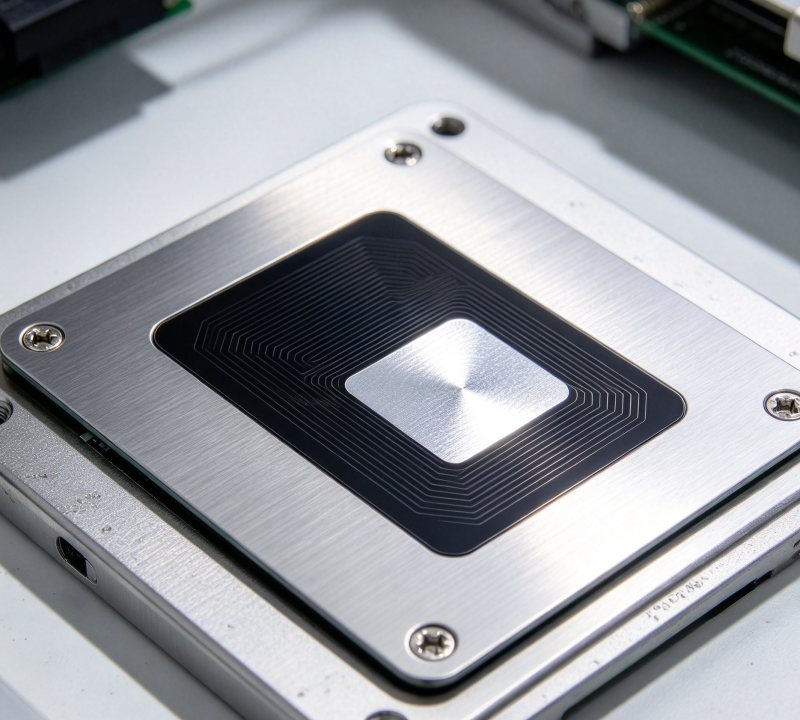
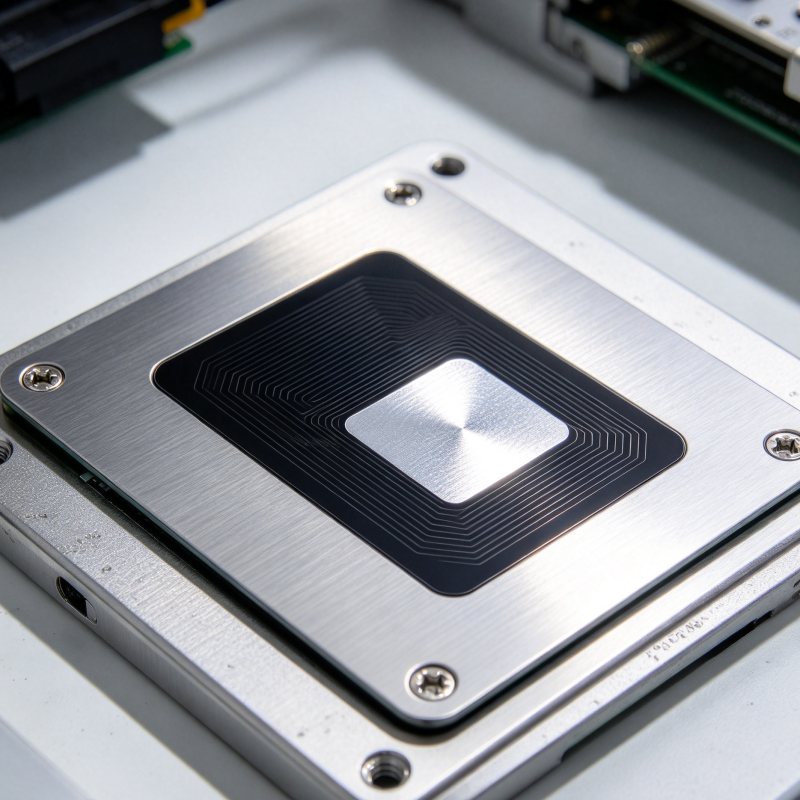
Unlike a UHF RFID reader that requires a separate antenna, this integrated RFID reader combines the reader electronics and antenna in one compact unit. This simplifies installation and can reduce the number of external components required for a short-range RFID application.
The reader communicates with the host system through RS232 or USB. This makes it suitable for both industrial control environments and PC-based RFID applications.
The integrated antenna is particularly useful when the required RFID read zone is relatively compact. According to the manufacturer’s specification, the effective reading distance can reach up to 0.5 m under suitable conditions. This distance should be treated as an application reference rather than a guaranteed result because RFID performance varies with tag design, tag orientation, material composition, reader settings, and the surrounding RF environment.
FEATURES
- Self-intellectual property;
- Support ISO18000-6B, ISO18000-6C(EPC C1G2) protocol tag;
- 902~928MHz frequency band(frequency customization optional);
- FHSS or Fix Frequency transmission;
- RF output power up to 30dbm(adjustable);
- Built-in antenna with effect distance up to 0-0.5m*;
- Support auto-running, interactive and trigger-activating work mode;
- Low power dissipation with single +9 DC power supply;
- Support RS232, USB interface;TCP/IP optional
- Effective distance depends on antenna, tag and environment.
CHARACTERISTICS
Absolute Maximum Rating
| ITEM | SYMBOL | VALUE | UNIT |
| Power Supply | VCC | 16 | V |
| Operating Temp. | TOPR | -10~+55 | ℃ |
| Storage Temp. | TSTR | -20~+75 | ℃ |
Electrical and Mechanical Specification
Under TA=25℃,VCC=+9V unless specified
| ITEM | SYMBOL | MIN | TYP | MAX | UNIT |
| Power Supply | VCC | 8 | 9 | 12 | V |
| Current Dissipation | IC | 350 | 650 | mA | |
| Frequency | FREQ | 902 | 928 | MHz |
Interface
| Item | Comment |
| Red | +9V |
| Black | GND |
| Yellow | Wiegand DATA0 |
| Blue | Wiegand DATA1 |
| Purple | RS485 R+ |
| Orange | RS485 R- |
| Brown | GND |
| White | RS232 RXD |
| Green | RS232 TXD |
| Grey | Trigger input(TTL level) |
* Optional model named as UHFReader ZK-RFID 107 with TCP/IP interface is also available.

RFID Protocol Compatibility
The reader supports both ISO18000-6B and ISO18000-6C (EPC C1G2), giving system developers flexibility when selecting compatible UHF RFID tags.
ISO18000-6C, commonly associated with EPC Class 1 Generation 2, is widely used for UHF RFID identification and supply-chain applications. Supporting a recognized RFID protocol can simplify integration when deploying tags from different suppliers.
| Protocol | Typical Use | Reader Support |
|---|---|---|
| ISO18000-6B | Legacy UHF RFID identification | Supported |
| ISO18000-6C | Modern UHF RFID identification and inventory applications | Supported |
| EPC C1G2 | EPC-based UHF RFID systems | Supported |
For a new RFID project, selecting tags that match the reader’s supported protocol is essential. Buyers should also confirm the regional frequency requirements before placing an order.
Communication Interface Options
The RS232 USB UHF RFID Reader Writer provides multiple connection options for integration with different host systems.
RS232 Interface
RS232 is commonly used in industrial equipment, computers, controllers, and legacy automation systems. It provides a straightforward serial communication method and can be useful when stable point-to-point communication is required.
The product interface definition identifies dedicated RS232 RXD and TXD connections:
| Wire Color | Function |
|---|---|
| White | RS232 RXD |
| Green | RS232 TXD |
| Brown | GND |
The host connection should be wired according to the required serial communication configuration and the reader’s communication protocol.
USB Interface
USB connectivity makes the reader suitable for PC-based applications where a direct connection to a computer is preferred. USB can simplify installation for applications such as RFID enrollment, desktop identification, testing, and software-based tag management.
Optional TCP/IP
For applications requiring network communication, an optional model identified by the manufacturer as UHFReader ZK-RFID 107 is available with a TCP/IP interface. This option can be considered when the RFID reader needs to communicate through an Ethernet-based network rather than a direct serial or USB connection.
Three Operating Modes for Different RFID Applications
The reader supports three operating modes: automatic running, interactive operation, and trigger activation.
| Operating Mode | How It Works | Suitable Applications |
|---|---|---|
| Auto-running | Reader operates automatically according to its configured behavior | Continuous identification, automated equipment |
| Interactive | Host system interacts with the reader | Software-controlled RFID applications |
| Trigger-activated | RFID operation is initiated by an external trigger | Access points, sensors, controlled identification |
This flexibility allows the same RFID hardware platform to be considered for different system architectures.
For automated equipment, the trigger mode can be useful when RFID reading needs to occur only after an external event. For PC software, interactive operation may provide greater control over when RFID commands are executed.
Built-in Antenna for Compact RFID Installations
One of the main advantages of this UHF RFID reader is its built-in antenna.
An integrated antenna can simplify system design because the reader and antenna do not need to be purchased and mounted as two separate components. This can be particularly beneficial when the RFID reading area is limited and the application does not require a long-distance external antenna.
The specified effective distance is up to approximately 0.5 m. However, RFID read distance is not determined by reader power alone.
Important factors include:
- RFID tag chip and antenna design
- Tag orientation
- Distance between the tag and reader
- Material surrounding the tag
- Presence of metal or liquid
- RF interference
- Reader power settings
- Installation position
For this reason, application testing with the actual RFID tag is recommended before final system deployment.
RF Output Power and Frequency
The reader operates in the 902–928 MHz frequency range and supports adjustable RF output power up to 30 dBm.
Adjustable RF power allows the reader to be configured according to the required RFID read zone. Maximum output power is not always the best setting. In a compact application, excessive RF power can increase unwanted tag detection outside the intended area.
The reader also supports FHSS and fixed-frequency transmission.
| RF Function | Benefit |
|---|---|
| Adjustable RF power | Helps optimize the RFID read zone |
| FHSS | Provides frequency-hopping operation |
| Fixed frequency | Provides a fixed-frequency transmission option |
| Frequency customization | Available as an optional configuration |
Regional frequency regulations vary, so the appropriate frequency configuration should be confirmed for the destination market before deployment.
Power Requirements
The reader is designed for a single DC power supply.
The specified electrical characteristics are:
| Electrical Parameter | Specification |
|---|---|
| Recommended / Typical Supply | 9 V DC |
| Operating Supply Range | 8–12 V DC |
| Maximum Rated Supply | 16 V DC absolute maximum |
| Typical Current Consumption | 350 mA |
| Maximum Current Consumption | 650 mA |
The power supply should be selected according to the reader’s electrical requirements. Stable power is important for maintaining reliable RFID operation, especially when the reader is used continuously.
RS232 vs. USB: Which Interface Should You Choose?
Both RS232 and USB can be useful, but they are suited to different system architectures.
| Requirement | RS232 | USB |
|---|---|---|
| PC connection | Suitable | Highly suitable |
| Industrial controller | Highly suitable | Depends on controller |
| Serial communication | Native | USB-based |
| Embedded integration | Suitable | Depends on USB support |
| Simple desktop testing | Suitable | Highly suitable |
| Legacy equipment | Highly suitable | May require USB support |
| Network connection | Requires additional equipment | Requires additional equipment |
Choose RS232 when the reader needs to communicate directly with an industrial controller, serial device, or existing automation equipment.
Choose USB when the primary host is a PC or other USB-compatible computer and simple connectivity is a priority.
For network-based installations, consider the optional TCP/IP configuration.
Applications
The compact design and integrated antenna make this RFID reader suitable for applications where a controlled short-range RFID reading zone is required.
Inventory and Asset Identification
The reader can be integrated into inventory stations and asset management equipment to identify RFID-tagged items. The built-in antenna can help simplify the hardware configuration for localized reading points.
Access Control
UHF RFID tags can be used for identification in access-related systems. The reader’s trigger input and serial communication interfaces can be integrated with external controllers to create a customized identification workflow.
Industrial Automation
RS232, RS485, Wiegand, and trigger-related connections provide options for integration with industrial controllers and automation equipment.
The reader can be used as an RFID identification component within a larger automated process.
RFID Enrollment and Desktop Applications
USB connectivity makes the reader suitable for PC-based RFID enrollment, tag identification, database entry, and testing applications.
Smart Equipment and OEM Integration
Manufacturers can integrate the reader into customized equipment where RFID identification is required. Its built-in antenna can reduce the need for a separate antenna assembly in compact applications.
Application Comparison
| Application | Recommended Interface | Suitable Mode | Main Advantage |
|---|---|---|---|
| Desktop RFID identification | USB | Interactive | Easy PC integration |
| Industrial controller | RS232 / RS485 | Interactive or Trigger | Flexible serial integration |
| Automated equipment | RS232 / Trigger | Trigger-activated | Controlled RFID reading |
| Access control system | Wiegand / RS232 | Trigger-activated | Easy controller integration |
| Network RFID system | TCP/IP optional | Automatic / Interactive | Network connectivity |
| OEM equipment | USB / RS232 | Application-dependent | Compact integrated design |
Why Choose an Integrated UHF RFID Reader?
An integrated UHF RFID reader is often a practical alternative to a separate reader and external antenna when the required read zone is relatively small.
| Integrated Reader | Separate Reader + External Antenna |
|---|---|
| Reader and antenna combined | Reader and antenna installed separately |
| Simpler mechanical design | More installation flexibility |
| Suitable for compact applications | Better for large or extended read zones |
| Fewer external RF components | More antenna choices |
| Faster installation | More configuration options |
| Ideal for controlled read areas | Ideal for long-range deployments |
The right choice depends on the required read distance, physical installation space, tag type, and RF environment.
Installation Considerations
Proper installation can have a significant impact on RFID performance.
The reader should be positioned so that tags enter the intended reading zone with a suitable orientation. Metal structures, liquids, electrical equipment, and other RF devices can affect UHF RFID performance.
For best results:
- Test the actual RFID tags before final installation.
- Avoid placing the reader directly next to large metal structures unless the installation has been tested.
- Adjust RF output power according to the required reading area.
- Keep the RFID tag orientation consistent where possible.
- Verify the frequency configuration for the target market.
- Test the reader under real operating conditions rather than relying only on laboratory measurements.
These steps can help reduce missed reads and unintended tag detection.
Operating Temperature and Storage Conditions
The reader is specified for an operating temperature range of -10°C to +55°C and a storage temperature range of -20°C to +75°C.
| Condition | Temperature |
|---|---|
| Operating | -10°C to +55°C |
| Storage | -20°C to +75°C |
When installing the reader in an enclosure, equipment cabinet, or industrial machine, consider the temperature generated by surrounding components as well as the ambient temperature.
Frequently Asked Questions
What type of RFID tags does this reader support?
The reader supports ISO18000-6B and ISO18000-6C (EPC C1G2) UHF RFID tags. Tag compatibility should be confirmed according to the exact tag specification and frequency configuration.
What is the reading distance?
The manufacturer’s specification indicates an effective distance of up to approximately 0.5 m. Actual read performance depends on the RFID tag, antenna, orientation, RF power, installation, and surrounding environment.
Does the reader have a built-in antenna?
Yes. The standard product configuration includes a built-in antenna, which helps simplify installation for short-range RFID applications.
Does it support RS232?
Yes. RS232 is supported, with dedicated RXD and TXD connections identified in the product interface definition.
Does it support USB?
Yes. The product supports USB as one of its communication interfaces.
Is TCP/IP available?
TCP/IP is available as an optional configuration. The manufacturer identifies the optional model as UHFReader ZK-RFID 107.
Can the RF output power be adjusted?
Yes. RF output power is adjustable and can reach up to 30 dBm.
Does the reader support trigger operation?
Yes. The reader supports trigger-activated operation and provides a trigger input specified as TTL level.
What power supply does it require?
The specified operating supply range is 8–12 V DC, with 9 V DC listed as the typical operating condition.
Is the 0.5 m reading distance guaranteed?
No. The stated distance should be considered a reference specification. Actual RFID performance depends on tag design, orientation, installation, RF environment, and other application conditions.
Choose the Right UHF RFID Reader for Your Project
The RS232 USB UHF RFID Reader Writer is a practical choice when a project requires a compact UHF RFID reader with an integrated antenna, adjustable RF power, standard UHF protocols, and flexible host interfaces.
It is particularly suitable for short-range RFID identification where RS232 or USB connectivity is preferred. The optional TCP/IP configuration can extend the platform to network-connected applications.
For projects requiring longer reading distances, multiple external antennas, outdoor installation, or large RFID read zones, a fixed long-range UHF RFID reader with an external antenna may be more appropriate.
For OEM projects, access control equipment, industrial automation, inventory stations, and PC-based RFID applications, this integrated reader provides a flexible starting point for RFID system development.
Request a Quote or Technical Information
If you are evaluating this UHF RFID reader for a commercial or OEM project, provide the target application, RFID tag type, required reading distance, communication interface, operating frequency, and installation environment.
The appropriate configuration can then be selected according to your system requirements.