September 14, 2026
Our 13.56MHz PVC NFC membership cards combine contactless NFC/RFID technology with high-quality card printing, QR codes, barcodes, and personalized numbering. Designed for membership programs, events, access control, loyalty applications, and other identification systems, these smart PVC cards provide a practical way to connect a physical card with digital or contactless services.
The cards can be customized with different NFC and RFID chips, printed designs, surface finishes, QR codes, serial numbers, and encoded data. Depending on your application, you can choose a simple NFC chip for URL sharing or digital identification, or a more advanced chip for closed-loop systems such as secure access, loyalty, payment, or transportation applications.

Specification
| Item | Cashless Payment MIFARE NFC Card |
| Chip | MIFARE Ultralight® C,MIFARE Ultralight® EV1,Ntag213 |
| Chip Memory | 192 bytes,64byte,144byte etc |
| Size | 85*54*0.84mm or customized |
| Printing | CMYK Digital/Offset printing |
| Silk-screen printing | |
| Available craft | Glossy/matt/frosted surface finish |
| Numbering: Laser engrave | |
| Barcode/QR Code printing | |
| Hot stamp: gold or silver | |
| URL,text,number,etc encoding/lock to read only | |
| Application | Event management, Festivel, concert ticket, Access control etc |
Why Choose 13.56MHz NFC PVC Cards?
13.56MHz is widely used for NFC and high-frequency RFID applications. A 13.56MHz PVC card can support contactless interaction while retaining the familiar appearance and durability of a plastic membership card.
The biggest advantage is flexibility. The same physical card can contain a printed member name, membership number, QR code, barcode, and NFC chip. This allows organizations to support different identification methods without issuing several types of cards.
For example, a membership card can display a member number for manual verification, use a QR code for smartphone scanning, and use NFC for contactless interaction. The best configuration depends on how the card will be used and what readers or mobile devices are available.
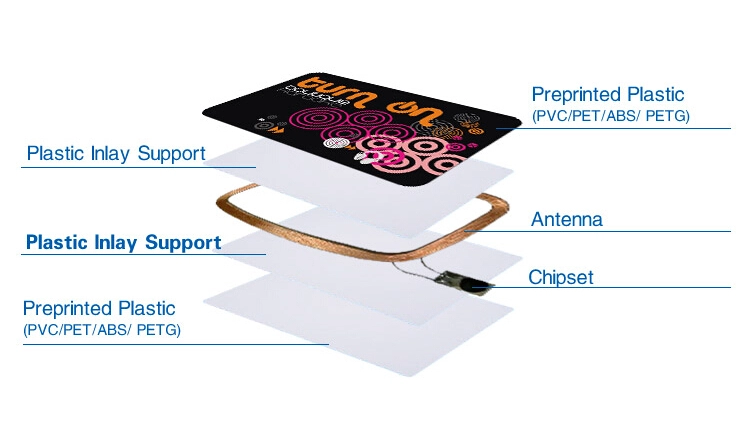
An NFC chip must be first formatted as NDEF to be able to store NDEF messages and records in its user memory. Ntag213 is the most popular nfc chip ,memory is 144byte.
NDEF formatting is a permanent operation. Many applications of NFC do not use NDEF;these tend to be closed-loop systems such as secure access, loyalty, payment and transportation.
Chip Options
| Chip Options | |
| ISO14443A | MIFARE Classic® 1K, MIFARE Classic ® 4K |
| MIFARE® Mini | |
| MIFARE Ultralight ®, MIFARE Ultralight ® EV1, MIFARE Ultralight® C | |
| Ntag213 / Ntag215 / Ntag216 | |
| MIFARE ® DESFire ® EV1 (2K/4K/8K) | |
| MIFARE ® DESFire® EV2 (2K/4K/8K) | |
| MIFARE Plus® (2K/4K) | |
| Topaz 512 | |
| ISO15693 | ICODE SLI-X, ICODE SLI-S |
| 125KHZ | TK4100, EM4200,EM4305, T5577 |
| 860~960Mhz | Alien H3, Impinj M4/M5 |
Remark:
MIFARE and MIFARE Classic are trademarks of NXP B.V.
MIFARE DESFire are registered trademarks of NXP B.V. and are used under license.
MIFARE and MIFARE Plus are registered trademarks of NXP B.V. and are used under license.
MIFARE and MIFARE Ultralight are registered trademarks of NXP B.V. and are used under license.
NFC Card and QR Code Card in One
Combining NFC and QR technology can make a membership card more versatile.
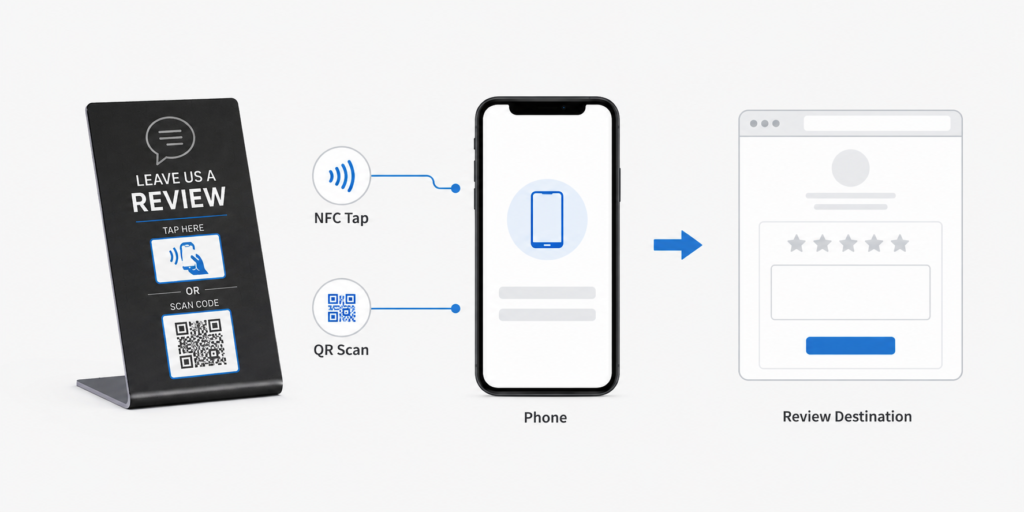
NFC provides contactless interaction when the card is tapped or brought close to a compatible reader or NFC-enabled device. A QR code provides a visual code that can be scanned using a camera or QR scanner.
| Technology | How It Works | Typical Advantage | Common Applications |
|---|---|---|---|
| NFC | Contactless communication | Fast tap-based interaction | Membership, access, digital links |
| QR Code | Optical scanning | Easy smartphone scanning | Membership ID, websites, promotions |
| Barcode | Optical scanning | Compatible with many existing scanners | Inventory, identification, ticketing |
| Printed ID | Visual identification | Does not require a scanner | Membership and staff cards |
Using NFC and QR codes together can also provide a backup identification method. If an NFC reader is not available, the printed QR code can still be scanned where supported.

NTAG213 vs. MIFARE Classic vs. DESFire
For buyers who are not familiar with NFC chips, the choice can be confusing. The three options below represent different application approaches.
| Consideration | NTAG213 | MIFARE Classic | MIFARE DESFire |
|---|---|---|---|
| Typical use | NFC interaction and digital links | RFID identification and closed systems | Advanced secure systems |
| User memory | 144 bytes | 1KB class or higher | 2K/4K/8K configurations |
| NFC URL | Excellent choice | Not primarily designed for this use | Possible depending on system |
| Simple NFC projects | Recommended | Usually unnecessary | Usually unnecessary |
| Closed-loop systems | Limited depending on requirements | Common option | Strong option for advanced systems |
| Security requirements | Application dependent | Application dependent | Designed for more advanced security use |
| System complexity | Low | Medium | Higher |
NTAG213 is particularly suitable when the primary purpose is to store a URL or a small amount of NFC data. The original product information identifies NTAG213 as a popular NFC chip and specifies 144 bytes of memory.
For more advanced access, loyalty, payment, or transportation systems, the correct choice depends on the complete system architecture rather than card memory alone.
NFC Data Encoding
NFC cards can be encoded with information such as URLs, text, numbers, and other supported records. For applications using NDEF messages, the NFC chip must first be formatted as NDEF.
NDEF is a standardized data format used by NFC devices to store and exchange NFC records. A typical NFC membership card might contain a URL that opens a membership page, registration form, digital profile, promotional page, or other web resource.
For example:
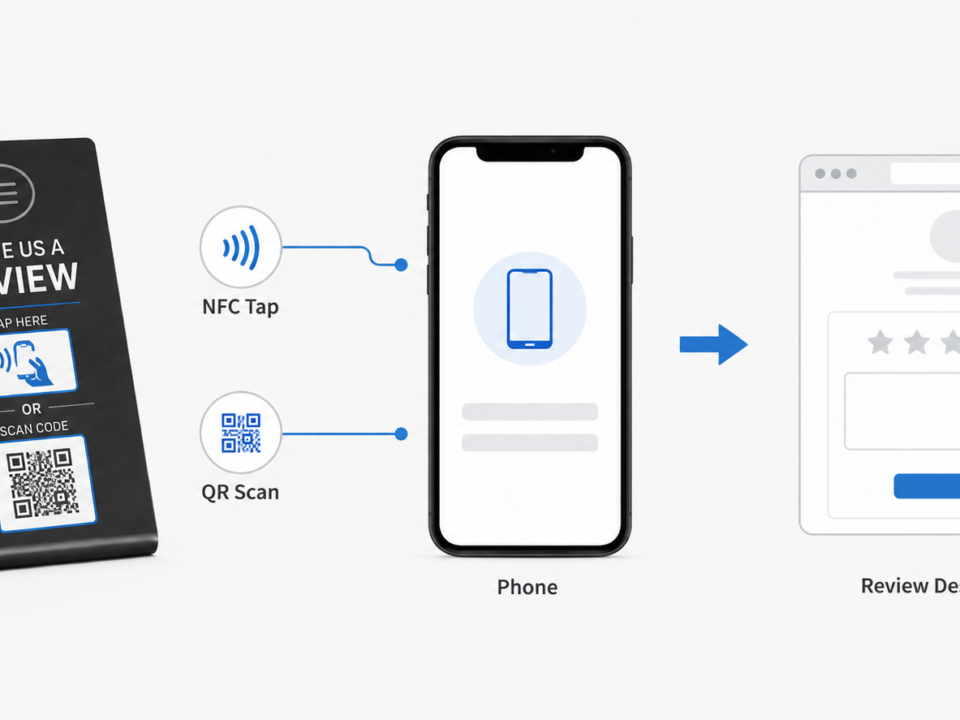
Tap card → NFC-enabled device detects card → URL opens → member or visitor reaches the designated page
The actual NFC behavior depends on the chip, encoded data, mobile device, reader, and software system.
Important NDEF Consideration
NDEF formatting is a permanent operation according to the original product information. Therefore, encoding requirements should be confirmed before cards are formatted and personalized.
Not every NFC application uses NDEF. Closed-loop systems such as secure access, loyalty, payment, and transportation can use their own system architecture and authentication methods instead.
NFC Membership Card Customization
The physical appearance of a membership card is an important part of branding. These PVC NFC cards support several customization options.
Full-Color Card Printing
CMYK digital or offset printing can be used for customized card artwork. Organizations can add brand colors, logos, membership levels, photographs, text, and other visual elements according to the final card design.
Silk-screen printing is also available for selected designs and requirements.
Surface Finishes
Different surface treatments can create different visual and tactile effects.
- Glossy finish: Smooth and reflective appearance.
- Matte finish: More subdued appearance with reduced surface reflection.
- Frosted finish: Textured appearance for a distinctive card design.
QR Code and Barcode Printing
A unique QR code or barcode can be printed on each card. This can be combined with a membership number or other identifier.
For variable-data projects, the organization can provide the required data for personalized card production. The exact encoding and data preparation process should be confirmed before mass production.
Laser Numbering
Laser engraving can be used for personalized numbering. This is useful for membership IDs, card serial numbers, or other identifiers that need to be visibly associated with individual cards.
Gold and Silver Foil Stamping
Gold or silver hot stamping can be used to add a premium visual effect to logos, text, numbers, or selected design elements.
NFC + QR Code Membership Card Workflow
A typical smart membership card can combine several functions:
- Print the member information on the PVC card.
- Add a unique QR code or barcode for visual scanning.
- Install the selected NFC chip during card manufacturing.
- Encode the NFC data according to the application.
- Test the NFC function and printed code before shipment.
- Issue the personalized cards to members, customers, employees, or visitors.
This multi-technology approach gives organizations more flexibility than using a printed card alone.
Applications
13.56MHz PVC NFC cards can be customized for a wide range of identification and contactless applications.
| Application | Possible Card Function |
|---|---|
| Membership programs | Member ID + NFC + QR code |
| Loyalty programs | Contactless identification and digital interaction |
| Event management | Ticket or attendee identification |
| Concerts and festivals | Event access and digital information |
| Access control | RFID/NFC identification with compatible systems |
| Clubs and gyms | Membership identification |
| Visitor management | Visitor ID and digital information |
| Promotional campaigns | NFC URL + QR code |
| Digital business cards | NFC URL linking to online profile |
| Closed-loop systems | Chip-based identification and authentication |
The appropriate chip and encoding method should be selected according to the reader, software, security requirements, and overall system design.

NFC Membership Cards vs. Traditional PVC Cards
Traditional PVC cards are useful for visual identification, but they require manual inspection or a separate barcode/QR code for electronic identification. NFC adds another contactless layer.
| Feature | Traditional PVC Card | PVC QR Code Card | PVC NFC + QR Card |
|---|---|---|---|
| Printed information | Yes | Yes | Yes |
| QR scanning | No | Yes | Yes |
| NFC interaction | No | No | Yes |
| Contactless reading | No | No | Yes |
| Digital URL access | No | Yes | Yes |
| RFID identification | No | No | Yes, with compatible chip |
| Multiple identification methods | Limited | Medium | High |
For organizations that already use QR codes but want to introduce contactless functionality, an NFC + QR card can provide a practical upgrade path.
Choosing the Right NFC Chip
The best chip depends on what you want the card to do.
Choose NTAG213 when you mainly need a compact NFC data record such as a URL, short text, or digital link.
Choose NTAG215 or NTAG216 when your application requires more NFC memory than NTAG213 provides.
Choose MIFARE Classic when the card needs to operate as part of a compatible RFID system rather than simply storing a standard NFC URL.
Choose MIFARE DESFire when your project has more demanding security and system requirements. DESFire-based projects should be designed around the complete reader, software, authentication, and backend architecture.
If you are unsure which chip is appropriate, provide the intended application and reader model when requesting a quotation. This allows the card configuration to be matched to the actual system.
Card Size and Physical Specifications
The standard PVC card size is 85 × 54 × 0.84 mm. This format is close to the dimensions commonly used for conventional plastic identification and membership cards.
| Specification | Standard |
|---|---|
| Material | PVC |
| Length | 85 mm |
| Width | 54 mm |
| Thickness | 0.84 mm |
| Shape | Standard rectangular card |
| Custom size | Available according to project requirements |
Custom dimensions can be discussed for applications that require a different physical format.
Printing and Personalization Options
A smart card can be customized at several levels, from the physical appearance to the electronic data.
| Customization | Purpose |
|---|---|
| CMYK printing | Full-color branding and artwork |
| Offset printing | High-volume card artwork |
| Silk-screen printing | Selected graphic effects |
| Glossy finish | Reflective premium appearance |
| Matte finish | Low-reflection appearance |
| Frosted finish | Textured appearance |
| QR code | Smartphone or scanner-based identification |
| Barcode | Scanner-based identification |
| Laser numbering | Permanent visible identification |
| Gold foil | Premium branding |
| Silver foil | Premium metallic effect |
| NFC encoding | Digital or system data |
This makes the product suitable for both simple branded membership cards and more complex personalized card programs.
Quality and Data Verification
For personalized RFID and NFC cards, physical printing and electronic data should be treated as two parts of the same project.
A card may contain a printed member number, QR code, barcode, and electronic NFC identifier. These identifiers should be mapped correctly during production to reduce the risk of issuing the wrong card to a member.
For projects involving variable data, buyers should provide the required data format and encoding requirements before production. Testing a sample or pre-production batch is recommended for systems with specific NFC reader or software compatibility requirements.

Packaging and Delivery
The standard packaging method is designed for bulk RFID card orders.
- 200 RFID cards are normally packed into one white box.
- 5, 10, or 15 boxes can be packed into one carton.
- Customized packaging can be provided according to project requirements.
Custom packaging can be considered when the cards are being supplied as part of a branded membership, event, loyalty, or promotional program.
Frequently Asked Questions
What is a 13.56MHz NFC card?
A 13.56MHz NFC card is a contactless card that operates using a 13.56MHz NFC or high-frequency RFID technology. Depending on the chip, it can be used for digital NFC interaction, RFID identification, access control, membership, events, loyalty systems, and other applications.
Can the NFC card include a QR code?
Yes. A QR code can be printed on the same PVC card as the NFC chip. This allows the card to support both contactless NFC interaction and camera-based QR scanning.
Can I print my logo on the NFC membership card?
Yes. The cards can be customized with logos, colors, text, graphics, membership information, QR codes, barcodes, and other design elements using available printing and finishing methods.
Can the NFC card store a website URL?
Yes. NFC chips such as NTAG213 are commonly used for storing NFC-compatible URLs. The exact data capacity depends on the selected chip and the information being encoded.
Can NFC data be locked?
Read-only locking can be used for supported NFC applications. The locking method and whether the data can be changed later should be confirmed before encoding because some operations are irreversible.
Is NTAG213 suitable for membership cards?
NTAG213 can be a good choice when the main requirement is a simple NFC function, such as opening a website, digital membership page, or other small NFC data record. It provides 144 bytes of user memory according to the product specification.
Should I choose NFC or MIFARE?
It depends on the system. For simple NFC interactions such as URLs, NTAG chips are often more appropriate. For RFID-based closed-loop systems, MIFARE products may be more suitable. The reader, software, security requirements, and data architecture should all be considered before selecting the chip.
Do NFC cards need to use NDEF?
No. NDEF is used when the NFC application needs to store NDEF messages. The original product specification notes that many NFC applications, including some closed-loop access, loyalty, payment, and transportation systems, do not use NDEF.
Can the card be customized in size?
The standard size is 85 × 54 × 0.84 mm, while customized dimensions can be discussed for specific projects.
How to Order Custom NFC Membership Cards
To prepare an accurate card configuration, provide the following information when requesting a quotation:
- Card quantity
- Card dimensions
- Required NFC/RFID chip
- Card artwork or logo
- QR code or barcode requirements
- Variable numbering requirements
- NFC encoding requirements
- Surface finish
- Packaging requirements
- Reader or system information, if applicable
For NFC projects, it is especially important to specify whether the card will store a URL or NDEF message, or whether it will operate as part of a closed-loop RFID system.
Get Custom 13.56MHz NFC PVC Cards
Our 13.56MHz PVC NFC membership cards provide a flexible platform for organizations that need printed identification together with contactless RFID/NFC functionality. With multiple chip options, custom printing, QR codes, barcodes, laser numbering, foil stamping, and different surface finishes, the cards can be configured for a wide range of membership, event, loyalty, access, and digital applications.
Whether you need a simple NTAG213 card with a website URL or a more advanced RFID card for a closed-loop system, the chip and personalization options can be selected according to your project requirements.