September 28, 2026
Efficient animal identification is essential for modern livestock farms. A reliable RFID ear tag gives each animal a unique electronic identity that can be connected to farm records, breeding information, health data, movement history and other management systems.
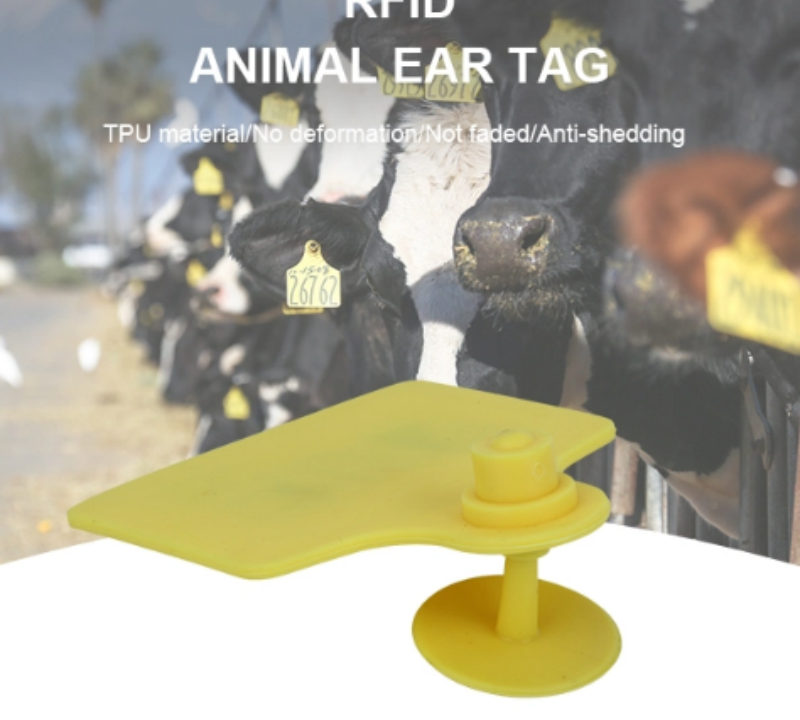
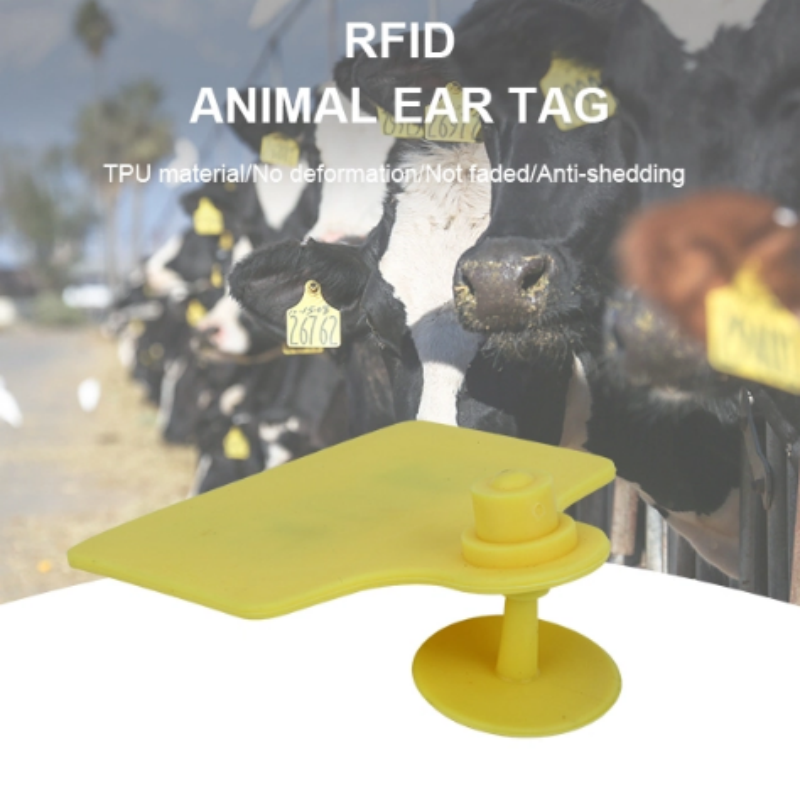
Our custom RFID animal ear tags are designed for sheep, cattle, cows, pigs, goats, rabbits and other livestock identification applications. Made with durable TPU material, the tags can be customized with animal ID numbers, logos, barcodes and other identification information according to your management requirements.
Different RFID technologies, chips, tag sizes and identification formats can be selected for different applications. Whether you need electronic identification for individual animals or a large-scale livestock traceability system, the ear tag can be configured to work with the corresponding RFID reader and software platform.
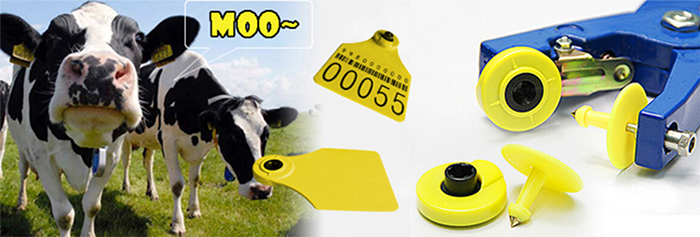
With RFID technology developed animal identification and traceability system, mainly for animal breeding, transportation, slaughter track monitoring. When the outbreak, can be back to animal breeding process. The health sector can through the system for possible infection disease with trace of animals, to determine its ownership and historical traces. At the same time, system to animals slaughtered from birth to provide instant, detailed and reliable data.
Specification
| Specification of RFID Ear Tag | |
| Item | RFID Animal Ear Tg |
| Material | TPU |
| Size | Dia20mm, Dia30mm, 70*80mm, 51*17mm,72*52mm, 70*90mm etc |
| Printing | Laser printing ( ID number, logo etc) |
| Chip | EM4305/213/216/F08, Alien H3 etc |
| Protocol | ISO11784/5.,ISO14443A, ISO18000-6C |
| Frequency | 13.56mhz |
| Operating Temperature | -25 to 85 (Centigrade) |
| Storage Temperature | 25 to 120 (Centigrade) |
| Fit for animal species | Sheep, pig, cow, rabbit, etc |
| Remark | reusable ear tag: with open hole Not reusable: with closing |
| Customization | 1. chip type2. logo or number printing 3. ID encoding |
RFID Animal Ear Tag for Modern Livestock Management
Traditional livestock identification methods often rely on visual ear tags, handwritten records or manually entered identification numbers. These methods can work for small farms, but managing large numbers of animals becomes increasingly difficult when identification needs to be fast, accurate and connected to digital records.
An RFID animal ear tag provides an electronic identification method. Each tag can carry a unique ID that can be captured by a compatible RFID reader and associated with an individual animal in a farm management database.
This makes RFID useful for applications such as:
- Individual animal identification
- Livestock inventory management
- Breeding and reproduction records
- Animal movement tracking
- Feeding and production management
- Veterinary and health records
- Farm-to-processing traceability
- Animal ownership identification
- Livestock transportation management
- Automated data collection
The RFID tag itself does not need to contain the complete animal record. Instead, its unique identification number can serve as a digital link between the physical animal and the information stored in your farm management system.
Key Features of the Custom RFID Ear Tag
Durable TPU Construction
The ear tag can be manufactured using TPU material, providing a flexible and lightweight structure suitable for livestock identification applications. TPU is commonly selected for applications where the tag needs to withstand handling and outdoor farming environments.
The final material specification should be selected according to the animal species, application environment and expected service conditions.
Custom Animal Identification
The tag can be customized with identification numbers, serial numbers, logos and other visual information. Laser marking or other suitable printing methods can be selected according to the tag material and production requirements.
A visible ID can also provide a useful backup to electronic identification. If an RFID reader is not immediately available, farm workers can visually identify the animal from the printed number.
Multiple Chip Options
Different RFID chips can be supplied depending on the required frequency, protocol, memory configuration and reader compatibility.
Available options listed for this product family include chip types such as EM4305, 213, 216, F08 and Alien H3. Because these chips belong to different RFID technology families, the chip should be selected together with the intended RFID reader rather than simply choosing a chip based on its name.
Multiple Ear Tag Sizes
Different animal species and identification requirements may require different tag dimensions. Available sizes include options such as:
| Example Size | Potential Application |
|---|---|
| Ø20 mm | Compact animal identification |
| Ø30 mm | General livestock applications |
| 51 × 17 mm | Narrow-format identification |
| 52 × 72 mm | Larger visible identification |
| 70 × 80 mm | Livestock identification |
| 70 × 90 mm | Larger identification area |
Actual dimensions can be customized depending on the selected design, antenna and chip configuration.

RFID Technology Options: LF, HF and UHF
RFID animal identification is not limited to one frequency. LF, HF and UHF systems have different operating characteristics, so choosing the correct technology is important when designing a livestock identification system.
| RFID Technology | Typical Frequency | Typical Characteristics | Common Considerations |
|---|---|---|---|
| LF RFID | 125/134 kHz | Shorter read range, relatively tolerant of interference | Commonly used for animal identification |
| HF RFID | 13.56 MHz | Short to medium read range | Suitable for applications requiring HF/NFC-related technologies |
| UHF RFID | 860–930 MHz | Fast multi-tag reading and longer read range | Useful for automated identification and inventory applications |
GS1 identifies LF systems around 125 kHz and 134 kHz, HF systems around 13.56 MHz, and passive UHF/RAIN RFID systems in the 860–930 MHz range. UHF systems commonly use EPC Gen2 and ISO/IEC 18000-63 air-interface technologies.
For this reason, the term “UHF RFID ear tag” should only be used when the selected tag actually operates in the UHF frequency range. If a specific version uses a 13.56 MHz chip, it should be described as an HF RFID ear tag instead.
Why Choose RFID for Livestock Identification?
Faster Data Collection
RFID allows animal identification to be captured electronically instead of requiring workers to manually type identification numbers. This can reduce repetitive data entry during routine farm operations.
Better Record Association
A unique RFID number can be linked to information such as animal age, breed, vaccination records, breeding history, weight records and movement information within the farm management software.
Reduced Manual Data Entry
When an RFID reader automatically captures the tag ID, operators can associate the identification number with a specific management event. This can help reduce transcription errors caused by manually reading or entering numbers.
Scalable Farm Management
The same identification concept can be applied to a small herd or a larger livestock operation. The RFID tag becomes the physical identification point, while the software provides the database and management functions.
Applications of RFID Animal Ear Tags
| Application | How RFID Can Help |
|---|---|
| Animal Identification | Assign a unique digital ID to each animal |
| Breeding Management | Connect animals with breeding and reproduction records |
| Health Management | Associate veterinary and vaccination records with individual animals |
| Feeding Management | Link feeding or production data to animal IDs |
| Weight Management | Record weight events against individual animals |
| Transportation | Identify animals during movement between locations |
| Inventory Management | Quickly identify animals within a group or facility |
| Traceability | Connect animal identification with historical management records |
| Processing Management | Maintain identification information through later production stages |
The exact data collected depends on the farm software and overall RFID system. The ear tag provides the identification carrier; it does not by itself create a complete livestock management database.
RFID Ear Tag for Sheep
Sheep farms can use RFID ear tags to establish individual electronic identities for animals. A unique tag number can be associated with breed, birth date, parentage, health records, weight information and other farm data.
For flock management, RFID can also simplify routine identification. Instead of manually reading a printed number and entering it into a system, compatible readers can capture the electronic ID automatically.
The appropriate tag size, material, attachment method and RFID technology should be selected according to sheep size, management conditions and reader requirements.
RFID Ear Tag for Cattle and Cows
Cattle identification often involves larger animals, longer management cycles and more extensive records. An RFID ear tag can provide a consistent identification reference throughout the animal’s lifecycle.
A cattle RFID system can be connected with records such as:
- Birth and registration information
- Breed and parentage
- Vaccination and veterinary records
- Feeding history
- Weight measurements
- Breeding information
- Farm location
- Transportation records
- Ownership information
- Processing or traceability records
For automated cattle identification, UHF RFID can be considered where longer read distances and rapid identification are important. However, actual read performance depends on the tag antenna, reader, reader power, installation position, animal orientation, surrounding materials and local radio regulations.
Customization Options
The ear tag can be customized to match different farm identification and branding requirements.
| Custom Option | Available Configuration |
|---|---|
| Tag Material | TPU or selected material according to design |
| Tag Size | Multiple standard sizes; custom designs may be possible |
| RFID Chip | Selected according to frequency and reader compatibility |
| Printed ID | Animal number, serial number or other information |
| Logo | Farm, company or organization logo |
| Encoding | RFID ID encoding according to project requirements |
| Color | Subject to production and customization requirements |
| Attachment | Open or closed ear tag design |
| Packaging | Bulk packaging or project-specific packaging |
Before mass production, the RFID chip, antenna, frequency, encoding format and reader should be confirmed as one complete system.
Open and Closed Ear Tag Designs
Different ear tag structures can be selected depending on whether the tag is intended for one-time or reusable identification applications.
| Design | General Characteristic | Suitable Consideration |
|---|---|---|
| Open Ear Tag | Designed with an opening structure | May be suitable when the tag needs to be removed or reused |
| Closed Ear Tag | Designed as a permanent-style identification tag | Suitable for applications where the tag is intended to remain attached |
The exact attachment method should be selected based on animal species, ear thickness, farm practices and local animal identification requirements.
ISO 11784/11785 and ISO/IEC 18000-63: What Is the Difference?
These standards should not be treated as interchangeable.
ISO 11784/11785 is associated with electronic identification of animals, while ISO/IEC 18000-63 defines an RFID air interface for UHF systems operating in the 860–960 MHz range. GS1 notes that ISO/IEC 18000-63 is the current designation for the former ISO/IEC 18000-6 Type C standard.
Therefore, when selecting an RFID ear tag, it is important to confirm not only the standard name but also:
- Operating frequency
- RFID chip model
- Air-interface protocol
- Reader compatibility
- Tag memory
- Antenna design
- Required reading distance
- Regional frequency regulations
This approach helps avoid compatibility problems between the ear tag and RFID reader.
How an RFID Livestock Identification System Works
A basic RFID livestock management system consists of an RFID ear tag, RFID reader and software platform.
First, a unique ID is encoded into the RFID tag. The tag is attached to the animal’s ear and becomes its physical electronic identifier.
When the animal passes through or comes within the reading area, the compatible RFID reader captures the tag ID. The software then uses that ID to retrieve or update the corresponding animal record.
For passive UHF RFID systems, the tag receives operating energy from the reader’s radio field and communicates by backscatter. This means the passive tag does not require its own battery.
A typical workflow is:
RFID Ear Tag → RFID Reader → Identification ID → Farm Software → Animal Record
This architecture allows the physical identification tag and digital farm records to work together.

How to Choose the Right RFID Ear Tag
Choosing an RFID ear tag should begin with the complete application rather than the tag alone.
1. Identify the Animal
Determine whether the tags will be used for sheep, cattle, pigs, goats or another species. The animal’s size and ear structure affect the appropriate tag design.
2. Confirm the RFID Technology
Decide whether the application requires LF, HF or UHF RFID. Do not select a chip until the reader technology has been confirmed.
3. Check Reader Compatibility
The tag and reader must use compatible frequency and communication protocols. A UHF reader cannot simply replace an HF or LF reader.
4. Define the Reading Distance
If animals are identified at close range, a short-range technology may be sufficient. If identification needs to occur from a greater distance or during movement through a reading gate, UHF may be considered.
5. Select the Identification Format
Determine whether the tag should include only an electronic ID or both an electronic ID and visible printed information.
6. Confirm the Environment
Outdoor farms, livestock pens, transportation areas and processing facilities can have different operating conditions. The tag material, attachment structure and antenna design should be selected accordingly.
RFID Ear Tag vs. Traditional Visual Ear Tag
| Feature | RFID Ear Tag | Traditional Visual Ear Tag |
|---|---|---|
| Electronic Identification | Yes | No |
| Automatic Reading | With compatible RFID reader | No |
| Database Integration | Yes | Manual or indirect |
| Visible Number | Can be included | Yes |
| Multi-Animal Reading | Possible with suitable RFID system | Manual |
| Data Collection | Automated identification possible | More manual work |
| Traceability | Supports digital traceability | Depends on manual records |
| Reader Required | Yes | No |
RFID does not necessarily replace visual identification. In many farm systems, combining electronic identification with a clearly printed animal number provides both automated and human-readable identification.
Benefits for Smart Farm Management
RFID animal identification can become an important data collection point in a smart farming system.
Once an animal has a unique electronic identity, different management events can be associated with the same ID. For example, a weight measurement can be recorded against the animal’s RFID number, followed later by a vaccination event, breeding record or transportation event.
Over time, this creates a structured digital history for each animal.
The value of the system therefore comes from the combination of:
Reliable Identification + RFID Reading + Farm Software + Accurate Data
The ear tag is the identification component that connects the physical animal to the digital management system.
Frequently Asked Questions
What animals can use RFID ear tags?
The product can be configured for livestock such as sheep, cattle, cows, pigs, goats and rabbits. The appropriate size and attachment design should be selected for the specific animal.
Can the RFID ear tag be customized?
Yes. Customization can include tag size, RFID chip, printed identification number, logo, color, encoding and other design requirements, subject to the selected configuration.
Can I print an animal ID on the ear tag?
Yes. A visible ID can be printed or laser marked on the tag. This provides a human-readable identification method in addition to the electronic RFID ID.
Is this RFID ear tag UHF?
The answer depends on the selected chip and antenna configuration. A true UHF version should operate in the UHF range and use a compatible UHF RFID protocol. GS1 describes passive UHF RFID as operating in approximately the 860–930 MHz range, while 13.56 MHz belongs to HF RFID.
Can the tag work with any RFID reader?
No. RFID tags and readers must be compatible in frequency, air-interface protocol and other technical parameters. Always confirm the chip and reader model before ordering.
Does a passive RFID ear tag need a battery?
Passive RFID tags do not require an internal battery. In a passive UHF system, the reader supplies the energy required for the tag to respond.
Can the RFID ID be connected to farm software?
Yes. The RFID number can be used as a unique identifier in a livestock management system. The software can associate the ID with animal information and management events.
Can I order customized RFID ear tags for a large farm?
Yes. Custom configurations can be developed for different livestock identification projects. Before mass production, the required quantity, animal species, tag dimensions, RFID technology, chip model, printing, encoding and reader compatibility should be confirmed.
Build a More Connected Livestock Identification System
A reliable animal identification system starts with a tag that matches the requirements of the entire RFID deployment.
Our custom RFID animal ear tags provide a flexible platform for livestock identification, with multiple sizes, chip options, identification formats and customization possibilities. From individual sheep identification to cattle management and larger livestock traceability projects, the tag can be configured around the requirements of your RFID system.
If you are planning a new livestock RFID project, provide the animal type, expected reading distance, RFID reader model, required frequency, tag size and quantity. These details can be used to determine the appropriate ear tag configuration and avoid compatibility issues before production.
Recommended project information:
- Animal species
- Number of animals
- RFID frequency
- RFID reader model
- Required reading distance
- Tag dimensions
- Visible ID requirements
- Logo or branding requirements
- RFID encoding requirements
- Intended farm management application
Feel free to contact us at any time.