November 20, 2026
Our custom animal RFID ear tag is designed to help farms, livestock producers, breeders, and animal management organizations identify and track individual animals more efficiently. With RFID technology developed animal identification and trace ability system, mainly for animal breeding, transportation, slaughter track monitoring. When the outbreak, can be back to animal breeding process. The health sector can through the system for possible infection disease with trace of animals, to determine its ownership and historical traces. At the same time, system to animals slaughtered from birth to provide instant, detailed and reliable data.
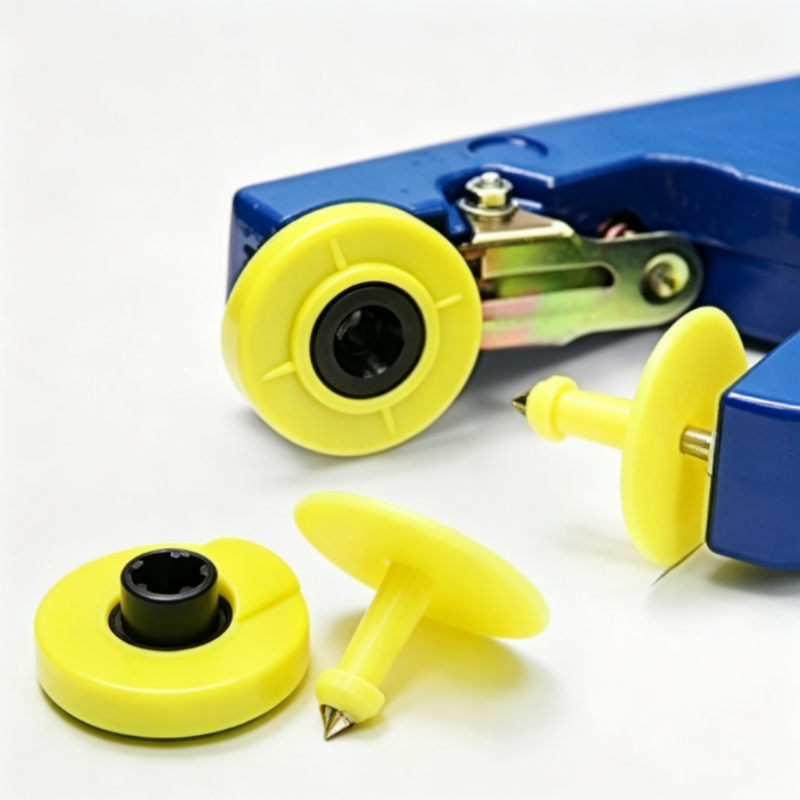
By combining a durable TPU ear tag with RFID technology, each animal can be assigned a unique digital identity for identification, breeding management, transportation records, health monitoring, and traceability.
The RFID ear tag can be customized with different chip options, ID encoding, laser-printed numbers, logos, and tag sizes to match different livestock management systems. Depending on the selected RFID technology, the tag can be configured for applications ranging from close-range identification to longer-range livestock tracking.
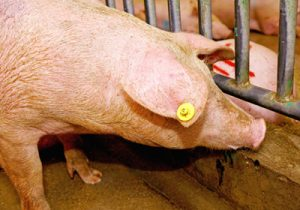
For sheep, cattle, pigs, rabbits, and other livestock, RFID identification provides a practical way to connect a physical animal with its digital records. This makes it easier to retrieve information throughout the animal’s management lifecycle.
Specification
| Specification of RFID Ear Tag | |
| Item | RFID Animal Ear Tg |
| Material | TPU |
| Size | Dia20mm, Dia30mm, 70*80mm, 51*17mm,72*52mm, 70*90mm etc |
| Printing | Laser printing ( ID number, logo etc) |
| Chip | EM4305/213/216/F08, Alien H3 etc |
| Protocol | ISO11784/5.,ISO14443A, ISO18000-6C |
| Frequency | 13.56mhz |
| Operating Temperature | -25 to 85 (Centigrade) |
| Storage Temperature | 25 to 120 (Centigrade) |
| Fit for animal species | Sheep, pig, cow, rabbit, etc |
| Remark | reusable ear tag: with open hole Not reusable: with closing |
| Customization | 1. chip type2. logo or number printing 3. ID encoding |
Why Use RFID Ear Tags for Livestock Management?
Traditional animal identification methods often rely on printed numbers, visual inspection, handwritten records, or manual data entry. These methods can become difficult to manage when a farm has hundreds or thousands of animals.
An RFID animal ear tag provides each animal with a machine-readable identification number. When the tag is read by a compatible RFID reader, the identification data can be transferred to a farm management system or database.
This creates a link between the animal and its digital records.
| Traditional Identification | RFID Animal Identification |
|---|---|
| Manual number checking | Electronic identification |
| Visual reading required | RFID reader can scan the tag |
| Higher risk of manual entry errors | Digital ID reduces manual entry |
| Difficult to track large herds manually | Suitable for larger livestock populations |
| Records may be separated from the animal | RFID ID can connect to digital records |
| Limited automation | Can support automated data collection |
The result is a more structured approach to livestock identification and traceability.
RFID Animal Ear Tag Features
The tag is manufactured from TPU and can be supplied in different shapes and sizes depending on the animal, application, and selected RFID inlay.
The current product specification supports customization of the RFID chip, printed information, and encoded identification data. This allows buyers to configure the ear tag according to their existing livestock management system.
Key features include:
- TPU construction for livestock applications
- Multiple tag sizes available
- Custom RFID chip options
- Unique ID encoding
- Laser printing for identification numbers
- Custom logo printing
- Options for reusable or non-reusable tag designs
- Compatibility with different RFID protocols depending on the selected chip
- Suitable for sheep, cattle, pigs, rabbits, and other livestock
The product page currently lists several dimensions, including 20 mm and 30 mm diameter options as well as rectangular formats such as 70 × 80 mm, 51 × 17 mm, 72 × 52 mm, and 70 × 90 mm. Final dimensions should be selected according to the animal species and tag design.
Choose the Right RFID Technology
Not every livestock RFID application requires the same RFID frequency. The best option depends on the reader, required reading distance, animal management workflow, and existing software system.
The following comparison provides a general selection guide:
| RFID Technology | Typical Frequency | Main Advantage | Typical Use |
|---|---|---|---|
| LF RFID | 125–134 kHz | Reliable animal identification | Livestock identification systems |
| HF RFID | 13.56 MHz | Short-range data exchange | Close-range identification and NFC-related applications |
| UHF RFID | Approx. 860–960 MHz | Longer reading distance and faster bulk reading | Automated livestock tracking and larger-scale identification |
For livestock projects, the RFID frequency should always match the reader and antenna configuration. A tag cannot be treated as universally compatible simply because it is described as an “RFID tag.”
For projects requiring UHF animal identification, customers should confirm that the selected tag uses a UHF-compatible chip and protocol, such as an appropriate ISO 18000-6C implementation.
UHF Animal RFID Tag for Automated Livestock Tracking
UHF RFID can be useful when animals need to be identified from a greater distance or when multiple tags need to be detected efficiently.
A UHF livestock RFID system can be integrated with fixed readers, antennas, handheld readers, gates, weighing stations, sorting equipment, or other farm automation equipment.
Typical workflows may include:
- An animal is fitted with an RFID ear tag.
- The tag is assigned a unique identification number.
- The RFID reader detects the tag.
- The reader sends the ID to livestock management software.
- The system retrieves or updates the animal’s records.
- Management data can be used for breeding, weighing, transportation, health, or traceability processes.
For automated installations, the tag, RFID reader, antenna, software, and installation environment should be evaluated as one complete system.
RFID Sheep Ear Tags for Farm Management
Sheep farms can use RFID ear tags to give individual animals a unique electronic identity.
Instead of manually recording an animal number every time a sheep is weighed, transferred, vaccinated, bred, or inspected, the RFID reader can capture the tag ID electronically.
The RFID number can then be associated with information such as:
- Animal identification number
- Birth date
- Breed
- Parent information
- Weight records
- Breeding history
- Health records
- Vaccination records
- Farm location
- Transportation records
- Sale or slaughter information
This approach helps create a consistent digital history for each animal.
RFID Tags for Cattle, Pigs and Rabbits
Although the product is particularly suitable for sheep identification, the same customized RFID ear tag concept can be applied to other livestock.
| Animal | Possible RFID Application |
|---|---|
| Sheep | Individual identification, breeding, weighing, health records |
| Cattle | Herd identification, breeding, movement and traceability |
| Pigs | Farm management, batch identification and movement tracking |
| Rabbits | Individual identification and breeding management |
| Other Livestock | Customized according to animal size and management requirements |
The physical dimensions, attachment method, RFID chip, and reader configuration should be selected according to the animal species and operating environment.
Custom RFID Ear Tag Options
Different farms and livestock management systems may require different tag configurations. We support customization of the key identification elements so the finished ear tag can match the customer’s operational requirements.
| Customization | Available Options |
|---|---|
| RFID Chip | Select according to required frequency and reader |
| ID Encoding | Custom unique identification numbers |
| Printing | ID number, logo, and other information |
| Size | Multiple dimensions available |
| Tag Design | Open-hole or closing design |
| Application | Sheep, cattle, pigs, rabbits and other livestock |
Custom encoding is particularly useful for projects that already use an established animal numbering system. The RFID memory or identification number can be prepared according to the agreed coding requirements before shipment.
Printed ID and RFID ID: What’s the Difference?
A printed number and an RFID number serve different purposes.
The printed number allows people to visually identify the animal or tag. The RFID number allows an electronic reader to identify the tag automatically.
Using both together can provide an additional verification method.
| Identification Method | Human Readable | Machine Readable | Automation |
|---|---|---|---|
| Printed Number | Yes | No | Limited |
| RFID ID | No | Yes | Yes |
| Printed Number + RFID | Yes | Yes | Yes |
For large livestock operations, combining visual identification with electronic identification can make it easier for staff to verify records while also supporting automated data collection.
Reusable vs. Non-Reusable RFID Ear Tags
The product can be supplied in different physical designs depending on whether the tag is intended for reuse.
The reusable version uses an open-hole design, while the non-reusable version uses a closing design according to the current product specification.
| Design | Main Characteristic | Suitable For |
|---|---|---|
| Open-Hole Design | Designed with an open attachment structure | Applications where tag removal or reuse is required |
| Closing Design | Designed as a closed/non-reusable tag | Permanent animal identification |
The appropriate design depends on your livestock management procedure, local identification requirements, and whether the tag needs to remain permanently associated with the animal.
Durable TPU Construction
The RFID ear tag uses TPU as the primary tag material. TPU is commonly selected for flexible identification products because it can be manufactured into different shapes and forms while providing a lightweight solution for animal identification.
The listed operating temperature range is -25°C to 85°C, while the listed storage temperature range is 25°C to 120°C. These figures should be considered product specifications for the selected configuration rather than a guarantee of performance under every environmental condition.
For outdoor livestock applications, the final product should be evaluated according to local weather, animal behavior, cleaning procedures, installation method, and expected service life.
How an RFID Livestock Identification System Works
An RFID ear tag is only one part of a complete animal management system.
A typical system consists of four main components:
1. RFID Ear Tag
Each animal receives a unique RFID identity.
2. RFID Reader
The reader detects the tag and retrieves its identification number.
3. Antenna
The antenna communicates with the RFID tag and determines the practical reading area.
4. Livestock Management Software
The software connects the RFID number with animal information and management records.
This structure allows farms to move from physical identification to digital livestock management.
From Animal Identification to Full Traceability
RFID technology can support traceability across multiple stages of livestock management.
For example, an individual animal can be assigned an RFID number at the beginning of its lifecycle. As the animal moves through different management stages, events can be associated with the same electronic identity.
A simplified traceability workflow may look like this:
Birth → Identification → Breeding → Weighing → Health Management → Transportation → Processing
At each stage, the RFID number can be used as the reference key for the relevant record.
This makes it easier to retrieve an animal’s history and reduces dependence on manual record matching.
Applications of Animal RFID Ear Tags
The customized RFID ear tag can support a variety of livestock management applications.
Breeding Management
Associate each animal with its breeding and parent information. RFID identification can help reduce manual identification during breeding operations.
Weighing Management
When RFID readers are integrated with livestock scales, the animal ID can be associated with weight measurements automatically.
Health and Vaccination Records
Use the RFID number to retrieve an animal’s health information, treatment records, or vaccination history.
Transportation Management
RFID identification can help record animal movement between farms, collection points, transportation facilities, and other locations.
Slaughter and Processing Traceability
The animal’s unique identity can be linked with relevant production and processing records to support traceability requirements.
Herd and Inventory Management
RFID identification provides a digital way to count, identify, and manage animals within a farm or livestock facility.
RFID Ear Tags vs. Traditional Ear Tags
Traditional ear tags remain useful for visual identification, but they require staff to read the number manually.
RFID ear tags add electronic identification to the physical tag.
| Feature | Traditional Ear Tag | RFID Ear Tag |
|---|---|---|
| Visual Identification | Yes | Yes, with printed ID |
| Electronic Identification | No | Yes |
| Automated Data Capture | Limited | Yes |
| Integration with Software | Manual | Direct electronic ID |
| Individual Animal Tracking | Yes | Yes |
| Large-Scale Automation | Limited | Better suited |
| Custom ID Encoding | Usually limited | Available |
RFID is therefore particularly useful when the goal is not simply to identify an animal, but to connect its physical identity with a digital management system.
How to Select an Animal RFID Ear Tag
Before ordering, consider the following five factors:
1. Animal Species
Select the tag size and physical design according to the animal.
2. RFID Frequency
Confirm whether your existing reader uses LF, HF, or UHF technology.
3. RFID Protocol
The tag protocol must be compatible with the reader and software system.
4. Reading Environment
Consider whether the tag will be read manually, with a handheld reader, or automatically through a fixed gate or antenna.
5. Identification Method
Decide whether you need only RFID identification or both RFID and printed visual identification.
Providing these details before production helps ensure that the tag is compatible with the complete RFID system.
Frequently Asked Questions
What animals can use RFID ear tags?
The listed product is suitable for sheep, pigs, cattle, rabbits, and other livestock. The final tag size and design should be selected according to the animal species and application.
Can the RFID ear tag be customized?
Yes. The product can be customized by RFID chip type, ID encoding, logo, printed identification number, and tag design.
Can I print a farm logo on the tag?
Yes. Laser printing can be used for identification numbers, logos, and other agreed markings.
Can each animal have a unique RFID number?
Yes. RFID ID encoding can be customized so that individual animals can be assigned unique identification numbers.
Are RFID ear tags reusable?
A reusable version with an open-hole design is available according to the listed specification. A closing design is also available for non-reusable applications.
Is this an HF or UHF RFID ear tag?
The exact RFID frequency depends on the selected chip configuration. The current listing includes several chip and protocol options, including ISO 14443A and ISO 18000-6C, while also listing 13.56 MHz. Customers should confirm the exact chip, frequency, and protocol before ordering to ensure compatibility with their RFID reader.
Can the tag work with an existing RFID reader?
It can work with an existing reader when the RFID frequency, chip, and protocol are compatible. Please provide your reader model or RFID specifications so the appropriate tag configuration can be confirmed before production.
Can the RFID number be linked to farm software?
Yes. The RFID number can be used as a unique identification key in livestock management software. The software integration itself depends on the reader, communication interface, database, and farm management platform.
Why Choose a Customized RFID Ear Tag?
A standard animal tag may be sufficient for basic identification, but customized RFID ear tags provide more flexibility for commercial livestock management projects.
You can define the RFID chip, identification numbering, printed information, logo, dimensions, and physical design according to the requirements of your project.
For farms implementing digital livestock management, this means the ear tag can be designed as part of the complete identification system rather than treated as an isolated product.
Get a Custom RFID Ear Tag for Your Livestock Project
Whether you are managing sheep, cattle, pigs, rabbits, or other livestock, the right RFID ear tag should match your animal, RFID reader, software, and identification workflow.
We can provide customized RFID animal ear tags with different chip options, sizes, printing, ID encoding, and tag designs.
When requesting a quotation, please provide:
- Animal species
- Required quantity
- Preferred tag size
- RFID frequency
- RFID reader model
- Required protocol
- Chip preference, if known
- ID numbering format
- Logo or printing requirements
- Reusable or non-reusable design
- Expected application environment
Our team can then help confirm the appropriate RFID ear tag configuration for your livestock identification and traceability project. Feel free to contact us at any time.