October 21, 2026
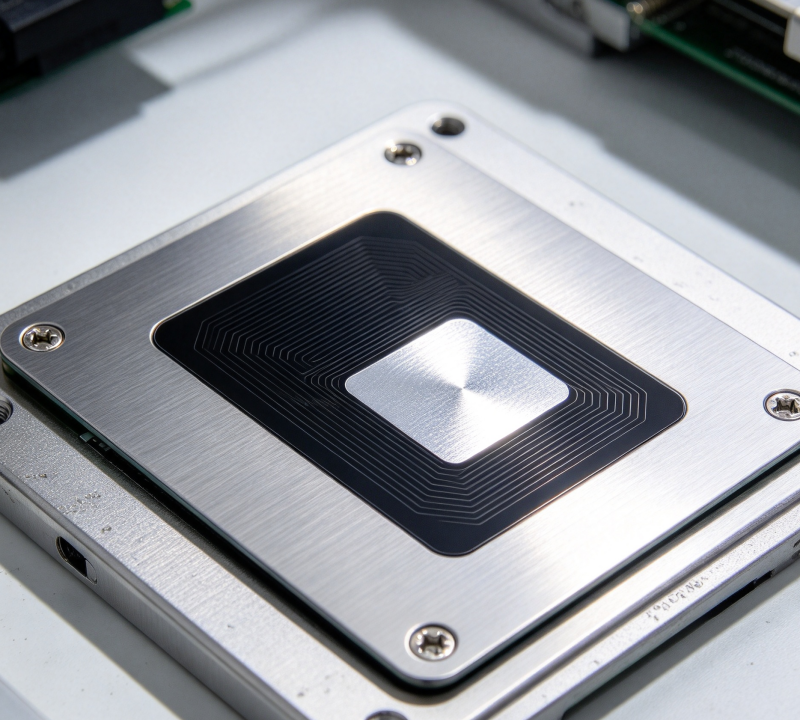
The Small Micro FPC NTAG213 On-Metal NFC Tag is a compact NFC tag designed for applications where installation space is limited and the tag needs to work on or near metal surfaces. With an optional mini diameter of 8mm or 10mm, flexible FPC antenna construction, and NTAG213 NFC technology, this tag is suitable for electronic products, like for toys, food, tobacco, wine, drug,cosmetic, accessories and other high-end products trace-ability, security and home entertainment applications, wearable smart application and some insert applications.
Unlike conventional NFC tags that are mainly designed for non-metallic surfaces, this mini NFC tag can be customized for on-metal applications. Aluminum or copper antenna options, PET protection, custom shapes, printing, and roll or individual packaging provide flexibility for different product designs and installation requirements.
Features:
1: Normal size or mirco size can less than 10mm, 8.7mm etc
2: Aluminum or double copper antenna
3: PET waterproof, resistance of chemical and heating or PVC, Paper
4: Custom 4C LOGO printing or white sticker, wet inlay
5: Can be anti metal, suitable for metal surface
6: Shape and size can be customized
7: Pack by pcs or roll perfect fit your installation
Available NFC TAG Size :Dia8mm,Dia10mm,Dia18mm,15x15mm,9x18mm,8x12mm,6x16mm etc

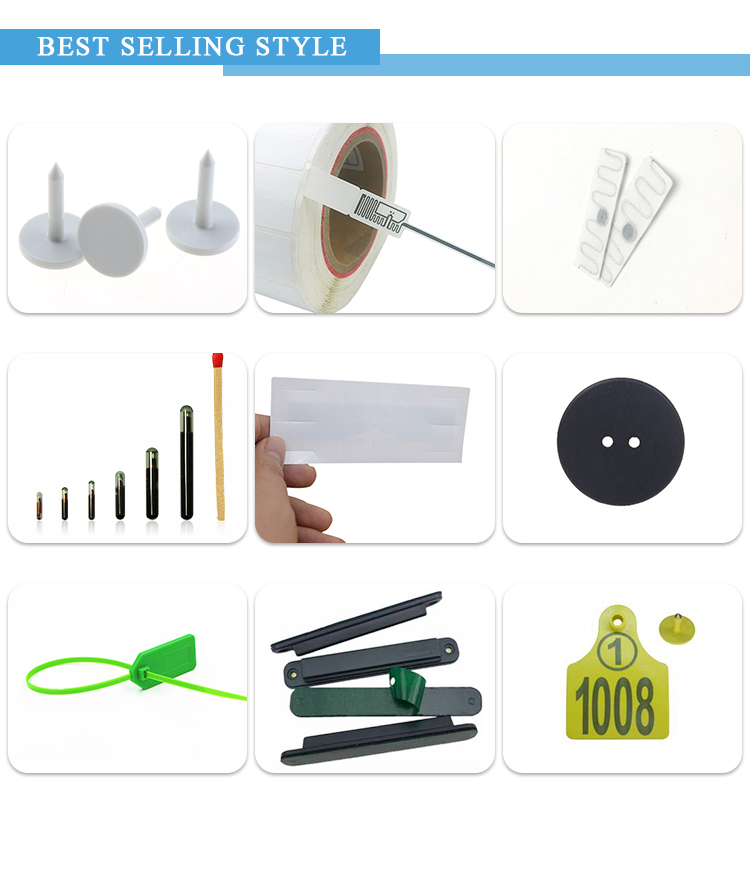
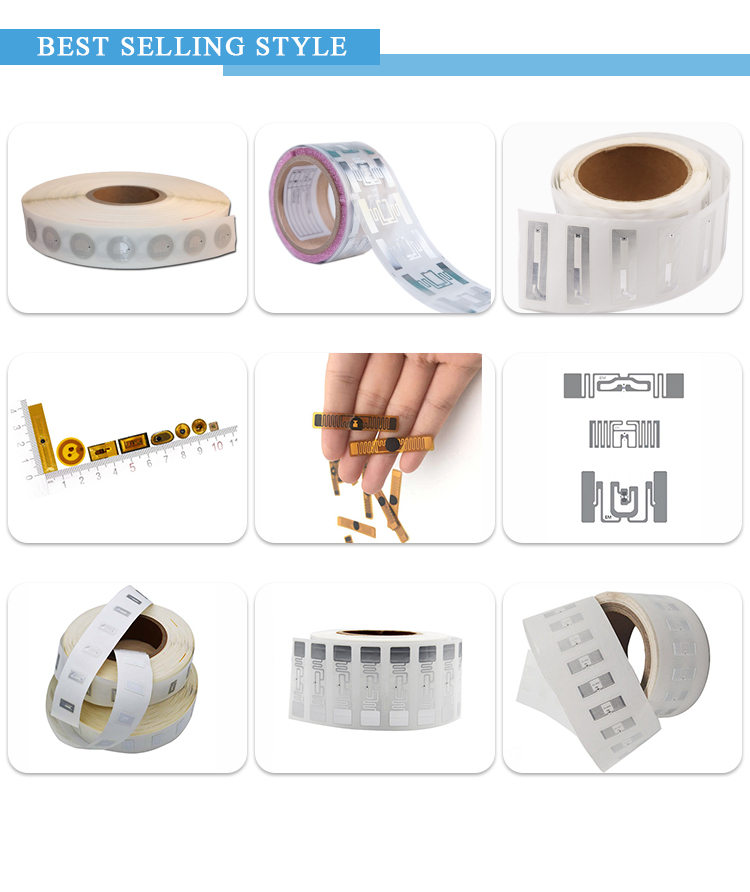
RFID chip
| RFID chip | For HF we have:Protocol ISO/IEC 14443A:1: MIFARE Classic® 1K MIFARE Classic® EV1 1K MIFARE Classic® 4KMIFARE and MIFARE Classic are registered trademarks of NXP B.V. and are used under license.2: MIFARE Plus® MIFARE Plus® EV1 MIFARE Plus® SE 1KMIFARE and MIFARE Plus are registered trademarks of NXP B.V. and are used under license. 3: MIFARE® DESFire® EV1 MIFARE® DESFire® EV2MIFARE DESFire are registered trademarks of NXP B.V. and are used under license. 4: NFC Forum Type 2:1) NTAG® 203 (144 bytes) NTAG 213 (144 bytes) NTAG® 215 (504 bytes)2) NTAG® 216(888 bytes)NTAG® are registered trademarks of NXP B.V. and are used under license. 3) MIFARE Ultralight® (48 bytes) MIFARE Ultralight® EV1 (48 bytes)4) MIFARE Ultralight® C(148 bytes)MIFARE and MIFARE Ultralight are registered trademarks of NXP B.V.and are used under license. Protocol ISO 15693/ISO 18000-3:ICODE® SLIX, ICODE® SLIX-S, ICODE® SLIX-L, ICODE® SLIX 2ICODE® are registered trademarks of NXP B.V. and are used under license. |
Product Specifications
The following specifications describe the available product configurations. Final dimensions, materials, antenna construction, and packaging can be customized according to the application.
| Item | Specification |
|---|---|
| NFC Chip | NTAG213 |
| NFC Standard | NFC Forum Type 2 |
| Communication Protocol | ISO/IEC 14443A |
| User Memory | 144 bytes |
| Frequency | 13.56 MHz |
| Antenna | FPC, aluminum or copper options |
| Tag Shape | Round, rectangular, or customized |
| Mini Diameter | 8mm / 10mm |
| Other Available Sizes | 18mm, 15×15mm, 9×18mm, 8×12mm, 6×16mm |
| Surface Application | Non-metal or on-metal configurations |
| Cover Material | PET, PVC, paper, or customized materials |
| Printing | Custom logo and 4-color printing available |
| Packaging | Individual pieces or rolls |
| Application | NFC identification, traceability, authentication, smart products, and more |
Why Choose an On-Metal NFC Tag?
Metal can affect the electromagnetic field used by conventional NFC antennas. As a result, a standard NFC label may not perform as expected when it is placed directly on a metal product.
An on-metal NFC tag is designed specifically for applications involving metal surfaces. Its antenna and tag construction can be optimized for the intended installation environment.
This makes the mini FPC NFC tag useful for products such as metal housings, electronic devices, tools, accessories, industrial components, premium packaging, and other products where available installation space is very small.
Actual NFC read performance depends on the tag design, metal material, mounting conditions, reader or smartphone, and distance between the tag and reader. For demanding applications, sample testing is recommended before mass production.

Mini NFC Tag Size Comparison
Different products require different tag dimensions. A smaller tag provides greater installation flexibility, while a larger antenna area can provide more design space for NFC performance optimization.
| Tag Size | Typical Advantage | Suitable Applications |
|---|---|---|
| 8mm diameter | Extremely compact | Small electronics, jewelry, mini accessories |
| 10mm diameter | Compact and versatile | Consumer products, metal components, small devices |
| 18mm diameter | Larger antenna area | General product identification |
| 15×15mm | Square installation area | Electronic housings and accessories |
| 9×18mm | Narrow rectangular format | Small product edges and slots |
| 8×12mm | Compact rectangular format | Embedded applications |
| 6×16mm | Narrow mini format | Small spaces and special installations |
The final size should be selected according to the available installation area, required NFC performance, surface material, and product structure.
NTAG213 vs. Other NFC Chips
NTAG213 is one of several NFC chip options available for this type of product. The most suitable chip depends mainly on memory requirements, application features, security requirements, and system compatibility.
| NFC Chip | User Memory* | Typical Use |
|---|---|---|
| NTAG213 | 144 bytes | URLs, product IDs, basic NFC applications |
| NTAG215 | 504 bytes | Larger NDEF records and product data |
| NTAG216 | 888 bytes | Applications requiring more NFC memory |
| MIFARE Ultralight | 48 bytes | Compact identification applications |
| MIFARE Ultralight C | 148 bytes | NFC applications with additional security features |
| ICODE SLIX Series | Application dependent | HF RFID and item identification |
*Memory figures shown are based on the product information provided and should be confirmed against the selected chip version and final configuration.
For a simple product identification or web-link application, NTAG213 can provide sufficient memory while maintaining a compact NFC tag design.
NTAG213 for Product Identification
One common use of an NTAG213 NFC tag is to give each physical product a unique digital identity.
When an NFC-enabled smartphone reads the tag, the user can access the corresponding product information, registration page, authentication service, maintenance record, or digital product profile.
Instead of storing large amounts of product information directly on the NFC chip, the tag can store a short URL or identifier while the detailed information remains in a cloud-based system. This approach can be useful for traceability and product lifecycle management.
FPC Antenna for Compact NFC Applications
The flexible FPC antenna structure is particularly useful when the available installation area is small or when the tag needs to follow a specific product shape.
Compared with a larger conventional NFC label, a miniature FPC tag can be integrated into compact products or embedded into selected areas of a device.
Depending on the product configuration, aluminum or copper antenna materials can be considered. The antenna design should be matched to the selected chip and intended operating environment to achieve the required NFC performance.
For very small tags, antenna design and product testing become especially important because reducing the antenna size can affect the coupling and reading performance.
PET, PVC, and Paper Construction Options
The tag can be manufactured using different outer materials according to the required application.
PET is suitable when a more durable label construction is required. It can be selected for applications where resistance to water, chemicals, or heat is important.
PVC can be used for applications requiring a flexible and printable label construction.
Paper can be considered for general indoor applications where environmental exposure is limited and cost efficiency is important.
The actual material combination should be selected according to temperature, moisture, chemical exposure, installation method, and expected product lifetime.
On-Metal vs. Standard NFC Tags
Choosing between an on-metal NFC tag and a conventional NFC tag depends primarily on the surface where the tag will be installed.
| Feature | On-Metal NFC Tag | Standard NFC Tag |
|---|---|---|
| Metal surface | Designed for metal applications | Generally not optimized for direct metal mounting |
| Non-metal surface | Suitable | Suitable |
| Miniature FPC option | Available | Depends on design |
| Installation flexibility | High for metal products | Best on paper, plastic, glass, and similar surfaces |
| Antenna design | Optimized for application | Conventional NFC antenna |
| Typical use | Metal electronics, tools, accessories | Packaging, cards, labels, plastic products |
For a metal product, an on-metal configuration should be considered rather than assuming that a standard NFC inlay will provide the required performance.
Available NFC Chip Options
In addition to NTAG213, different HF RFID and NFC chips can be supplied depending on the project requirements.
NTAG Series
Available options include:
- NTAG203
- NTAG213
- NTAG215
- NTAG216
These chips are suitable for different memory requirements and NFC applications.
MIFARE Series
Available options include:
- MIFARE Classic 1K
- MIFARE Classic EV1 1K
- MIFARE Classic 4K
- MIFARE Plus
- MIFARE Plus EV1
- MIFARE Plus SE 1K
- MIFARE DESFire EV1
- MIFARE DESFire EV2
MIFARE products can be selected for applications where specific memory, security, access-control, or system requirements apply.
MIFARE Ultralight Series
Available options include:
- MIFARE Ultralight
- MIFARE Ultralight EV1
- MIFARE Ultralight C
These chips are available for compact HF/NFC applications with different memory and feature requirements.
ICODE Series
The product range can also support ISO 15693 / ISO 18000-3 compatible ICODE products, including:
- ICODE SLIX
- ICODE SLIX-S
- ICODE SLIX-L
- ICODE SLIX2
The appropriate chip should be selected according to the reader system, operating standard, memory requirements, and application environment.
Custom NFC Tag Size and Shape
A standard round NFC tag is not always the best fit for a small product. The antenna and label can be customized to match the available installation area.
Common formats include:
- Round mini NFC tags
- Small square NFC tags
- Narrow rectangular NFC tags
- Embedded NFC tags
- Custom-shaped FPC tags
Available reference sizes include 8mm, 10mm, 18mm, 15×15mm, 9×18mm, 8×12mm, and 6×16mm.
Custom dimensions can be discussed for projects requiring a specific installation footprint.
Custom NFC Tag Printing
The tag surface can be customized for branding, product identification, or visual instructions.
Available options may include:
- Company logo
- 4-color printing
- Serial numbers
- QR codes
- Product codes
- White labels
- Custom artwork
Printing requirements should be confirmed together with the tag material and production method before mass production.
Individual or Roll Packaging
Different installation processes require different packaging formats.
For manual installation, individual pieces can be convenient because each tag can be removed and applied separately.
For automated or semi-automated production lines, roll packaging can be more suitable. Roll dimensions, label spacing, winding direction, and core specifications can be customized according to the installation equipment.
| Packaging | Recommended For |
|---|---|
| Individual pieces | Manual installation and small-batch production |
| Roll packaging | Automated or high-volume application |
| Custom packing | Special production and logistics requirements |
Applications of Mini On-Metal NFC Tags
The compact size and customizable construction make this type of NFC tag suitable for a wide range of products.
Electronics
The tag can be integrated into electronic products, metal housings, accessories, and components to provide product identification, service information, or digital registration.
Toys
NFC tags can connect physical toys with digital content, product information, ownership registration, or interactive applications.
Cosmetics and Accessories
Mini NFC tags can be incorporated into premium packaging, cosmetic accessories, jewelry, and other small products where a conventional large label may not fit.
Food, Tobacco, and Wine Packaging
NFC technology can be used for product identification, traceability, digital information, and customer engagement. The appropriate tag construction should be selected according to the packaging material and environmental conditions.
Pharmaceutical and Healthcare Products
NFC tags can provide product identification and access to digital information when used in suitable packaging and traceability systems. Application-specific regulatory and data requirements should be evaluated separately.
Wearable Products
The flexible FPC construction and small form factor can be useful for wearable devices, smart accessories, and compact products where installation space is limited.
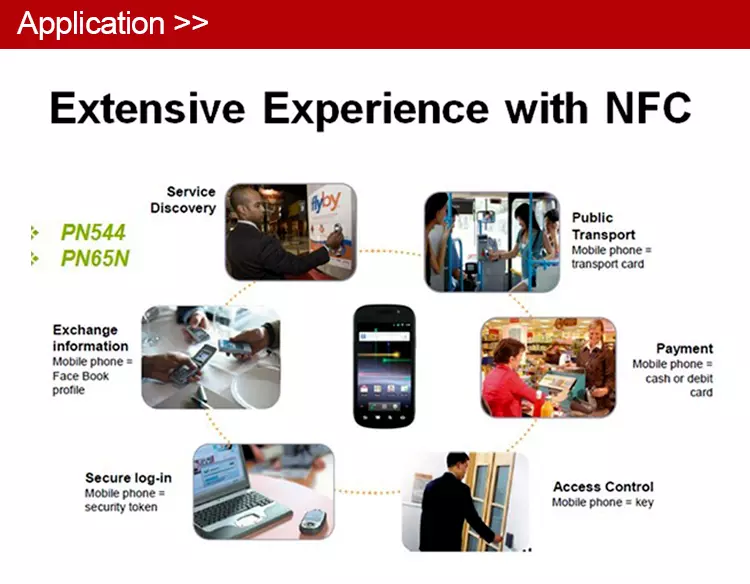
NFC Traceability and Product Authentication
An NFC tag can serve as the connection between a physical product and its digital record.
A typical system can work as follows:
Product → NFC Tag → Unique ID or URL → Cloud Platform → Product Information
The NFC chip itself can store a short identifier or NDEF message, while a connected platform can manage product details such as manufacturing information, service records, ownership registration, or other digital content.
For authentication applications, the overall security of the system depends on more than the NFC chip. Backend controls, unique identifiers, authentication methods, tag configuration, and application software should all be considered.
How to Choose the Right Mini NFC Tag
Before selecting an NFC tag, consider the following factors:
- Installation surface – Determine whether the tag will be installed on metal, plastic, glass, paper, or another material.
- Available space – Measure the maximum diameter or length available for the tag.
- Required read performance – Define the expected reading distance and smartphone or reader type.
- Memory requirement – Select NTAG213, NTAG215, NTAG216, or another chip according to the amount of data required.
- Environmental conditions – Consider water, heat, chemicals, abrasion, and outdoor exposure.
- Installation method – Choose individual pieces or roll packaging according to the production process.
- Printing requirements – Confirm whether a logo, serial number, QR code, or other artwork is required.
- Sample testing – Test the final tag on the actual product before confirming mass production.
Sample Testing Before Mass Production
For miniature and on-metal NFC tags, testing the final product configuration is important.
The same tag can perform differently depending on the metal surface, product geometry, tag position, smartphone model, reader antenna, and distance. Therefore, sample testing should be carried out using the actual product or a representative sample.
During testing, evaluate:
- NFC detection reliability
- Reading distance
- Different smartphone models
- Tag position and orientation
- Metal surface material
- Temperature and environmental conditions
- Adhesive or mounting method
This helps determine whether the selected tag size and antenna configuration meet the requirements of the finished product.

Frequently Asked Questions
What is an NTAG213 NFC tag?
NTAG213 is an NFC chip that supports NFC Forum Type 2 applications and ISO/IEC 14443A communication. The product information provided for this tag lists 144 bytes of memory.
Can the 10mm NFC tag be used on metal?
The product is offered in an on-metal configuration designed for metal applications. However, actual performance depends on the metal material, tag construction, installation conditions, and NFC reader. Testing on the final product is recommended.
What is the smallest available size?
The listed product sizes include an 8mm diameter option, as well as 10mm and other custom dimensions. Final minimum size depends on the selected chip, antenna design, material, and required performance.
Can the NFC tag be customized?
Yes. Size, shape, antenna material, outer material, printing, and packaging can be customized according to project requirements.
Can it be supplied in rolls?
Yes. Roll packaging is available for applications using automated or continuous installation processes.
Can the NFC tag store a URL?
Yes. NTAG213 can be used to store an NDEF record such as a URL, provided the data fits within the available memory.
Does a smaller NFC tag always have a shorter reading distance?
Miniaturizing an NFC antenna can affect its coupling and read performance. The actual result depends on the complete antenna design, reader, tag position, and surrounding materials. A sample test is recommended when a specific reading distance is required.
Which NFC chip should I choose?
NTAG213 is suitable for applications that require a compact NFC tag and relatively small amounts of data. NTAG215 and NTAG216 provide more memory, while MIFARE and ICODE products can be considered when different system or application requirements apply.
Request a Custom Mini NFC Tag
If you need a mini 8mm or 10mm NFC tag, an on-metal NFC tag for a metal product, or a custom FPC NFC tag for an embedded application, the tag can be configured according to your product requirements.
When requesting a quotation or sample, provide the following information:
- Required chip
- Tag diameter or dimensions
- Metal or non-metal application
- Required reading distance
- Product surface material
- Tag thickness requirements
- Printing requirements
- Estimated order quantity
- Individual or roll packaging
- Expected operating environment
Providing these details allows the NFC tag construction and antenna design to be matched more closely to the final application.
Note: NFC performance specifications such as reading distance, operating temperature, thickness, and environmental resistance should be confirmed for the final customized configuration before production. The actual performance may vary according to the selected chip, antenna, materials, mounting surface, reader, and application environment.