November 5, 2026
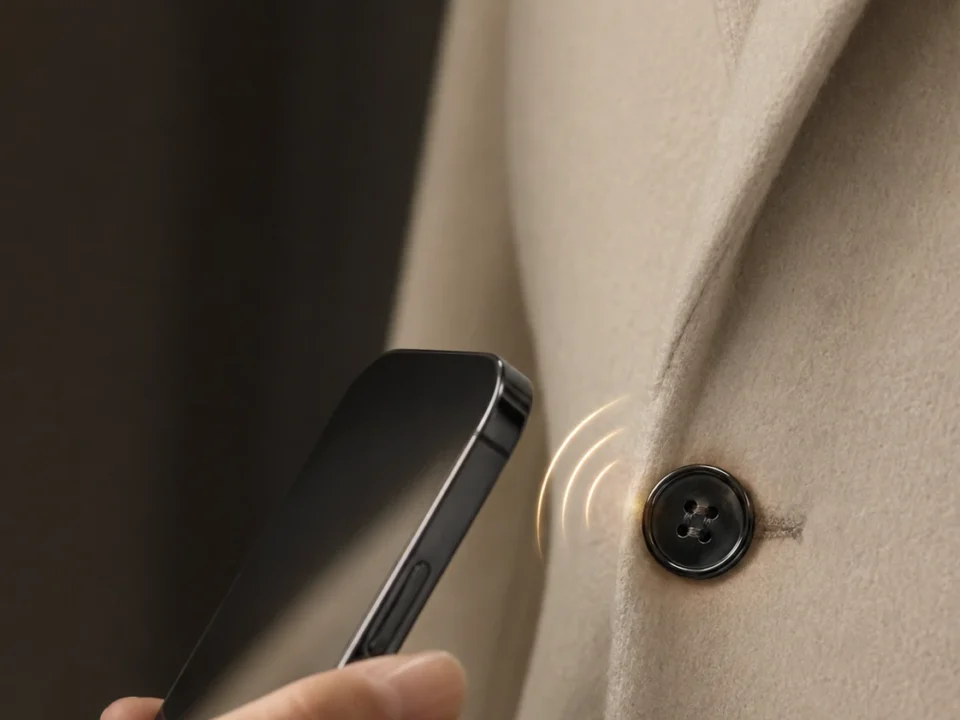
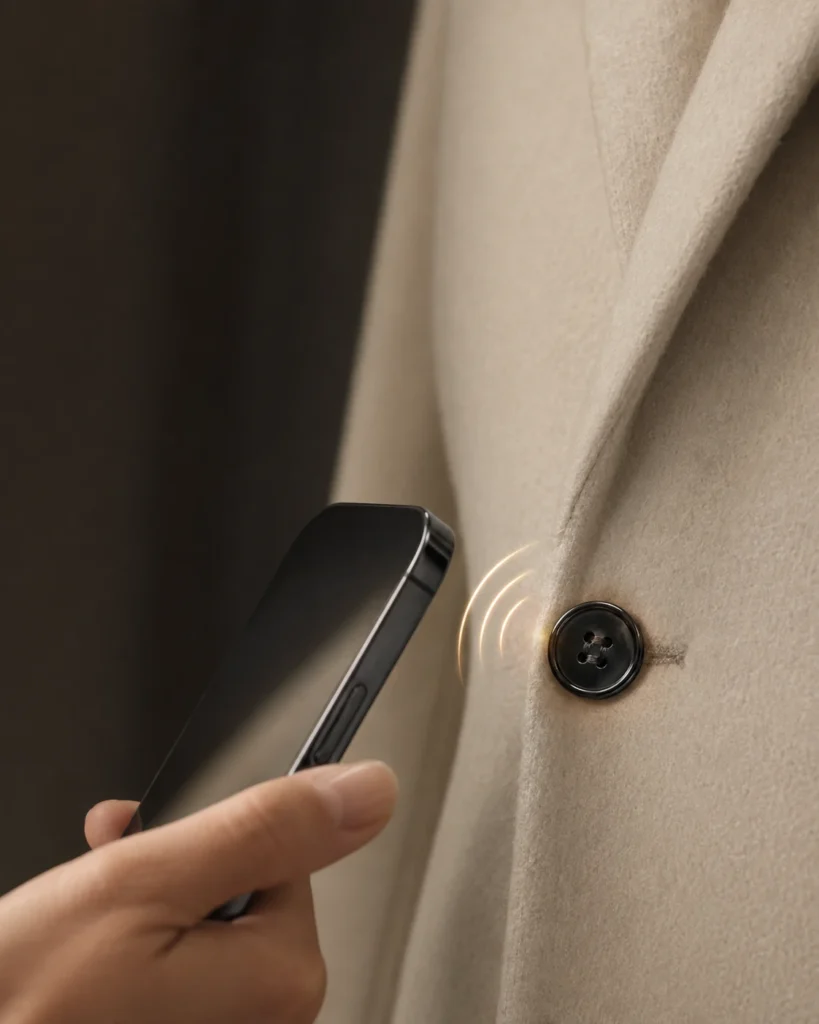
Our RFID smart e-ticket for subway NFC card is designed for contactless ticketing, public transportation, access control, and event admission. Built around 13.56 MHz high-frequency RFID technology, this smart card supports fast contactless communication and convenient data access for transportation operators, system integrators, ticketing solution providers, and card distributors.
We offer the MIFARE Ultralight C chip option for applications that require compact data storage, contactless authentication, and flexible card customization. With custom printing, card numbering, QR codes, and other personalization options, we help businesses create smart ticket cards that combine practical functionality with a professional appearance.
Whether you need subway tickets, public transport passes, event admission cards, or disposable contactless tickets, we can tailor the card configuration to your project requirements.
Key features
- Fully ISO/IEC 14443 A 1-3 compliant
- NFC Forum Type 2 Tag compliant
- 106 Kbit/s communication speed
- Anti-collision support
- 1536 bits (192 bytes) EEPROM memory
- Protected data access via 3DES authentication
- Cloning protection
- Command set compatible to MIFARE Ultralight
- Memory structure as in MIFARE Ultralight (pages)
- 16 bit counter
- Unique 7 bytes serial number
- Number of single write operations: 10,000
RFID Smart E-Ticket Technical Specifications
| Item | Cashless Payment MIFARE Ultralight® C NFC Card |
| Chip | MIFARE Ultralight® C |
| Chip Memory | 192 bytes |
| Size | 85*54*0.84mm or customized |
| Printing | CMYK Digital/Offset printing |
| Silk-screen printing | |
| Available craft | Glossy/matt/frosted surface finish |
| Numbering: Laser engrave | |
| Barcode/QR Code printing | |
| Hot stamp: gold or silver | |
| URL,text,number,etc encoding/lock to read only | |
| Application | Event management, Festivel, concert ticket, Access control etc |
Why Choose MIFARE Ultralight C for E-Ticketing?
The MIFARE Ultralight® C contactless IC is a cost-effective solution using the open 3DES cryptographic standard for chip authentication and data access.
The widely adopted 3DES standard enables easy integration into existing infrastructures and the integrated authentication command set provides effective cloning protection that helps to prevent counterfeiting of tags.
Tickets, vouchers, or tags based on MIFARE Ultralight C can act as single trip mass transit tickets, event tickets, or low-cost loyalty cards and are also used for device authentication.
| Chip Options | |
| ISO14443A | MIFARE Classic® 1K, MIFARE Classic ® 4K |
| MIFARE® Mini | |
| MIFARE Ultralight ®, MIFARE Ultralight ® EV1, MIFARE Ultralight® C | |
| Ntag213 / Ntag215 / Ntag216 | |
| MIFARE ® DESFire ® EV1 (2K/4K/8K) | |
| MIFARE ® DESFire® EV2 (2K/4K/8K) | |
| MIFARE Plus® (2K/4K) | |
| Topaz 512 | |
| ISO15693 | ICODE SLI-X, ICODE SLI-S |
| 125KHZ | TK4100, EM4200,EM4305, T5577 |
| 860~960Mhz | Alien H3, Impinj M4/M5 |
Remark:
MIFARE and MIFARE Classic are trademarks of NXP B.V.
MIFARE DESFire are registered trademarks of NXP B.V. and are used under license.
MIFARE and MIFARE Plus are registered trademarks of NXP B.V. and are used under license.
MIFARE and MIFARE Ultralight are registered trademarks of NXP B.V. and are used under license.
What Is an RFID Smart E-Ticket Card?
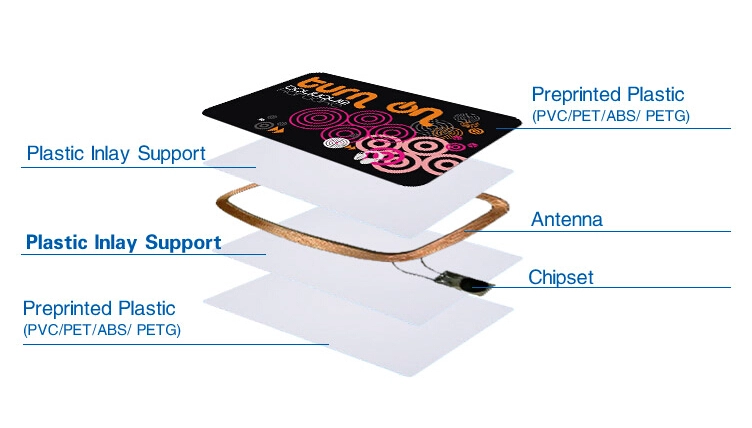
An RFID smart e-ticket card is a contactless card that communicates with a compatible reader using radio-frequency technology. Instead of inserting a ticket into a machine, passengers present the card near a reader to initiate an identification or ticket-validation process.
In a public transportation environment, the card can serve as a physical carrier for an identifier or supported ticket data. The associated ticketing system determines how that information is used to validate journeys, manage access, or record transactions.
Our RFID subway cards provide a practical card format for transportation projects that need convenient passenger interaction and flexible card personalization.
How Does Contactless Ticketing Work?
A typical RFID ticketing process includes four steps:
- Card presentation: The passenger places the card near a compatible reader.
- Card communication: The reader communicates with the chip using the supported contactless protocol.
- Card identification or authentication: The system reads the required identifier or performs the configured authentication process.
- Ticket validation: The ticketing application determines whether the journey or entry is permitted and processes the transaction.
The exact process depends on the reader, chip configuration, security settings, and ticketing software. We can help customers select an appropriate card option for their intended system architecture.
RFID Subway Card Applications
Our RFID smart e-ticket cards can be customized for different transportation and admission environments. The final application depends on the selected chip and the system used to read and process the card.
1. Subway and Metro Ticketing
Contactless cards provide a convenient way for passengers to present tickets at compatible metro gates and validation points. Card-based ticketing can support single-journey products, limited-use tickets, and other transit products designed around the selected chip.
2. Public Transportation Passes
Bus, tram, and other transit operators can use contactless cards as part of a broader fare collection solution. Card identification and transaction processing can be configured according to the capabilities of the reader and fare management system.
3. Event and Exhibition Tickets
Concert organizers, exhibition centers, stadiums, and event management companies can use personalized RFID tickets for contactless entry. Printed event details, logos, and unique identifiers help organize ticket distribution and admission.
4. Tourist and Short-Term Travel Cards
Tourist passes and temporary travel products can combine a customized card design with a supported identification or ticketing application. Operators can select card configurations according to the intended usage period and required data functions.
5. Access Control and Membership
Compatible RFID cards can also be used for building entry, visitor identification, membership programs, and selected access management applications. The card chip and reader must support the authentication and data functions required by the system.

MIFARE Ultralight C vs. Other RFID Card Chips
Choosing the right chip is an important step when developing an RFID ticketing product. Memory, security functions, communication standards, and reader compatibility all influence the final selection.
The following comparison provides a practical starting point for evaluating common card options.
| Chip type | Typical characteristics | Suitable applications |
|---|---|---|
| MIFARE Ultralight C | 192-byte EEPROM; 3DES authentication | Compact tickets and limited-data applications |
| MIFARE Ultralight EV1 | Compact memory options; application-dependent security features | Disposable tickets and promotional cards |
| NTAG213 | 144 bytes of user memory | NFC labels, smart posters, and simple interactive applications |
| NTAG215 | 504 bytes of user memory | NFC marketing, product information, and interactive tags |
| NTAG216 | 888 bytes of user memory | Applications requiring more NFC user memory |
| MIFARE Classic 1K | 1 KB memory; sector-based organization | Compatible legacy access and ticketing systems |
| MIFARE DESFire EV2 | File-based smart card architecture; advanced security features | Multi-application ticketing and more complex systems |
Memory figures refer to commonly specified chip capacities; usable application memory and supported functions vary by chip model.
Which Chip Should You Choose?
Choose MIFARE Ultralight C when your project needs compact ticket data and 3DES authentication support. Consider an NTAG chip when the main objective is NFC interaction, such as opening a URL or presenting product information.
For systems requiring larger data capacity, multiple applications, or a more extensive security architecture, a DESFire family chip may be a better starting point. MIFARE Classic may suit existing installations designed specifically around that technology.
We recommend selecting the chip based on the target reader and software environment rather than memory capacity alone.
RFID vs. NFC: Understanding the Difference
RFID is a broad family of radio-frequency identification technologies. NFC is a related short-range technology operating at 13.56 MHz, with defined communication modes and compatibility requirements.
Many 13.56 MHz contactless cards use technologies associated with both RFID and NFC. However, not every RFID card supports every NFC function, and not every NFC-enabled phone can perform all operations supported by a dedicated ticketing reader.
| Comparison | RFID smart card | NFC-enabled application |
|---|---|---|
| Main purpose | Contactless identification and data exchange | Short-range interaction and data exchange |
| Common use | Ticketing, access control, identification | Mobile interaction, tags, supported smart cards |
| Reader requirements | Depend on frequency and protocol | Depend on NFC mode and supported technology |
| Mobile compatibility | Varies by chip and frequency | Requires compatible NFC hardware and supported functions |
| Security | Depends on chip and system design | Depends on the selected technology and application |
For subway ticketing, the most important consideration is whether the card works with the intended reader, validation process, and ticketing application.
Custom RFID Subway Card Manufacturing
We provide card customization options to help transportation operators, ticketing companies, and distributors align the product with their branding and operational needs.
Card Material and Dimensions
Our standard PVC card format measures 85 × 54 mm with a thickness of 0.84 mm. This familiar format is convenient for wallets, cardholders, and ticket distribution.
For projects requiring a different form factor or material, we can discuss available manufacturing options according to the application, durability requirements, and chip design.
Custom Printing Options
We support different printing and personalization methods for branded RFID cards.
| Customization option | Typical use |
|---|---|
| Full-color offset printing | Large production runs and detailed graphics |
| Digital printing | Customized artwork and selected short-run projects |
| Screen printing | Specific colors and graphic elements |
| Logo printing | Brand identity and operator recognition |
| Serial number printing | Card inventory and identification |
| QR code or barcode | Visual identification and supplementary scanning |
| Magnetic stripe | Applications that require a separate magnetic interface |
| Signature panel | Manual identification or recordkeeping |
| Gold or silver foil | Premium visual presentation |
| Custom packaging | Distribution, retail, and project-specific packaging |
Personalization can combine printed visual information with supported electronic encoding. QR codes, barcodes, and printed numbers provide additional visual or optical identification methods; they do not automatically replace the chip’s electronic functions.
Card Encoding and Data Personalization
We can discuss encoding requirements for projects that need predefined data, serial numbers, or card identifiers. Depending on the selected chip, available options may include UID-based identification, writable application memory, and supported access-control settings.
Customers should define their encoding requirements alongside the target reader and software system. This approach helps align the card production process with the intended deployment.

Packaging Options for RFID E-Ticket Cards
Efficient packaging helps organize bulk card orders for transportation projects, distributors, and ticketing service providers.
Our standard packaging options include:
| Packaging item | Available configuration |
|---|---|
| Inner packaging | White box |
| Cards per box | 200 cards |
| Boxes per carton | 5, 10, or 15 boxes |
| Total cards per carton | 1,000, 2,000, or 3,000 cards |
| Custom packaging | Available for project requirements |
Custom labels and packaging arrangements can be discussed according to order quantity and distribution needs.

Normal package :200pcs rfid cards into the white box. 5 boxes /10boxes /15boxes into one carton. Customized Package based on your request.
How to Select the Right RFID Ticket Card
Before placing an order, we recommend defining the following project details. Clear specifications help us identify the appropriate chip and customization options.
1. Reader and protocol: Identify the reader model, operating frequency, and supported contactless protocols.
2. Ticketing function: Define whether the card is used for single-use tickets, transit passes, event admission, or access control.
3. Data requirements: Determine what information needs to be stored, read, or associated with the card in the backend system.
4. Security requirements: Specify the required authentication method, key management approach, and protected data functions.
5. Card appearance: Provide the desired dimensions, artwork, colors, numbering, and any QR code or barcode requirements.
6. Order quantity and packaging: Estimate the required volume and preferred packaging configuration.
7. Delivery schedule: Share the planned deployment date and any production or shipping requirements.
With these details, we can recommend a suitable chip option and prepare a more relevant product proposal.
Frequently Asked Questions
What frequency does the RFID subway card use?
Our MIFARE Ultralight C card option operates at 13.56 MHz and uses ISO/IEC 14443 Type A communication. It is intended for compatible high-frequency contactless systems.
How much memory does the MIFARE Ultralight C chip provide?
MIFARE Ultralight C provides 192 bytes of EEPROM memory. This capacity is suited to compact data requirements, including selected ticketing and identification applications.
Does the card support encryption?
The MIFARE Ultralight C chip supports 3DES-based authentication. The overall security of a ticketing application depends on how the chip, reader, authentication process, and backend software are configured.
Can I customize the card with my logo?
Yes. We offer custom printing options for logos, graphics, colors, serial numbers, QR codes, and barcodes. We can discuss artwork requirements and available printing methods for your order.
Can the RFID card be used directly with a smartphone?
Smartphone compatibility depends on the phone’s NFC capabilities, the selected chip, and the operations supported by the application. A dedicated transportation reader may support functions that are not available through a standard mobile NFC application.
Can I use this card with an existing subway gate?
The card must match the gate’s supported chip technology, communication protocol, authentication process, and ticketing configuration. Providing the reader model and system requirements helps us identify an appropriate card option.
Can you supply other RFID and NFC chips?
Yes. Available chip options can include MIFARE Ultralight variants, NTAG213/215/216, MIFARE Classic, and MIFARE DESFire families. The suitable choice depends on memory, security, application functions, and system compatibility.
What is the standard card size?
Our standard card size is 85 × 54 mm, with a thickness of 0.84 mm. Other dimensions and formats can be discussed according to project requirements.
How are the cards packaged?
Our standard packaging uses 200 cards per white box, with 5, 10, or 15 boxes per carton. We can also discuss customized packaging arrangements for bulk orders.
What information should I provide when requesting a quotation?
Please share your target chip, card quantity, card artwork, encoding requirements, packaging preferences, and intended application. If you are replacing an existing card, the reader model and relevant card specifications are also helpful.

Request a Quote for Custom RFID Subway Cards
We supply RFID smart e-ticket cards for transportation operators, system integrators, ticketing providers, event organizers, and card distributors.
Whether you need MIFARE Ultralight C subway tickets, customized NFC cards, or alternative RFID chip configurations, our team can help you define the product specifications, printing options, encoding requirements, and packaging plan for your project.
Contact us with your required chip type, quantity, artwork, and application details. We will work with you to identify a suitable card solution for your contactless ticketing project.