October 21, 2026
Custom Tracking Tags for Industrial Assets, Warehousing and Logistics
Looking for custom tracking tags to improve asset visibility, inventory management, or supply chain operations? D.O RFID Group provides RFID tags and customized identification solutions designed around different applications, materials, operating environments, and system requirements.
From warehouse inventory and industrial equipment to reusable containers and logistics assets, choosing the right tracking tag depends on what you need to identify, how the tag will be read, and where it will be used.
We help businesses evaluate suitable tag technologies, materials, dimensions, mounting methods, and encoding options to develop tracking solutions that fit their operational requirements.
Need a customized tracking tag solution? Contact our team to discuss your application, evaluate suitable products, and request a quotation.
As a professional tag supplier and manufacturer, D.O RFID Group is committed to providing high – performance and customizable intelligent tracking tag products for global customers. Our products combine advanced technologies with flexible customization capabilities, suitable for multiple scenarios such as logistics warehousing, asset management, and retail traceability. They help enterprises improve management efficiency and achieve precise tracking and digital management of items.
What Are Intelligent Tracking Tags?
Intelligent tracking tags are identification or tracking devices used to identify assets, collect identification data, or support location monitoring. Depending on the technology, they can help businesses improve inventory visibility, automate identification processes, and manage assets throughout their operational workflows.
Different tracking technologies serve different purposes. Passive RFID tags communicate with compatible readers without requiring an onboard battery for the RFID function. Bluetooth-based devices can support proximity detection or location monitoring when used with compatible gateways or positioning infrastructure. GPS-enabled devices can determine geographic position when the necessary satellite reception, power supply, and supporting connectivity are available.
The right solution depends on whether your priority is automated identification, inventory counting, proximity monitoring, or geographic location tracking.
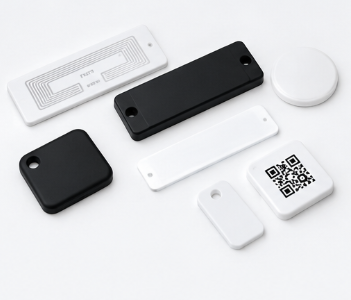
Core Features of the Products
- Flexible Customization: We support customizing tag size, material, appearance design, and functional modules according to customer needs. Whether it’s an industrial – grade tag resistant to high temperatures, water, and moisture, or a lightweight and portable retail tag, we can create it as required to meet the special requirements of different application scenarios.
- Stable High Performance: Using high – quality raw materials and precise manufacturing processes, our tags ensure strong signal reception, long battery life, and anti – interference performance. They can work stably even in complex environments, enabling real – time positioning and data transmission of items.
- Wide Compatibility: Our tags are compatible with multiple mainstream operating systems and management platforms. They support various communication technologies such as Bluetooth, RFID, and GPS, and can be easily integrated into the customer’s existing management systems, reducing deployment costs and operational difficulties.
Core Function Demonstration
- Real – Time Positioning and Tracking: By connecting to intelligent terminals or management platforms, you can obtain real – time location information of items and support historical trajectory queries. This helps enterprises keep track of item dynamics and optimize scheduling processes.
- Data Storage and Transmission: The built – in large – capacity storage chip can record the entire life – cycle data of items, such as production information, circulation trajectory, and quality inspection records. It also supports one – click uploading to the cloud for digital management and analysis of data.
- Abnormal Warning Mechanism: It supports customizing warning rules, such as exceeding the preset range or abnormal signal interruption. Alerts are triggered in real – time to help customers handle abnormal situations promptly and reduce the risk of item loss or damage.
Technical Parameter Table
| Project | Details |
|---|---|
| Size | Customizable (Regular size: 50mm×30mm×5mm) |
| Material | ABS plastic / silicone / metal composite material (Customizable low-temperature and corrosion-resistant materials) |
| Operating Frequency | 2.4GHz (Bluetooth) / 860 – 960MHz (RFID) / L1/L2 (GPS) |
| Battery Life | The built-in battery supports 12 – 36 months of battery life (Customizable rechargeable or solar-powered modes) |
| Waterproof Rating | IP67 (Customizable IP68-grade waterproof and dustproof) |
Custom Tracking Tag Solutions for Different Applications
Tracking tags need to match the assets being managed and the environment in which they operate. A tag designed for warehouse inventory may not be suitable for metal equipment, outdoor containers, or assets exposed to demanding industrial conditions.
D.O RFID Group helps businesses evaluate tracking tag options according to their application requirements.
Warehouse and Inventory Tracking
RFID tracking tags can support faster inventory identification and stocktaking when integrated with compatible readers and inventory management systems. They can help reduce manual scanning and improve the efficiency of warehouse operations.
Potential applications include inventory identification, storage bins, cartons, reusable containers, and warehouse equipment.
When selecting a warehouse tracking tag, consider the required reading distance, tag density, asset materials, reader configuration, and the need to identify multiple items within the same reading area.

Industrial Equipment and Asset Tracking
Industrial asset tracking requires tags that remain identifiable under the conditions in which equipment is used. Depending on the application, important considerations may include mounting strength, exposure to dust or moisture, temperature variation, vibration, and contact with metal surfaces.
Suitable tags may be used to identify tools, machinery, maintenance equipment, returnable transport items, and other valuable assets.
For metal assets, evaluate tags specifically designed for on-metal applications. Actual performance depends on the tag design, mounting surface, reader, orientation, and surrounding environment.

Logistics and Supply Chain Tracking
Tracking tags can help identify goods, pallets, containers, and reusable transport assets as they move through warehouses, distribution centers, and logistics operations.
RFID-based identification can support receiving, sorting, dispatch, and inventory verification processes. Where continuous location monitoring is required, additional tracking devices, gateways, network connectivity, or positioning infrastructure may be necessary.
The appropriate solution depends on whether you need identification at designated checkpoints or location information between checkpoints.

Retail and Product Identification
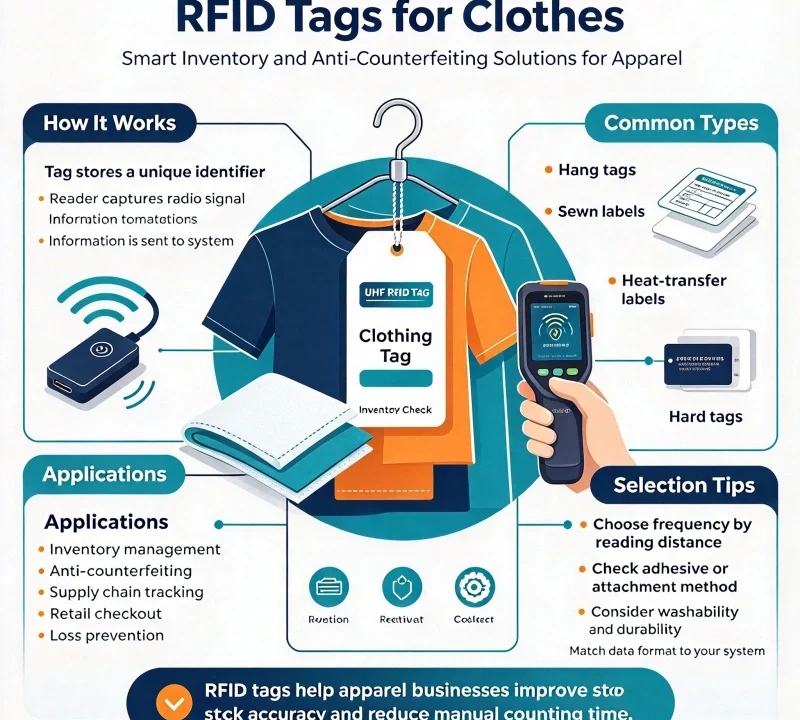
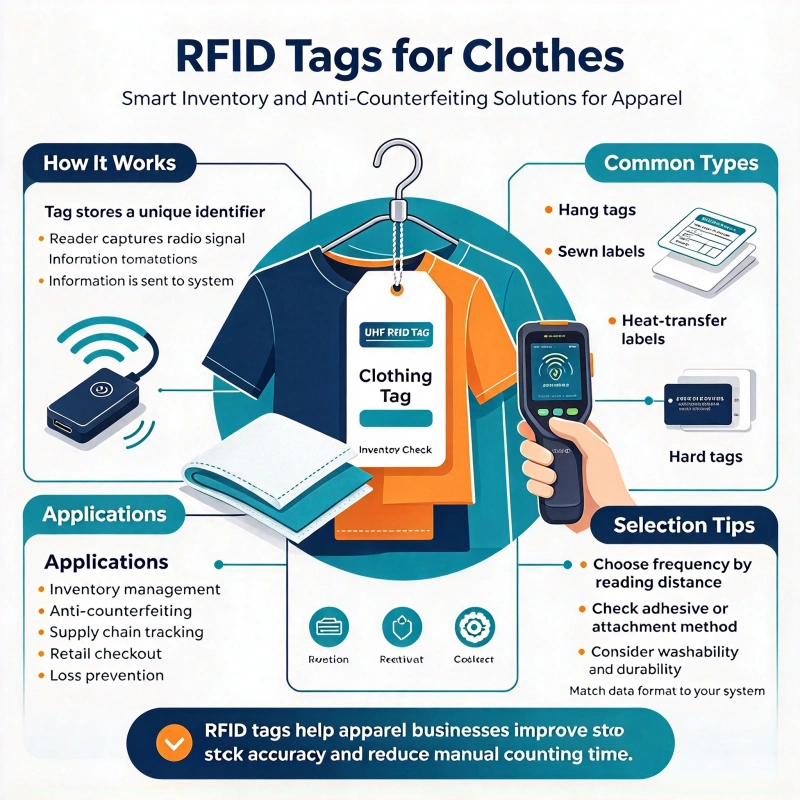
RFID and other identification tags can support product identification, inventory management, stock visibility, and selected retail automation workflows.
For retail applications, consider tag size, attachment method, product packaging, reader compatibility, data encoding, and whether the tag needs to remain readable throughout the product lifecycle.
Customized designs can be evaluated according to the product type and the requirements of the intended identification system.

Reusable Containers and Returnable Assets
Reusable containers, transport boxes, and returnable packaging often move repeatedly between facilities, suppliers, and customers. Identifying these assets can help businesses manage circulation, record movements at reading points, and reduce manual tracking work.
The selection process should consider repeated handling, attachment durability, environmental exposure, and the identification range required by the operational workflow.
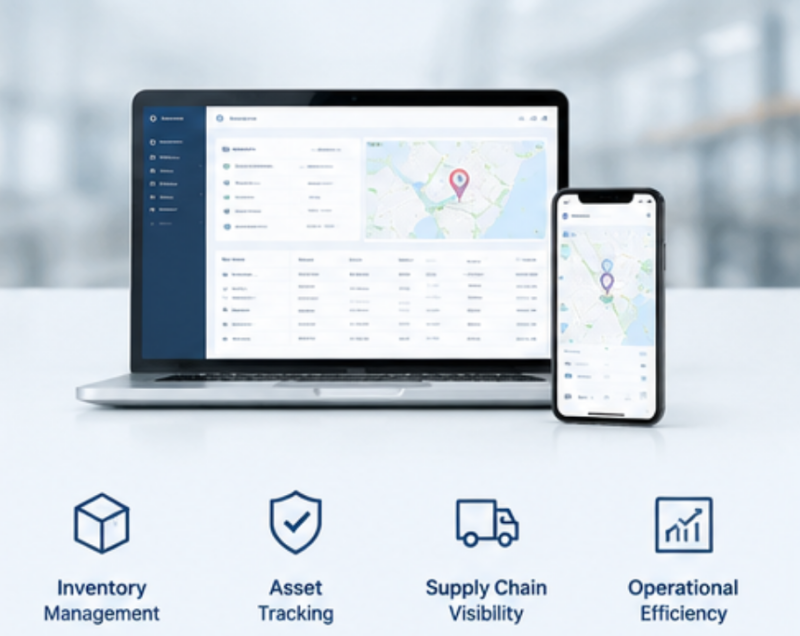
Types of Tracking Tags and How to Choose the Right Technology
Not all tracking tags work in the same way. Selecting a suitable technology requires a clear understanding of the identification method, infrastructure, power requirements, and expected tracking results.
RFID Tracking Tags
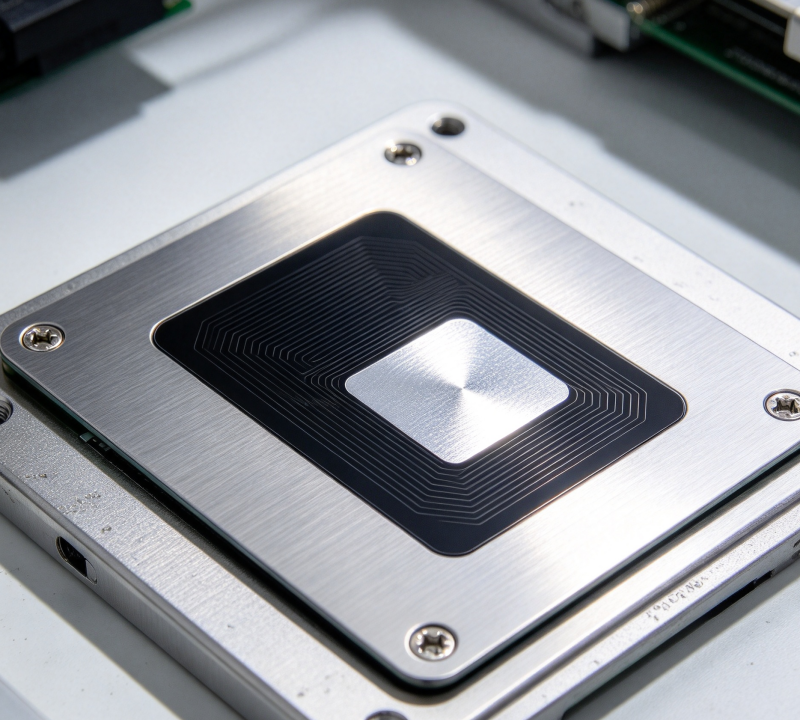
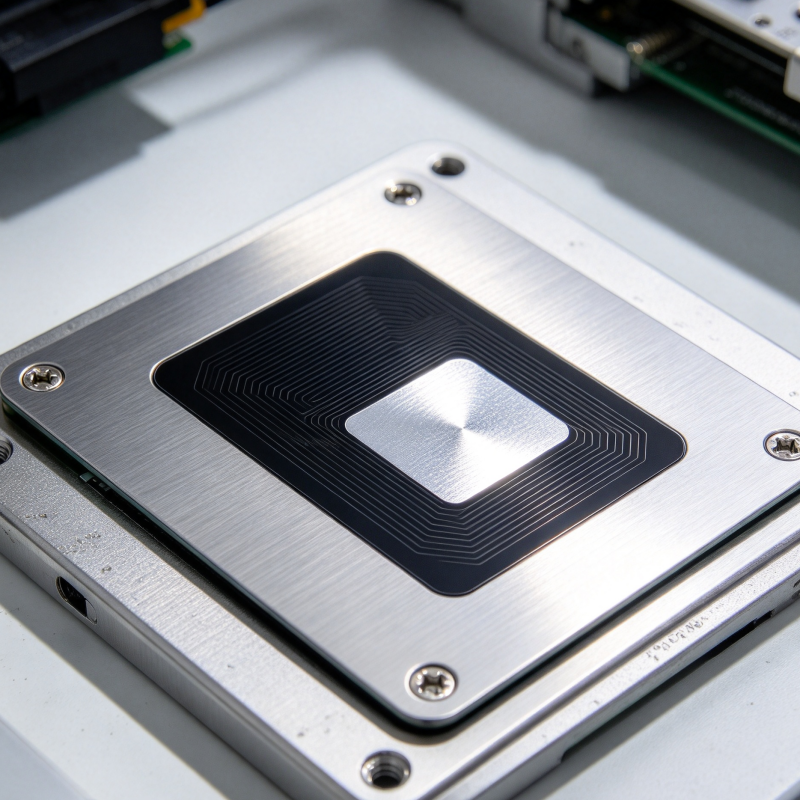
RFID tags use radio-frequency communication to transfer identification data to compatible RFID readers. Passive RFID tags obtain the energy needed for communication from the reader’s RF field, so they do not require an onboard battery for normal passive RFID operation.
RFID solutions are widely used for inventory management, warehouse automation, asset identification, and logistics workflows.
When choosing RFID tracking tags, consider the operating frequency, chip, reader compatibility, required reading distance, memory requirements, tag placement, and environmental conditions.
NFC Tags for Short-Range Identification
NFC is a short-range contactless technology commonly used for product information access, equipment identification, maintenance records, and interactive identification workflows.
NFC tags may be suitable when users need to identify an item with a compatible NFC-enabled device at close range. They are generally not a substitute for long-range UHF RFID inventory systems.
Choose NFC when close-range interaction is part of the workflow and the intended devices and applications support the required NFC functions.
Bluetooth Tracking Devices
Bluetooth-based tracking devices can support proximity detection and location-related applications through compatible smartphones, gateways, receivers, or positioning systems.
Depending on the device and deployment, Bluetooth solutions may provide proximity information or estimated location rather than precise geographic coordinates.
Before selecting a Bluetooth tracking device, consider battery requirements, expected operating life, advertising intervals, receiver coverage, installation density, and software integration.
GPS-Enabled Tracking Devices
GPS-enabled tracking devices can determine geographic position using satellite signals. They are commonly considered for outdoor assets, vehicles, mobile equipment, and applications that require location information over wider areas.
Performance depends on satellite visibility, power availability, device design, connectivity, and the positioning service used. GPS alone does not automatically provide continuous remote tracking; the device also needs an appropriate method to transmit location data.
When evaluating a GPS-enabled solution, clarify the required reporting frequency, coverage, battery life, communications method, and total operating cost.
Customization Options for Tracking Tags
A tracking tag should be selected according to the actual operating requirements rather than appearance alone. Depending on the product type and project feasibility, customization may involve the tag’s physical design, electronic configuration, material, mounting method, and data preparation.
Tag Size, Shape, and Form Factor
Tag dimensions and shape affect where a tag can be installed and how it interacts with the asset and reader.
Depending on the application, design considerations may include:
- Overall dimensions and available installation space
- Label, card, hard-tag, or other suitable form factors
- Attachment holes, adhesive mounting, or mechanical fastening
- Housing design and protection of electronic components
- Compatibility with the target asset and identification workflow
The available options depend on the selected product and customization requirements.
Chip, Frequency, and Protocol Selection
For RFID tags, chip and frequency selection should match the reader system, application requirements, and applicable regional regulations.
Common considerations include:
- LF, HF, or UHF operating frequency
- Compatible chip and supported protocol
- Memory capacity and required data functions
- Reader compatibility and expected reading performance
- Required identification distance and reading environment
A tag’s performance cannot be determined by chip selection alone. Antenna design, tag dimensions, mounting conditions, reader configuration, and surrounding materials can also affect results.
Materials and Environmental Requirements
The tag’s materials and construction should match the environment in which it will be used.
Depending on the application, selection criteria may include:
- Plastic, adhesive label, or other suitable construction
- Resistance to moisture, dust, or selected chemicals
- Operating temperature requirements
- Exposure to vibration, impact, or repeated handling
- Outdoor exposure and UV resistance
- Compatibility with metal or other challenging mounting surfaces
Waterproofing, temperature resistance, chemical resistance, and ingress protection should be confirmed for the specific model and validated under appropriate test conditions.
Mounting and Installation Methods
The mounting method can influence durability, reading performance, and maintenance requirements.
Potential installation approaches include adhesive attachment, mechanical fastening, cable ties, or purpose-designed housings, depending on the tag type and asset.
For metal surfaces, liquids, or dense materials, evaluate the complete tag-and-reader configuration before confirming the final design.
Encoding, Printing, and Branding
Some tracking projects require tags to be encoded or printed before delivery. Depending on the selected product, customization may include identification data, serial numbers, barcodes, QR codes, logos, or other product information.
Before production, confirm the required data format, encoding procedure, label layout, numbering rules, and any data-security requirements.
Technical Specifications and Compatibility
Technical specifications should be evaluated against the requirements of the complete tracking system. A tag with a suitable nominal reading range may still perform differently when installed on a specific asset or used in a different environment.
Reading Distance and Identification Performance
Reading distance depends on the tag technology, antenna design, reader output, reader antenna, mounting position, surrounding materials, and operating environment.
For RFID applications, distinguish between laboratory results and performance in the intended installation. For Bluetooth or GPS-enabled devices, distinguish between proximity detection, estimated position, and geographic location.
When defining requirements, specify the target reading distance, asset orientation, number of tags in the reading area, expected movement speed, and the required identification reliability.
Reader and System Compatibility
Before ordering tracking tags, verify that the selected product is compatible with your existing readers, software, and data workflows.
For RFID, confirm the operating frequency, protocol, chip requirements, and regional frequency regulations. For Bluetooth or GPS-based systems, confirm the required receivers, gateways, connectivity, software, and data interfaces.
If you already operate an asset management or warehouse management system, provide its relevant technical requirements so compatibility can be assessed before production.
Battery Life and Maintenance
Battery requirements vary significantly by tracking technology and device configuration. Passive RFID tags do not need an onboard battery for normal passive identification, while active tracking devices may require batteries or another power source.
For battery-powered devices, expected service life depends on battery capacity, reporting frequency, transmission settings, operating temperature, signal conditions, and usage patterns.
Battery life should therefore be confirmed for the selected device and intended operating profile rather than assumed from the technology category alone.
Environmental Protection and Product Testing
Where tags will be exposed to demanding conditions, testing should reflect the intended use.
Relevant evaluations may include reading performance on the target material, attachment durability, temperature exposure, moisture resistance, impact resistance, and performance after repeated handling.
If a specific IP rating, operating temperature range, or durability requirement is essential, confirm that the selected model has appropriate supporting documentation and test evidence.
D.O RFID Group Factory Advantages – A Trustworthy Manufacturer
As an industry – leading intelligent tag manufacturer, D.O RFID Group has a modern production base and advanced automated production lines. It has the full – process manufacturing capabilities from chip packaging, module integration to finished product assembly. Our advantages include:
- Mature R & D Team: Our professional engineer team has extensive experience in the tag technology field. They can quickly respond to customer customization needs and provide one – stop services from solution design to sample proofing.
- Strict Quality Control: We have established a complete ISO9001 quality management system. Every process from raw material procurement to finished product delivery undergoes multiple inspections to ensure stable and reliable product performance.
- Efficient Supply Chain: We have established long – term cooperative relationships with high – quality suppliers, achieving stable supply of raw materials and cost optimization. We also support small – batch trial production and large – scale mass production, flexibly meeting the order requirements of different customers.
- Thoughtful After – Sales Service: We offer a 2 – year product warranty. Our professional after – sales team responds 7×24 hours to promptly solve problems encountered by customers during use, making cooperation worry – free.
How to Order Custom Tracking Tags
A clearly defined requirement helps shorten the product selection and quotation process.
Step 1: Share Your Application Requirements
Tell us what you need to track, where the tags will be installed, and how the identification or tracking process will work.
Useful information includes the asset type, operating environment, desired reading distance, existing readers, target quantity, and required customization.
Step 2: Evaluate the Suitable Tag Options
Based on your requirements, evaluate the appropriate technology, product type, material, mounting method, and technical specifications.
If you already have a reader model or an existing tag specification, provide that information to help assess compatibility.
Step 3: Confirm Specifications and Quotation
Before placing an order, confirm the selected model, customization scope, quantity, encoding requirements, quality criteria, packaging, and delivery expectations.
The quotation should reflect the actual product configuration and agreed project requirements.
Step 4: Test Samples and Validate Performance
Where samples are available, test them in the intended environment. Verify reading performance, attachment, compatibility, and any critical environmental requirements.
Document the acceptance criteria before approving the final configuration.
Step 5: Confirm Production and Delivery
Once the specifications and acceptance requirements are approved, confirm the order details, production schedule, inspection arrangements, and shipping requirements with the supplier.
Frequently Asked Questions About Custom Tracking Tags
What is the difference between RFID tracking tags and Bluetooth tracking devices?
RFID tags are commonly used to identify items when they are read by compatible RFID readers. Passive RFID tags do not require an onboard battery for normal passive identification.
Bluetooth tracking devices use Bluetooth radio signals and compatible receivers or gateways to support proximity detection or certain location-monitoring applications. They may require a battery and supporting infrastructure.
The appropriate option depends on whether you need automated identification at reading points, proximity monitoring, or location information.
Which tracking tag is best for warehouse inventory?
The best option depends on your inventory workflow, item materials, reading distance, tag density, reader configuration, and software requirements.
RFID tags may be suitable for automated inventory identification and bulk reading workflows. Other technologies may be more appropriate when close-range user interaction or location monitoring is required.
Testing the selected tag with the intended reader and actual inventory is recommended before a large deployment.
Can RFID tracking tags be used on metal surfaces?
Yes, certain RFID tags are specifically designed for metal mounting. Standard RFID labels or tags may experience reduced performance when installed directly on metal.
The correct choice depends on the tag design, mounting surface, required reading distance, and reader configuration. Test the selected tag on the actual asset before confirming the final specification.
Can tracking tags be customized in size and material?
Customization possibilities depend on the selected tag type and project requirements. Available options may include dimensions, form factor, material, mounting method, printing, encoding, and other product features.
Provide your installation space, asset material, environmental conditions, and target quantity so the available options can be evaluated.
Do tracking tags require a battery?
Passive RFID tags do not require an onboard battery for normal passive RFID identification. Bluetooth tracking devices and GPS-enabled tracking devices commonly require a battery or another power source, although the configuration depends on the specific product.
Battery requirements and expected service life should be confirmed for the selected device and intended operating profile.
What information is needed to request a quotation?
To help prepare a suitable quotation, provide as much of the following information as possible:
- Application and asset type
- Required tracking or identification technology, if known
- Target asset material and installation method
- Required reading distance or location-monitoring function
- Environmental and temperature requirements
- Existing reader, gateway, or software specifications
- Preferred dimensions, material, and customization options
- Estimated order quantity and target delivery date
If you do not know which technology is appropriate, describe your application and operational goals first. The technical options can then be evaluated.
Can I test samples before placing a bulk order?
Sample availability depends on the selected product and customization requirements. Where samples are available, testing them in the intended environment can help validate reader compatibility, reading performance, installation, and durability.
Discuss the required configuration, sample quantity, and acceptance criteria before proceeding.
How do I choose between passive RFID and active tracking devices?
Choose passive RFID when your main requirement is identifying items through compatible readers at designated reading points or within a managed reading area.
Consider active tracking devices when the application requires functions such as Bluetooth-based proximity monitoring or GPS-enabled location reporting. These devices may require batteries, receivers, network connectivity, and additional software.
The decision should be based on the required tracking outcome, coverage, infrastructure, power availability, and total system cost.
Request a Quote for Custom Tracking Tags
Every tracking project has different technical and operational requirements. The right solution starts with understanding your assets, identification workflow, installation environment, and expected performance.
Contact D.O RFID Group to discuss your custom tracking tag requirements. Share your application details, preferred specifications, estimated quantity, and any existing reader or system information so our team can evaluate suitable options.
Whether you need RFID tags for inventory management, identification tags for industrial equipment, or a customized solution for logistics assets, we can discuss product suitability, customization feasibility, sample evaluation, and quotation requirements.
Request a Quote Today to start evaluating the right tracking tag solution for your project.

Au is an RFID and NFC manufacturer based in Shenzhen, China, with over 10 years of experience.