
Jewelry retail looks elegant from the outside—glass counters, brilliant diamonds, precise lighting. Behind the counter, however, inventory control can feel like controlled chaos. Hundreds or thousands of tiny, high-value items. Manual counting. Human error. Shrinkage risk. Time-consuming audits.
This is exactly where RFID jewelry tags and a complete RFID Jewelry Management System change the rules of the game.
Instead of scanning items one by one with barcodes—or manually counting rings like a medieval merchant—RFID enables bulk reading, real-time tracking, intelligent inventory management, and enhanced security. It transforms jewelry management from reactive control into proactive data-driven operations.
This article provides a comprehensive SEO-focused overview of RFID jewelry tags, detailed technical specifications, chip options, materials, system architecture, application benefits, and how a complete RFID jewelry management solution works in modern retail.
What Are RFID Jewelry Tags?
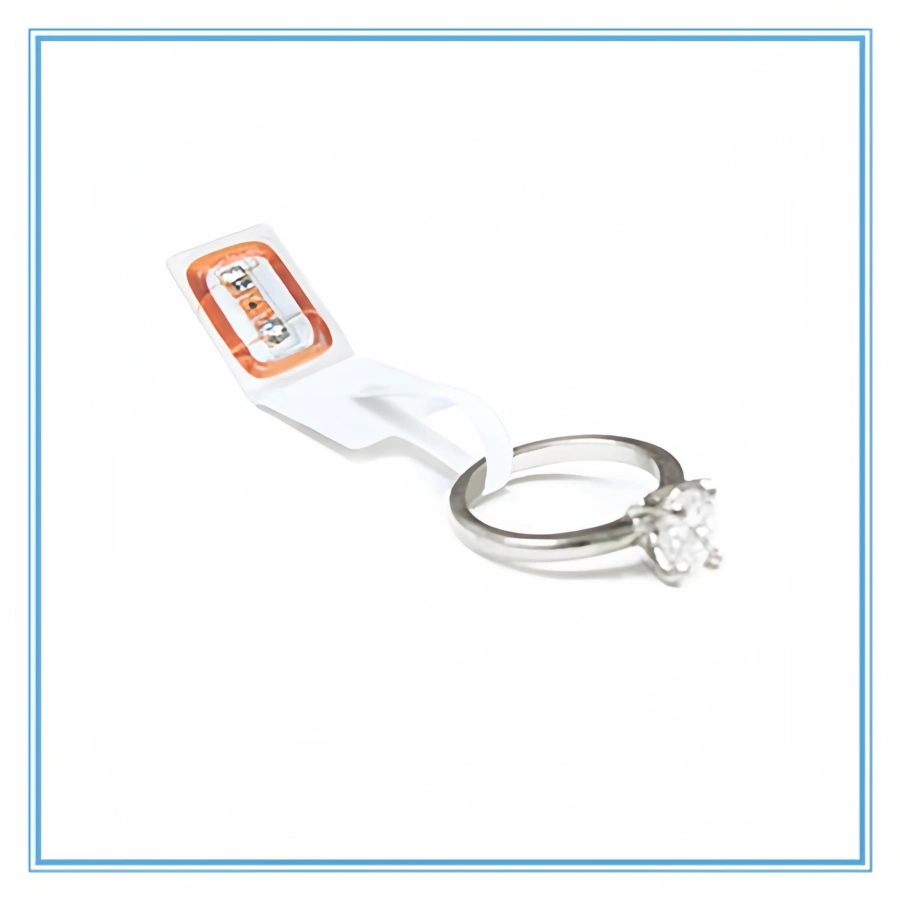
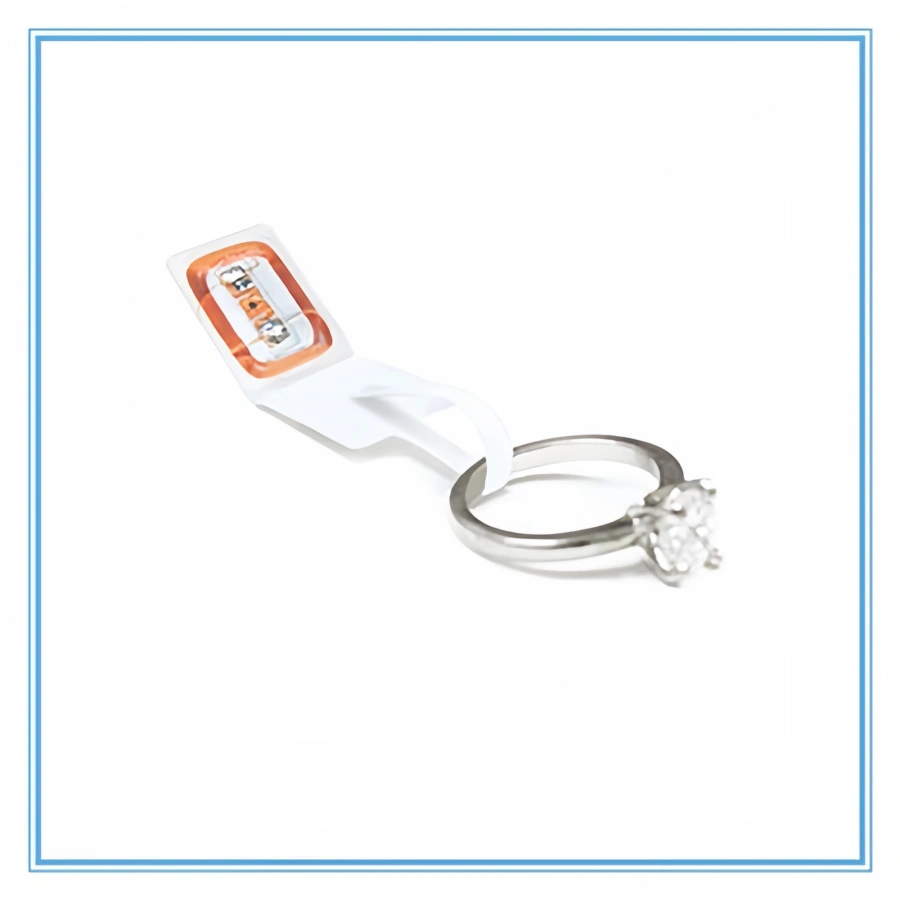
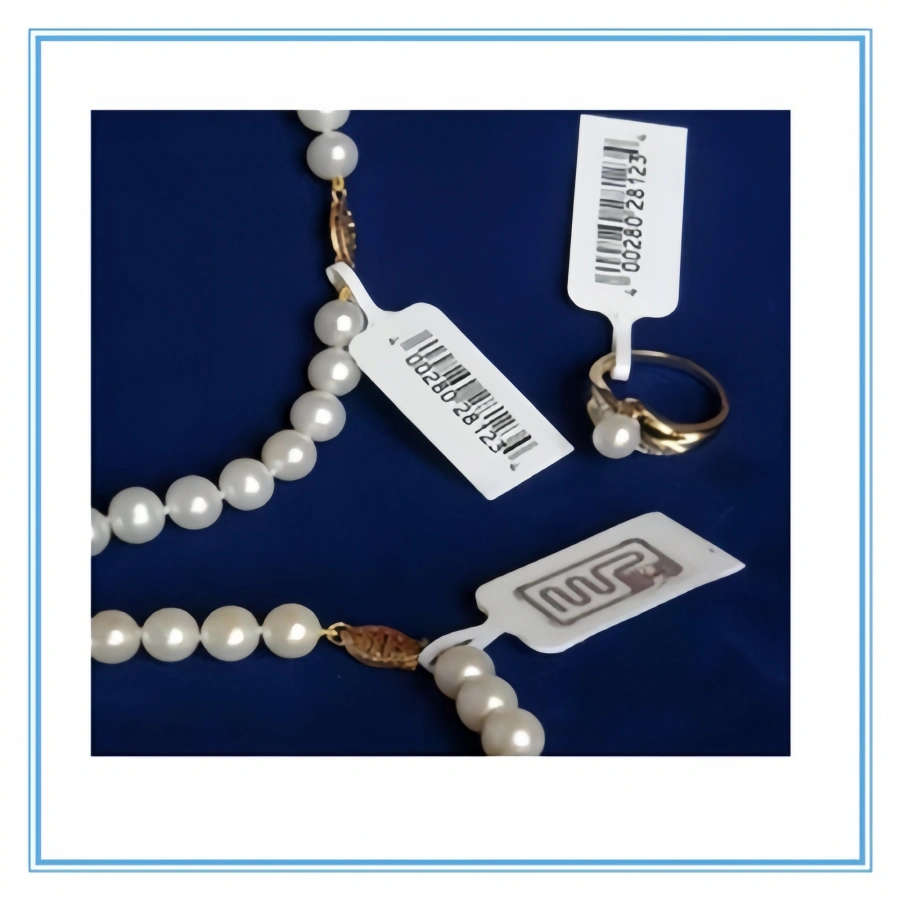
RFID jewelry tags are ultra-thin electronic labels embedded with a radio frequency identification chip and antenna. They are designed specifically for tagging small, high-value items such as:
- Rings
- Necklaces
- Bracelets
- Earrings
- Watches
- Luxury accessories
Unlike traditional barcode labels, RFID tags do not require line-of-sight scanning. Multiple items can be identified simultaneously within seconds.
Jewelry inventory that once required hours to audit can now be completed in minutes.
That’s not marketing exaggeration. That’s radio physics doing quiet work.
RFID Jewelry Tag Specifications
Let’s break down the technical parameters in detail:
Material: Coated paper, PVC, PET, CPC, PP or customized
Surface Material: Radiant White PET
RFID Chip Options:
- UHF: H3 / H4, M4 / M5, UC7
- HF: N213, F08, IC SLI
Operating Frequency: - UHF: ISO18000-6C
- HF: ISO14443A / ISO15693
IC Life: 100,000 programming cycles, 10 years data retention
Size Options:
120×15×0.25mm
92×12.5mm
120×18mm
100×16mm
100×25mm
211×24mm
110×15mm
(Custom sizes available)
Operating Temperature: 0°C ~ 60°C
Operating Humidity: 20% ~ 80% RH
Storage Temperature: 20°C ~ 30°C
Storage Humidity: 20% ~ 60% RH
Shelf Life: 1 year in anti-static bag at 20~30°C / 20%~60% RH
ESD Voltage Immunity: 2 kV (HBM)
Appearance: Single row reel form
Every specification serves a purpose. Let’s explore what they mean in real-world applications.
UHF vs HF RFID for Jewelry
One of the most important decisions in jewelry RFID deployment is frequency selection.
UHF RFID (ISO18000-6C)
UHF tags operate at ultra-high frequency and offer:
- Longer read range
- Bulk scanning capability
- Faster inventory counting
- Suitable for tray-level or cabinet-level reading
UHF chip options include:
- H3 / H4
- M4 / M5
- UC7
UHF is ideal for:
- Warehouse inventory
- Backroom stock management
- Rapid cycle counting
- Anti-theft gate systems
HF RFID (ISO14443A / ISO15693)
HF tags operate at 13.56MHz and provide:
- Shorter read range
- High reading stability
- Close-proximity authentication
- High compatibility with NFC systems
HF chip options include:
- N213
- F08
- IC SLI
HF is often used for:
- Counter-level management
- POS verification
- Customer interaction systems
Choosing between UHF and HF depends on operational requirements. Many large jewelry retailers deploy hybrid systems.
Tag Materials – Why They Matter
Jewelry tags must balance:
- Thinness
- Flexibility
- Durability
- Aesthetic appearance
Available materials include:
- Coated paper
- PVC
- PET
- CPC
- PP
- Customized materials
Surface material: Radiant White PET
Radiant White PET provides:
- Clean appearance
- Good printability
- Scratch resistance
- Compatibility with thermal printing
Jewelry retail is visual. The tag must not distract from the product.
IC Life and Data Retention
Each RFID chip supports:
- 100,000 programming cycles
- 10 years data retention
This ensures:
- Long-term reliability
- Rewritable flexibility
- Sustainable tag usage
For retailers managing rotating stock, reprogrammable capability reduces cost.
Tag Size Options
Jewelry tags must be:
- Lightweight
- Flexible
- Small enough to avoid product interference
Common sizes include:
- 120×15×0.25mm
- 92×12.5mm
- 100×16mm
- 100×25mm
- 211×24mm
- 110×15mm
Custom sizing is available to fit different jewelry shapes.
Ultra-thin 0.25mm design ensures comfort and aesthetics.
Environmental Performance
Operating Temperature: 0°C ~ 60°C
Operating Humidity: 20% ~ 80% RH
Jewelry stores are climate-controlled environments. However, tags must remain stable during transport and storage.
Storage Conditions:
- 20°C ~ 30°C
- 20% ~ 60% RH
- Stored in anti-static bags
ESD Voltage Immunity: 2 kV (HBM)
Electrostatic discharge resistance protects chips during handling and printing.
Electronics and static electricity are not friends. ESD immunity prevents invisible damage.
Appearance & Packaging
Tags are delivered in:
- Single row reel form
Reel packaging allows:
- Automated printing
- Efficient encoding
- High-speed application
Operational efficiency starts at packaging.
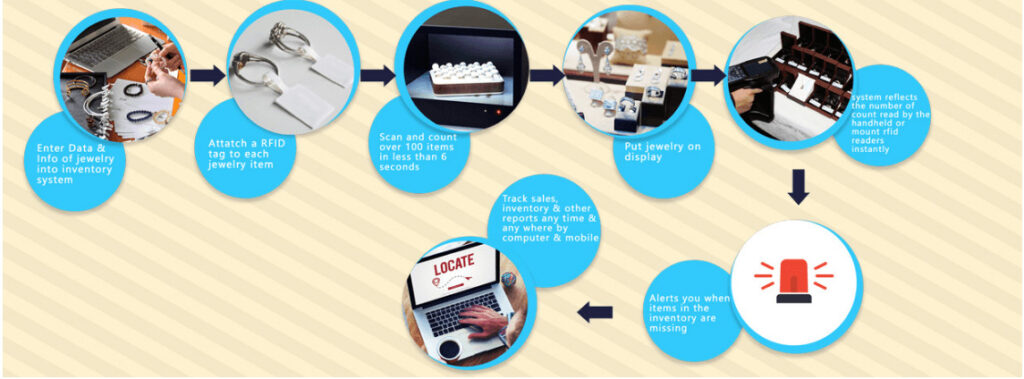
RFID Jewelry Management System – How It Works
RFID tags alone are powerful. Combined with a management system, they become transformative.
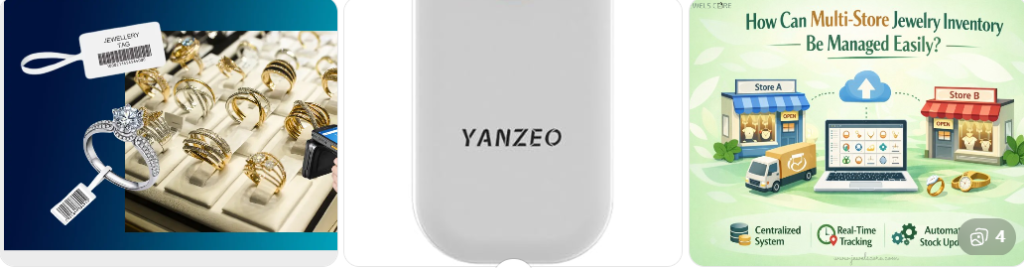
A complete RFID jewelry management system typically includes:
- RFID jewelry tags
- RFID handheld readers
- Fixed RFID antennas
- POS integration
- Inventory management software
- Anti-theft gate systems
Let’s break down the workflow.
Step 1: Tagging & Encoding
Each jewelry item receives:
- A unique RFID tag
- Encoded EPC number
- Linked database information
Data stored may include:
- Product ID
- SKU
- Weight
- Material type
- Price
- Location
Digital identity replaces manual tracking.
Step 2: Inventory Entry
When items arrive:
- Bulk scanning captures all tags instantly
- Database auto-updates
- No manual barcode scanning required
Inventory accuracy improves dramatically.
Step 3: Daily Inventory Counting
Traditional method:
- Remove items
- Count manually
- Cross-check spreadsheet
- Risk human error
RFID method:
- Scan tray
- System updates in seconds
- Discrepancies flagged automatically
Time saved equals operational efficiency.
Step 4: Sales Integration
At POS:
- Item scanned
- System updates inventory
- Sales data linked to RFID ID
Real-time inventory visibility reduces stock discrepancies.
Step 5: Anti-Theft Protection
RFID gates at exits detect unpaid items.
If tag status = unsold → alarm triggered.
Loss prevention improves without intrusive measures.
Benefits of RFID Jewelry Management
1. Faster Inventory Counting
Inventory time reduced by up to 90%.
2. Improved Accuracy
Eliminates manual counting errors.
3. Shrinkage Reduction
Real-time tracking deters theft.
4. Data-Driven Decisions
Sales trends, stock turnover, and popular items can be analyzed.
5. Enhanced Customer Experience
Faster service and better stock visibility.
6. Labor Cost Reduction
Less manual handling means lower operational burden.
Why Jewelry Retail Needs RFID
Jewelry is:
- High value
- Small size
- Easy to misplace
- Labor-intensive to manage
RFID addresses these specific pain points.
The smaller the product, the bigger the management challenge.
RFID turns invisible radio waves into visible control.
Customization Options
Jewelry brands may customize:
- Tag size
- Logo printing
- Encoding format
- Reel packaging
- Chip type
- Pre-programmed EPC
Brand consistency and system integration matter.
Integration with ERP Systems
Modern RFID jewelry systems integrate with:
- ERP platforms
- POS systems
- Warehouse management systems
- CRM databases
Seamless data flow improves transparency.
Retail intelligence depends on data integrity.
Security Considerations
While RFID improves tracking, system-level security is essential:
- Controlled access to database
- Encrypted backend communication
- Role-based user permissions
RFID is a tool. Security is architecture.
Implementation Process
Typical deployment steps:
- Needs analysis
- Frequency selection (UHF or HF)
- Pilot testing
- Staff training
- Full system rollout
- Performance monitoring
Gradual deployment minimizes operational disruption.
Future of RFID in Jewelry Retail
As technology evolves, trends include:
- Integration with smart mirrors
- Customer interactive displays
- AI-based inventory prediction
- Omnichannel synchronization
RFID is becoming the backbone of smart retail.
Jewelry retail is blending craftsmanship with digital precision.
Conclusion
RFID jewelry tags and RFID jewelry management systems provide a powerful, efficient, and intelligent solution for modern jewelry retail operations.
With:
- UHF and HF chip options
- Multiple size configurations
- Durable PET surface material
- 100,000 programming cycles
- 10-year data retention
- Waterproof and ESD-resistant design
- Bulk reel packaging
- Wide operating tolerance
These RFID tags enable precise identification, fast inventory counting, improved security, and seamless integration with retail management systems.
In a market where each item may represent significant monetary value, operational accuracy is not optional—it is essential.
RFID does not change the brilliance of a diamond.
It simply ensures that every diamond is exactly where it should be.
Invisible radio waves.
Visible operational control.