
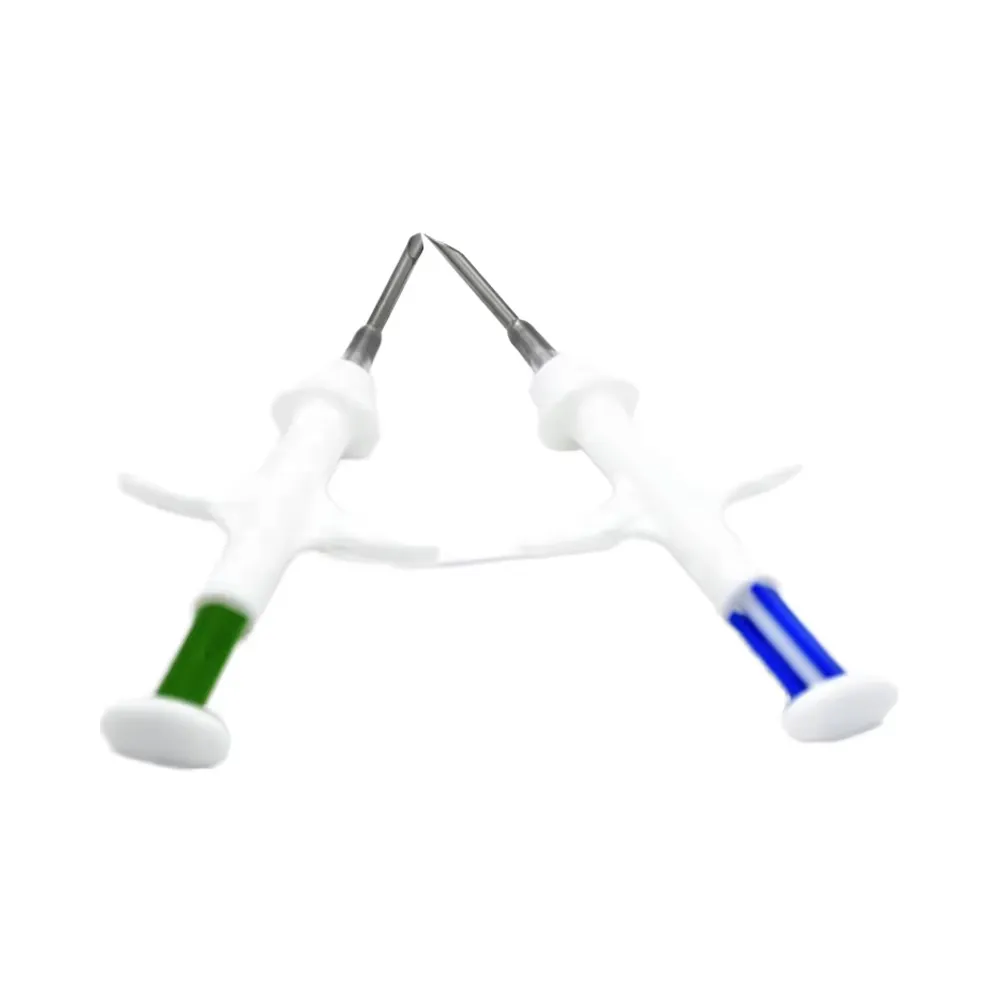
Product Overview: Advanced Identification & Health Monitoring
This microchip represents a significant advancement in animal management technology. It integrates a passive RFID transponder with a precision temperature sensor, creating a powerful tool for permanent identification and proactive health monitoring.
What is the RFID Temperature Sensor Microchip?
It is a passive, implantable microchip that provides both a unique identification number (UID) and accurate real-time body temperature data. This dual functionality solves two critical challenges simultaneously: establishing a tamper-proof lifetime identity for an animal and enabling non-invasive health monitoring.
Who is it For?
The device is engineered for professionals and organizations that require reliable data for animal care and management.
- Veterinarians & Animal Clinics: For pet identification, linking medical records, and detecting fever during examinations.
- Livestock Farmers & Ranchers: For herd health monitoring, disease prevention, and efficient management of cattle, swine, and other livestock.
- Animal Shelters & Breeders: For reliable identity management and preliminary health screening of animals.
- Research Facilities: For stress-free, continuous temperature monitoring of laboratory animals in scientific studies.
Key Features & Benefits
- Dual-Function Technology: Combines permanent RFID identification with accurate temperature sensing in one ultra-miniature device.
- ISO Standard Compliance: Fully compliant with global ISO 11784/11785 FDX-B standards, ensuring universal readability and consistent data formatting.
- Passive & Maintenance-Free: Contains no battery; it is entirely powered by the reader’s signal, guaranteeing a functional lifespan exceeding 20 years.
- Biocompatible Bioglass Encapsulation: The chip is encased in medical-grade bioglass, making it safe for long-term implantation with minimal tissue reaction.
- Miniature Size (1.4 x 8.5mm): Its small form factor allows for quick and minimally invasive implantation using a standard pre-loaded syringe.
- Unique, Unalterable UID: Each chip contains a factory-lasered, tamper-proof identification number that serves as a lifelong digital key for the animal.
How the RFID Temperature Microchip Works
The system operates on established low-frequency RFID principles, enhanced with integrated sensor technology.
The FDX-B Communication Protocol
The chip uses the Full Duplex B (FDX-B) protocol. This means it can continuously transmit its data packet back to the reader while simultaneously receiving the energy required to operate, enabling fast and reliable communication.
The Data Transmission Process
- A compatible 134.2 kHz FDX-B reader is activated near the implanted animal.
- The electromagnetic field generated by the reader powers the microchip’s circuit.
- The integrated sensor within the chip measures the immediate ambient temperature, which correlates to the animal’s body temperature.
- The chip modulates the reader’s field, transmitting a digital data stream containing both its Unique ID (UID) and the current temperature reading.
- The reader decodes this signal and displays the identification number and temperature value on its screen.
Integration with Management Software
The scanned UID automatically links to the animal’s profile in dedicated management software. The accompanying temperature reading can be logged against this profile with a timestamp, creating a searchable health history for trend analysis and proactive care.
Primary Applications & Use Cases
- Pet Healthcare: Early fever detection, post-operative monitoring, and enriching electronic medical records with vital sign data.
- Livestock Management: Herd health monitoring for early illness detection (e.g., bovine respiratory disease), optimizing breeding schedules, and supporting food safety through health tracking.
- Disease Control & Biosecurity: Rapid screening of animals in shelters, during transport, or at borders for signs of infectious disease.
- Breeding & Genetic Programs: Precise health and wellness monitoring of high-value breeding stock.
- Research & Laboratory Animal Monitoring: Automated, stress-free collection of continuous temperature data for scientific research and study protocols.
Technical Specifications
- Product Name: RFID Temperature Sensor Microchip
- Chip Type: EM4305 or Custom Sensor ASIC
- Frequency: 134.2 kHz (Low Frequency – LF)
- Protocol: ISO 11784/11785 FDX-B
- Standard: ISO 11784/11785
- Encapsulation Material: Biocompatible Bioglass
- Dimensions: 1.4 mm (Diameter) × 8.5 mm (Length)
- Core Features: Passive RFID, Unique UID, Integrated Temperature Sensor
- Primary Application: Animal Identification and Physiological Temperature Monitoring
Benefits for Veterinarians and Farmers
- Enhanced Diagnostic Capability: Obtain immediate, objective temperature data during any routine scan or examination.
- Improved Operational Efficiency: Read identification and a key health vital in one single action, saving significant time during check-ups or herd processing.
- Proactive Animal Care: Facilitate a shift from reactive treatment to proactive health management by identifying subtle changes or fevers earlier.
- Data-Driven Decisions: Build historical temperature baselines for individual animals or herds, enabling informed management decisions based on data trends.
- Global Compliance & Traceability: Utilize an internationally recognized identification system that supports export requirements, theft recovery, and lifetime traceability.
Industry Use Cases in Detail
Dairy Farm Health Management
During milking parlor routines, each cow is scanned. The system automatically logs the cow’s identity and checks her temperature. A sudden elevation can be an early indicator of conditions like mastitis or metritis, allowing for prompt intervention.
Equine Health and Transport
Horses can be scanned during travel, at competitions, or in quarantine. Monitoring for stress-induced or infection-related temperature changes helps ensure animal welfare and allows for timely veterinary care.
Swine Fever Detection
In swine production, rapid scanning of pigs enables the quick identification and isolation of individuals showing elevated temperatures. This is a critical tool for preventing the spread of diseases like Porcine Reproductive and Respiratory Syndrome (PRRS).
Frequently Asked Questions (FAQ)
What is an RFID temperature sensor microchip?
It is a passive, implantable RFID device that transmits both a unique identification number and the animal’s current body temperature when activated and scanned by a compatible reader.
How does the microchip measure temperature?
The microchip contains a tiny integrated sensor circuit that measures the local temperature at the implantation site. This analog measurement is converted to a digital value and encoded into the data signal transmitted alongside its UID.
Is it safe for my animal?
Yes. The chip is encapsulated in biocompatible bioglass, a material proven safe for long-term implantation in living tissue. It is inert, hypoallergenic, and designed specifically for lifelong biocompatibility.
What reader do I need?
You require an FDX-B compatible reader operating at the 134.2 kHz frequency. Most standard animal RFID readers support the FDX-B protocol, but it is essential to verify that the reader model specifically supports the temperature data function of these sensor chips.
Can the temperature data be logged automatically?
Yes. When integrated with compatible animal management software, the reader can be configured to automatically upload each scan event. This creates a record containing the UID, temperature, precise timestamp, and operator ID, building a searchable digital health history.