
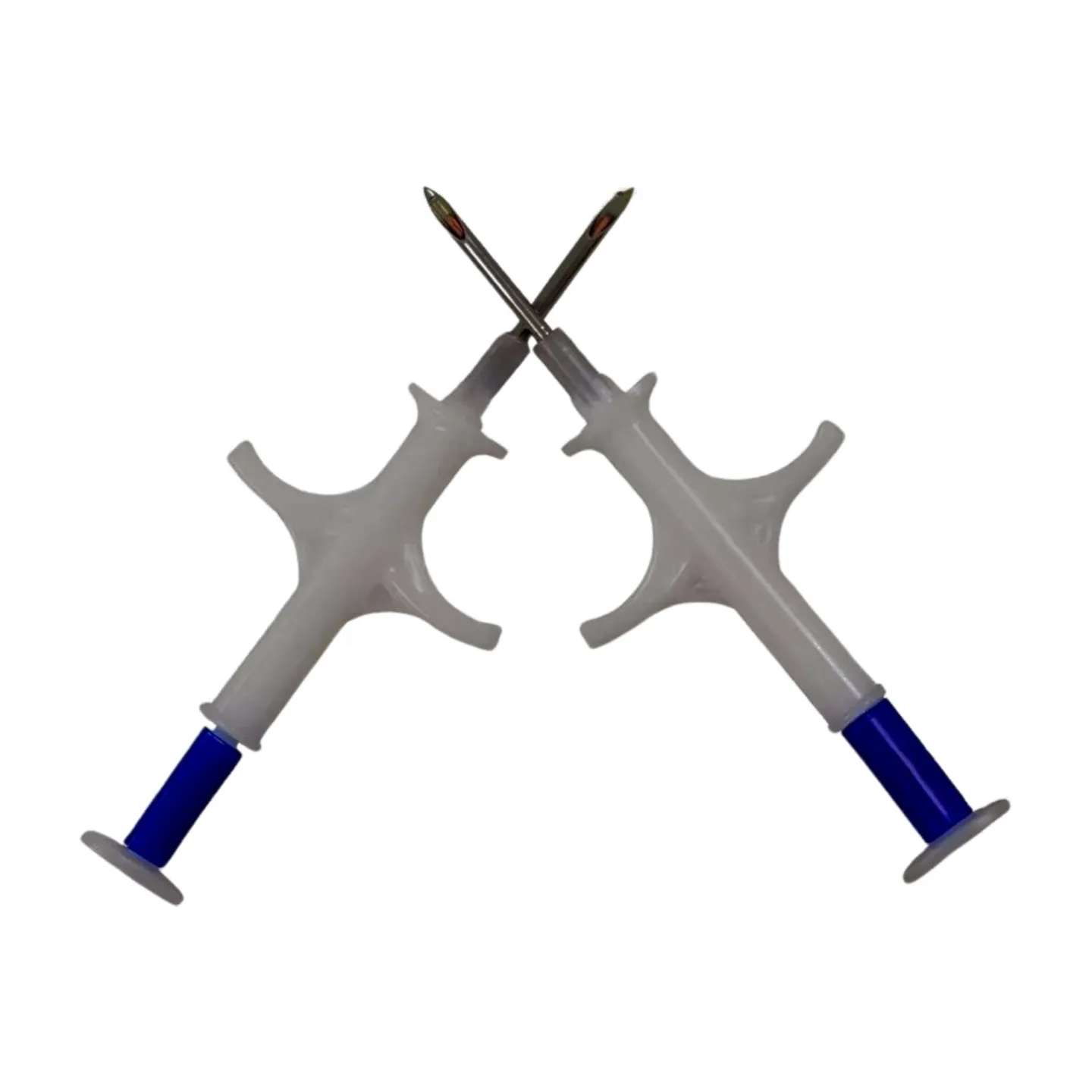
Product Overview
The RFID Temperature Sensor Microchip is a passive, implantable device that combines permanent electronic identification with real-time body temperature monitoring for cats. This dual-function technology offers veterinarians, breeders, and pet owners a powerful tool for enhancing animal welfare, streamlining medical procedures, and enabling proactive health management.
What is an RFID Temperature Tag for Cats?
This microchip is a significant advancement in pet care technology. It functions as a standard FDX-B RFID transponder for lifelong identification while integrating a precise temperature sensor. When scanned with a compatible reader, it transmits both a unique identification number (UID) and the current subcutaneous temperature reading, eliminating the need for stressful traditional temperature-taking methods.
Key Features & Benefits
Dual-Function Technology
This microchip’s core innovation lies in its dual data output. It provides a permanent, unalterable identification number for pet recovery and registration databases. Simultaneously, its integrated sensor delivers an accurate measurement of the animal’s core body temperature, a critical vital sign for health assessment.
Designed for Animal Safety & Comfort
Animal welfare is paramount. The chip is hermetically sealed in biocompatible bioglass, ensuring long-term safety and tissue compatibility. Its miniature dimensions (1.4mm x 8.5mm) allow for quick, minimally invasive implantation with a pre-loaded syringe, typically performed in the subcutaneous tissue between the shoulder blades.
Global Standard Compliance
Built on the ISO 11784/11785 FDX-B standard, this microchip guarantees global interoperability. Any compliant reader worldwide can scan it, ensuring the identification and temperature data remain accessible throughout the pet’s life, regardless of location.
How the RFID Temperature Microchip Works
The operational principle is straightforward and reliable. The device is entirely passive, requiring no internal battery.
- Implantation: A veterinarian administers the sterile microchip via a quick injection.
- Activation: A compatible ISO 11785 FDX-B reader is brought near the implantation site, emitting a low-frequency (134.2 kHz) activation signal.
- Data Transmission: Powered by the reader’s signal, the chip activates its circuitry and sensor. It instantly measures the local tissue temperature and transmits a data packet containing both its unique ID and the temperature reading.
- Data Display: The reader decodes the signal and displays the pet’s ID and current temperature on its screen for immediate clinical use and record-keeping.
Primary Applications & Use Cases
- Veterinary Clinics: Enables rapid, stress-free temperature checks during routine exams, pre-surgical assessments, or post-operative monitoring without restraint or discomfort.
- Catteries & Breeding Programs: Facilitates close health monitoring of queens and kittens, allowing for early detection of fever or infection, which is crucial in breeding environments.
- Animal Shelters & Rescues: Provides immediate identification and health status (via temperature) for incoming animals, improving intake procedures and medical triage efficiency.
- Responsible Pet Ownership: Offers owners and veterinarians a tool for monitoring recovering or chronically ill pets, contributing to more informed home care decisions.
Technical Specifications
| Specification | Detail |
|---|---|
| Product Name | RFID Temperature Sensor Microchip |
| Frequency | 134.2 kHz (Low Frequency – LF) |
| Protocol | ISO 11784/11785 FDX-B |
| Chip Type | Sensor-Integrated RFID ASIC |
| Encapsulation | Biocompatible Bioglass |
| Dimensions | Ø 1.4 mm x 8.5 mm length |
| Primary Function | UID Transmission & Temperature Sensing |
| Key Feature | Animal Temperature Monitoring |
Benefits for Veterinarians and Pet Owners
- Enhances Animal Welfare: Significantly reduces stress and discomfort associated with rectal thermometry.
- Improves Clinical Efficiency: Saves valuable time during examinations and procedures by enabling instant temperature reads.
- Supports Accurate Diagnostics: Provides reliable core body temperature data, a fundamental parameter for illness diagnosis and treatment planning.
- Offers Permanent Security: Provides a tamper-proof, lifetime identification solution that cannot be lost like a collar or tag.
- Ensures Long-Term Usability: Adherence to global ISO standards future-proofs the investment, ensuring readability for the life of the animal.
FAQ: RFID Temperature Tags for Cats
What is an RFID temperature sensor tag?
It is a passive RFID microchip that transmits two pieces of data when scanned: a unique identification code for pet registration and a real-time reading from its integrated temperature sensor.
How does the temperature microchip work?
The microchip contains specialized circuitry that includes a temperature sensor. When activated by the electromagnetic field from a compatible reader, it powers up, takes a measurement of the surrounding tissue temperature, and broadcasts this data along with its stored ID number.
Is it safe for my cat?
Yes. The device is manufactured from biocompatible materials (bioglass) that are well-tolerated by animal tissue. It is supplied sterile and implanted using a simple veterinary procedure similar to a routine vaccination. Its small size minimizes any tissue reaction.
Do I need a special reader?
You need an ISO 11785 compliant FDX-B reader. Many modern universal veterinary scanners support this protocol and are capable of reading both the identification number and the temperature data from these specialized microchips.