
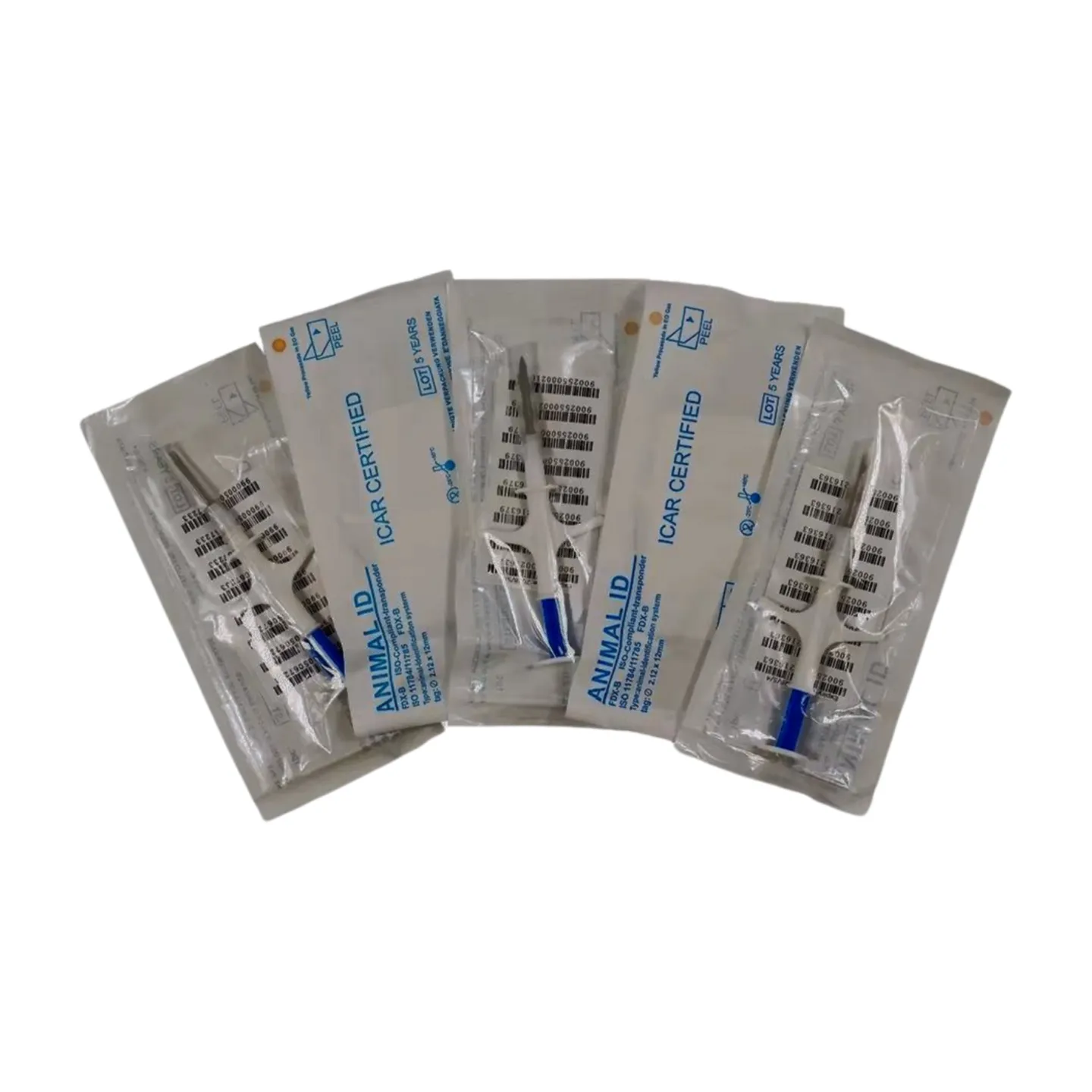
Product Overview: Advanced Canine Health Monitoring
The RFID Temperature Tag for Dogs represents a significant advancement in veterinary telemetry, enabling precise, stress-free monitoring of a canine’s vital health metrics.
What is an RFID Temperature Tag for Dogs?
This specialized device combines a unique RFID transponder with an integrated, high-accuracy temperature sensor. It is typically attached to a dog’s collar or a specialized animal harness, where it continuously measures and logs core body temperature data.
Core Problem Solved: Non-Invasive, Continuous Temperature Tracking
It eliminates the need for stressful and intermittent manual temperature checks, providing a continuous stream of accurate physiological data without direct handling or restraint of the animal.
Target Users: Veterinarians, Pet Owners, Breeders & Researchers
This technology is essential for veterinary professionals managing hospitalized or post-operative patients, conscientious pet owners, commercial dog breeders ensuring litter health, and researchers conducting longitudinal animal studies.
Key Features & Technical Advantages
Continuous Core Body Temperature Monitoring
The embedded sensor delivers frequent, automated temperature readings, creating a detailed health profile and enabling the detection of subtle trends or sudden febrile events.
Long-Range, Automated Data Collection (No Handling Required)
Data is wirelessly transmitted to fixed UHF RFID readers installed in kennels, runs, or clinic rooms, allowing for completely passive monitoring as the animal moves within the read zone.
Rugged, Biocompatible Design for Animal Wear
Encased in a durable, waterproof housing made from animal-safe materials, the tag is designed to withstand the active lifestyle of dogs and various environmental conditions.
Long Battery Life & Data Logging Capabilities
An integrated long-life battery powers the sensor and memory, allowing the tag to store thousands of temperature readings even when outside a reader’s immediate range for later upload.
Integration with Farm & Clinic Management Software
Collected temperature data is seamlessly integrated into practice management software or herd health platforms, associating vitals with individual animal records for comprehensive health management.
How It Works: Automated Pet Health Surveillance
Step 1: Tag Attachment & Animal Identification
The tag is securely attached to the dog. Its unique RFID number is registered in the management software, permanently linking the device and its data to that specific animal.
Step 2: Passive Data Collection via Fixed Readers
Strategic reader antennas placed in the animal’s environment automatically poll the tag at regular intervals, collecting temperature readings and timestamping each data point without any staff intervention.
Step 3: Real-Time Alerts & Historical Trend Analysis
The software analyzes incoming data. It can trigger instant alerts if readings exceed preset thresholds and provides tools for visualizing historical temperature trends over hours, days, or weeks.
Primary Applications & Use Cases
Pet Medical Monitoring
Critical for post-operative care, monitoring illness progression, detecting fevers early, and managing chronic conditions in companion animals under veterinary supervision.
Veterinary Research Projects
Provides reliable, consistent data for longitudinal studies on canine health, behavioral research linked to physiology, and clinical trials measuring drug efficacy or treatment responses.
Breeding & Kennel Management
Enables proactive health surveillance in breeding facilities, kennels, and animal shelters, allowing for the rapid isolation and treatment of sick animals to prevent disease spread.
Technical Specifications (Sample)
Frequency & Read Range
Operates on UHF RFID frequencies (e.g., 865-868 MHz, 902-928 MHz). Typical read range is 0-8 meters from a fixed reader, depending on antenna configuration and environment.
Temperature Sensor Range & Accuracy
Measures a range of approximately 25°C to 45°C (77°F to 113°F) with a typical accuracy of ±0.2°C to ±0.5°C.
Battery Type & Operational Life
Powered by a user-replaceable or long-life lithium battery, offering an operational lifespan ranging from 3 to 7 years under standard use conditions.
Physical Dimensions & Ingress Protection (IP) Rating
Compact and lightweight design. Housing typically rated IP67 or higher, ensuring protection against dust, water immersion, and cleaning processes.
Data Storage & Communication Protocols
Onboard memory for data logging. Communicates using standard EPC UHF Gen2v2 protocols, ensuring compatibility with most RFID reader systems and software platforms.
Benefits for Veterinarians & Pet Owners
For Vets: Enhanced Diagnostic Data, Reduced Stress for Animals, Streamlined Workflow
Veterinarians gain access to superior diagnostic data sets while minimizing procedure-related stress for their patients, leading to more accurate assessments and efficient clinic operations.
For Owners: Peace of Mind, Early Warning Signs, Better Informed Care Decisions
Pet owners receive objective, continuous insights into their dog’s health, enabling earlier intervention and more informed discussions with their veterinary care team.
For Facilities: Automated Health Logs, Improved Biosecurity, Operational Efficiency
Kennels and breeding facilities benefit from automated, digital health records, enhanced ability to control disease outbreaks, and reduced labor costs associated with manual monitoring.
Industry Use Cases: From Clinic to Farm
Companion Animal Veterinary Clinics
Deployed in hospitalization wards for 24/7 monitoring of critical patients, surgical recovery cases, and animals with infectious diseases, providing constant oversight without constant disturbance.
Specialist & Emergency Care
Invaluable in ICU and emergency settings for monitoring patients with heatstroke, sepsis, or post-trauma, where frequent vital sign checks are crucial but manual handling is risky.
Agricultural & Livestock Extension
Used for monitoring working dogs’ health within integrated farm management automation systems, ensuring the wellbeing of valuable herding or guardian dogs as part of overall livestock oversight.