
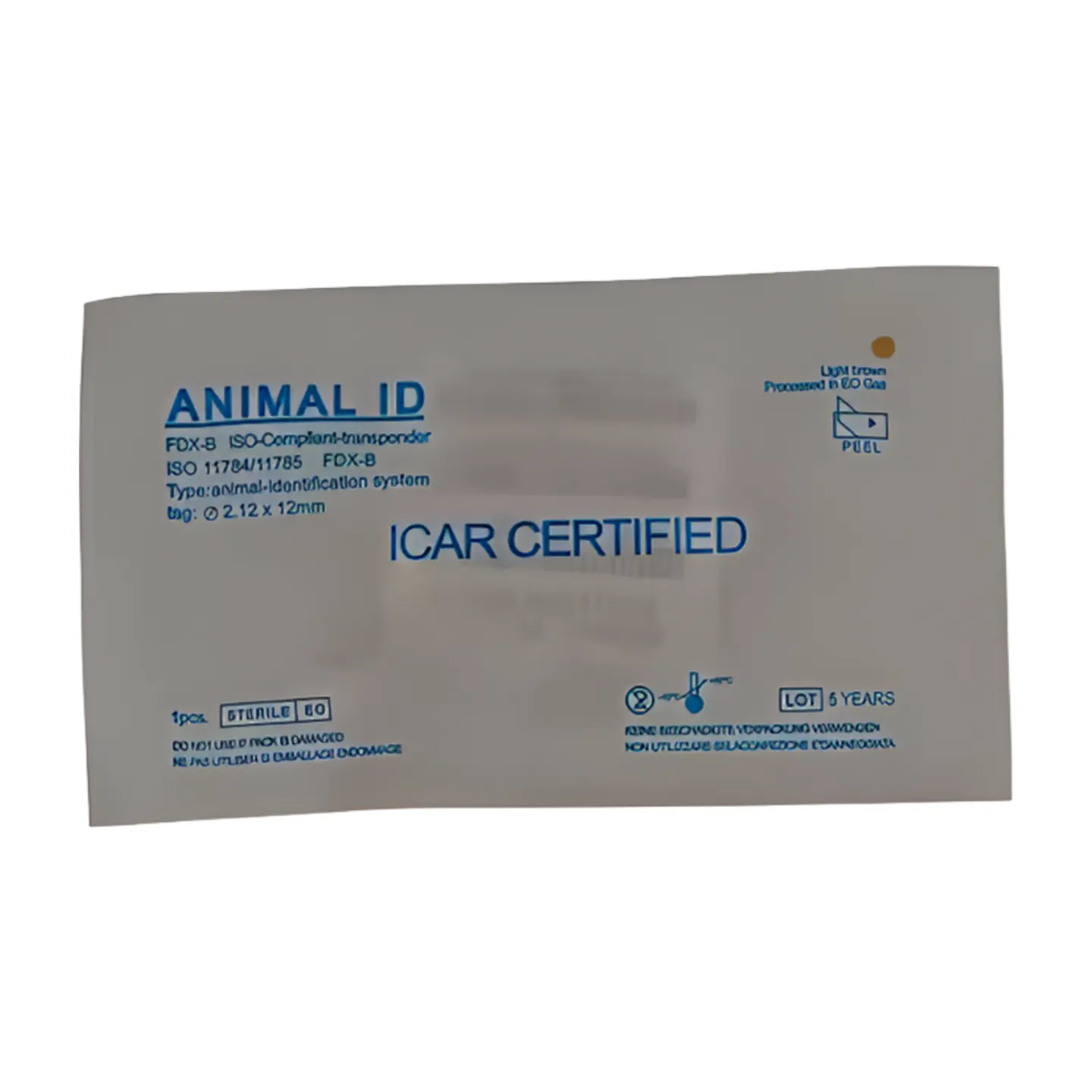
Animal RFID Microchips: ICAR Certified, Long-Life Solutions for Global Animal Identification
1. What Are Animal RFID Microchips?
Animal RFID microchips are passive implantable radio frequency identification devices that store a unique, non-replicable identification code for each individual animal. They enable permanent, reliable electronic identification to support traceability, lost animal recovery, livestock management, and regulatory compliance. The devices are administered via a sterile syringe, requiring no surgery for implantation, making the process minimally invasive for animals.
2. Core Technical Specifications of Our Animal RFID Microchips
2.1 Frequency & Protocol Compatibility (134.2 kHz, FDX-A/B/HDX)
All microchips operate at the global standard 134.2 kHz frequency for animal identification. They support three widely used industry protocols: FDX-A, FDX-B, and HDX, ensuring compatibility with most commercial and official RFID readers deployed globally for animal tracking purposes.
2.2 Chip Models & Performance (EM4305, EM4100, ID, UHF)
The product line supports multiple chip models including EM4305, EM4100, ID, and UHF, catering to varying requirements for data storage capacity, read range, and application specificity across different use cases and regions.
2.3 Size Options by Protocol & Animal Type
Size offerings are tiered by protocol to suit different animal sizes: FDX-A models range from 1.4x8mm to 4x34mm, while HDX models range from 2x12mm to 4x34mm. Smaller sizes are optimized for small companion pets and exotic animals, while larger sizes are designed for livestock and large wildlife species.
2.4 Material & Durability (Medical Grade Bioglass, 10+ Year Lifespan)
All microchips are encased in medical grade bioglass, which is biocompatible, non-toxic, corrosion-resistant, and prevents migration inside the animal’s body after implantation. The devices have a tested service life of 10 or more years, covering the full lifecycle of most animal species.
3. Compliance & Certifications: Why ICAR & ISO 11784/11785 Matter
All our animal RFID microchips hold valid ICAR certification, the global gold standard for animal identification product quality and reliability. They are also fully compliant with ISO 11784 and 11785 international standards for animal identification. These credentials ensure cross-border interoperability of identification data, meet regulatory requirements for animal movement and traceability in nearly all global markets, and eliminate compatibility issues with official government and industry RFID readers.
4. Key Benefits of Our Animal RFID Microchips
The core advantages of our microchip line include:
- Medical grade biocompatible material that eliminates risk of adverse immune reactions or infection post implantation
- 10+ year lifespan that supports permanent identification for the full duration of most animals’ lives
- Minimally invasive syringe implantation that can be completed in under 10 seconds by trained personnel with no anesthesia required for most species
- Multiple size and protocol options that fit all animal types from small companion pets to large livestock and wild species
- Global certification alignment that meets regulatory requirements for animal traceability across all major regional markets
5. Choosing the Right Microchip for Your Animal
5.1 Protocol Selection: FDX-A vs FDX-B vs HDX
FDX-B is the most widely adopted protocol for pet identification, accepted in nearly all national pet registration databases globally, and required for cross-border pet travel in most regions. HDX is preferred for commercial livestock management due to its longer read range, making it ideal for large-scale farm operations and supply chain traceability. FDX-A is used primarily for region-specific applications per local regulatory requirements.
5.2 Size Guide for Small Pets, Livestock & Wildlife
Sizes under 2mm in diameter are recommended for small pets such as cats, small dog breeds, and small exotic animals. Sizes between 2mm and 3mm in diameter are suitable for medium to large dog breeds, sheep, goats, and small to medium wildlife species. Sizes over 3mm in diameter are designed for large livestock including cattle, horses, camels, and large wild species such as deer and big cats.
5.3 Ensuring Regulatory Compliance
Always confirm that the selected microchip holds ICAR certification and meets the ISO standard and protocol requirements of your region, to ensure compatibility with local animal registration systems and compliance with local animal movement and traceability regulations.
6. Applications Across Animal Sectors
6.1 Pet Identification & Lost Pet Recovery
Implanted microchips provide a permanent form of identification for pets that cannot be lost, damaged, or removed like collars and tags, enabling animal shelters and veterinary clinics to scan and reunite lost pets with their owners quickly and accurately.
6.2 Livestock Management & Supply Chain Traceability
Microchips enable individual identification of livestock, supporting breeding management, health monitoring, disease outbreak traceability, and full transparency across the meat and dairy product supply chain.
6.3 Wildlife Conservation & Research
Implanted microchips allow conservation researchers to track individual wild animals for population studies, migration pattern monitoring, and endangered species protection efforts.
6.4 Animal Shelter & Rescue Operations
Microchips help animal shelters track animal intake, medical history, and adoption status, and enable verification of ownership for recovered lost or stolen animals.
7. Implantation Best Practices for Animal RFID Microchips
Implantation should only be performed by trained veterinarians or certified animal care personnel. Only use sterile, pre-packaged syringes provided with the microchip to avoid risk of infection. Implant the chip at the recommended subcutaneous site for the target animal species, most commonly the loose skin between the shoulder blades for companion pets. After implantation, scan the chip immediately to confirm it is functioning correctly, and register the unique identification code in the relevant national or regional animal database as required.
8. Frequently Asked Questions (FAQ)
Q: Are animal RFID microchips safe for animals?
A: Yes, the microchips are encased in medical grade bioglass that is fully biocompatible, with no reported long-term adverse effects in over 30 years of global industry use.
Q: How long do the microchips remain functional?
A: The microchips are passive devices with no internal battery, and have a tested service life of 10 or more years, covering the full lifecycle of most animal species.
Q: Are the microchips compatible with my existing RFID reader?
A: Our microchips operate at the standard 134.2 kHz frequency and support FDX-A, FDX-B, and HDX protocols, so they are compatible with all standard animal identification readers that support these protocols.
Q: Can the microchip be used for cross-border animal travel?
A: Yes, our ICAR certified, ISO 11784/11785 compliant microchips meet the animal identification requirements for cross-border travel in nearly all global regions.
9. Technical Specifications Comparison Table
| Protocol | Supported Chip Models | Size Range | Recommended Animal Type |
|---|---|---|---|
| FDX-A | EM4305, EM4100, ID, UHF | 1.4x8mm to 4x34mm | Small pets, exotic animals, region-specific applications |
| FDX-B | EM4305, EM4100, ID, UHF | 1.25x7mm to 3x12mm | Companion pets, shelter animals, cross-border travel |
| HDX | EM4305, UHF | 2x12mm to 4x34mm | Livestock, large wildlife, commercial farm traceability |
10. Regulatory Compliance Guide by Region
North America: Requires ISO 11784/11785 compliant microchips for cross-border pet travel, ICAR certification is recommended for all commercial livestock traceability operations.
European Union: Mandates ICAR certified, ISO 11784/11785 compliant FDX-B microchips for all companion animals and livestock used in commercial supply chains.
Asia Pacific: Regional requirements vary by country, with most markets accepting ICAR certified, ISO 11784/11785 compliant microchips for both pet and livestock applications.
11. Post-Implantation Chip Registration Guide
After successful implantation, record the 15-digit unique identification code of the microchip along with complete animal details and owner contact information. Submit the full record to the relevant national or regional animal registration database for your region. Update the registration information whenever the owner’s contact details change or the animal is transferred to a new owner, to ensure the identification data remains valid for recovery or traceability purposes.