October 21, 2026
The global RFID tag market is experiencing unprecedented growth. Projected at USD 11.02 billion in 2025, the market is expected to reach USD 20.97 billion by 2033, growing at a compound annual rate of 8.37%. By 2026, global RFID tag market sales are estimated at 39.13 billion yuan (approximately USD 5.4 billion), with forecasts reaching 75.15 billion yuan by 2033. This expansion is driven by retail inventory automation, supply chain digitization, healthcare tracking, and the rise of contactless everything.
But here’s the challenge: RFID tags aren’t commodities. The difference between a tag that works reliably and one that fails at the worst moment comes down entirely to the manufacturer you choose — their chip selection, antenna design, quality control, and application expertise.
This guide profiles the top RFID tag manufacturers worldwide, from multi-billion-dollar conglomerates to specialized innovators, with an emphasis on what makes each one distinct. Whether you’re sourcing for a warehouse deployment, a hospital system, or a custom wearable project, this is your decision framework.
What Are RFID Tags and Why Do They Matter?
An RFID (Radio Frequency Identification) tag is a small electronic device consisting of a microchip attached to an antenna. When the tag passes within range of an RFID reader, the reader’s electromagnetic field powers the chip (in passive tags) — causing it to transmit its stored data back to the reader. No batteries. No line-of-sight. Just reliable, automated identification.
RFID tags operate across three primary frequency bands:
- Low Frequency (LF: 125–134 kHz): Short range (<10 cm). Used for animal identification, car immobilizers, and access control where close proximity is acceptable.
- High Frequency (HF: 13.56 MHz): Short to medium range (<10 cm–1 m). Includes NFC (Near Field Communication), which is embedded in most smartphones. Common in payment cards and ticketing.
- Ultra-High Frequency (UHF: 860–960 MHz): Long range (up to 10+ meters). Enables bulk reading of hundreds of tags per second. The workhorse of supply chain, logistics, and retail inventory.
Where RFID Tags Are Used (Real-World Applications)
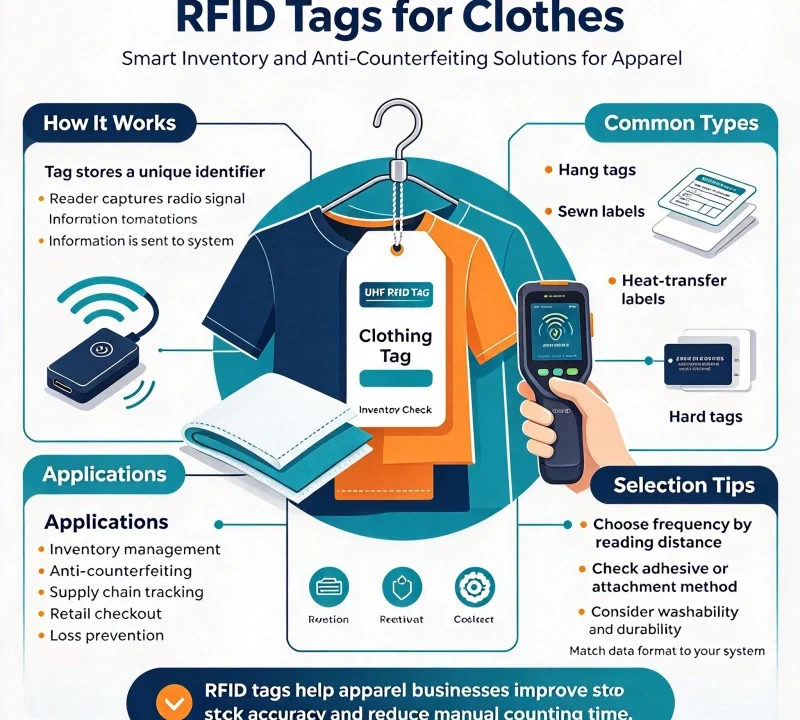
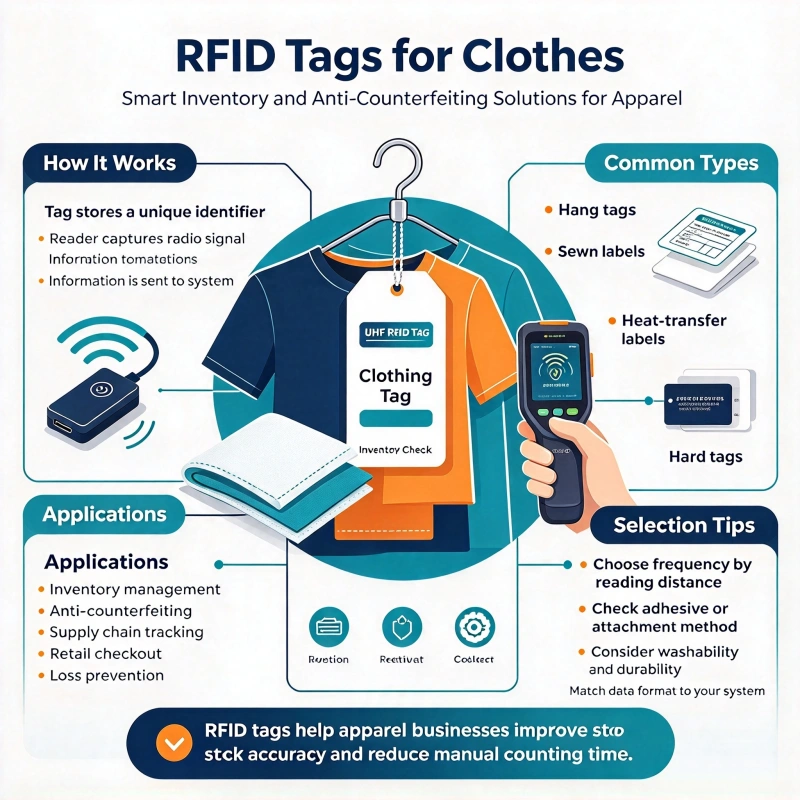
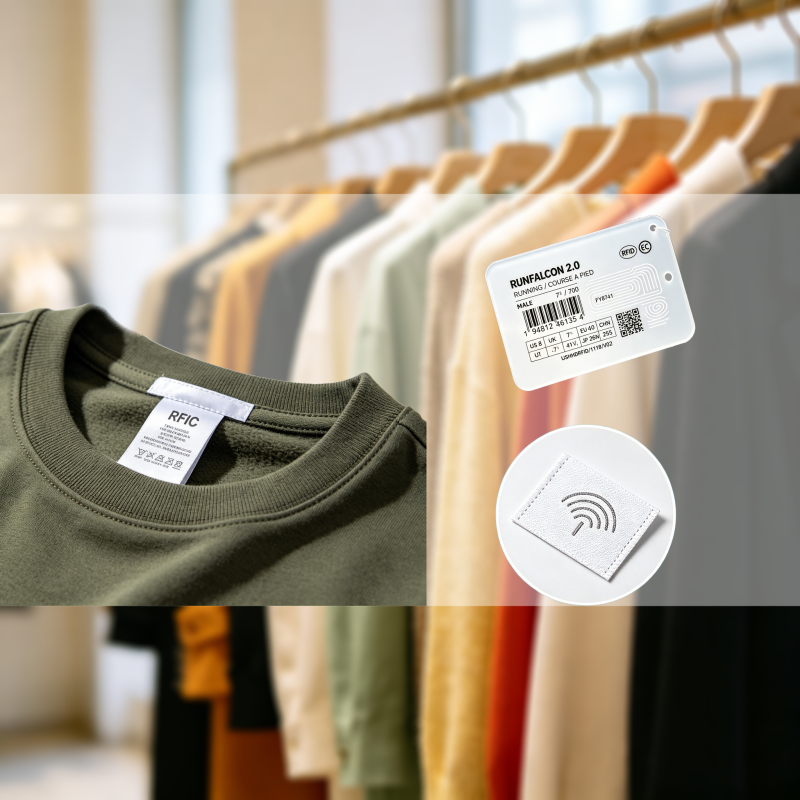
- Retail Inventory Management: RFID tags on every clothing item enable automated inventory counts, reducing out-of-stocks by 50–70% and increasing sales. UHF tags are scanned wirelessly through handheld or fixed readers.
- Supply Chain and Logistics: RFID tags on pallets, cases, and individual products provide real-time visibility from factory to store. Major retailers like Walmart and Target have mandated RFID for suppliers.
- Healthcare and Patient Safety: RFID wristbands prevent medication errors, track surgical instruments, and manage bed turnover. Wristbands can store patient IDs, allergies, and medication schedules — readable instantly at any care point.
- Access Control and ID Credentials: MIFARE-based cards secure office buildings, hotel rooms, and university campuses. Contactless credentials have largely replaced magnetic stripe and barcode systems.
- Event Management and Ticketing: UHF RFID wristbands at festivals enable cashless payments, entry validation, and VIP access. Thousands of attendees can be processed per minute.
- Asset Tracking: RFID tags attached to tools, equipment, and IT assets automate check-in/check-out and locate misplaced items instantly.
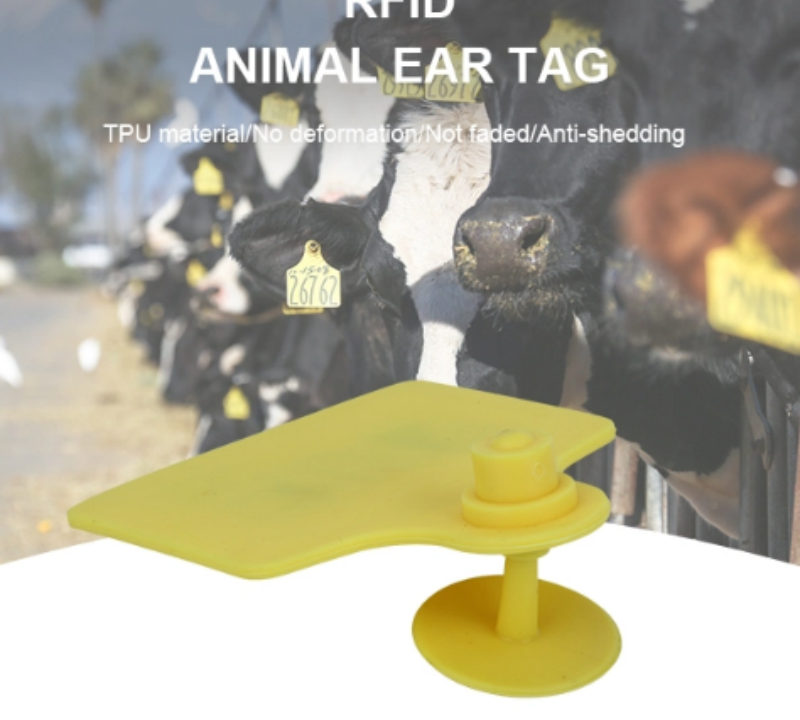
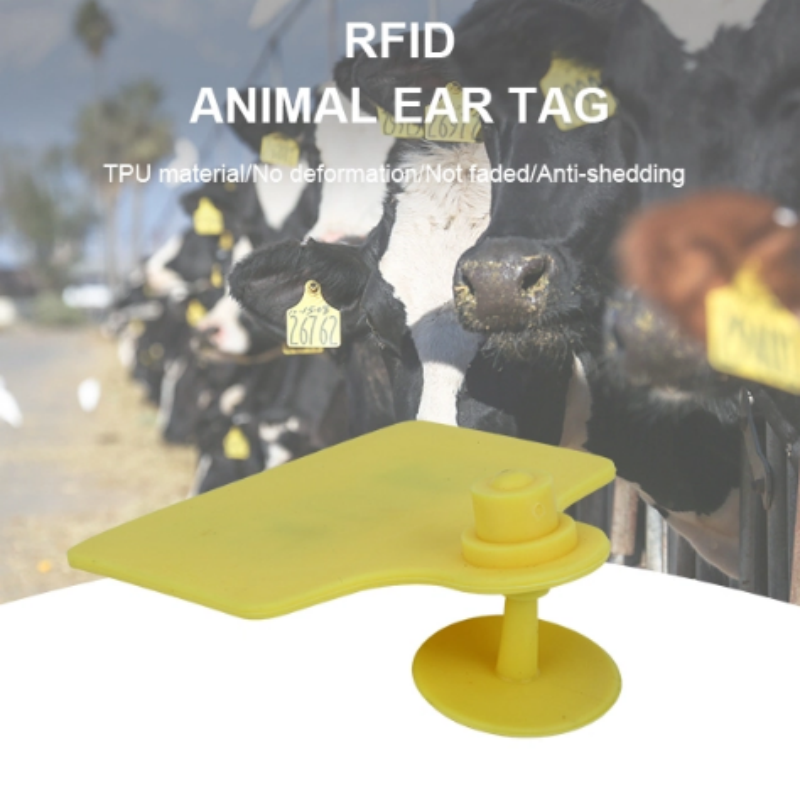
- Livestock and Animal Identification: LF and UHF ear tags track cattle from birth to processing, supporting disease control and supply chain traceability.
- Automotive Manufacturing: RFID tags follow vehicle components through assembly lines, ensuring the right part arrives at the right station at the right time.
- Pharmaceutical Authentication: Secure RFID tags combat counterfeit drugs, verify chain of custody, and support regulatory compliance.

The Top RFID Tag Manufacturers in the World
1. Avery Dennison Smartrac
Headquarters: Glendale, California, USA (with Smartrac headquarters in Amsterdam, Netherlands)
Key Products: UHF RFID inlays, dual-frequency tags (UHF + NFC), NFC tags, ARC-certified retail tags
Avery Dennison Smartrac is arguably the largest RFID inlay manufacturer globally. Following Avery Dennison’s acquisition of Smartrac’s RFID transponder division, the combined entity offers the broadest product range for any RFID application. From apparel hang tags to industrial labels, their product finder spans Web inlays for item-level retail, Accessory inlays for small items like cosmetics, and Belt DF dual-frequency tags for brand protection combined with supply chain tracking.
What makes them unique: Their ARC (Auburn University RFID Lab) certification program ensures retail-ready performance for major brands. Products like AD Circus Pro NFC tags incorporate one-time password authentication to beat counterfeiting, while the AD Enforce U9 combines UHF RFID with Electronic Article Surveillance (EAS) in a single label — reducing the need for two separate tags.
Best for: Apparel retailers, global supply chains, high-volume consumer goods brands.
2. Impinj
Headquarters: Seattle, Washington, USA
Key Products: RAIN RFID endpoint ICs (chips), reader ICs, software platform
Strictly speaking, Impinj doesn’t manufacture finished RFID tags — they make the silicon that powers them. But no list of RFID tag manufacturers would be complete without them because Impinj’s chips are inside the majority of high-performance UHF tags on the market. The company’s M730, M750, M770, and M780 endpoint ICs power countless partner inlays and tags. As of 2025, Impinj partners have launched more than 100 Gen2X-enabled inlays and 50 readers in less than a year.
What makes them unique: Impinj’s Gen2X innovations, announced at their 2025 Solutions Developers Conference, address three persistent enterprise challenges: inhibiting counterfeit tags, reducing stray tag reads, and helping readers focus on desired tags in dense environments. Gen2X-enabled tags — based on the M800 series — deliver performance that was previously unattainable, with enterprise deployments showing dramatic read rate improvements.
Best for: RAIN RFID solution providers, system integrators, and any application requiring long-range, dense tag reading.
3. NXP Semiconductors
Headquarters: Eindhoven, Netherlands
Key Products: UCODE RAIN RFID tag ICs, NTAG NFC chips, MIFARE contactless ICs
NXP is the other giant of RFID silicon. Where Impinj dominates UHF, NXP leads across the entire frequency spectrum — from UHF (UCODE family) to HF/NFC (NTAG, ICODE, MIFARE). Their chips appear in everything from public transport cards to pharmaceutical authentication tags.
What makes them unique: NXP has aggressively expanded security capabilities. In 2025, they introduced UCODE DNA Track and UCODE DNA City — RAIN RFID ICs combining long-range UHF with cryptographic authentication to protect brands and fight fraud. Meanwhile, their NTAG X DNA NFC tag, certified to Common Criteria EAL6+, provides AES-256 encryption, ECC for asymmetric authentication, and dual-interface (NFC + I²C) for IoT integration — while harvesting up to 20 mW from an NFC reader to power external devices.
Best for: Secure payment and ID applications, pharmaceutical authentication, high-value asset tracking with anti-counterfeiting requirements.
4. HID Global
Headquarters: Austin, Texas, USA
Key Products: RFID tags and readers, access control credentials, sensor-enabled passive tags, RTLS solutions
HID Global is best known as a leader in secure identity and access control, but their RFID tag portfolio extends far beyond door badges. Operating under parent company ASSA ABLOY, HID has built a comprehensive RFID capability that spans LF, HF, UHF, BAP (battery-assisted passive), BLE, and LoRa technologies.
What makes them unique: HID has pushed RFID beyond simple identification into sensing. They have introduced passive RFID tags that can detect temperature, liquid level, stress changes, and vibration — turning a simple inventory tag into a environmental sensor. Their IronTag RAIN RFID tag, based on Impinj’s Monza X chip with 8,192 bits of user memory, is designed for industrial tracking in harsh environments. HID also offers passive RTLS (real-time location systems) based on EPC protocols for indoor positioning.
Best for: Physical access control, industrial asset tracking, environmental monitoring, government IDs.
5. Zebra Technologies
Headquarters: Lincolnshire, Illinois, USA
Key Products: RFID printer-encoders, fixed and handheld readers, RFID-enabled mobile computers
While Zebra is not primarily a tag manufacturer, they are the leading provider of RFID infrastructure — the printers, encoders, and readers that enterprises use to deploy RFID at scale. Zebra’s printers and encoder systems are the de facto standard for printing and encoding RFID labels in warehousing and distribution. They also offer a full line of RFID tags through their supplies division, including specialty tags for on-metal use, harsh environments, and high-temperature applications.
What makes them unique: Zebra’s integrated ecosystem — from tag design software to printer-encoders to handheld readers — means customers can source both tags and the equipment to encode them from a single vendor. Their industrial printers are known for reliability in demanding environments.
Best for: Large-scale warehousing and logistics deployments, barcode-to-RFID migrations, enterprises needing turnkey RFID infrastructure.
6. Checkpoint Systems
Headquarters: Philadelphia, Pennsylvania, USA (Division of CCL Industries)
Key Products: UHF RFID tags and inlays, RFID-based loss prevention systems, cloud retail operations software
Checkpoint Systems has over 50 years of expertise in retail technology, evolving from electronic article surveillance (EAS) into a full-spectrum RFID provider. Their Voltis™ M830 UHF RFID label received Auburn ARC certification for specs O, Y2, R, Q, F, W5, W6, and L — covering a broad range of retail use cases including general merchandise and apparel.
What makes them unique: Checkpoint combines tag manufacturing with integrated retail software. Their Checkpoint Store Operations cloud platform centralizes EAS, RF, and RFID devices into a single portal with real-time analytics and Power BI dashboards. Their SFERO RFID loss prevention system covers store entrances up to 10 meters wide with 95% accuracy, detecting RFID-tagged items passing through — with product-level image identification. For the European Digital Product Passport (DPP) mandate, Checkpoint has developed integrated smart labels combining RFID and QR codes, powered by their CheckLINQ data platform.
Best for: Retail chains (apparel, general merchandise, grocery), loss prevention, DPP compliance for EU markets.
7. Alien Technology
Headquarters: San Jose, California, USA
Key Products: UHF RFID tag ICs (Higgs family), RFID readers, tag inlays
Alien Technology pioneered many of the manufacturing techniques that made low-cost UHF RFID possible. Their Higgs series endpoint ICs — including Higgs 3, Higgs 4, and Higgs 9 — are widely used in retail and logistics tags. Alien also manufactures readers and offers complete RAIN RFID solutions.
What makes them unique: Alien’s tag ICs feature configurable memory architectures, allowing customization of EPC memory size, user memory, and password protection within the same chip platform. Their “fast write” capability speeds up encoding in high-volume production lines.
Best for: Retail source tagging, supply chain applications requiring flexible memory configurations.
8. SATO Holdings Corporation
Headquarters: Tokyo, Japan
Key Products: RFID printer-encoders, RFID tags and labels, healthcare RFID solutions
SATO is a Japanese leader in auto-ID solutions, with particular strength in RFID printing and encoding. They manufacture both the printers and the consumables (RFID tags and labels), ensuring perfect compatibility. SATO has partnered with RFiD Discovery for healthcare wristband solutions, targeting patient identification and bed management systems.
What makes them unique: SATO’s “AEP” (Application-Enabled Printing) technology embeds business logic directly into the printer, allowing the printer to process RFID data without a connected PC. Their healthcare-focused RFID tags are designed for patient safety applications with strict regulatory compliance.
Best for: Healthcare RFID deployments, Asian markets, enterprises requiring printer-integrated solutions.
9. Honeywell International
Headquarters: Charlotte, North Carolina, USA
Key Products: RFID readers, mobile computers with RFID, RFID tag offerings
Honeywell is a diversified technology giant with a significant presence in auto-ID and data collection. Their mobile computers (like the CT series with integrated UHF RFID) are widely deployed in warehousing and retail. Through acquisitions and partnerships, Honeywell offers a range of RFID tags designed to work optimally with their reader ecosystem.
What makes them unique: Honeywell’s tag portfolio is optimized for use with their readers and mobile computers, simplifying the “system” engineering challenge. Their durability ratings for industrial tags are among the highest in the industry.
Best for: Warehousing operations already using Honeywell scanning equipment, industrial manufacturing.
10. Tageos
Headquarters: Montpellier, France
Key Products: UHF RFID inlays and tags, ARC-certified retail tags, industrial RFID labels
Tageos has built a strong reputation for high-quality UHF RFID inlays at competitive price points. They are a key Impinj partner, with over 35 Gen2X-enabled inlays based on Impinj’s M800 endpoint ICs. Tageos operates global manufacturing with facilities in Europe, the US, and China, enabling regional supply.
What makes them unique: Tageos is known for technical depth — their CTO and engineering team actively collaborates with Impinj on advanced tag designs. They have been early adopters of Gen2X features like Tag Selection and endpoint IC verification to improve tag readability in enterprise environments.
Best for: Retailers needing ARC-certified tags, enterprises seeking Gen2X-ready products.
11. D.O RFID Group
Headquarters: Shenzhen, Guangdong, China
Key Products: RFID cards, NFC tags, RFID wristbands, RFID inlays, RFID readers and data collectors, custom RFID tags
D.O RFID Group is a Shenzhen-based manufacturer with over 14 to 15 years of experience in the RFID and smart card field. Unlike many Western manufacturers that focus narrowly on specific tag types, D.O RFID Group offers exceptional range: RFID wristbands (silicone and PVC), RFID cards, NFC tags, key fobs, epoxy tags, RFID inlays, contact IC cards, and RFID readers and writers. They also produce RFID data collectors (with and without displays) used in manufacturing environments for real-time production floor tracking. One of their specialized products is cable tags engineered to withstand extreme conditions — temperatures from 23°F to 176°F, plus exposure to harsh solvents, oils, and chemicals. For animal tracking, they manufacture ear tag e-units and semi-finished transponders.
What makes them unique: D.O RFID Group is a true vertically integrated manufacturer — they produce both the passive tags and the active readers and data collectors that work with them. This end-to-end capability is rare among mid-sized RFID manufacturers. They offer an exceptionally low minimum order quantity, with lead times as short as 2–3 weeks for custom projects. The company provides a 36-month warranty and 24-hour technical support. Their status as a long-term supplier of Austria metro cards demonstrates their ability to meet rigorous European quality and compliance standards — a credential that distinguishes them from many other Chinese manufacturers. Their engineering team designs completely custom RFID tags for unique use cases, embedding NFC/RFID transponders into custom housings.
Best for: Custom RFID projects with low-to-medium volume requirements, event and hospitality wristbands, access control cards, budget-conscious buyers needing both tags and readers from one supplier.
12. Confidex
Headquarters: Tampere, Finland
Key Products: Industrial-grade UHF RFID tags, on-metal tags, high-temperature tags
Confidex specializes in rugged RFID tags designed for the harshest industrial environments. Their tags withstand extreme temperatures, chemical exposure, vibration, and mechanical impact — applications where a standard label would fail in days.
What makes them unique: Confidex tags are engineered for decades of performance in automotive manufacturing, heavy equipment tracking, and industrial laundry. Their on-metal tag designs solve the detuning problem that plagues standard UHF tags on metal surfaces.
Best for: Industrial manufacturing, automotive assembly lines, heavy equipment rental, industrial laundry tracking.
13. Omni-ID
Headquarters: Rochester, New York, USA (with global operations)
Key Products: On-metal UHF RFID tags, high-temperature tags, visual RFID tags
Omni-ID is another specialist in challenging environments, particularly known for tags that perform reliably on or near metal surfaces. Their Prox and Flex lines offer varying degrees of ruggedness and read range depending on application requirements.
What makes them unique: Omni-ID’s “visual RFID” tags combine a printed barcode or human-readable text with an embedded RFID chip — useful for facilities that aren’t fully automated and need fallback visual verification.
Best for: IT asset tracking, metal container tracking, data center inventory.
14. Xerafy
Headquarters: Singapore (with R&D in the UK and US)
Key Products: Metal-mount UHF RFID tags, high-temperature tags (autoclave, curing oven), industrial RFID solutions
Xerafy focuses exclusively on RFID tags for high-performance industrial applications. Their tags are designed to survive autoclave sterilization (medical devices), paint curing ovens (automotive), and other extreme processes.
What makes them unique: In October 2025, Xerafy and Impinj launched the world’s thinnest Gen2X on-metal RAIN RFID labels — Metal Skin Delta and Titanium — opening new use cases for tagging thin metal items where traditional tags were too bulky. This product combines Impinj’s M800-series Gen2X capabilities with Xerafy’s thin-on-metal antenna engineering.
Best for: Medical device tracking (sterilizable tags), aerospace part tracking, automotive manufacturing with high-heat processes.
15. Laxcen Technology (立芯科技)
Headquarters: Ningbo, China
Key Products: RAIN RFID tags and inlays, RFID readers, IoT RFID solutions
Laxcen is one of China’s fastest-growing RFID manufacturers and made history in 2025 as the only Chinese company ranked among Tracxn’s global RFID Top 10 competitors. Founded in 2012, Laxcen has developed a comprehensive portfolio spanning both tags and readers.
What makes them unique: Laxcen’s inclusion in Tracxn’s global rankings — with a two-position improvement since 2023 — validates the increasing competitiveness of Chinese RFID technology on the world stage. They are well-positioned for price-competitive global sourcing without compromising on technical performance.
Best for: Chinese and Asia-Pacific deployments, cost-competitive global sourcing, IoT solution integration.
How to Choose the Right RFID Tag Manufacturer
With dozens of qualified manufacturers in the market, your choice should be driven by application requirements, not brand familiarity alone.
Step 1: Define Your Environment First
- Harsh environment (temperature extremes, chemicals, vibration): Confidex, Xerafy, Omni-ID, HID Global (IronTag series)
- Standard retail inventory: Avery Dennison Smartrac, Checkpoint, Tageos, Alien Technology
- On-metal applications: Xerafy (Metal Skin series), Confidex (on-metal lines), Omni-ID (Prox series)
- Wearables (wristbands, cards): D.O RFID Group, SATO (healthcare wristbands)
- Secure payment / ID: NXP (MIFARE, NTAG DNA), HID Global (secure credentials)
Step 2: Consider Volume and Customization
- High volume, standardized: Avery Dennison Smartrac, Tageos, Checkpoint
- Low to medium volume, custom designs: D.O RFID Group offers flexible MOQs and short lead times with custom engineering
- Ultra-high volume source tagging: Alien Technology, Impinj-based inlay manufacturers
Step 3: Evaluate Geography and Supply Chain Risk
- Global footprint (multiple continent manufacturing): Avery Dennison Smartrac (Americas, Europe, Asia), Tageos (EU, US, China), Checkpoint (global with recent Mexico expansion)
- US-based: Avery Dennison, Impinj (chips), Alien Technology, HID Global
- Europe-based: NXP (Netherlands), Confidex (Finland), Tageos (France), Xerafy (Singapore with UK/US R&D)
- China-based: D.O RFID Group (Shenzhen), Laxcen (Ningbo)
Step 4: Consider Technology Partnerships and Standards Compliance
- ARC certification (retail): Avery Dennison Smartrac, Checkpoint, Tageos, Laxcen
- Gen2X readiness (highest UHF performance): Impinj chip-based tags (Avery Dennison, Tageos, Xerafy, Impinj partners)
- Regulatory compliance (DPP, FDA, etc.): Checkpoint (DPP solutions), NXP (EU DPP-ready NTAG X DNA)
Supplier Differentiation — My View
The RFID tag manufacturing industry has bifurcated. On one side are global scale players (Avery Dennison Smartrac, Checkpoint, Tageos) offering high-volume, standardized products with global logistics. They excel when you need millions of identical tags delivered to multiple countries with consistent quality.
On the other side are agile mid-sized manufacturers (D.O RFID Group, Confidex, Xerafy) offering flexibility, customization, and application-specific design. They excel when your project doesn’t fit the standard catalog — specialized wristbands for a resort, custom readers for a production line, on-metal tags with non-standard dimensions.
Where do D.O RFID Group and Laxcen fit in this picture? They represent a emerging third wave of RFID manufacturing. With Western-quality standards and patents from key customers like Austria metro, they offer compelling evidence that modern Chinese manufacturing can be both cost-competitive and quality-equivalent to Western and European alternatives. D.O RFID Group’s 36-month warranty and 24-hour technical support — uncommon among mid-tier manufacturers — signal confidence in their products.
The biggest challenge these Asian manufacturers face is brand recognition in Western markets. But for buyers who look beyond incumbents, the value is undeniable. D.O RFID Group produces reliable PVC and silicone wristbands, epoxy tags, NFC cards, and industrial cable tags — essential items for events and access control — often at 30–50% lower cost than Western alternatives. Their three-year warranty provides the assurance that quality engineering backs the low cost.
The Future of RFID Tag Manufacturing (2026 and Beyond)
The RFID tag market is evolving along several key vectors:
Gen2X mainstreaming: With more than 100 Gen2X-enabled tag models and 50 readers now available, 2026 will be the year Gen2X becomes the baseline expectation rather than a premium upgrade. The technology’s ability to inhibit counterfeit tags, reduce stray reads, and focus reader attention on desired tags directly addresses enterprise pain points.
Security integration: NXP’s NTAG X DNA (CC EAL6+ certified with AES-256) and UCODE DNA tags demonstrate that even passive RFID tags can now provide cryptographic authentication. With EU Digital Product Passport regulations taking effect, secure, authenticable tags will move from “nice to have” to mandatory in European markets.
Sustainability: Eco-friendly RFID tags — made with recycled materials, reduced adhesives, and biodegradable substrates — are the next frontier. The global eco-friendly RFID tag market was estimated at 503.2millionin2025andisprojectedtoreach952.8 million by 2032.
Smaller form factors: As Impinj and partners launch tags for traditionally hard-to-read products like liquid hand soap and small cosmetics — demonstrated by a 24mm Gen2X-enabled tag reading 98% of a dense shelf in 13 seconds compared to 79% in standard mode — tags will continue shrinking while performance improves.
Final Recommendations
After analyzing market positions, technical capabilities, and application fit across the top 15 RFID tag manufacturers, here are my final, actionable recommendations:
If you are a large retailer managing global supply chains: Avery Dennison Smartrac, Checkpoint Systems, or Tageos will provide ARC-certified inlays, global manufacturing footprint, and retail-specific engineering support.
If you are deploying an industrial tracking system in harsh environments: Confidex, Xerafy, Omni-ID, or HID Global offer the durability you need, with Confidex and Xerafy leading in extreme temperature and chemical resistance.
If you are integrating RFID into secure ID or payment systems: NXP provides the most advanced security features (AES-256, ECC, CC EAL6+ certification). HID Global offers comprehensive identity management systems.
If you need custom tags, low-to-medium volumes, or readers + tags from one supplier: D.O RFID Group is a compelling option. Their vertical integration — producing both tags and data collectors — means fewer vendor relationships for you. Their 36-month warranty and European transit card credentials (Austria metro) demonstrate quality beyond their price point. For event management, hospitality wristbands, and access control cards, they are worth serious consideration.
If your priority is the absolute lowest cost per tag: Look at Aliasing NXP- or Impinj-based tags from Chinese manufacturers like Laxcen or volume inlay producers like Tageos. But be careful — low-cost tags without ARC certification or proper testing will fail in high-read-rate retail environments.
The global RFID tag market is large enough for many winners. The key is matching your specific application to the manufacturer whose engineering priorities align with yours. Speed matters. Durability matters. Security matters. Cost matters. Choose accordingly.

Do RFID is a leading China-based manufacturer with over 15 years of experience. We specialize in customized RFID readers, tags, and cards, delivering high-quality, tailored solutions that meet your unique business needs and drive seamless, efficient identification.