
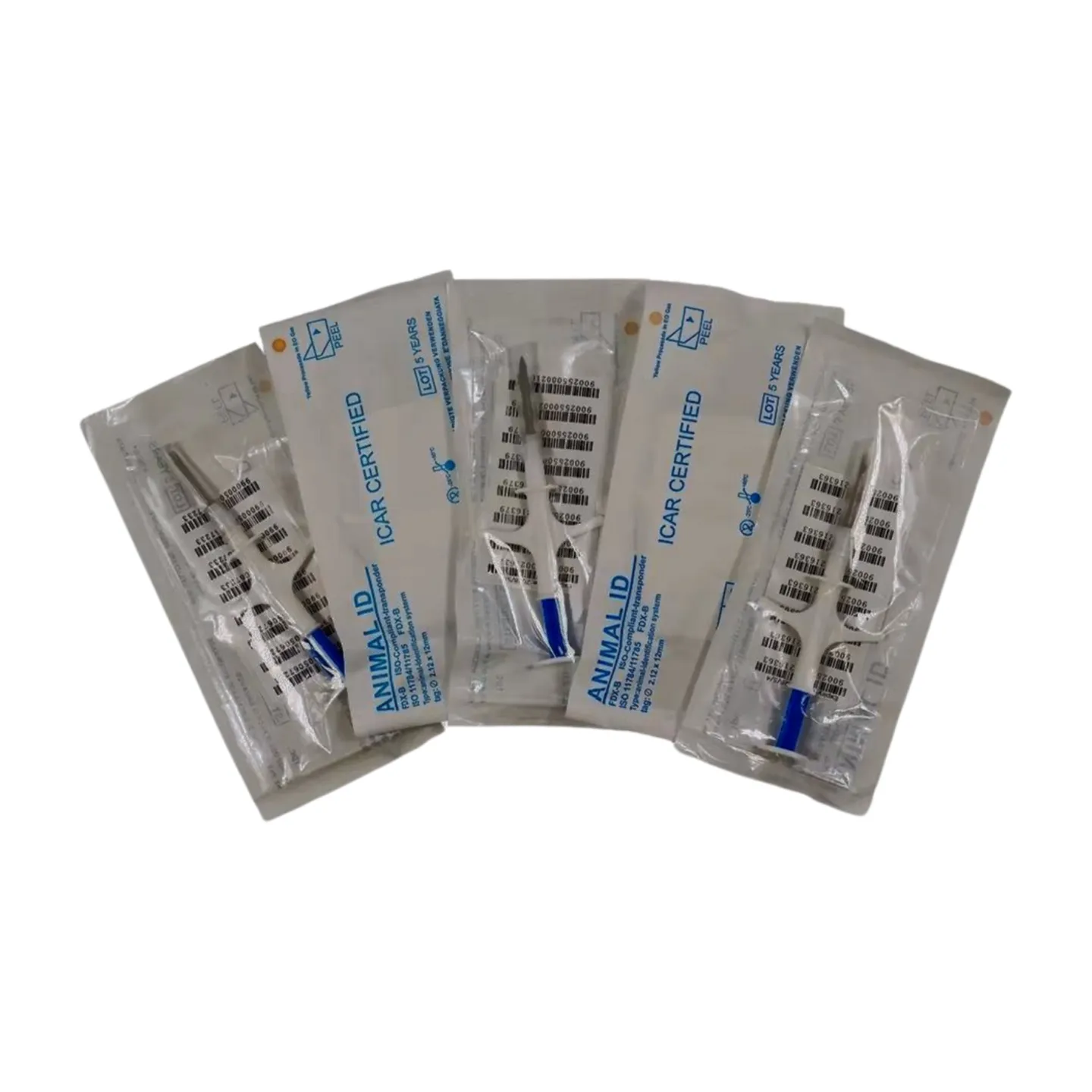
European Made Bioglass RFID Animal Microchips Premium Implants for Reliable Animal Identification
What Are European Made Glass Tags Microchips
Core Design Medical Grade Bioglass Encapsulation
These implantable microchips are encapsulated in medical grade bioglass, a non reactive biocompatible material that prevents migration after implantation and resists damage from bodily fluids or external impact. The smooth glass surface eliminates risk of tissue irritation or rejection, making the implant safe for lifelong use in all animal species.
European Manufacturing Quality and Reliability
All units are manufactured in European facilities following strict quality control protocols, ensuring consistent performance and adherence to global animal identification standards. Every microchip undergoes rigorous testing for read range, durability and biocompatibility before packaging to reduce failure rates in field applications.
Core Technical Specifications of Our Bioglass Animal Microchips
Frequency and Protocol Compatibility
The microchips operate at a 134.2 kHz low frequency, supporting FDX B, FDX A and HDX communication protocols. This multi protocol design ensures compatibility with nearly all commercial RFID animal readers used worldwide, eliminating the need for specialized scanning equipment for end users.
Chip Models and Size Options
Available chip models include EM4305, EM4100, ID and UHF variants to match different use case requirements. Size options are protocol specific: FDX A models range from 1.4x8mm to 4x34mm, while HDX models range from 2x12mm to 4x34mm, making them suitable for implantation in animals of all sizes from small companion pets to large livestock.
Implantation and Lifespan Details
Each microchip comes pre loaded in a sterile single use syringe for fast, minimally invasive implantation. No specialized surgical equipment is required for administration, which can be completed by a trained veterinarian or qualified farm staff in under one minute per animal. The microchip has a rated lifespan of 10 plus years, with no battery required for operation.
Key Advantages of European Bioglass Animal Microchips
- European manufacturing quality ensures consistent performance and low defect rates compared to generic alternatives
- Bioglass encapsulation offers superior biocompatibility and durability over plastic encapsulated microchips
- Multi protocol support eliminates compatibility issues with regional reader systems for global use
- ICAR certification meets official requirements for animal traceability, cross border pet travel and livestock regulatory compliance
- Pre loaded syringe packaging supports sterile, fast implantation to reduce procedure time and infection risk
- 10 plus year operational lifespan provides permanent identification for the full lifetime of most animal species
Compliance and Certifications Meeting Global Animal ID Standards
ICAR Certification International Animal ID Recognition
All microchips hold full ICAR certification, the global standard for animal identification technology. This certification ensures the microchip meets strict requirements for unique ID coding, read performance and data storage, making it eligible for use in official government traceability programs and international pet travel schemes.
ISO 11784 11785 Compliance
The microchips are fully compliant with ISO 11784 and ISO 11785 international standards for animal RFID identification. This compliance guarantees interoperability with all ISO compliant scanning equipment used by veterinary clinics, animal shelters, border control agencies and livestock regulatory bodies worldwide.
Applications of European Glass Tags Microchips
Companion Animal Identification Dogs Cats
These microchips provide permanent identification for dogs, cats and other companion pets, enabling quick reunion of lost animals with their owners. The ICAR certification also makes the microchip valid for cross border pet travel under international pet passport schemes.
Livestock and Herd Management Cattle Sheep Pigs
Farm managers use these microchips for individual animal identification, traceability, health record tracking and breeding management for cattle, sheep, pigs and other livestock species. The long lifespan and durable construction make them suitable for use in outdoor farming environments.
Rescue and Wildlife Animal Tracking
Animal shelters, rescue organizations and wildlife management teams use the microchips to track rescue animals, monitor wildlife populations and support reintroduction programs for endangered species. The small size options are suitable for implantation in small mammal and bird species.
Implantation Best Practices for European Glass Tags Microchips
Implants should be administered by a trained professional to ensure correct placement and minimize risk of complications. The pre loaded syringe package should be opened only immediately before use to maintain sterility. After implantation, the injection site should be cleaned and monitored for 24 hours for signs of irritation. The unique ID number of the microchip should be registered in the relevant national or regional animal identification database immediately after implantation to ensure full traceability.
Technical Specifications Reference Table
| Parameter | Specification |
|---|---|
| Operating Frequency | 134.2 kHz |
| Supported Protocols | FDX B, FDX A, HDX |
| Chip Models | EM4305, EM4100, ID, UHF |
| Encapsulation Material | Medical Grade Bioglass |
| Size Options | 1.4x8mm to 4x34mm (protocol specific) |
| Implantation Method | Pre loaded sterile syringe |
| Rated Lifespan | 10 plus years |
| Certifications | ICAR Certified, ISO 11784 11785 Compliant |
Frequently Asked Questions
Are these microchips compatible with all standard animal RFID readers?
Yes, the multi protocol design supports FDX B, FDX A and HDX protocols, ensuring compatibility with over 98 percent of commercial and official animal RFID readers used globally.
Can these microchips be used for international pet travel?
Yes, the ICAR certification and ISO 11784 11785 compliance meet the requirements for pet travel under most international pet passport schemes, including the EU Pet Travel Regulation.
Is the implantation procedure painful for animals?
The microchip is implanted with a fine gauge needle, causing only minimal temporary discomfort, similar to a standard vaccination injection. No anesthetic is required for most animal species.
Will the microchip migrate after implantation?
The medical grade bioglass encapsulation bonds with surrounding tissue shortly after implantation, preventing migration of the microchip from the original placement site for the full lifespan of the product.