
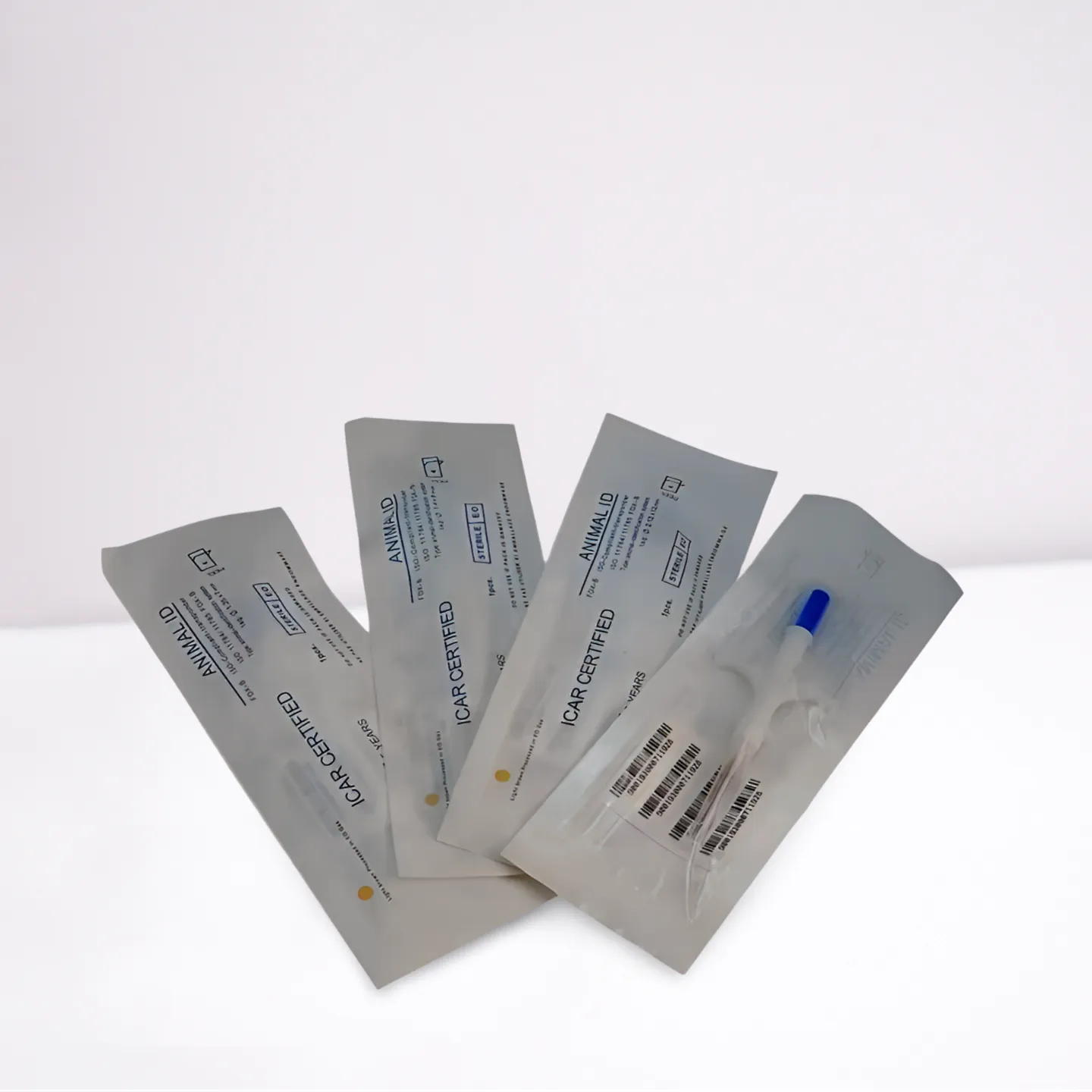
RFID Animal Microchips – ISO 11784/11785 Compliant Implantable Tags from DO RFID GROUP
What Are RFID Animal Microchips
These are passive low frequency implantable tags designed to provide permanent unique identification for animals. Operating at 134.2kHz, they store a non tamperable unique ID that can be read by compatible RFID scanners, eliminating the risk of lost or altered identification markers compared to external tags like collars or ear tags. They are used to support animal recovery, traceability, and management across multiple sectors.
Technical Specifications of Our RFID Animal Microchips
| Parameter | Value |
|---|---|
| Frequency | 134.2kHz |
| Protocol | ISO 11784/11785 |
| Chip Type | EM4305 or equivalent high performance chip |
| Standard Size | 2.12 x 12mm |
| Encapsulation Material | Biocompatible medical grade glass |
| Read Range | Up to 10cm, reader dependent |
| Memory | 512 bits |
| Operating Temperature Range | -25°C to +85°C |
All specifications are tested during production to ensure consistent performance across all units.
Key Advantages of DO RFID GROUP’s Animal Microchips
- Biocompatible construction: Medical grade glass encapsulation prevents adverse reactions and supports safe long term implantation for the full lifespan of the animal.
- Tamper proof design: The unique ID programmed into each chip cannot be altered after implantation, ensuring reliable permanent identification.
- Durable performance: The sealed glass housing resists damage from impact, moisture, and extreme temperatures, suitable for use in both indoor and outdoor environments.
- Global compliance: All units meet international certification requirements, making them suitable for use in cross border animal management and traceability programs.
Applications of RFID Animal Microchips
These microchips are deployed across a wide range of use cases, including:
- Pet identification: Enables quick recovery of lost dogs and cats by linking the chip ID to owner contact information in centralized databases.
- Livestock management: Supports traceability for cattle, sheep, and pigs to improve food safety, breeding program management, and disease control efforts.
- Zoo and wildlife management: Tracks individual zoo animals for health monitoring and supports wildlife conservation programs by tracking migration and population data.
- Veterinary clinic patient management: Links each animal to its medical records for more efficient and accurate care delivery.
DO RFID GROUP Your Trusted RFID Animal Microchip Manufacturer
Our Manufacturing Capabilities
We operate large scale production lines with high daily output capacity to meet bulk order requirements of all sizes. Our production facilities hold ISO 9001 certification for consistent quality management across all processes.
Quality Control and Certifications
We implement multi stage quality control checks from raw material sourcing to final product testing. All microchips are certified to ISO 11784/11785, CE, RoHS, and FDA standards to ensure compliance with global regulatory requirements.
15 Plus Years of Industry Experience
With over 15 years of experience manufacturing RFID products, we have served thousands of B2B clients worldwide including livestock farms, pet clinic networks, wildlife protection organizations, and animal identification solution distributors.
Customization and Bulk Order Services
We offer flexible OEM and ODM options to meet specific client requirements, including pre programmed custom ID codes, custom laser marking, and customized packaging options. We support bulk orders of all sizes with competitive direct factory pricing and short lead times to support your operational timelines.
Implantation Guide
Follow these steps for safe and correct microchip implantation:
- Prepare the sterile microchip, implanter tool, and alcohol swab for the implantation site.
- Restrain the animal gently to avoid sudden movement during the procedure.
- Disinfect the implantation site, typically the loose skin between the shoulder blades for small animals, or the ear base for livestock.
- Insert the implanter needle under the skin and push the plunger to place the microchip under the skin.
- Remove the needle and apply gentle pressure to the implantation site to stop any minor bleeding.
- Scan the microchip to confirm it is functioning correctly and record the ID number in your database.
Frequently Asked Questions
What is the expected lifespan of the microchip? The microchip has no battery and is designed to function for the full lifespan of the animal, typically over 20 years.
Can I request custom pre programmed ID codes? Yes, we offer custom ID programming services for all bulk orders to align with your existing database requirements.
What is the lead time for bulk orders? Standard bulk orders are shipped within 3 to 7 working days, with custom orders requiring additional lead time depending on the scope of customization.
Are the microchips suitable for all animal sizes? The standard 2.12x12mm size is suitable for all animal species from small cats and dogs to large livestock and wildlife.
Request a Quote
Contact our sales team with your order volume, customization requirements, and delivery timeline to receive a custom competitive quote for your RFID animal microchip needs. We offer dedicated account management for all bulk and long term clients to ensure consistent supply and support.