September 14, 2026
As smartphones have become essential tools for communication, payments, networking, and digital identity, Anti-Metal Epoxy RFID NFC Stickers have emerged as one of the fastest-growing NFC products. Unlike conventional NFC stickers that lose performance when attached to metal surfaces, anti-metal versions are engineered with a ferrite shielding layer that enables stable communication even when mounted directly on smartphones, laptops, tablets, metal business card holders, and other conductive objects.
These compact, waterproof, and highly customizable stickers are widely used for digital business cards, social media sharing, access control, product authentication, smart marketing, customer engagement, and IoT applications.
Industry analysts estimate that the global NFC market will exceed USD 45 billion by 2030, while more than 85% of smartphones shipped worldwide already support NFC functionality. At the same time, the RFID market is expected to grow at a CAGR of 10–12%, driven by increasing demand for contactless technology, digital transformation, and connected devices.
This comprehensive guide explains everything importers, distributors, OEM buyers, and technology integrators need to know about Anti-Metal Epoxy RFID NFC Stickers for phones.
What Is an Anti-Metal Epoxy RFID NFC Sticker?
An Anti-Metal Epoxy RFID NFC Sticker is a passive 13.56 MHz NFC tag designed to operate reliably on metallic surfaces. Unlike standard NFC stickers, which experience severe signal degradation when attached to metal, anti-metal stickers incorporate a special ferrite isolation layer that prevents electromagnetic interference.
The sticker typically consists of:
- NFC integrated circuit (IC)
- Copper or aluminum antenna
- Ferrite anti-metal shielding layer
- Industrial adhesive backing
- Protective epoxy resin coating
- Printed branding layer
When placed near an NFC-enabled smartphone or reader, the tag transfers stored information without requiring a battery or external power source.
Typical applications include:
- Digital business cards
- Social media sharing
- Product authentication
- Smart packaging
- Mobile phone NFC tags
- Access control
- Equipment identification
- Asset tracking
- Promotional marketing
- Contactless customer engagement
Why Standard NFC Stickers Fail on Metal
One of the most common questions from customers is why ordinary NFC stickers stop working when attached to smartphones or metal objects.
The answer lies in electromagnetic physics.
NFC operates through magnetic field coupling between the reader and the antenna. Metal surfaces absorb and distort this magnetic field, reducing antenna efficiency and often making communication impossible.
An anti-metal NFC sticker solves this problem by adding a ferrite layer between the antenna and the metal surface.
The ferrite material redirects magnetic flux and minimizes interference, allowing the NFC antenna to maintain proper resonance at 13.56 MHz.
This technology significantly improves reading performance on:
- Smartphones
- Tablets
- Laptops
- Metal nameplates
- Stainless steel equipment
- Industrial machinery
- Aluminum products
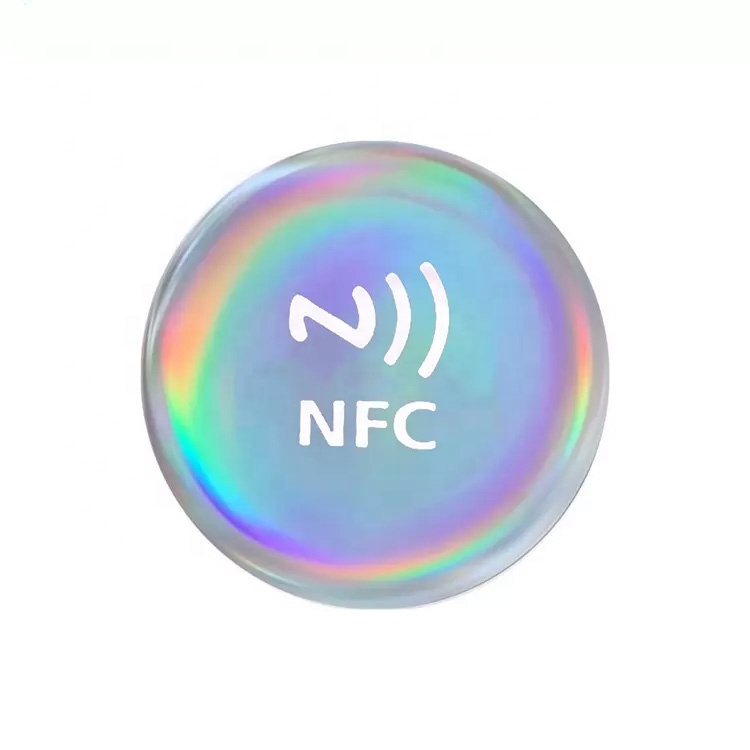
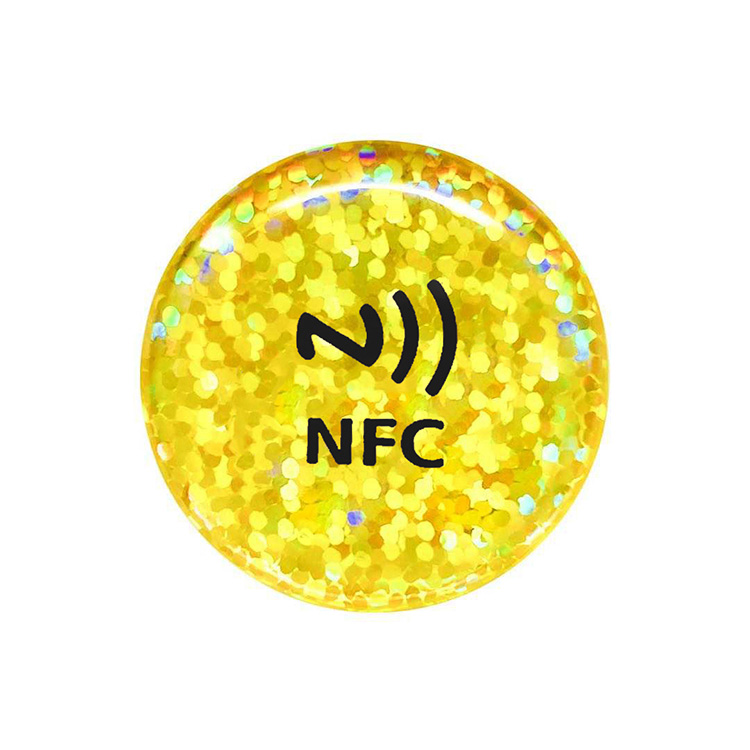
Anti-metal Epoxy RFID NFC sticker for phone
NFC Tag That Instantly Shares Social Media, Contact Info, Music, Payment Platforms etc.
Material | Coated paper,pvc,epoxy,ABS etc |
Printing | Double side CMYK offset printing |
Crafts | Number printing (Serial No & Chip UID etc), QR, Barcode etc Chip program/encode/lock/encrption will be available as well (URL ,TEXT ,Number and Vcard) Epoxy, Hole punch etc |
Size | Diameter 25mm,30mm,35mm,40mm,50mm stocke mould size ,0.5-0.9mm thicknessOEM size ,shape and crafts according to you required |

Available Chips
| LF: 125KHz | EM4200 ,EM4305,T5577,HID,HITAG® S256; |
| HF: 13.56MHz | NTAG® 203, NTAG® 213, NTAG® 215, NTAG® 216; MIFARE Classic® 1K, MIFARE Classic® 4K; MIFARE Plus® 1K, MIFARE Plus® 2K, MIFARE Plus® 4K; MIFARE Ultralight® EV1, MIFARE Ultralight® C; MIFARE® DESFire® 2K, MIFARE® DESFire® 4K, MIFARE® DESFire® 8K;ICODE® SLIX, ICODE® SLIX-S, ICODE® SLIX-L, ICODE® SLIX 2 |
| UHF: 860-960MHz | UCODE® etc |
Remark:
NTAG are registered trademarks of NXP B.V. and are used under license.
ICODE are registered trademarks of NXP B.V. and are used under license.
MIFARE and MIFARE Classic are trademarks of NXP B.V.
MIFARE and MIFARE Ultralight are registered trademarks of NXP B.V. and are used under license.
MIFARE and MIFARE Plus are registered trademarks of NXP B.V. and are used under license.
MIFARE DESFire are registered trademarks of NXP B.V. and are used under license
HITAG is a registered trademark of NXP B.V.
How Does an Anti-Metal NFC Sticker Work?
The operating principle follows internationally recognized NFC standards, including:
- ISO/IEC 14443 Type A
- ISO/IEC 14443 Type B
- ISO/IEC 18092
- NFC Forum specifications
The communication process consists of four steps:
- An NFC-enabled smartphone generates a magnetic field.
- The NFC sticker harvests energy through its antenna.
- The embedded chip becomes active and transmits stored data.
- The smartphone automatically opens the programmed action, such as a website, digital business card, social media profile, payment page, or contact record.
Typical communication is completed in less than one second, providing a fast and intuitive user experience.
Product Structure
A professionally manufactured anti-metal epoxy NFC sticker includes several engineered layers.
Epoxy Resin Surface
The transparent epoxy coating protects the printed graphics from:
- UV exposure
- Water
- Dust
- Scratches
- Daily wear
It also gives the product a premium glossy appearance.
Printed Graphic Layer
Customers can customize:
- Company logos
- QR codes
- Social media icons
- Variable numbers
- Promotional graphics
NFC Chip
Common chip options include:
- NTAG213
- NTAG215
- NTAG216
- MIFARE Classic
- MIFARE DESFire EV3
- ICODE SLIX
Copper or Aluminum Antenna
The antenna is precisely matched to the NFC chip to maximize communication efficiency.
Ferrite Anti-Metal Layer
This is the key component that isolates the antenna from metal interference.
Industrial Adhesive
High-performance adhesive ensures reliable attachment to:
- Smartphones
- Phone cases
- Metal surfaces
- Electronic devices
- Industrial equipment
Popular NFC Chip Options
NTAG213
Usable memory:
- 144 bytes
Ideal for:
- Digital business cards
- Social media links
- Website URLs
NTAG215
Usable memory:
- 504 bytes
Suitable for:
- Marketing campaigns
- Product information
- Customer interaction
NTAG216
Usable memory:
- 888 bytes
Best for:
- Large digital profiles
- Rich multimedia links
- Enterprise applications
MIFARE DESFire EV3
Recommended for:
- Secure authentication
- Corporate access control
- Smart city infrastructure
Manufacturing Process
Professional OEM production follows rigorous quality management procedures.
Artwork Preparation
Designers prepare graphics according to customer branding requirements while ensuring proper antenna positioning.
Chip and Antenna Assembly
The NFC chip is bonded to a precision antenna using automated equipment.
Ferrite Lamination
The ferrite shielding layer is laminated beneath the antenna to optimize anti-metal performance.
Printing
Industrial offset or digital printing systems provide:
- CMYK graphics
- Pantone colors
- Variable QR codes
- Individual serial numbers
- Barcodes
Epoxy Dispensing
Automated dispensing machines apply a transparent epoxy coating with consistent thickness, ensuring long-term protection and a premium finish.
Programming
Each NFC chip can be encoded with:
- Website URLs
- vCards
- Social media profiles
- Product information
- Wi-Fi credentials
- Google Review links
- Dynamic cloud-managed URLs
Quality Inspection
Each production batch is tested for:
- Readability
- Programming accuracy
- Reading distance
- Adhesive strength
- Surface quality
- Waterproof performance
- Compatibility with Android and iPhone devices
Professional manufacturers typically maintain defect rates below 0.5% through automated testing and statistical process control.
Customization Options
OEM suppliers offer extensive customization.
Available options include:
- Company logo
- Full-color CMYK printing
- Pantone color matching
- Laser engraving
- Variable QR codes
- UID printing
- Serial numbering
- Matte finish
- Gloss finish
- Custom shapes
- Individual chip programming
- Private-label packaging
Popular shapes include:
- Round
- Square
- Oval
- Rectangle
- Phone icon
- Company logo
- Fully customized die-cut designs
Major Applications
Digital Business Cards
Professionals can attach the sticker to the back of a smartphone.
One tap instantly shares:
- Contact information
- Company profile
- Portfolio
- Appointment links
- LinkedIn profile
Social Media Marketing
Content creators use NFC stickers to increase followers by linking directly to:
- TikTok
- YouTube
- X (formerly Twitter)
Google Review Campaigns
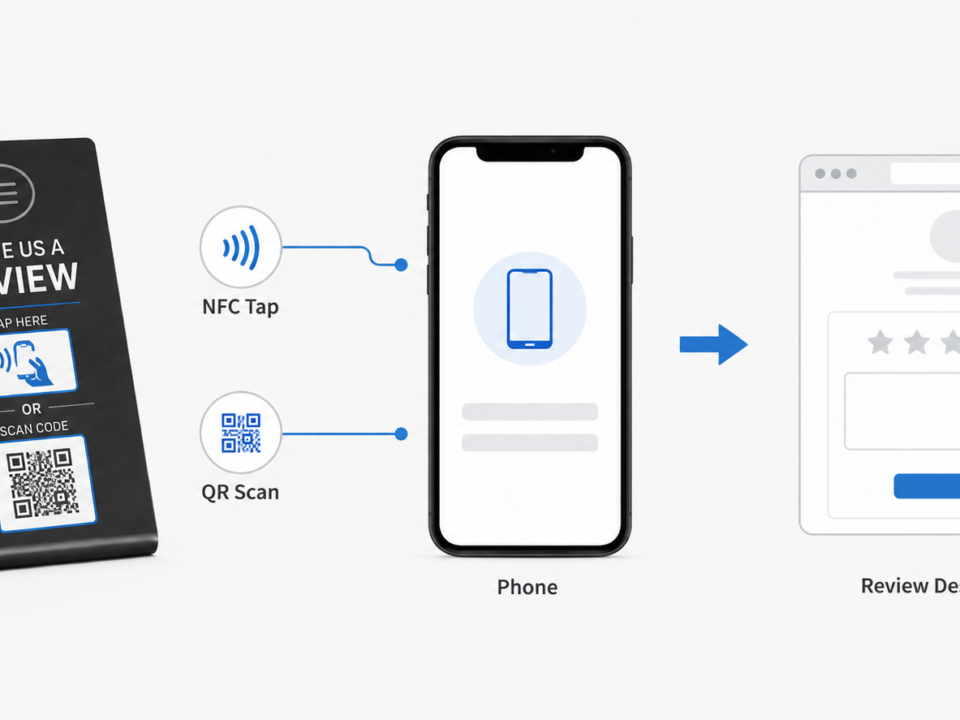
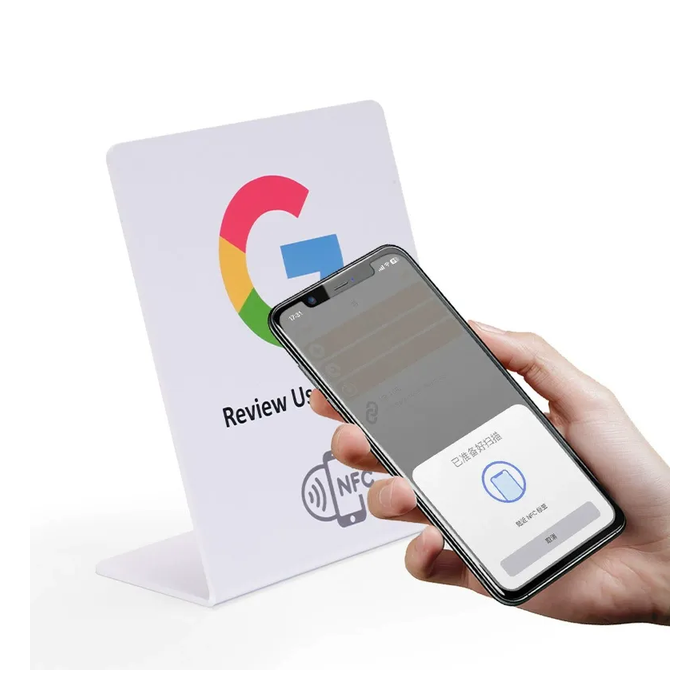
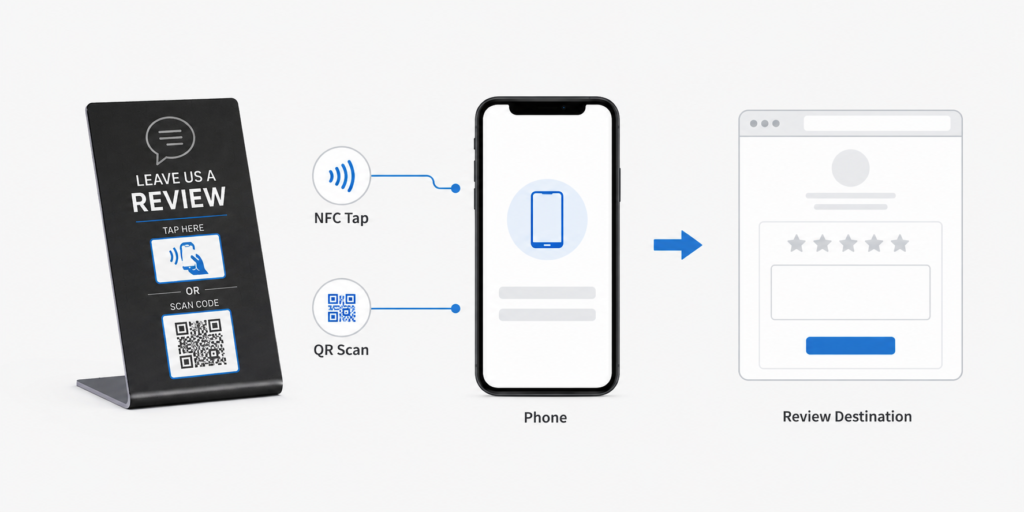
Restaurants and retail stores place NFC stickers at checkout counters so customers can submit Google Reviews with a single tap.
Product Authentication
Luxury brands use NFC stickers to verify product authenticity while reducing counterfeiting.
Smart Packaging
Manufacturers integrate NFC stickers into packaging for:
- User manuals
- Warranty registration
- Product videos
- Customer support
Access Control
NFC stickers can also function as portable access credentials when programmed with compatible authentication systems.
Anti-Metal NFC Sticker vs Standard NFC Sticker
| Feature | Anti-Metal NFC Sticker | Standard NFC Sticker |
|---|---|---|
| Works on Metal | ✔ | ✘ |
| Smartphone Installation | Excellent | Limited |
| Waterproof | Excellent | Good |
| Reading Stability | Excellent | Moderate |
| Epoxy Protection | Yes | Optional |
| Durability | Outstanding | Good |
| Premium Appearance | Excellent | Standard |
Although anti-metal versions are slightly more expensive, they offer significantly better performance when installed on smartphones, laptops, metal equipment, and other conductive surfaces.
Real Manufacturing Experience
One OEM project involved producing customized anti-metal epoxy NFC stickers for a software company promoting digital business cards.
The customer wanted the stickers attached directly to employees’ smartphones while maintaining fast NFC performance across different phone brands. During development, engineers tested multiple ferrite thicknesses and antenna designs to optimize communication without making the sticker excessively thick.
Prototype evaluation included repeated testing on aluminum-frame smartphones, stainless steel phone stands, and metal laptop covers. After several iterations, the engineering team selected a ferrite material that delivered stable tap recognition while preserving a slim profile suitable for everyday use.
This project demonstrated that successful anti-metal NFC products depend not only on chip selection but also on careful antenna tuning, ferrite material quality, adhesive performance, and precision manufacturing.
Buying Guide for OEM Importers
When selecting a manufacturing partner, consider more than unit price.
Manufacturing Capability
Reliable suppliers should have:
- Automated antenna production
- Precision epoxy dispensing
- Chip programming equipment
- Anti-metal lamination technology
- Automated inspection systems
Certifications
Look for compliance with:
- ISO 9001
- ISO/IEC 14443
- NFC Forum specifications
- CE
- RoHS
- REACH
Chip Authenticity
Choose manufacturers using genuine NFC chips from reputable semiconductor suppliers to ensure stable long-term performance.
OEM & ODM Services
A professional supplier should offer:
- Custom mold development
- Graphic design support
- Variable programming
- Individual URL encoding
- Retail packaging
- Global logistics assistance
Building Topical Authority with a Pillar–Cluster Strategy
To maximize search visibility and demonstrate expertise, this guide should serve as the pillar page for “Anti-Metal Epoxy RFID NFC Stickers.” Surround it with in-depth cluster articles that answer related customer questions and link naturally back to this page.
Recommended cluster topics include:
- Why Standard NFC Tags Fail on Metal Surfaces
- NTAG213 vs. NTAG216 for Phone NFC Stickers
- How to Program an NFC Sticker for Digital Business Cards
- Anti-Metal NFC Tags vs. QR Codes
- Best NFC Stickers for iPhone and Android
- NFC Google Review Stickers for Retail Stores
- Custom Epoxy NFC Tags for Product Authentication
- NFC Smart Packaging Solutions
- RFID vs. NFC: Key Differences Explained
- Common NFC Sticker Installation Mistakes
A well-planned pillar–cluster architecture strengthens internal linking, expands topical coverage, and sends strong E-E-A-T signals to search engines.
Future Trends
Several innovations are driving the next generation of anti-metal NFC products:
- AI-powered digital business cards
- Dynamic cloud-managed NFC links
- CRM integration for lead tracking
- Digital product passports
- Apple Wallet and Google Wallet integration
- Eco-friendly recycled materials
- NFC + QR hybrid marketing solutions
- Smart packaging with consumer analytics
As smartphones continue to serve as the center of digital identity and customer engagement, anti-metal epoxy NFC stickers will play an increasingly important role in contactless networking, authentication, and interactive marketing.
Conclusion
Anti-Metal Epoxy RFID NFC Stickers for phones combine advanced ferrite shielding technology, durable epoxy protection, and globally compatible NFC standards to deliver reliable performance on metal-backed devices and other conductive surfaces. They are widely used for digital business cards, smart marketing, access control, product authentication, and customer engagement, offering a premium contactless experience with simple tap-to-connect functionality.
For distributors, importers, and brand owners, partnering with an experienced OEM manufacturer ensures high-quality chip sourcing, optimized antenna design, precision ferrite integration, rigorous quality control, and flexible customization services. By combining real manufacturing expertise with a comprehensive pillar–cluster content strategy and adherence to international standards, businesses can build lasting authority in the rapidly expanding NFC and RFID market while meeting the growing demand for intelligent, contactless solutions.