September 14, 2026
The MIFARE Ultralight® C contactless IC is a cost effective solution using the open 3DES cryptographic standard for chip authentication and data access.
The widely adopted 3DES standard enables easy integration into existing infrastructures and the integrated authentication command set provides an effective cloning protection that helps to prevent counterfeit of tags.
Tickets, vouchers or tags based on MIFARE Ultralight C can act as single trip mass transit tickets, event tickets or as low cost loyalty cards and are also used for device authentication.
Key features
- Fully ISO/IEC 14443 A 1-3 compliant
- NFC Forum Type 2 Tag compliant
- 106 Kbit/s communication speed
- Anti-collision support
- 1536 bits (192 bytes) EEPROM memoryProtected data access via 3DES authentication
- Cloning protection
- Command set compatible to MIFARE Ultralight
- Memory structure as in MIFARE Ultralight (pages)
- 16 bit counter
- Unique 7 bytes serial number
- Number of single write operations: 10,000
| Item | Cashless Payment MIFARE Ultralight® C NFC Card |
| Chip | MIFARE Ultralight® C |
| Chip Memory | 192 bytes |
| Size | 85*54*0.84mm or customized |
| Printing | CMYK Digital/Offset printing |
| Silk-screen printing | |
| Available craft | Glossy/matt/frosted surface finish |
| Numbering: Laser engrave | |
| Barcode/QR Code printing | |
| Hot stamp: gold or silver | |
| URL,text,number,etc encoding/lock to read only | |
| Application | Event management, Festivel, concert ticket, Access control etc |
NXP MIFARE Ultralight C Technology
At the heart of the card is the MIFARE Ultralight C MF0ICU2 contactless IC from NXP Semiconductors. It was developed for contactless smart tickets, cards, and limited-use applications.
The chip communicates using the MIFARE RF interface and supports ISO/IEC 14443 Type A communication. Its 7-byte UID provides a unique identifier for each IC and supports the anti-collision process required when multiple contactless devices are present in the RF field.
Unlike simple NFC tags that only provide open memory, MIFARE Ultralight C supports 3DES authentication. This allows an application to protect selected operations and verify that a card is authorized before protected data is accessed.
This makes the technology suitable for applications where basic NFC functionality is not enough, but a larger and more complex smart-card platform is unnecessary.
Memory Capacity and Data Structure
One important distinction is the difference between total EEPROM capacity and available user memory.
The MIFARE Ultralight C contains 1536 bits, or 192 bytes, of EEPROM. Part of this space is reserved for manufacturer information, configuration, locking, authentication, and other system functions. The user-programmable read/write area is 1152 bits, or 144 bytes.
| Memory Area | Capacity | Purpose |
|---|---|---|
| Total EEPROM | 1536 bits / 192 bytes | Complete EEPROM space |
| User read/write memory | 1152 bits / 144 bytes | Application data |
| OTP area | 32 bits | One-time programmable data |
| Lock/configuration areas | Reserved | Access and memory protection |
| Manufacturer/system data | Reserved | Chip and security functions |
The available user memory is suitable for compact records such as ticket information, membership identifiers, access credentials, URLs, status data, and other application-specific information.
For projects that require large amounts of user data, a higher-capacity NFC product may be more appropriate.
3DES Authentication for Added Security
One of the main advantages of MIFARE Ultralight C is its built-in 3DES authentication.
The authentication mechanism can be used to protect card operations and help prevent unauthorized modification of protected information. NXP specifically positions MIFARE Ultralight C for limited-use applications that require enhanced security compared with conventional paper tickets, magnetic-stripe tickets, barcodes, and basic contactless solutions.
The card also provides a unique 7-byte UID, programmable locking mechanisms, a 32-bit OTP area, and a 16-bit one-way counter. These features can be combined at the system level to create controlled ticketing, access, and verification workflows.
Security should always be considered as part of the complete system. A secure IC alone does not automatically make an entire access-control or payment system secure. Reader configuration, key management, backend software, communication security, and application design are equally important.
Chip Options
| Chip Options | |
| ISO14443A | MIFARE Classic® 1K, MIFARE Classic ® 4K |
| MIFARE® Mini | |
| MIFARE Ultralight ®, MIFARE Ultralight ® EV1, MIFARE Ultralight® C | |
| Ntag213 / Ntag215 / Ntag216 | |
| MIFARE ® DESFire ® EV1 (2K/4K/8K) | |
| MIFARE ® DESFire® EV2 (2K/4K/8K) | |
| MIFARE Plus® (2K/4K) | |
| Topaz 512 | |
| ISO15693 | ICODE SLI-X, ICODE SLI-S |
| 125KHZ | TK4100, EM4200,EM4305, T5577 |
| 860~960Mhz | Alien H3, Impinj M4/M5 |
Remark:
MIFARE and MIFARE Classic are trademarks of NXP B.V.
MIFARE DESFire are registered trademarks of NXP B.V. and are used under license.
MIFARE and MIFARE Plus are registered trademarks of NXP B.V. and are used under license.
MIFARE and MIFARE Ultralight are registered trademarks of NXP B.V. and are used under license.
Blank White Card for Custom Personalization
The standard blank white version is suitable for businesses and system integrators that want to handle card printing or NFC personalization themselves.
A blank surface also provides flexibility during product development, pilot projects, internal testing, and small-batch personalization.
For finished products, we can support customized options such as:
- Full-color CMYK printing
- Offset printing
- Silk-screen printing
- Glossy or matte finishes
- Variable numbering
- Serial numbers
- QR codes
- Barcodes
- Logo printing
- NFC data encoding
- Read-only or locked data configuration
- Custom packaging
Customization requirements should be confirmed before production because printing, encoding, locking, numbering, and other personalization services can affect production processes and lead times.
Standard Card Size and Construction
The card is available in a standard bank-card format, making it easy to integrate into wallets, card holders, ticketing systems, access-control programs, and existing card issuance workflows.
| Item | Typical Specification |
|---|---|
| Format | CR80 / bank-card style |
| Length | Approximately 85.6 mm |
| Width | Approximately 54 mm |
| Thickness | Approximately 0.84 mm |
| Form | PVC smart card |
| Communication | Contactless |
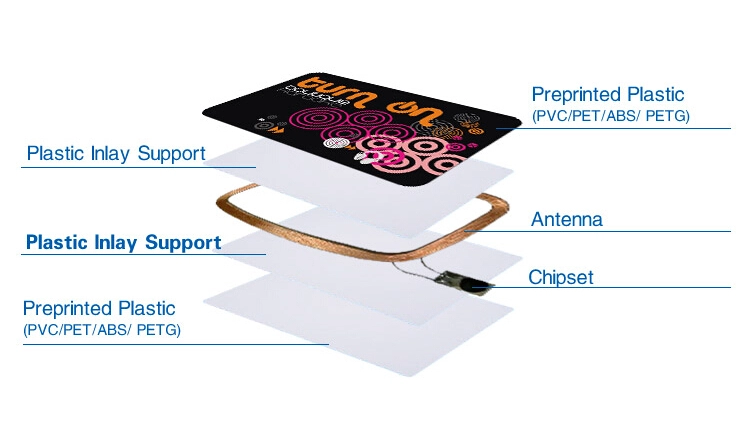
| Antenna | Integrated NFC/HF antenna |
| Surface | White blank or customized |
| Printing | Optional |
Custom dimensions and constructions may be available for specific projects. If the card will be installed inside another product, such as a wristband, key fob, label, or embedded device, antenna geometry should be evaluated before mass production.
MIFARE Ultralight C vs. Other NFC Cards
Choosing the right NFC chip depends on memory requirements, security, reader compatibility, product life, and budget. The following comparison provides a practical starting point.
| Feature | MIFARE Ultralight C | MIFARE Ultralight EV1 | MIFARE Ultralight AES | NTAG213 |
|---|---|---|---|---|
| Frequency | 13.56 MHz | 13.56 MHz | 13.56 MHz | 13.56 MHz |
| ISO/IEC 14443 Type A | Yes | Yes | Yes | Yes |
| UID | 7-byte | 7-byte | 7-byte | 7-byte |
| User memory | 144 bytes | 48/128 bytes | 144 bytes | 144 bytes |
| Authentication | 3DES | Password protection | AES-128 | Password protection |
| OTP | Yes | Yes | Yes | Yes |
| Counter | 16-bit | 3 × 24-bit | 3 × 24-bit | No |
| Typical application | Secure limited-use cards | Basic ticketing | Higher-security NFC | General NFC |
| Security level | Enhanced | Basic | Advanced | Basic |
NXP currently identifies MIFARE Ultralight AES as the replacement for MIFARE Ultralight C for new designs, providing AES-based authentication and additional security features. However, MIFARE Ultralight C remains relevant for existing systems and applications specifically designed around 3DES authentication.
Therefore, if you are developing a completely new product, it is worth comparing Ultralight C with Ultralight AES before finalizing the chip platform.
MIFARE Ultralight C vs. NTAG213
MIFARE Ultralight C and NTAG213 both provide approximately 144 bytes of user memory, but they target somewhat different requirements.
NTAG213 is commonly selected for straightforward NFC applications such as website links, digital business cards, product identification, marketing tags, and smart labels.
MIFARE Ultralight C is more appropriate when 3DES authentication and controlled access are important.
| Requirement | Recommended Choice |
|---|---|
| Simple NFC URL | NTAG213 |
| Digital business card | NTAG213 |
| Product NFC tag | NTAG213 |
| Basic NFC data storage | NTAG213 |
| Secure limited-use ticket | MIFARE Ultralight C |
| Authentication-based application | MIFARE Ultralight C |
| Existing 3DES infrastructure | MIFARE Ultralight C |
| New high-security design | Consider MIFARE Ultralight AES |
The correct choice ultimately depends on the reader infrastructure and security architecture rather than memory capacity alone.
Recommended Applications
MIFARE Ultralight C was developed with limited-use and contactless applications in mind. NXP lists use cases including transit tickets, event tickets, vouchers, access passes, loyalty cards, and similar applications.
Event Tickets
Use NFC cards for concerts, festivals, exhibitions, sports events, conferences, and other ticketed activities. The card can carry an identifier or ticket record while the backend system handles validation and access rules.
Access Control
The card can be integrated into access-control systems where authenticated card transactions are required. System developers should select the appropriate reader and key-management architecture for the required security level.
Loyalty and Membership Cards
MIFARE Ultralight C cards can be personalized with customer numbers, membership identifiers, campaign information, or other compact data.
Transit and Limited-Use Tickets
The technology is particularly suited to limited-use ticketing. NXP describes MIFARE Ultralight C as a contactless ticket IC intended for applications such as single-trip and multi-use transit tickets and event passes.
Vouchers and Promotional Cards
The card can replace printed vouchers or paper-based credentials where a contactless interaction improves convenience and helps automate validation.
Product Identification
NFC cards can also be used as part of product identification and authentication workflows. The UID can provide a unique card-level identifier, while application data can contain product or transaction information.

NFC Reader Compatibility
Because MIFARE Ultralight C uses the 13.56 MHz ISO/IEC 14443 Type A interface, it can be integrated with compatible NFC/HF RFID readers and NFC-enabled development platforms.
The actual compatibility of a reader depends on its support for the MIFARE Ultralight C command set and authentication functions. A reader that can detect generic NFC Type 2 tags does not necessarily support every MIFARE Ultralight C security operation.
For development projects, always verify:
- ISO/IEC 14443 Type A support
- MIFARE Ultralight C command support
- 3DES authentication support
- Read/write permissions
- Key-management capabilities
- Required SDK or API support
This is especially important when replacing an existing NFC card with MIFARE Ultralight C.
Write Endurance and Data Retention
According to current NXP documentation, MIFARE Ultralight C provides 100,000 write cycles and data retention of approximately 10 years under the specified conditions.
Actual product life depends on how the card is used and which memory locations are repeatedly updated.
For applications that continuously modify the same memory location, the system should be designed with the IC’s write endurance in mind. Where appropriate, application software can distribute updates across available memory or use dedicated counter mechanisms instead of repeatedly rewriting the same data.
Why Choose a Blank MIFARE Ultralight C Card?
A blank card provides greater flexibility than a pre-personalized card.
You can determine the card artwork, numbering system, data structure, NFC records, and issuance process according to your own requirements.
It is particularly useful for:
- NFC system developers
- RFID integrators
- Event organizers
- Ticketing companies
- Access-control providers
- Loyalty program operators
- Card manufacturers
- Promotional product companies
- Universities and institutions
- Transportation projects
For larger projects, cards can also be customized with artwork, variable data, encoding, packaging, and other production services.
Printing and Personalization Options
A professional NFC card can combine physical identification with contactless digital functionality.
For example, a finished card may include a company logo on the front, a unique printed serial number, a QR code, and NFC data encoded into the chip.
Variable printing can also be used to connect the physical card number with a digital record in your database.
Common personalization options include:
| Personalization | Available Option |
|---|---|
| Company logo | Yes |
| Full-color artwork | Yes |
| Serial number | Yes |
| Variable numbering | Yes |
| QR code | Yes |
| Barcode | Yes |
| NFC URL | Yes |
| NFC text/data | Yes |
| Matte finish | Available |
| Glossy finish | Available |
| Custom packaging | Available |
Final specifications depend on order quantity, artwork, encoding requirements, and production method.

Ordering and Bulk Supply
The blank white version is suitable for both testing and production projects. For commercial orders, customers can specify the required quantity, printing method, card dimensions, encoding requirements, and packaging.
Bulk production can help reduce the unit cost of customized NFC cards, particularly when the same card design and chip configuration are used across a large order.
Before placing a production order, we recommend confirming:
- Required chip model
- Card dimensions
- Card thickness
- Printing artwork
- NFC data format
- Authentication requirements
- UID handling requirements
- Quantity
- Packaging
- Shipping destination
- Sample approval requirements
Samples can be useful when reader compatibility, antenna performance, printing quality, or NFC encoding needs to be tested before mass production.

Normal package :
200pcs rfid cards into white box .
5 boxes /10boxes /15boxes into one carton.
Customized Package based on your request.
Frequently Asked Questions
What is a MIFARE Ultralight C card?
A MIFARE Ultralight C card is a 13.56 MHz contactless smart card based on the NXP MIFARE Ultralight C IC. It supports ISO/IEC 14443 Type A communication, a 7-byte UID, 3DES authentication, programmable memory protection, and compact user memory.
How much memory does MIFARE Ultralight C have?
The chip contains 1536 bits, or 192 bytes, of total EEPROM. Of this amount, 1152 bits, or 144 bytes, are available as user read/write memory.
Is MIFARE Ultralight C NFC compatible?
Yes. MIFARE Ultralight C operates at 13.56 MHz using the ISO/IEC 14443 Type A interface and is associated with NFC Forum Type 2 tag applications.
Does MIFARE Ultralight C support encryption?
It supports 3DES authentication. This provides a security mechanism for controlled access to protected card functions and data.
Can the card be printed?
Yes. The blank white card can be supplied for in-house printing, and customized production can include full-color artwork, logos, serial numbers, QR codes, barcodes, and other personalization options.
Can the NFC data be pre-encoded?
Yes, NFC encoding can be arranged depending on the required data structure. The exact encoding method should be confirmed before production.
Is the UID programmable?
The 7-byte UID is an individual identifier associated with the IC. It should not be treated as ordinary user memory. Applications that depend on UID-based identification should be designed according to the chip manufacturer’s UID handling requirements.
Is MIFARE Ultralight C suitable for new projects?
It depends on the project. MIFARE Ultralight C remains useful for existing systems requiring 3DES authentication, but NXP currently states that MIFARE Ultralight AES is the replacement recommended for new designs.
What is the reading distance?
NXP specifies an operating distance of up to approximately 100 mm, depending on antenna geometry and reader configuration. Real-world performance may be shorter because of the reader, antenna, card construction, orientation, and surrounding materials.
Choose the Right NFC Card for Your Project
The Blank White NFC MIFARE Ultralight C Card is a practical choice for contactless applications that need more than basic NFC memory. With 144 bytes of user memory, a 7-byte UID, 16-bit counter, programmable locking functions, and 3DES authentication, it provides a compact platform for ticketing, access, loyalty, voucher, and other limited-use applications.
If your project already uses MIFARE Ultralight C or requires compatibility with a 3DES-based card architecture, this card can be a suitable option. For completely new security-sensitive designs, compare it with the newer MIFARE Ultralight AES platform before making a final decision.
Contact us with your required quantity, card size, printing design, NFC encoding, reader model, and application. We can help determine the appropriate card configuration and personalization options for your project.