September 14, 2026
The CR100 Bluetooth mPOS terminal is a compact mobile payment device designed to support EMV chip card and NFC contactless transactions. It connects to smartphones, tablets, computers, and other smart devices through Bluetooth or USB, making it suitable for mobile POS applications, payment solutions, and custom software integrations.
With support for EMV/PBOC chip cards, EMV contactless cards, ISO 14443A/B, and ISO 7816 Class A, B, and C, the CR100 combines card-present payment functionality with a compact form factor. Its security architecture supports DUKPT, Fixed Key, and MK/SK key management, together with DES, 3DES, AES, RSA, and SHA-256 encryption algorithms.
The device is designed for businesses, payment solution providers, system integrators, and software developers looking for a flexible EMV card reader and NFC payment terminal that can communicate with a host application through Bluetooth or USB.
Specification
Bluetooth mpos terminal nfc rfid EMV chip reader
CR100, you can accept payments wherever you go.
Powerfully and flexibly accepts EMV and NFC payments
Connects with smart devices via BLE or USB
Easily to be integrated into apps on iOS, Android, Windows and Linux
| EMV Card Reader | EMV/PBOC Chip Card Reader, ISO 7816 Compliant Class A, B, C |
| NFC Reader | EMV contactless, ISO 14443A/B |
| Communication | Bluetooth v3.0, Bluetooth v4.0 and USB |
| Indicator | LED Status indicator & Buzzer |
| Key Management | DUKPT |
| Fixed Key | |
| MK/SK | |
| Encryption Algorithm | DES |
| 3DES | |
| AES | |
| RSA | |
| SHA-256 | |
| Supported Operating System | Android 2.1 or above |
| iOS 6.0 or above | |
| Windows Phone 8 | |
| MS Windows | |
| Certifications | EMV L1&L2 |
| EMV contactless L1 | |
| PBOC L1&L2 | |
| MasterCard PayPass | |
| Visa PayWave | |
| VISA Ready | |
| PCI-PTS 5.x with SRED | |
| MasterCard TQM | |
| AMEX Pay | |
| Bluetooth BQB | |
| FCC | |
| CE | |
| Charging Method | Micro USB |
| Battery | Lithium polymer rechargeable battery 3.7V, greater than 250mAh |
| Dimensions | 66 x 66 x 9.8 mm(WxHxD) |

EMV Chip Card Reader for Secure Card-Present Payments
The CR100 works as an EMV chip card reader for applications that require contact card transactions. It supports EMV/PBOC chip cards and complies with ISO 7816 Class A, B, and C specifications.
Compared with traditional magnetic-stripe-only readers, EMV chip technology provides a more advanced card-present transaction method. For payment solution developers, an EMV-compatible reader can be integrated into a broader payment application where the host software and payment processor manage the transaction workflow.
The CR100 is therefore suitable for applications where a compact card reader needs to communicate with a mobile or embedded host device.
NFC and Contactless Payment Reader
In addition to contact card reading, the CR100 supports EMV contactless transactions and ISO 14443A/B contactless technology.
A customer can use a compatible contactless payment card or NFC-enabled payment method by bringing it close to the reader. This makes the device suitable for mobile checkout and other applications where fast, contactless interaction is preferred.
| Payment Interface | Supported Technology |
|---|---|
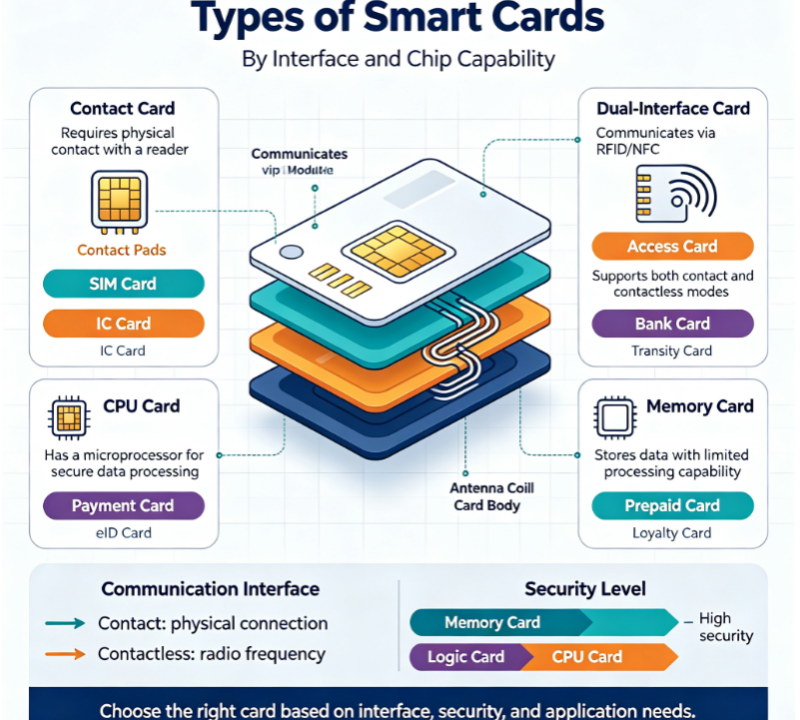
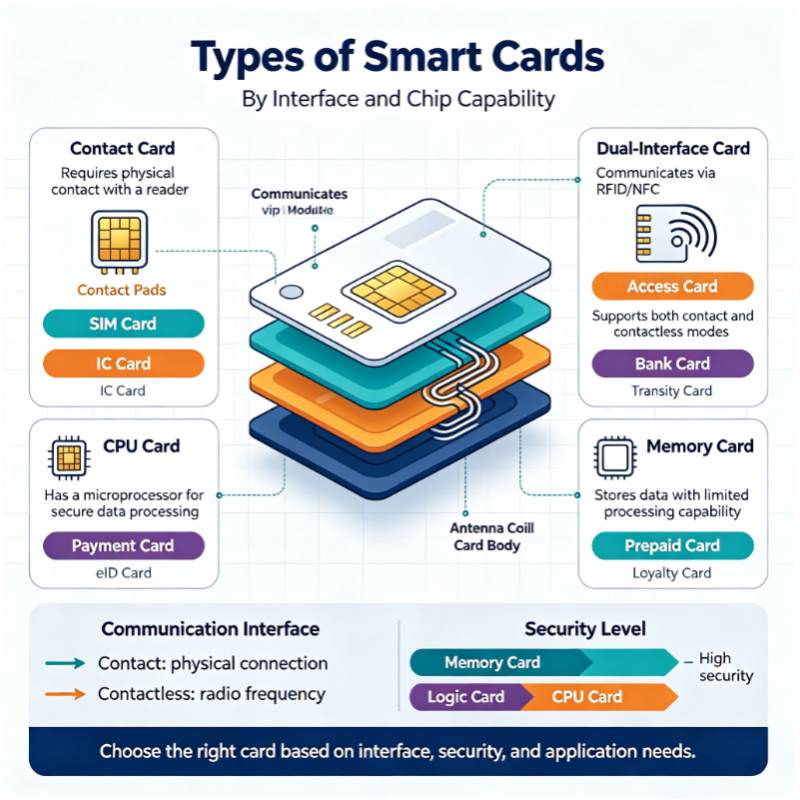
| Contact card | EMV / PBOC chip |
| Contactless card | EMV Contactless |
| NFC interface | ISO 14443A/B |
| Card contact standard | ISO 7816 Class A/B/C |
The combination of contact and contactless interfaces allows solution providers to build applications around different card-present transaction scenarios without requiring separate readers for each interface.
Bluetooth and USB Connectivity
The CR100 can communicate with a host device using Bluetooth or USB. Bluetooth connectivity is useful for mobile POS applications because the reader can communicate wirelessly with a compatible smart device.
USB provides an alternative wired connection for applications where a physical connection is preferred.
The original product specification lists Bluetooth v3.0 and Bluetooth v4.0, together with USB communication.
| Connection | Typical Application |
|---|---|
| Bluetooth | Mobile and wireless POS applications |
| USB | Wired POS and development environments |
| Smartphone or tablet | Mobile payment application |
| Computer | Desktop or integrated payment application |
The choice between Bluetooth and USB can depend on the architecture of the payment application, device compatibility, operating environment, and deployment requirements.
Designed for Mobile POS Applications
A traditional POS terminal can be difficult to deploy in applications that require mobility. The CR100 is designed around a smaller mobile form factor, allowing payment hardware to be paired with a host device.
A typical architecture can include:
Payment Card → CR100 → Bluetooth/USB → Mobile App → Payment Platform
In this architecture, the CR100 provides the card-reading interface while the host application controls the user interface and communicates with the relevant payment infrastructure.
The CR100 can therefore be considered a hardware component within a complete mobile POS ecosystem rather than a standalone payment-processing service.
Compact Design for Portable Payment Solutions
The CR100 measures only 66 × 66 × 9.8 mm, providing a compact form factor for applications where space and portability are important.
Its integrated rechargeable lithium polymer battery is rated at 3.7V and greater than 250mAh. The device uses Micro USB for charging.
| Physical Specification | Value |
|---|---|
| Width | 66 mm |
| Height | 66 mm |
| Depth | 9.8 mm |
| Battery type | Rechargeable lithium polymer |
| Battery voltage | 3.7V |
| Battery capacity | Greater than 250mAh |
| Charging interface | Micro USB |
The compact design makes the reader suitable for mobile payment hardware concepts, portable POS equipment, and embedded payment solutions where a full-size terminal is unnecessary.
Payment Security and Key Management
Security is an important consideration when developing payment hardware. The CR100 specification lists several key-management options, including DUKPT, Fixed Key, and MK/SK.
It also lists support for multiple cryptographic algorithms:
- DES
- 3DES
- AES
- RSA
- SHA-256
These capabilities provide the security-related building blocks required by payment applications and secure card-reader environments.
However, the exact security implementation depends on the complete payment solution, including application software, host system, payment processor, transaction architecture, and key-injection requirements. Developers should confirm the required security configuration with the manufacturer and their payment-acquiring partners before deployment.
EMV and Payment Industry Certifications
The CR100 specification includes several payment and regulatory certifications.
| Certification / Qualification | Listed Support |
|---|---|
| EMV | L1 & L2 |
| EMV Contactless | L1 |
| PBOC | L1 & L2 |
| MasterCard | PayPass |
| Visa | payWave |
| Visa | VISA Ready |
| PCI | PCI-PTS 5.x with SRED |
| MasterCard | TQM |
| American Express | AMEX Pay |
| Bluetooth | BQB |
| Regulatory | FCC / CE |
These certifications and qualifications are particularly relevant for payment solution providers, POS manufacturers, system integrators, and businesses evaluating an EMV or NFC reader for a commercial project.
Certification requirements can vary according to the target market, payment scheme, transaction flow, and final product configuration. Buyers should therefore verify the applicable certification scope for their intended deployment.
CR100 vs. Traditional Card Readers
The CR100 combines several payment interfaces in one compact device. The following comparison highlights the difference between a basic card reader concept and a multifunctional EMV/NFC mPOS reader.
| Capability | Basic Card Reader | CR100 mPOS Reader |
|---|---|---|
| EMV chip card | Depends on model | Yes |
| NFC contactless | Often unavailable | Yes |
| Bluetooth | Model dependent | Yes |
| USB | Model dependent | Yes |
| Mobile POS integration | Limited by interface | Designed for integration |
| Payment security features | Model dependent | DUKPT / Fixed Key / MK/SK |
| Cryptographic algorithms | Limited | DES / 3DES / AES / RSA / SHA-256 |
| Payment certifications | Varies | Multiple listed certifications |
| Portable form factor | Varies | 66 × 66 × 9.8 mm |
This makes the CR100 more suitable for projects that require both contact and contactless payment interfaces rather than a single-purpose card-reading solution.
CR100 vs. NFC-Only Readers
An NFC-only reader can be suitable when an application only needs contactless card or tag interaction. However, payment projects may require both contact and contactless interfaces.
| Requirement | NFC-Only Reader | CR100 |
|---|---|---|
| ISO 14443A/B | Yes, depending on model | Yes |
| EMV Contactless | Model dependent | Yes |
| EMV chip card | Usually no | Yes |
| ISO 7816 card interface | Usually no | Yes |
| Bluetooth | Model dependent | Yes |
| USB | Model dependent | Yes |
| Payment-oriented security | Varies | DUKPT, Fixed Key, MK/SK |
| Mobile POS use | Possible | Yes |
For projects that need both EMV chip card and NFC contactless payment, a combined reader can reduce the need to deploy multiple hardware devices.
Operating System Compatibility
The product page lists compatibility with several operating environments, including Android, iOS, Windows Phone 8, and Microsoft Windows. The product description also states that the device can be integrated into applications on iOS, Android, Windows, and Linux.
| Platform | Listed Support |
|---|---|
| Android | Android 2.1 or above |
| iOS | iOS 6.0 or above |
| Windows Phone | Windows Phone 8 |
| Windows | Microsoft Windows |
| Linux | Listed for application integration |
Because operating-system versions and mobile security requirements change over time, developers should confirm the current SDK, drivers, APIs, and supported OS versions before starting a new project.
Applications of the Bluetooth mPOS Terminal
The CR100 can be considered for a range of payment-related applications where a compact card reader is required.
Mobile POS
Retailers and service providers can integrate a Bluetooth EMV card reader with a mobile POS application to support card-present transactions.
Payment Software Development
Software companies can use the reader as part of a custom payment solution, subject to the required SDK, API, payment certification, and acquiring arrangements.
Portable Checkout
The small form factor and rechargeable battery make the CR100 suitable for applications that require payment hardware away from a fixed checkout counter.
POS System Integration
System integrators can combine the reader with tablets, computers, embedded systems, or custom POS equipment through Bluetooth or USB.
Payment Solution Prototyping
Developers and hardware manufacturers can evaluate the device as a component for mobile or integrated payment concepts.
Why Choose a Combined EMV and NFC Reader?
A combined payment reader provides greater flexibility than a single-interface device. EMV chip cards and contactless payment methods remain important interfaces in modern card-present environments, and supporting both can simplify the hardware architecture of a payment solution.
The CR100 brings the following interfaces together:
EMV Chip + EMV Contactless + NFC + Bluetooth + USB
This combination is especially useful when a project needs a compact reader that can connect to a separate application rather than relying on a large all-in-one POS terminal.
Integration Considerations for Developers
Before integrating the CR100 into a commercial payment product, developers should evaluate more than the hardware specifications.
Important questions include:
- Which SDKs are available for the target operating system?
- What APIs are provided for Bluetooth and USB communication?
- Which payment kernels and transaction functions are exposed?
- How are encryption keys injected and managed?
- Which payment processors or acquirers are supported?
- What certifications are required for the final product?
- What documentation and technical support are included?
- Which current Android, iOS, Windows, and Linux versions are officially supported?
The answers will determine whether the CR100 fits a specific payment architecture and deployment market.
Frequently Asked Questions
What is a Bluetooth mPOS terminal?
A Bluetooth mPOS terminal is a payment reader that communicates wirelessly with a smartphone, tablet, computer, or other host device. The host application can provide the POS interface while the reader handles supported card-reading functions.
Does the CR100 support EMV chip cards?
Yes. The CR100 supports EMV/PBOC chip cards and ISO 7816 Class A, B, and C.
Does the CR100 support NFC payments?
Yes. The product specification lists EMV Contactless and ISO 14443A/B support.
Can the CR100 connect through USB?
Yes. USB is listed as one of its communication interfaces, in addition to Bluetooth.
What security technologies does the CR100 support?
The specification lists DUKPT, Fixed Key, and MK/SK key-management methods, as well as DES, 3DES, AES, RSA, and SHA-256 encryption algorithms.
Is the CR100 a complete payment-processing system?
No. The CR100 should be understood as payment-reader hardware within a larger payment solution. A complete commercial deployment may require application software, payment processing services, acquiring-bank support, encryption/key management, and applicable certifications.
What devices can the CR100 integrate with?
The product description states that it can be integrated with applications on iOS, Android, Windows, and Linux, while the specification lists Android, iOS, Windows Phone 8, and Microsoft Windows support. Current OS and SDK compatibility should be confirmed before development.
Build a Flexible Mobile Payment Solution with CR100
The CR100 combines EMV chip card reading, NFC contactless payment, Bluetooth connectivity, USB communication, and payment-oriented security features in a compact mobile form factor.
For businesses and developers building mobile POS systems, payment terminals, or custom transaction applications, it provides a hardware platform that can be connected to a host application through Bluetooth or USB.
If you are developing a new payment product or looking for an EMV NFC card reader for OEM/ODM integration, contact us to discuss your application requirements, supported platforms, SDK/API availability, certifications, customization options, and project specifications.