September 14, 2026
As Industry 4.0, smart manufacturing, digital asset management, and connected products continue to expand worldwide, businesses increasingly require RFID and NFC solutions that can function reliably on metallic surfaces. Traditional RFID labels and NFC stickers often suffer from signal interference when attached directly to metal objects, making them unsuitable for many industrial and commercial applications.
To address this challenge, manufacturers have developed Custom Waterproof PVC PET RFID On Metal NFC Tags. These specialized tags combine anti-metal technology, durable PVC and PET materials, waterproof construction, and NFC functionality to deliver stable performance on steel, aluminum, iron, and other metallic surfaces.
From industrial equipment tracking and IT asset management to smart maintenance and product authentication, on-metal NFC tags have become an essential tool for modern organizations seeking reliable identification and digital interaction capabilities.
This comprehensive guide explains everything you need to know about Custom Waterproof PVC PET RFID On Metal NFC Tags, including their structure, working principles, specifications, applications, advantages, and comparisons with competing technologies.
| Product name | on metal NFC Tag |
| Surface material | absorbing material, ferrite, Coated paper, PVC, PET |
| Size | 10*10/18*18/45*76/35*35/50*50mm or customized |
| Frequency | HF:13.56Mhz |
| Protocol | ISO 14443A, ISO 15693 |
| Chips | 1. MIFARE Classic® 1K, MIFARE Classic® EV1 1K, MIFARE Classic® 4K MIFARE and MIFARE Classic are registered trademarks of NXP B.V. and are used under license.2. MIFARE Plus® S 1K, MIFARE Plus® S 1K SE, MIFARE Plus® S 2K / S 4K, MIFARE Plus® X 2K / X 4K, MIFARE Plus® EV1 2K / 4K MIFARE and MIFARE Plus are registered trademarks of NXP B.V. and are used under license.3.MIFARE® DESFire® EV1 2K/ 4K/ 8K MIFARE® DESFire® EV2 2K/ 4K/ 8K MIFARE® DESFire are registered trademarks of NXP B.V. and are used under license. 4. MIFARE Ultralight® (48 bytes) MIFARE Ultralight® EV1 (48 bytes/128 bytes) MIFARE Ultralight® C(148 bytes) 5.NTAG® 213 (144 bytes), NTAG® 215 (504 bytes), NTAG® 216(888 bytes) 6. Protocol ISO 15693/ISO 18000-3: ICODE® SLIX, ICODE® SLIX-S, ICODE® SLIX 2 |
| Data retention | 10 years |
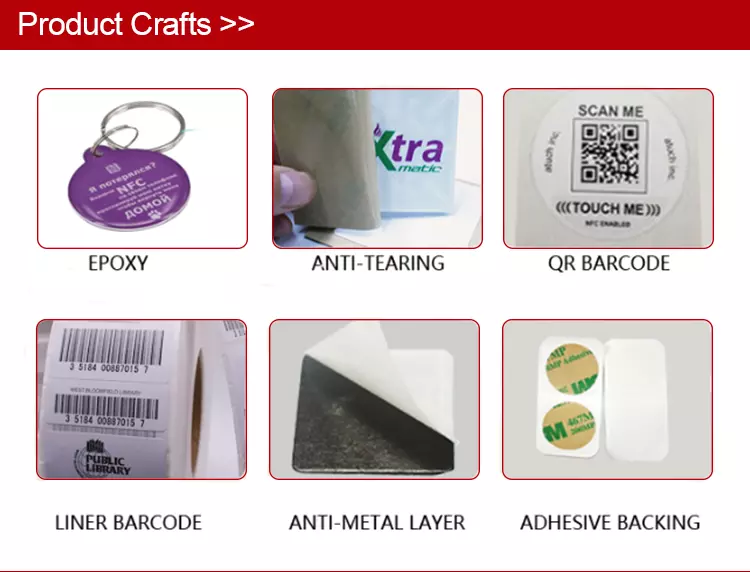
| Craft | Offest print, Silk print, laser print, printing logo/ barcode/ UID/ QR code, encrying |
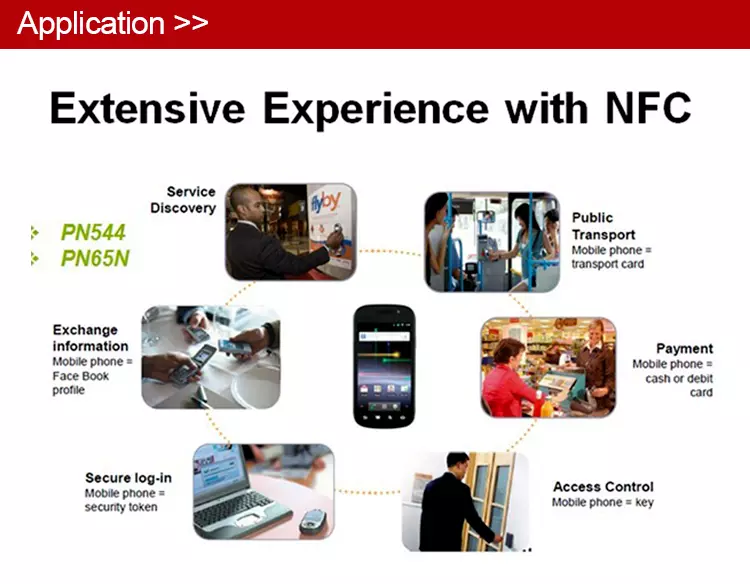
| Application | Advertising, Consumer Electronics, Gaming, Healthcare, Retail, Social media, etc |
We can do all the NFC chips, like ntag213,ntag215,ntag216, etc
SGS Approved
Lead time is 5 days

What Is a Custom Waterproof PVC PET RFID On Metal NFC Tag?
A Custom Waterproof PVC PET RFID On Metal NFC Tag is a specially engineered NFC tag designed to operate efficiently when mounted directly on metal surfaces.
Unlike conventional NFC stickers, these tags incorporate a ferrite shielding layer or an anti-metal isolation material that prevents the metal substrate from disrupting radio-frequency communication.
The typical structure includes:
- NFC microchip
- Copper or aluminum antenna
- Ferrite anti-metal layer
- PET substrate
- PVC protective housing
- Waterproof sealing layer
- Industrial adhesive backing
The result is a durable, weather-resistant, and highly reliable NFC tag suitable for both indoor and outdoor environments.
Why Standard NFC Tags Do Not Work Well on Metal
Many users are surprised to discover that ordinary NFC labels often fail when attached directly to metal.
Signal Reflection
Metal reflects electromagnetic waves.
When an NFC tag is mounted on metal:
- Signal distortion occurs
- Energy transfer becomes inefficient
- Communication quality decreases
Antenna Detuning
The metal surface changes the electrical characteristics of the NFC antenna.
This phenomenon, known as antenna detuning, causes:
- Reduced read distance
- Inconsistent performance
- Complete communication failure
Energy Absorption
The metal surface absorbs part of the electromagnetic energy required to power passive NFC chips.
Without sufficient energy, the chip cannot communicate effectively.
Anti-metal NFC tags solve these challenges through specialized shielding technology.
Technical Specifications
Specifications vary depending on chip selection and application requirements.
General Specifications
| Specification | Details |
|---|---|
| Frequency | 13.56 MHz |
| Protocol | ISO14443A |
| Operating Mode | Passive |
| Reading Distance | 1–10 cm |
| Material | PVC + PET |
| Waterproof Rating | IP65–IP68 |
| Data Retention | 10 Years |
| Write Cycles | 100,000+ |
| Installation Surface | Metal and Non-Metal |
Popular NFC Chip Options
NTAG213
- 144 Bytes User Memory
- Cost-effective
- Excellent smartphone compatibility
NTAG215
- 504 Bytes User Memory
- Suitable for enhanced marketing applications
NTAG216
- 888 Bytes User Memory
- Ideal for larger data storage requirements
MIFARE Classic
- Widely used in access control systems
- Proven reliability
MIFARE DESFire EV2
- Advanced encryption
- Enterprise-grade security
Structure of an On-Metal NFC Tag
NFC Chip
The integrated circuit stores and processes digital information.
The chip may contain:
- Product IDs
- Asset numbers
- URLs
- Maintenance records
- Authentication credentials
NFC Antenna
The antenna facilitates wireless communication between the tag and reader.
Ferrite Shielding Layer
The ferrite layer is the most critical component.
Its functions include:
- Blocking metal interference
- Stabilizing antenna performance
- Maintaining communication efficiency
PET Substrate
PET provides:
- Flexibility
- Environmental resistance
- Dimensional stability
PVC Protective Layer
The PVC housing enhances:
- Mechanical durability
- Waterproof performance
- UV resistance
Industrial Adhesive
Strong adhesive enables long-term attachment to:
- Equipment
- Machinery
- Metal tools
- Electronic devices
How a Waterproof On-Metal NFC Tag Works
Step 1: Reader Generates an RF Field
An NFC-enabled smartphone or reader emits a 13.56 MHz electromagnetic field.
Step 2: Ferrite Layer Protects Signal Integrity
The ferrite isolation layer prevents the metal surface from interfering with communication.
Step 3: Tag Harvests Energy
The NFC antenna captures energy from the reader.
Since the tag is passive, no battery is required.
Step 4: Chip Activation
The NFC chip powers up and retrieves stored data.
Step 5: Data Transmission
The chip transmits information back to the reader through load modulation.
Step 6: Data Processing
The reader forwards information to:
- Asset management systems
- ERP software
- Maintenance platforms
- Mobile applications
The entire process typically takes less than one second.
Key Advantages of Waterproof PVC PET On-Metal NFC Tags
Reliable Performance on Metal
This is the primary benefit.
The anti-metal design enables stable operation on:
- Stainless steel
- Aluminum
- Iron
- Copper
- Industrial machinery
Waterproof Construction
The sealed PVC housing protects against:
- Rain
- Moisture
- Dust
- Industrial washing
Long Service Life
Typical performance includes:
- 10+ years data retention
- 100,000+ write cycles
Battery-Free Operation
No charging or maintenance is required.
Smartphone Compatibility
Most Android and iPhone devices can read NFC tags directly.
High Durability
PVC and PET construction provides resistance to:
- Scratches
- Impacts
- Chemicals
- UV exposure
Cost Efficiency
Compared with active RFID systems, passive NFC tags offer a lower total cost of ownership.
Applications of On-Metal NFC Tags
Industrial Asset Management
Manufacturers use NFC tags to identify:
- Production equipment
- Manufacturing tools
- Industrial machinery
Benefits include:
- Faster audits
- Improved traceability
- Reduced asset loss
IT Asset Tracking
Organizations manage:
- Servers
- Computers
- Network switches
- Data center infrastructure
Preventive Maintenance
Technicians can access:
- Service history
- Maintenance schedules
- Inspection records
simply by tapping the tag.
Smart Manufacturing
Industry 4.0 facilities use NFC tags for:
- Equipment monitoring
- Process control
- Digital work instructions
Healthcare Equipment Management
Hospitals track:
- Medical devices
- Diagnostic equipment
- Laboratory instruments
Product Authentication
Brands use NFC tags to verify:
- Product authenticity
- Warranty status
- Ownership records
Facility Management
Applications include:
- HVAC systems
- Electrical cabinets
- Elevators
- Security systems
Tool Tracking
Maintenance teams identify:
- Hand tools
- Power tools
- Calibration equipment
with a simple smartphone tap.
Waterproof On-Metal NFC Tags vs Standard NFC Stickers
| Feature | On-Metal NFC Tag | Standard NFC Sticker |
|---|---|---|
| Metal Surface Performance | Excellent | Poor |
| Read Stability | High | Limited |
| Waterproof Protection | Yes | Optional |
| Industrial Use | Excellent | Limited |
| Durability | High | Moderate |
Winner
For metal surfaces, on-metal NFC tags are significantly superior.
NFC On-Metal Tags vs QR Code Labels
QR codes remain a common identification solution.
| Feature | NFC Tag | QR Code |
|---|---|---|
| Tap-to-Read | Yes | No |
| Contactless Experience | Excellent | Moderate |
| Security | Higher | Lower |
| Dynamic Data Updates | Yes | Limited |
| Counterfeit Resistance | Better | Lower |
Winner
NFC technology provides a more professional and secure user experience.
NFC On-Metal Tags vs UHF Anti-Metal RFID Tags
Both technologies are widely used in asset management.
| Feature | NFC On-Metal | UHF Anti-Metal RFID |
|---|---|---|
| Frequency | 13.56 MHz | 860–960 MHz |
| Read Range | 1–10 cm | Up to 15 m |
| Smartphone Compatible | Yes | Generally No |
| Consumer Interaction | Excellent | Limited |
| Bulk Inventory Reading | Moderate | Excellent |
Winner
- Consumer and technician interaction: NFC
- Large-scale inventory automation: UHF RFID
NTAG213 vs NTAG215 vs NTAG216
NTAG213
Best for:
- Asset identification
- Basic tracking
- Cost-sensitive projects
NTAG215
Best for:
- Product marketing
- Enhanced information storage
NTAG216
Best for:
- Smart products
- Digital product passports
- Advanced authentication
| Feature | NTAG213 | NTAG215 | NTAG216 |
|---|---|---|---|
| User Memory | 144 Bytes | 504 Bytes | 888 Bytes |
| Cost | Low | Medium | Higher |
| Data Storage | Basic | Enhanced | Extensive |
Customization Options
Manufacturers typically provide extensive customization.
Full-Color Printing
Options include:
- Logos
- Branding
- Product graphics
Variable Data Printing
Support for:
- Serial numbers
- QR codes
- Barcodes
Custom Shapes
Available formats include:
- Round
- Square
- Rectangle
- Oval
- Custom die-cut
Custom Sizes
Tag dimensions can be optimized for specific applications.
Adhesive Selection
Options include:
- Permanent adhesive
- High-temperature adhesive
- Outdoor-grade adhesive
Security Features
Unique Chip Identifier
Each NFC chip contains a unique serial number.
Password Protection
Sensitive information can be protected against unauthorized modification.
Anti-Counterfeiting Support
Unique identifiers enable product authentication.
Secure Data Storage
Information remains protected throughout the product lifecycle.
Future Trends of On-Metal NFC Technology
Industry 4.0 Integration
Smart factories increasingly require digital asset identification.
Digital Product Passports
Manufacturers are adopting NFC tags to meet emerging traceability requirements.
Mobile Maintenance Systems
Technicians increasingly use smartphones instead of dedicated terminals.
IoT Connectivity
NFC tags are becoming part of larger Industrial IoT ecosystems.
Sustainable Asset Management
Digital records reduce paper documentation and manual processes.
How to Choose the Right On-Metal NFC Tag
Before purchasing, consider:
Surface Material
Evaluate:
- Steel
- Aluminum
- Painted metal
- Stainless steel
Environmental Conditions
Consider:
- Temperature
- Humidity
- Chemical exposure
- UV radiation
Memory Requirements
Select the appropriate chip based on storage needs.
Waterproof Rating
Outdoor applications should prioritize IP67 or IP68 designs.
Reader Compatibility
Verify compatibility with:
- Smartphones
- NFC readers
- Existing software systems
Conclusion
Custom Waterproof PVC PET RFID On Metal NFC Tags provide a powerful solution for reliable NFC communication on metallic surfaces. By combining ferrite shielding technology, waterproof PVC and PET construction, durable industrial-grade materials, and advanced NFC chips such as NTAG213, NTAG215, and NTAG216, these tags overcome the limitations of traditional NFC labels while delivering exceptional performance in industrial, commercial, and smart product applications.
Whether used for asset management, equipment maintenance, smart manufacturing, product authentication, facility management, or Industrial IoT projects, on-metal NFC tags offer an ideal combination of durability, security, convenience, and cost-effectiveness. As digital transformation accelerates across industries, waterproof anti-metal NFC tags will continue to play a critical role in enabling intelligent and connected asset identification systems.