October 21, 2026
1.Material:Metal, Metal/Stainless steel/Aluminum/Copper
2.Color:Silver/Black/Gold/Rose Gold etc.
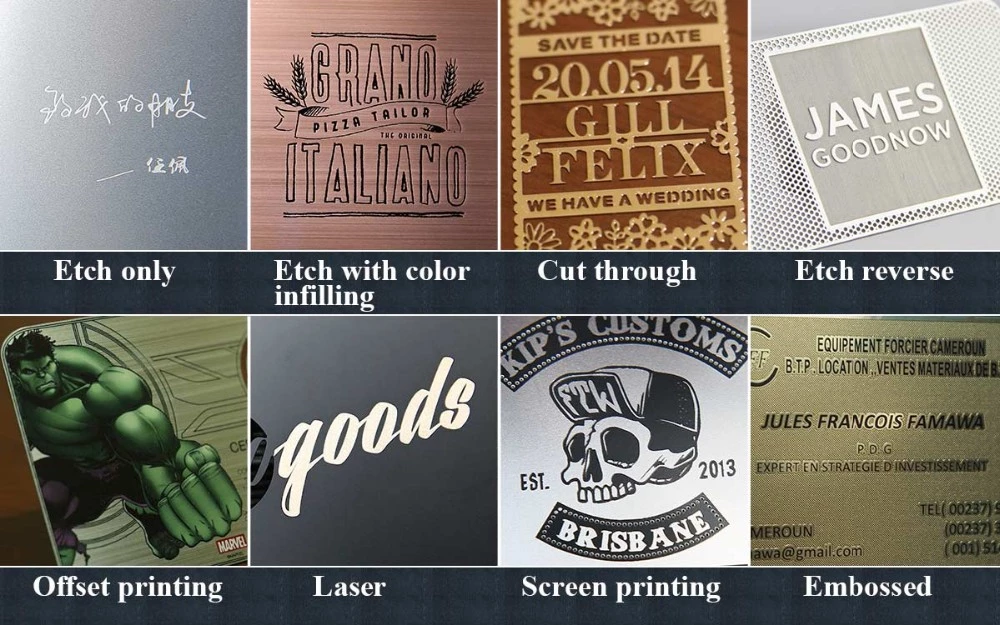
3.Surface finish:Etch,Corrosion,Laser Cut out,plating black color etc
| Item | metal business card |
| Material | Brass, Copper, Aluminum, Stainless steel |
| Dimension | 85*54mm, 80*43mm, 80*50mm, 77*44mm Or customized |
| Thickness | 0.3mm, 0.4mm, 0.5mm, 0.8mm or customized |
| Printing | CMYK full color offset printing; Silk printing ;Digital printing |
| Crafts option | Serial number, Bar codes, Magnetic Stripe, Chip, Signature Stripe, QR code, Set drill, epoxy, brushed/glossy/polish(mirror)/matte black,engraved,brushed, etched, photo etc. |
| Application | Business cards Membership/VIP/promotion cards Playing cards Wedding/invitation cards |
| Sample | Free sample for metal business card is available at anytime upon request |
Craft Option
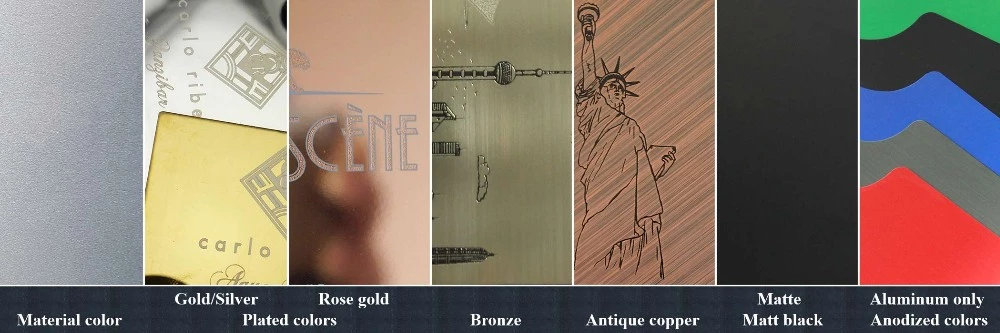
Regular colors: Glossy(material color), gold/pure gold, silver/sterling, rose gold, bronze, antique copper, matte/plated black and anodized colors.

In an era dominated by digital communication, physical touchpoints carry more weight than ever before. When you hand someone your business card, that small rectangle speaks volumes about your brand before a single word is exchanged. Among the countless networking tools available today, customized stainless steel metal visiting cards and metal business cards have emerged as the definitive standard for professionals who refuse to blend in. These cards are not just pieces of metal; they are conversation starters, brand statements, and durable assets that work relentlessly long after the handshake ends. Whether you call them metal visiting cards or metal business cards—both terms refer to the same premium product—they represent a fusion of craftsmanship, technology, and strategic branding. This comprehensive guide will walk you through everything you need to know: what these cards are, how they work from design to delivery, the real-world pain points they solve, a detailed competitive analysis against alternative materials, and a precise comparison between older-generation metal cards and the latest innovations hitting the market in 2026. By the time you finish reading, you will understand why customized stainless steel business cards have become the gold standard for luxury networking and how they can elevate your professional identity.
What Are Customized Stainless Steel Metal Visiting Cards and Business Cards?
At their core, customized stainless steel metal visiting cards are business cards manufactured from high-quality stainless steel sheets, typically grades 304 or 316L, and fully personalized to reflect an individual’s or company’s brand identity. Unlike conventional paper cards that wear out within weeks, these metal cards are engineered for permanence. The term “visiting card” is frequently used interchangeably with “business card,” especially in Asian, European, and Middle Eastern markets, but the product remains the same: a slim, durable, and elegantly designed metal piece that carries contact information, logos, and increasingly, embedded smart technology.
Standard dimensions often mirror traditional business card sizes—around 85 mm by 55 mm (3.35 inches by 2.17 inches)—but one of the hallmarks of customization is the ability to break free from the rectangle. Custom shapes, whether a silhouette of your product, a geometric cutout representing your logo, or a uniquely contoured edge, are entirely achievable with modern laser cutting equipment. Thickness generally ranges from 0.3 millimeters (ultra-thin and flexible yet rigid) to 0.8 millimeters (substantial and weighty), allowing you to choose a tactile experience that aligns with your brand personality. A 0.5 mm stainless steel card, for instance, offers a satisfying heft without being bulky in a wallet.
The surface finish sets the tone. A brushed finish provides a classic, satin texture that hides fingerprints and exudes understated elegance. A mirror polish delivers a highly reflective, futuristic look that grabs attention immediately. Sandblasted or matte finishes create a soft, premium touch that feels remarkably modern. Beyond the base metal, customization extends into several layers: laser engraving can create permanent black or dark gray text and imagery that will never fade; UV digital printing enables full-color logos, gradients, and even photographic details; electroplating adds a layer of gold, rose gold, black nickel, or silver over the stainless steel for a jewelry-like appearance. Some designs incorporate soft or hard enamel—a technique borrowed from lapel pin manufacturing—to fill recessed areas with vivid color that sits slightly raised, producing a stunning three-dimensional effect.
What truly pushes these customized metal business cards into the next generation, however, is the integration of technology. Many modern stainless steel cards include an embedded Near Field Communication (NFC) chip or a quick-response (QR) code etched directly into the metal. With a simple tap or scan, the recipient’s smartphone instantly opens a digital business card, a website, a portfolio, or a contact download page. The physical card becomes a bridge between a memorable in-person interaction and a seamless digital follow-up. In essence, a customized stainless steel metal visiting card is a micro-billboard, a piece of industrial art, and a smart networking device, all fused into a pocket-sized format built to outlast the competition.
How Do Customized Stainless Steel Metal Cards Work?
Understanding how these cards work requires a look at two distinct but interconnected dimensions: the physical production process that turns a sheet of stainless steel into a finished card, and the functional principle by which the card operates as a networking tool. Let’s break both down step by step.
The Manufacturing Workflow from Design to Finished Product
Step 1: Design Digitization and File Preparation
Every customized metal business card begins with a digital design. Using vector-based software such as Adobe Illustrator or CorelDRAW, the designer creates a precise blueprint that dictates the card’s outline, cutouts, engraved areas, color layers, and placement of any embedded components like NFC chips. The design must account for the manufacturing tolerances of laser machines, typically achieving an accuracy of ±0.05 mm. At this stage, decisions about the card’s size, thickness, edge profile (straight, rounded, or custom bevel), and surface finish are finalized. The client approves a digital mockup that simulates how the final metal card will appear, often with a visual representation of the metallic gleam.
Step 2: Material Selection and Preparation
Stainless steel grade 304 is the industry workhorse, prized for its excellent corrosion resistance, formability, and affordability. For clients in marine environments, medical fields, or those with nickel sensitivity, grade 316L (low-carbon, molybdenum-added) is often recommended due to its superior resistance to chlorides and hypoallergenic properties. The metal sheets arrive in the chosen thickness and are thoroughly cleaned to remove any oils or debris that could interfere with subsequent processes. If a specific base color is required through electroplating, the sheets may undergo an initial plating stage before individual cards are cut, or plating may occur after cutting depending on the desired edge effect.
Step 3: Precision Cutting and Shaping
High-power fiber laser cutting machines are programmed with the digital design file to cut the exact outline of each card. The laser beam is focused onto the metal surface, heating it to the point of vaporization, which allows incredibly intricate patterns to be cut cleanly without physical contact or tool wear. Cutouts for logos, internal shapes, or a cavity for an NFC chip are achieved in the same pass. For cards requiring a recessed area to seat an enamel fill or a pocket for an embedded chip, a controlled-depth engraving process using a lower laser power removes material to a precise depth—typically 0.2 mm to 0.4 mm—creating a clean pocket with a flat bottom.
Step 4: Edge Finishing and Surface Treatment
Freshly cut cards have sharp, burred edges. These are tumbled, sanded, or chemically deburred to create smooth, safe edges. Options here include a straight polished edge, a rounded edge (achieved by tumbling with abrasive media for longer durations), or a precision beveled edge through CNC machining. The chosen surface finish—brushed, mirror, or matte—is then applied to the entire surface or selectively masked for dual finishes. Brushed finishes are created by running the cards through abrasive belts or brushes that leave a uniform, directional grain. Mirror finishes require progressive polishing with finer and finer compounds until a chrome-like reflectivity is achieved. Matting is done via sandblasting or acid etching, which creates a non-reflective, velvety surface.
Step 5: Customization – Engraving, Printing, and Plating
This is where the true personalization manifests. Laser engraving uses a focused beam to oxidize the metal surface, creating a permanent dark mark that can be grayscale-tuned. For color, UV digital printers designed for rigid substrates apply CMYK inks, often with a white underbase layer printed first on darker metals to make colors pop. The inks are instantly cured by ultraviolet light, bonding them firmly to the metal. Enamel filling is a separate process: colored liquid enamel is carefully deposited into recessed cells, then baked or left to cure, creating a durable, glossy, slightly raised fill. Electroplating for gold, rose gold, or black finishes involves immersing the stainless steel cards in an electrolytic solution where an electric current deposits a micron-thin layer of the desired metal onto the surface, resulting in a luxurious and wear-resistant coating.
Step 6: NFC Embedding and Sealing
If the card includes an NFC chip, a milled pocket on the back of the card accommodates a thin, flexible NFC tag (commonly an NTAG213 or NTAG216 chip with a copper coil antenna). The tag is placed into the pocket and sealed with a UV-cured resin or a thin, laser-cut stainless steel overlay that is bonded flush with the surface. This encapsulation protects the chip from moisture, bending, and daily wear. The chip is then encoded with a URL, vCard data, or a custom app link. When manufactured correctly, the metal itself acts as a booster antenna in some designs, though a well-chosen ferrite sheet layer between the metal and the NFC tag mitigates interference, ensuring reliable tap-to-share functionality.
Step 7: Quality Control and Packaging
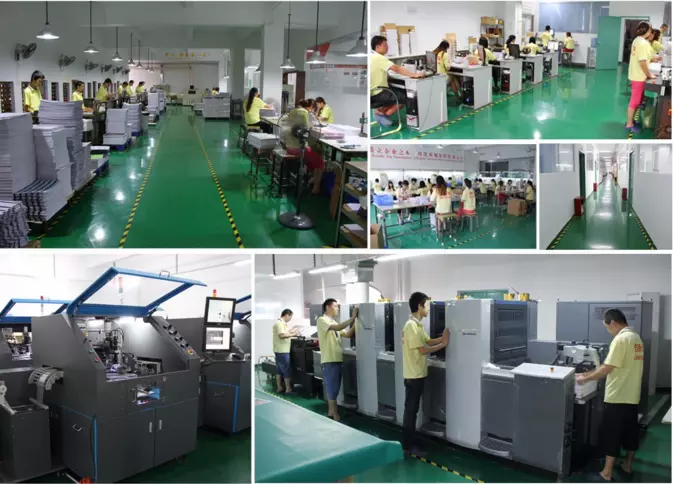
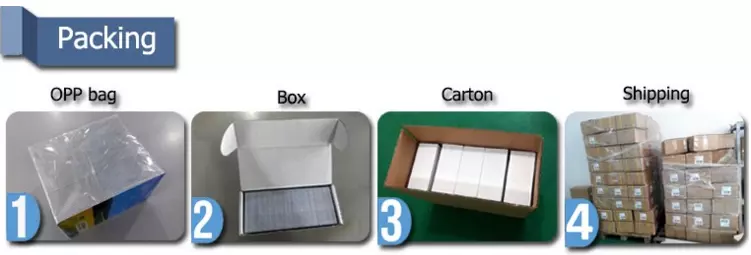
Finished cards undergo visual inspection under magnification for edge quality, engraving accuracy, color adhesion, and NFC read-range testing. Cards are then individually packaged—often in sleek, branded boxes that match the card’s premium nature—ready to make an unforgettable impression.
How the Card Works as a Networking Tool
The functional principle is elegantly simple. Physically, the card’s weight, cool temperature, and distinctive texture immediately signal quality upon being handed over. This tactile distinction triggers a psychological response: the recipient assigns higher value to the interaction and, by extension, to the person giving the card. If the card contains an NFC chip, the user simply instructs the recipient to tap the card on their smartphone. The phone reads the NFC tag and opens the pre-programmed link—no app required on modern iPhones (via background tag reading) or Android devices. This can lead to a vCard download, a LinkedIn profile, a video introduction, or a product demo page. Even without an NFC chip, a laser-etched QR code serves a similar bridge function. The metal card thus solves the age-old problem of manually typing contact details while simultaneously conveying technological savviness.
Pain Points Solved by Customized Stainless Steel Metal Business Cards
Traditional paper business cards have been the default for decades, but they come with a litany of frustrations that professionals have simply learned to tolerate. Customized stainless steel metal business cards systematically eliminate these pain points, transforming networking from a disposable chore into a memorable brand experience. Here are the critical problems they solve.
1. Extreme Fragility and Rapid Deterioration
Paper cards live a harsh life. They get bent in wallets, stained by coffee, smudged by damp hands, and faded by sunlight. Within a month, a once-pristine card can look so shabby that the recipient feels embarrassed to keep it. Stainless steel cards are completely immune to these everyday assaults. They do not bend under normal pressure, water simply beads up and wipes off, and extreme temperatures that would warp or yellow paper leave the metal unchanged. A card dropped in a puddle, left in a hot car, or retrieved from a washing machine emerges looking exactly as it did on day one. This permanence means your brand identity remains pristine for years, not weeks.
2. Perception of Cheapness and Low Brand Value
Even the most beautifully designed paper card cannot escape the reality that paper itself is an inexpensive, commonplace material. Handing someone a paper card signals that you adhered to convention and cut costs. In contrast, a stainless steel metal business card immediately positions you as a premium player. The weight, the metallic sheen, and the meticulous customization communicate luxury, innovation, and a refusal to cut corners. For industries like real estate, wealth management, high-end automotive sales, bespoke tailoring, and luxury hospitality, this material difference directly aligns the marketing tool with the expected service standard. Recipients perceive you as someone who invests in quality, a perception that translates into higher trust and greater willingness to engage.
3. Static Information That Becomes Obsolete
A common nightmare: you print a thousand beautiful cards, and then your company moves offices, your phone number changes, or you get promoted. Suddenly, those boxes of cards are useless waste. Metal cards with embedded NFC or QR technology completely decouple the physical object from the changing data. The chip or code points to a digital profile that you can update anytime, anywhere. You change your email address online, and the same stainless steel card continues to hand out perfectly accurate information. No reprinting costs, no waste, no apology for crossing out details with a pen. This dynamic information layer adds decades of functional life to a single physical card.
4. Environmental Guilt and Unsustainable Waste
The global business card industry consumes millions of trees annually, and a staggering percentage of paper cards end up in the trash within days of being received. Many are never even looked at again. This cycle of print, distribute, and discard contributes to deforestation and landfill mass. Stainless steel is 100% recyclable and, crucially, it is retained. Because metal cards are beautiful, interesting, and durable, people keep them. They become desk ornaments, wallet staples, or collection items. A single metal card eliminates the need for hundreds of paper reprints over a career. For eco-conscious brands, adopting reusable metal cards is a powerful sustainability statement that aligns with modern environmental values.
5. Lack of Offline-to-Online Connectivity
Paper cards force a manual bridge: the recipient must type a URL, scan a printed QR code (which requires opening a separate app), or dial a number. There is friction. An NFC-enabled stainless steel business card makes the transition instant and effortless. A tap is faster, more novel, and more likely to be acted upon immediately. It also allows for tracking engagement: you can see how many times your digital profile was accessed, gaining insights into networking effectiveness. The technology removes all barriers between a physical meeting and a digital connection, solving the disconnection problem that plagues analog cards.
6. Hygiene Concerns in a Post-Pandemic World
Paper cards are porous; they absorb oils, moisture, and pathogens. You cannot effectively sanitize a paper card. Metal cards, in contrast, can be wiped down with alcohol, sanitized repeatedly, and remain completely unharmed. In industries with high health standards or in regions where contact hygiene remains a priority, the easy-to-clean surface of stainless steel provides an important peace-of-mind advantage.
Competitive Analysis: Stainless Steel Business Cards vs. Alternative Materials
To fully appreciate the dominance of customized stainless steel metal visiting cards, it is essential to compare them against other materials used for business cards and premium networking tools. Each alternative has its merits, but stainless steel consistently proves to be the optimal balance of durability, luxury, cost-effectiveness, and customization capability.
Stainless Steel vs. Traditional Paper Cards
Paper cards are the baseline. They are cheap—sometimes as low as a few cents per card for bulk offset printing—and fast to produce. Their advantages end there. They lack durability, perceive value, and the ability to integrate smart tech without additional stickers or inserts. Stainless steel, while costing more per unit, offers an indefinite lifespan and a brand elevation that paper cannot approach. The return on investment, measured by lasting impressions per dollar, heavily favors metal.
Stainless Steel vs. Plastic (PVC) Cards
Plastic business cards, often printed with a similar thickness to credit cards, are an intermediate step between paper and metal. They are waterproof and more durable than paper, but they suffer from a plastic perception problem: they look and feel cheap. PVC cards scratch easily, can become brittle over time, and carry the negative environmental baggage of single-use plastics. They also lack the luxurious weight and cool touch that distinguishes metal. In terms of customization, full-color printing on plastic is easy, but engraving and deep texturing are impossible. Stainless steel offers a superior tactile experience, far greater durability, and a recyclable metallic composition that feels unmistakably premium.
Stainless Steel vs. Aluminum Business Cards
Aluminum is the most common metal card competitor. It is lightweight, rust-resistant, and relatively inexpensive to laser engrave. Anodized aluminum can achieve vibrant colors, which is one advantage. However, aluminum is a soft metal. Cards as thin as 0.5 mm can be bent permanently with moderate finger pressure, and anodized surfaces are susceptible to scratching, revealing the bright metal beneath. The light weight also reduces the perceived substance; a card that feels too light can paradoxically feel less valuable. Stainless steel, even at the same thickness, is significantly more rigid and resistant to deformation. Its heavier weight gives a satisfying, substantial feel that clients associate with quality. For gold, rose gold, or black finishes, stainless steel can be electroplated to achieve a more authentic metallic gleam than anodizing provides.
Stainless Steel vs. Brass and Copper Cards
Brass and copper have a vintage, warm-toned appeal that some brands favor. They are heavier than stainless steel, which can be a positive in terms of perceived heft. However, both metals develop a patina over time—tarnishing and changing color when exposed to air and skin oils. While this is sometimes sold as a “living finish,” many users find the resulting darkening and fingerprints undesirable for a clean brand image. Additionally, brass and copper can cause skin discoloration or allergic reactions in some individuals, and the metallic smell can linger on hands. Stainless steel remains chemically stable, does not tarnish, and is hypoallergenic (especially 316L grade). It preserves a pristine, low-maintenance appearance indefinitely.
Stainless Steel vs. Titanium Business Cards
Titanium is the ultra-premium metal often associated with aerospace and medical implants. It is stronger than stainless steel relative to its weight, incredibly lightweight, and completely corrosion-proof. For those who desire the absolute lightest, strongest card possible, titanium is the answer. The drawbacks are significant, however: titanium is expensive, difficult to machine, and limited in color options beyond its natural grey-silver hue. Electroplating titanium is more complex and costly. For the vast majority of businesses, the performance gains of titanium over stainless steel do not justify the dramatic price increase. Stainless steel delivers 95% of the practical benefits at a fraction of the cost, making it the more accessible luxury.
Stainless Steel vs. Wooden Cards
Wooden business cards offer an organic, sustainable story and a unique tactile warmth. They can be laser engraved to a high standard. The downsides include thickness: wood must be thicker than metal to avoid snapping, typically 0.8 mm to 2 mm, which makes wallet storage awkward. Wood is sensitive to humidity, can warp or splinter, and cannot incorporate an NFC chip without a visible cavity and insert. It also cannot achieve the fine metallic sheen and micro-detail engraving possible on steel. Stainless steel is simply a more versatile, precise, and long-lasting platform for both minimalist and highly complex card designs.
Summary of Competitive Positioning
In a direct comparison, stainless steel emerges as the Swiss Army knife of metal business cards. It is harder and more rigid than aluminum, more stable and hygienic than brass, dramatically more affordable than titanium, more durable and tech-friendly than wood or plastic, and in a completely different league of quality compared to paper. For a professional seeking a card that balances luxury, strength, customization range, and cost, customized stainless steel metal visiting cards are the unrivaled choice.
New Generation vs. Old Generation Metal Business Cards
The metal business card market has undergone a substantial evolution over the past decade. Early adopters who purchased metal cards around 2010 received a product that was groundbreaking for its time but primitive by today’s standards. Understanding the differences between old-generation and new-generation stainless steel cards is critical for anyone shopping in 2026, because not all metal cards are created equal.
Old Generation Metal Cards (circa 2010–2018)
Thickness and Comfort: Early metal cards were often thick—0.6 mm to 1.0 mm—and their edges were sharply squared off. This bulk made them difficult to slide into card slots in wallets and the hard corners could scratch wallet leather, phone screens, or even the recipient’s fingers. The excessive thickness was partly due to limitations in laser cutting precision and the belief that heavier always meant better.
Customization Limitations: The dominant decoration technique was simple laser marking, resulting in a monochrome dark-charcoal engraving on the bare metal surface. There were no full-color options. If you wanted a gold card, you needed brass; a black card might be achieved through a dark patina coating that wore off unevenly. Shapes were overwhelmingly standard rectangles, as complex die-cutting was expensive and fiber laser profiling was not yet widely accessible to promotional product manufacturers.
NFC Integration Was Absent: The concept of embedding an NFC chip inside a metal card existed but was rarely executed successfully. Metal interferes with the radio frequency field required to power an NFC tag, and early attempts often resulted in extremely poor read range or total failure. Few providers offered this feature, and those who did often delivered unreliable products that frustrated recipients.
Surface Finishing and Consistency: Quality control was inconsistent. Brushed finishes could have directional grain irregularities, mirror finishes often came with micro-scratches, and electroplating adhesion was sometimes poor, leading to peeling gold edges after months of use.
New Generation Metal Cards (2024–2026 and Beyond)
Advanced Manufacturing Precision: Today’s customized stainless steel metal business cards can be produced as thin as 0.3 mm while retaining impressive rigidity, thanks to improved material tempering and precision laser micro-machining. Edge finishing has matured dramatically. Cards now feature fully rounded corners, softly beveled edges, or even contoured profiles that feel smooth and luxurious against the skin. The reduction in thickness means they slide easily into even the tightest wallet slots alongside credit cards.
Explosion of Color and Aesthetic Effects: Modern UV digital printing technology now allows photographic-quality, full-color images to be printed directly onto stainless steel. A white ink underbase ensures colors remain vibrant even on dark, electroplated surfaces. Multi-level etching creates striking 3D textures, with different areas recessed to varying depths. Soft enamel and hard enamel color fills, previously confined to lapel pins, are now routinely integrated into business cards, allowing for a glossy, raised, jewel-like finish that feels incredible to touch. Electroplating processes have also been perfected, with durable, wear-resistant layers in a wide palette—matte gold, shiny rose gold, ruthenium black, and even two-tone plating on a single card.
Seamless Smart Technology: The NFC integration challenge has been definitively solved through the use of ferrite shielding layers and precisely milled, deep antenna pockets. A new-generation card can be tapped against any modern smartphone and instantly trigger an action with a read distance comparable to a standard NFC sticker. These chips now support larger memories (NTAG216, up to 888 bytes) and can be encoded with vCards, website URLs, video links, Wi-Fi credentials, or custom app interactions. Some providers even offer re-encodable NFC chips, though pre-encoded is more common for simplicity. QR codes, when used, are now deeply laser-engraved to remain legible and scannable for the life of the card, not simply printed on top.
Custom Shapes and Structural Design: With advanced fiber laser cutting and affordable low-volume digital fabrication, a card can take literally any shape a client draws. Intricate latticework, internal cutouts that frame logos, and cards shaped like car silhouettes for automotive brands, or product outlines for tech startups, are now routinely manufactured. Micro-engraved patterns and anti-counterfeit security details—such as hidden micro-text or serial numbers—can be incorporated for elite clientele.
Environmentally Conscious Packaging: New-generation metal cards come in packaging that reflects the product’s premium nature while minimizing waste. Magnetically closing rigid boxes, recycled paper sleeves with custom cutouts, and reusable metal tins have replaced the plastic clam-shells of the past. This attention to unboxing experience turns the act of receiving the cards into an event that reinforces brand value.
Cost Accessibility: Perhaps most importantly, the cost gap has narrowed. Automation in laser cutting and engraving, combined with a broader supplier base in precision metal manufacturing hubs, has made high-quality customized stainless steel business cards accessible for small businesses and individual professionals, not just Fortune 500 companies. In 2026, you can order a batch of 50 fully customized, NFC-enabled, colored metal cards for a price that, per card, delivers a lifetime of value versus the recurring expense of paper reprints.
The leap from old generation to new generation is transformative. What was once a novel but slightly rough-edged curiosity has matured into a polished, technologically integrated, and design-flexible product that truly functions as a modern networking super-tool.
How to Choose the Right Customized Stainless Steel Metal Business Card Provider
With the market booming, selecting the right manufacturing partner is essential to avoid receiving outdated old-generation quality at new-generation prices. There are several verification points to consider.
First, inquire about the specific stainless steel grade. Insist on 304 or 316L; avoid cheaper 201 grade, which has lower corrosion resistance and can rust over time when exposed to sweat or humidity. Reputable providers will openly state their material certificates. Second, request physical samples. Seeing and feeling a sample card reveals edge smoothness, engraving precision, color adhesion, and plating quality in ways photographs cannot. Scratch the surface with your nail, flex the card gently, and examine edges under light. Third, explore the full spectrum of customization they offer. A provider that only does black laser engraving is operating with old-generation equipment. Look for multi-color UV printing capability, electroplating options, enamel fill services, and proven NFC integration. Ask to see a video of an NFC card being tapped on a phone to verify real-world function.
Minimum order quantity (MOQ) and pricing transparency are practical considerations. Some suppliers impose a high MOQ for custom shapes due to setup costs, while others are flexible. The production lead time, from design approval to delivery, typically ranges from seven to twenty-one days depending on complexity and order size. Check for design support: the best providers have in-house designers who can optimize your artwork for metal engraving and printing, advising on line thickness, color contrast, and chip placement. Finally, read reviews and case studies. Testimonials from real clients in your industry provide proof that the provider can consistently deliver a luxury product that meets expectations.
Conclusion: Elevate Your Network with the Power of Stainless Steel
The humble business card has been reinvented. Customized stainless steel metal visiting cards and metal business cards are not a passing trend; they are a logical evolution in how professionals express their identity, value, and technological fluency. They solve the fragility, waste, and banality of paper cards while offering an unparalleled canvas for creative design and smart functionality. When compared against aluminum, brass, titanium, or wood, stainless steel stands out as the material that perfectly balances luxury with practicality. And the differences between yesterday’s metal cards and today’s new-generation marvels are so significant that settling for an outdated product is no longer an option.
In a world where everyone is trying to be remembered, a customized stainless steel business card ensures you are never forgotten. It is durable enough to survive decades, beautiful enough to be displayed, and smart enough to connect the physical moment to the digital world with a single tap. Whether you are an entrepreneur making your first big impression, a corporate executive reinforcing your elite status, or a creative professional showcasing your design sensibility, a stainless steel metal card is an investment in how the world perceives you. Make the switch, embrace the new generation of networking tools, and let your card tell a story that paper never could.