November 5, 2026
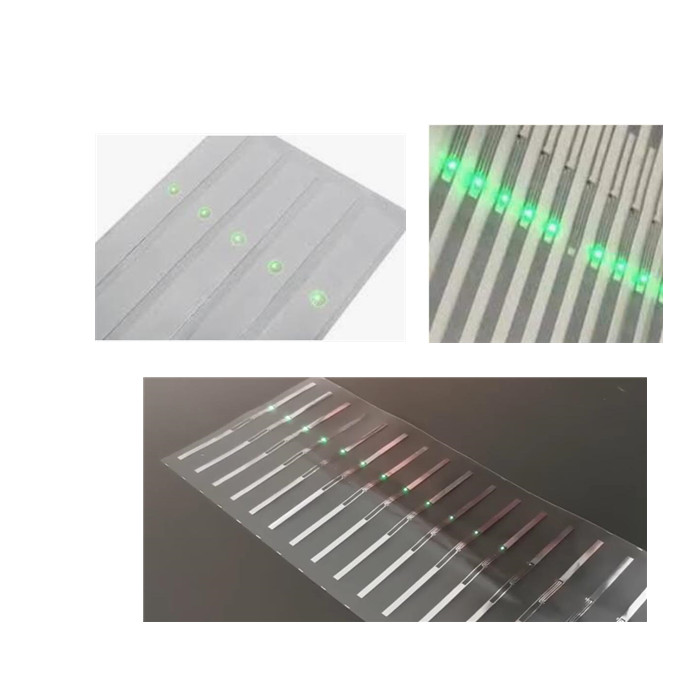
We supply 13.56 MHz Fudan F08 RFID 1K inlays for businesses looking for compact, adhesive-ready RFID components for contactless identification, product labeling, inventory management, and OEM manufacturing. Our RFID inlays combine an integrated circuit (IC) with an antenna on a PET substrate, providing a practical solution for converting into finished RFID labels and other identification products.
Our 13.56 MHz RFID inlay product range offers multiple antenna sizes and chip options to support different application requirements. The listed specifications include ISO/IEC 14443 Type A, an aluminium foil antenna, and a nominal reading range of 3–10 cm. We recommend confirming the exact chip model, memory capacity, antenna dimensions, and operating conditions before placing an order.
Product Overview
Our Fudan F08 RFID 1K inlay is designed for applications that require a compact RFID component that can be integrated into a label or finished product. Available wet inlay configurations feature an adhesive backing, making them suitable for peel-and-stick applications and further label converting.
We understand that different projects have different requirements. Some customers prioritize compact antenna dimensions, while others focus on reader compatibility, adhesive performance, or integration into an existing production line. We can discuss the required specifications to help identify a suitable configuration.
| Item | Parameter |
| Chip Model | All chips are available |
| Frequency | 13.56MHz |
| Memory | Depend on the chips |
| Protocol | ISO14443A |
| Base material | PET |
| Antenna material | Aluminium foil |
| Antenna size | 2612mm, 22mm Dia, 3232mm, 3722mm, 4545mm,76*45mm, or as request |
| Working temperature | -25°C ~ +60°C |
| Store Temperature | -40°C to +70°C |
| Read/Write Endurance | >100,000 times |
| Reading Range | 3-10cm |
| Certificates | ISO9001:2000, SGS |
Please note that final specifications may vary according to the selected chip, antenna design, adhesive construction, and finished label format. We recommend confirming the complete specification before mass production.
Product picture of 13.56mhz Fudan F08 RFID 1K inlay
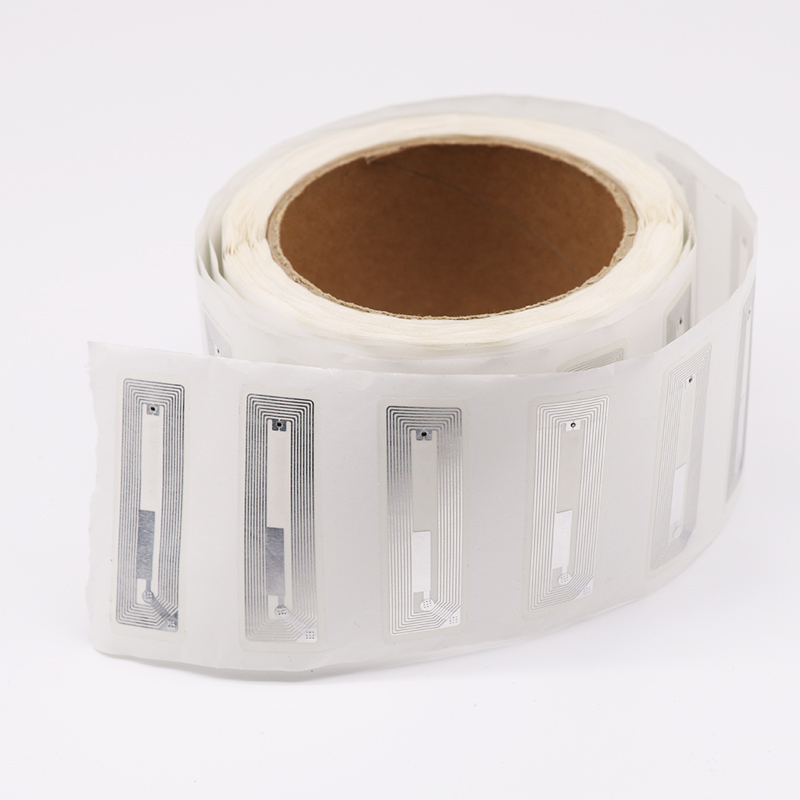
RFID Wet Inlays are described as “wet” due to their adhesive backing, so they are essentially industrial RFID stickers. Passive RFID Tags are comprised of two parts: an integrated circuit for storing and processing information and an antenna for receiving and transmitting the signal. They have no internal power supply. RFID Wet Inlays are best for applications where a low-cost “peel-and-stick” tag is needed. Any RFID Wet Inlay can also be converted into a paper or synthetic face label.
What Is a 13.56 MHz RFID Inlay?
An RFID inlay is the core electronic component used to manufacture an RFID label or tag. It typically consists of an integrated circuit and an antenna connected to the chip. The antenna receives radio-frequency energy from a compatible reader and enables communication between the chip and the reader.
Our passive RFID inlay products do not require an internal battery. Instead, a compatible reader supplies the radio-frequency field needed to activate the tag and communicate with it.
A wet RFID inlay includes an adhesive backing and a release liner. This construction makes it easier to apply the inlay to a suitable surface or incorporate it into a paper or synthetic label. Depending on the application, additional face material, printing, lamination, or protective layers may be required to create the finished product.
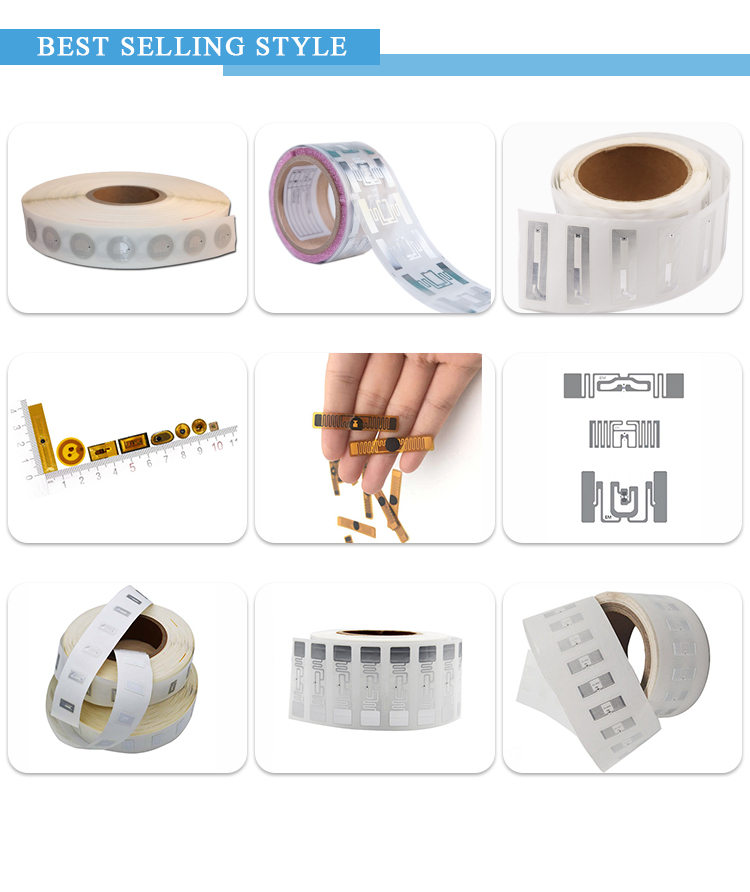
Key Features and Benefits
13.56 MHz High-Frequency Technology
Our RFID inlay operates at 13.56 MHz, a frequency widely used in high-frequency contactless identification systems. This makes it a candidate for short-range identification applications where the chip and reader support the same communication protocol.
Actual compatibility depends on the selected IC, reader specifications, and application requirements. We recommend testing the chosen configuration with the intended equipment before deployment.
ISO/IEC 14443 Type A Communication
The product specification lists ISO/IEC 14443 Type A as the communication protocol. This standard defines aspects of contactless communication, but it does not mean that every compatible chip has identical memory, security functions, or commands.
We encourage customers to confirm the exact chip model and its supported functions when integrating an RFID inlay into an existing system.
PET Substrate and Aluminium Foil Antenna
Our listed inlay construction uses PET as the base material and aluminium foil for the antenna. PET provides a thin carrier for the electronic components, while the antenna supports communication with a compatible RFID reader.
The final RF performance depends on antenna geometry, chip characteristics, tuning, converting processes, and the materials surrounding the tag. We recommend evaluating the finished label rather than relying solely on the performance of an unconverted inlay.
Multiple Antenna Sizes
We list several antenna dimensions to accommodate different product layouts and installation requirements. Custom sizes may also be available, subject to design and production confirmation.
| Antenna Size | Format | Potential Application Consideration |
|---|---|---|
| 26 × 12 mm | Rectangular | Compact label layouts |
| 22 mm diameter | Round | Circular labels or compact product designs |
| 32 × 32 mm | Square | Square-format label layouts |
| 37 × 22 mm | Rectangular | General-purpose label designs |
| 45 × 45 mm | Square | Applications with more antenna space |
| 76 × 45 mm | Rectangular | Larger label formats |
| Customized | Subject to confirmation | Specific product and converting requirements |
These dimensions are listed antenna sizes and should not automatically be treated as the overall finished label dimensions. Please confirm the required antenna footprint, chip placement, and final label size when requesting a quotation.
Adhesive-Ready Wet Inlay Options
Wet RFID inlays include an adhesive backing and release liner, making them convenient for peel-and-stick applications and label converting. They can be integrated into paper or synthetic face labels when the selected adhesive and materials are suitable for the intended use.
We recommend specifying the target surface, environmental conditions, and required adhesive performance before selecting a configuration.
Chip and Memory Options
Our Fudan F08 RFID 1K inlay range supports chip selection according to project requirements. The product name refers to Fudan F08 and 1K, while other chip options can be discussed for applications requiring different memory configurations or technical features.
Memory capacity, memory organization, authentication functions, and supported commands depend on the selected IC. Choosing the right chip helps ensure that the RFID inlay meets the functional requirements of the target system.
When selecting a chip, we recommend considering the following factors:
- Chip manufacturer and model.
- Total memory and user-accessible memory.
- Memory organization and supported commands.
- Authentication and access-control requirements.
- Compatibility with existing RFID readers and software.
- Intended application and data management requirements.
We can help customers compare available chip options and identify a suitable configuration for their RFID projects.
Wet Inlay vs. Dry Inlay vs. Finished RFID Label
Different RFID formats suit different manufacturing and application requirements. A wet inlay includes adhesive, a dry inlay generally does not, and a finished RFID label incorporates the inlay into a label construction.
| Feature | Wet RFID Inlay | Dry RFID Inlay | Finished RFID Label |
|---|---|---|---|
| Adhesive Backing | Included | Generally not included | Usually included |
| Release Liner | Usually included | Depends on construction | Usually included |
| Face Material | May require additional converting | Usually requires integration | Included |
| Printing | Requires further processing if needed | Requires further processing if needed | Can be supplied printed, depending on the order |
| Main Advantage | Convenient application and label converting | Flexible integration into other products | Ready for labeling workflows |
| Main Consideration | Adhesive and surface compatibility | Additional attachment or integration method | Final label materials and durability |
We recommend choosing the format according to your production process. A wet inlay may be appropriate when you need an adhesive-ready component, while a dry inlay may suit projects that involve lamination or integration into another product. A finished RFID label may be more convenient when the entire label construction is required.
Typical Applications of Fudan F08 RFID Inlays
Product Identification and Packaging
Our RFID inlays can be incorporated into product labels and packaging to support contactless identification. They are suitable for label-converting projects where compact RFID components are required.
The final label can be designed according to the product dimensions, surface material, printing requirements, and reader position.
Inventory and Asset Tracking
RFID technology helps businesses organize identification and inventory workflows by enabling compatible readers to identify tagged items. Our inlays can be integrated into labels used for inventory management, asset identification, and product tracking.
For efficient implementation, customers can select chip configurations and label formats that align with their existing reader systems and data management processes.
Contactless Identification Systems
Our 13.56 MHz RFID inlays using ISO/IEC 14443 Type A are suitable for compatible contactless identification applications. Chip selection can be tailored to the technical requirements of the target system.
We recommend matching the chip functions, reader capabilities, and intended application when planning a contactless identification solution.
OEM Manufacturing and Label Converting
Our RFID inlays are suitable for OEM manufacturing, private-label projects, and label-converting applications. We can discuss antenna dimensions, chip configurations, adhesive formats, and other product requirements to support customized projects.
Whether you are developing a new RFID label or integrating RFID functionality into an existing product, we can help you plan a suitable inlay configuration.

Reading Range and Performance
Our RFID inlay has a listed reading range of approximately 3–10 cm, making it suitable for many short-range identification applications.
Actual reading performance depends on the reader output, reader antenna, inlay antenna design, tag orientation, and surrounding materials. Selecting the appropriate antenna dimensions and testing the finished label with the intended reader helps optimize performance.
Metal surfaces and liquids can influence radio-frequency communication. For these applications, we recommend evaluating the inlay in its intended mounting position and operating environment.
For the best results, customers should test representative finished labels using the target reader and record the installation conditions. This helps establish consistent performance for the intended application.
Operating and Storage Temperature
Our product specification lists an operating temperature range of -25°C to +60°C and a storage temperature range of -40°C to +70°C.
These temperature ranges support a variety of indoor identification and labeling applications. For specialized environments, the complete label construction should be selected according to the operating conditions.
Factors such as adhesive performance, face material, humidity, and temperature variation can influence the suitability of a finished label. We can discuss the intended environment to help customers choose appropriate materials and configurations.
Read/Write Endurance
Our listed read/write endurance exceeds 100,000 cycles, supporting applications that require repeated interaction with RFID tags.
For projects involving frequent data updates, chip selection should take into account memory write endurance, data retention, and the intended data management process. Reading data and writing to non-volatile memory are different operations, and the appropriate operating procedures depend on the selected IC.
We can help customers identify relevant chip specifications when evaluating an RFID inlay for a particular application.
Quality Assurance
We focus on providing reliable RFID inlay solutions for a wide range of identification and labeling applications. Our quality-oriented approach covers material selection, antenna construction, chip integration, and product consistency.
Our RFID inlay solutions support OEM manufacturing, label converting, inventory management, and contactless identification projects. We work with customers to identify suitable chip options, antenna dimensions, and material configurations according to their application requirements.
Quality management and product inspection are important parts of our commitment to consistent manufacturing and customer satisfaction.

How to Choose the Right RFID Inlay
Selecting an appropriate RFID inlay begins with understanding the application and the technical requirements. We recommend preparing the following information before requesting a quotation.
| Selection Factor | Information to Provide | Why It Matters |
|---|---|---|
| Chip and Protocol | Required chip model and communication protocol | Helps establish compatibility |
| Memory | Required capacity and data structure | Ensures the chip supports the intended application |
| Antenna Dimensions | Maximum available footprint | Helps match the inlay to the product layout |
| Reader | Reader model or technical specifications | Supports compatibility and performance testing |
| Mounting Surface | Paper, plastic, glass, metal, or another material | Helps identify possible RF or adhesive challenges |
| Environment | Temperature, moisture, and handling conditions | Helps determine material and qualification requirements |
| Label Format | Wet inlay, dry inlay, or finished label | Aligns the product with the manufacturing process |
| Order Quantity | Sample quantity and estimated production volume | Supports quotation and production planning |
With this information, we can review the requested specification and identify which details require confirmation or sample testing before production.
Customization and Order Planning
We understand that OEM and industrial projects may require specific dimensions, chip configurations, or label constructions. Our listed antenna sizes provide a starting point, while custom dimensions and other chip options should be confirmed for feasibility.
For repeat orders, we recommend keeping a record of the approved chip model, antenna dimensions, adhesive type, packaging format, and inspection criteria. If any of these specifications change, validating a new sample can help reduce unexpected differences in performance.
Please also let us know whether the inlays will be applied manually or processed using automated label-converting equipment. Requirements such as roll format, web direction, spacing, liner release, and packaging may affect how the inlays are integrated into your production process.
Installation, Storage, and Handling
RFID inlays should be handled carefully to avoid creasing, tearing, or damaging the chip-to-antenna connection. Physical damage to the antenna or its connection can affect communication even when the inlay appears intact.
During incoming inspection, we recommend checking the packaging, dimensions, adhesive backing, and RFID performance of representative samples. Before full deployment, test the inlay after it has been converted into the final label.
Face materials, printing, adhesives, lamination, and the surface to which a label is attached may change RF performance. Testing only a loose inlay may not accurately represent the performance of the finished product.
For storage, follow the confirmed conditions for the selected inlay and adhesive construction. Protect the product from excessive moisture, heat, pressure, and physical damage. If you expect extended storage, please confirm the applicable shelf-life and storage guidance before ordering.
Frequently Asked Questions
Is this Fudan F08 RFID inlay compatible with 13.56 MHz readers?
Our RFID inlays operate at 13.56 MHz and support ISO/IEC 14443 Type A communication as specified. Compatibility depends on the selected chip and the functions supported by the reader. We recommend matching the chip configuration to your reader system.
What does 1K mean in Fudan F08 RFID 1K Inlay?
The term 1K commonly refers to a memory configuration associated with certain RFID chips. The exact memory capacity and organization depend on the selected IC. Customers should choose a chip configuration that meets their data storage requirements.
What is the difference between a wet inlay and an RFID sticker?
A wet inlay includes an adhesive backing and release liner, making it suitable for direct application or conversion into a label. A finished RFID sticker generally includes face material and may also feature printing or protective layers.
Can we request a custom antenna size?
Yes. We list multiple standard antenna sizes and can discuss customized dimensions for specific applications. The final design depends on the available space, chip configuration, and intended use.
What is the reading range of this RFID inlay?
The listed reading range is approximately 3–10 cm. Actual performance depends on the reader, antenna design, tag orientation, surrounding materials, and installation conditions.
Can this RFID inlay be used on metal?
Metal can affect the performance of conventional RFID antennas. For metal-mounted applications, we recommend evaluating the intended installation and selecting a suitable RFID construction.
Can the inlay be converted into a paper or synthetic label?
Yes. Wet RFID inlays can be incorporated into paper or synthetic face labels using suitable converting processes. The finished construction can be tailored to the label dimensions and application requirements.
What information should we provide for a quotation?
Please share the required chip model, memory capacity, antenna dimensions, reader or protocol requirements, adhesive format, mounting surface, operating environment, and estimated order quantity. These details help us recommend a suitable configuration.
Request a Quote for Your RFID Inlay Project
We welcome inquiries from label converters, OEM manufacturers, system integrators, distributors, and businesses evaluating 13.56 MHz RFID inlays.
To help us review your requirements, please share the intended application, chip and memory requirements, antenna dimensions, adhesive format, mounting surface, operating environment, and estimated order quantity.
If reader compatibility or reading distance is critical, we recommend evaluating samples with your intended reader and finished label construction before approving a bulk order. This allows the selected configuration to be assessed under realistic operating conditions and helps establish whether it meets your project’s technical requirements.