ISO14443A readers are at the heart of modern contactless smart card systems, powering applications such as access control, public transportation, cashless payment, identity verification, and secure authentication. While the term “ISO14443A reader” sounds simple, purchasing the wrong reader can result in card incompatibility, security gaps, performance issues, or system integration failures.
This guide explains what an ISO14443A reader is, how it works, what to check before buying, and how to choose the right model for your application—whether you are building a new system or upgrading an existing one.
What Is an ISO14443A Reader?
An ISO14443A reader is a contactless RFID reader designed to communicate with ISO/IEC 14443 Type A proximity cards operating at 13.56 MHz.
ISO14443 is the international standard for proximity smart cards, defining:
Air interface
Radio frequency power and signal modulation
Anti-collision and card selection
Communication protocols
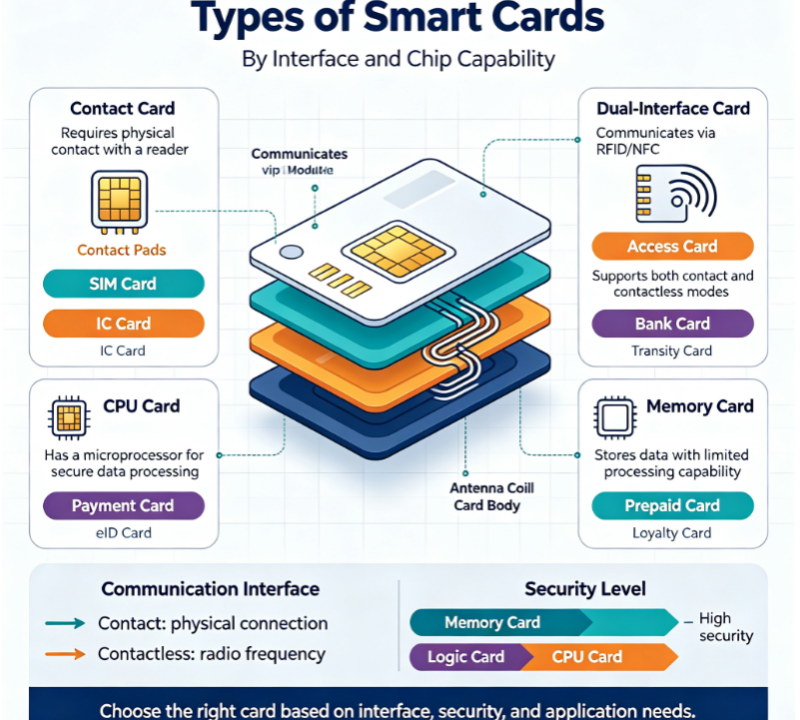
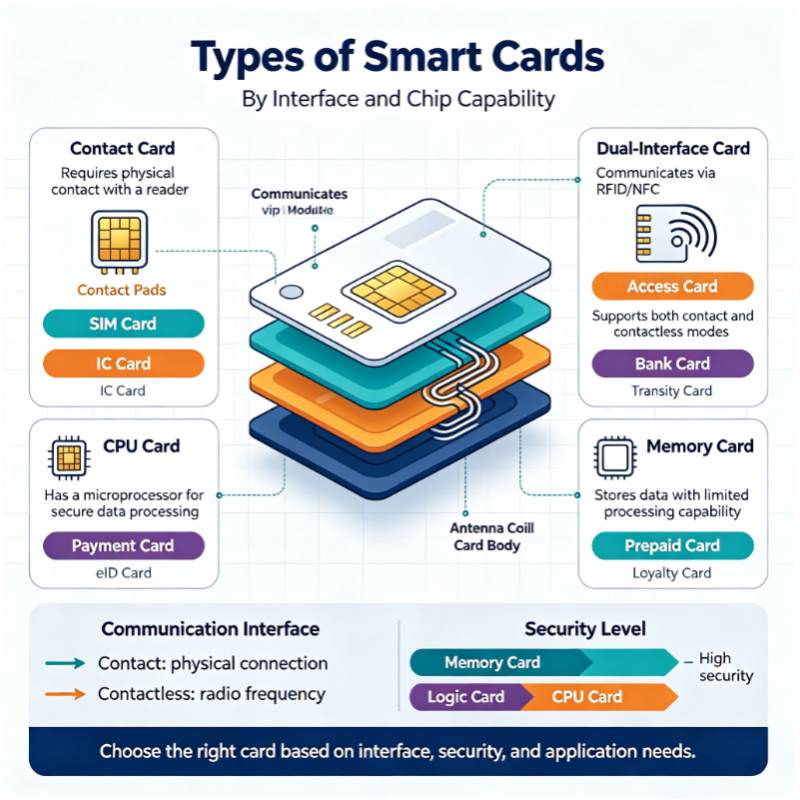
Type A is the most widely used variant and supports popular card families such as:
MIFARE Classic
MIFARE Ultralight
MIFARE Plus
MIFARE DESFire EV1 / EV2 / EV3
NTAG series
An ISO14443A reader supplies power to the card via electromagnetic coupling and exchanges data securely over short distances (typically up to 10 cm, reader-dependent).
Why Choosing the Right ISO14443A Reader Matters
Not all ISO14443A readers are equal.
Two readers may both claim “ISO14443A compliant” yet differ significantly in:
Supported card types
Encryption capabilities
Read range and stability
Firmware flexibility
Security certifications
Integration interfaces
Choosing the wrong reader can lead to:
Cards not being recognized
Slow transaction times
Security vulnerabilities
Costly firmware replacements
System redesigns
Buying correctly from the start saves time, money, and future headaches.
Step 1: Identify the Cards You Need to Read
Before choosing a reader, clearly define which cards your system must support.
Common ISO14443A Cards
Some cards use ISO14443A but have very different command sets and security features.
Examples:
MIFARE Classic 1K / 4K
MIFARE Ultralight / Ultralight EV1
MIFARE DESFire EV1 / EV2 / EV3
MIFARE Plus (S, X, SE)
NTAG213 / 215 / 216
Not every reader supports all of these cards by default.
Key Buying Rule
Always confirm:
Exact card model
Memory size
Security level
Encryption requirements
A reader that works perfectly with MIFARE Classic may fail entirely with DESFire EV2 if the firmware does not support AES authentication.
Step 2: Check Security and Encryption Support
Security is one of the most critical factors when buying an ISO14443A reader.
Basic Readers
Low-cost readers often support:
UID reading only
Plain communication
No encryption
These are suitable only for:
Simple identification
Attendance systems
Non-secure applications
Secure Readers
For professional systems, the reader should support:
AES-128 encryption
3-pass mutual authentication
Secure messaging (CMAC / encrypted)
Key diversification
Proximity checking (for advanced cards)
This is essential for:
Access control
Transit ticketing
Payment-related systems
Government or enterprise use
If you are using MIFARE DESFire EV1 or EV2, AES support is mandatory.
Step 3: Determine the Reader Form Factor
ISO14443A readers come in different physical designs. Choose based on installation environment and user interaction.
Desktop / USB Readers
Typical uses:
Card issuing
Enrollment
Programming
Office authentication
Features:
USB interface
Short read range
PC software integration
Embedded Reader Modules
Typical uses:
Turnstiles
Kiosks
Vending machines
Industrial devices
Features:
UART / SPI / I²C interfaces
Custom antenna connection
Firmware-level control
Wall-Mounted Access Control Readers
Typical uses:
Door access
Elevator control
Parking systems
Features:
Weather-resistant housing
Wiegand / RS485 / OSDP output
Long-term stability
Step 4: Evaluate Communication Interfaces
Reader integration depends heavily on the available interfaces.
Common interfaces include:
USB
UART (TTL)
RS232 / RS485
SPI
I²C
Wiegand
TCP/IP (Ethernet)
OSDP (secure access protocol)
Integration Tip
Match the reader interface to:
Your controller
Your MCU or SBC
Your existing access control panel
Changing interfaces later often requires hardware replacement.
Step 5: Consider Read Range and Antenna Design
ISO14443A is designed for short-range communication, but actual read distance varies.
Factors affecting read range:
Reader output power
Antenna size and tuning
Card antenna design
Environmental interference
Metal or electromagnetic noise nearby
Practical Guidance
Access control: 3–8 cm is ideal
Transit systems: Fast detection within 5–10 cm
Desktop programming: Controlled short range preferred
Excessive read range can actually reduce security by enabling unintended card reads.
Step 6: Check Firmware and SDK Availability
A professional ISO14443A reader should offer:
Firmware update capability
Clear command documentation
SDKs or APIs
Sample code
Supported platforms may include:
Windows
Linux
Android
Embedded systems
Without proper documentation, even powerful readers become difficult to deploy.
Step 7: Verify Compatibility with DESFire EV1 and EV2
This step is often overlooked.
Although DESFire EV2 is backward-compatible in theory, not all readers support it in practice.
Important questions to ask:
Can the reader authenticate DESFire EV2?
Does it support EV2 secure messaging?
Can it read EV2 cards programmed with EV1 data?
Is firmware upgrade available?
If your system may migrate from EV1 to EV2, choose a reader that already supports both.
Step 8: Look for Certifications and Standards Compliance
Reliable readers often comply with:
ISO/IEC 14443
CE / FCC / RoHS
Common Criteria (for secure elements)
Industry certifications for transit or access control
Certifications improve:
System reliability
Regulatory approval
Long-term support confidence
Step 9: Choose a Reliable Manufacturer or Supplier
When buying ISO14443A readers, supplier quality matters as much as hardware specs.
A good supplier should provide:
Clear datasheets
Technical support
Firmware updates
Customization options
Long-term product availability
Avoid no-name products with unclear documentation or locked firmware.
Step 10: Test Before Mass Deployment
Before purchasing in volume:
Test with your actual cards
Test in real installation environments
Verify encryption and authentication
Confirm transaction speed
A small pilot test can prevent major deployment failures.
Common Buying Mistakes to Avoid
Assuming all ISO14443A readers support DESFire
Buying UID-only readers for secure systems
Ignoring firmware upgrade paths
Choosing price over compatibility
Forgetting future expansion needs
RFID systems tend to last many years. Short-term savings often lead to long-term costs.
Typical Applications of ISO14443A Readers
Door access control
Elevator control systems
Public transportation
Campus ID cards
Secure printing
Cashless vending
Identity verification
Time and attendance
Final Thoughts: How to Buy the Right ISO14443A Reader
Buying an ISO14443A reader is not just about frequency or standard compliance. It is about matching security, compatibility, performance, and future scalability to your system requirements.
The best approach is:
Define your card types clearly
Match security level to application risk
Choose proven hardware with upgrade paths
Work with experienced suppliers
Test thoroughly before deployment
In a rapidly evolving RFID landscape, a well-chosen ISO14443A reader becomes the stable foundation of a secure, reliable, and future-proof contactless system.