August 26, 2026
Introduction
1. Poker Chips Set: Bring the casino games to your home with this clay poker chips set that will take your game night to the next level.
2. Casino Gifts: This set makes great gifts for poker players, friends, and family; gift the box of chips for Christmas, for a housewarming party, a birthday, a graduation, or special occasion.
3. Reliable Material: Use the casino poker chips for multiple occasions; these are crafted with high-quality clay and iron for an authentic feel.
4. Standard Sizing: Each poker chip measures 0.157 inches in diameter.
Specification
| Product Name | RFID Poker Chips |
| Chip Type | ICODE SLI-X |
| Size | R40mm*3mm |
| Protocol | ISO 15693/18000-3M1 |
| Read range | 0-10cm |
| Frequency | 13.56MHz |
| Working Temperature | -20 to +85°C |
| Memory | EEFORM: 1024bits |
| Re-write | 100,000 times |
| Application | Poker entertainment |
Technical Details
ICODE SLI IC is a dedicated chip for intelligent label applications like supply chain management as well as baggage and parcel identification in airline business and mail services. This IC is the first member of a product family of smart label ICs based on the ISO standard ISO/ IEC 15693.The I-CODE system offers the possibility of operating labels simultaneously in the field of the reader antenna (Anticollision). It is designed for long range applications
Feature
1. ICODE SLI RF Interface (ISO/ IEC 15693)
* Contactless transmission of data and supply energy (no battery needed)
* Operating distance: up to 1.5 m (depending on antenna geometry)
* Operating frequency: 13.56 MHz (ISM, world-wide licence free available)
* Fast data transfer: up to 53 kbit/s
* High data integrity: 16 Bit CRC, framing
* True anticollision
* Electronic Article Surveillance (EAS)
* Application Family Identifier (AFI) supported
* Data Storage Format Identifier (DSFID)
* Additional fast anticollision read
* Write distance equal to read distance
2 EEPROM
* 1024 bits, organised in 32 blocks of 4 byte each
* Data retention of 10 years
* Write endurance 100.000 cycles
3 Security
* Unique identifier for each device
* Lock mechanism for each user memory block (write protection)
* Lock mechanism for DSFID, AFI, EAS

How RFID Poker Chips Work
RFID poker chips use passive high-frequency RFID technology. Unlike active tracking devices, a passive RFID chip does not contain a battery.
A typical system consists of three main components:
- RFID poker chip – Contains the ICODE SLI-X IC and antenna.
- RFID reader – Generates the 13.56 MHz electromagnetic field and communicates with the chip.
- Software system – Processes the chip’s UID and memory data for identification, tracking, or gaming management.
When a chip is placed within the reader’s operating field, the antenna receives energy from the reader. The IC then uses this energy to communicate stored information back to the reader.
Because communication is contactless, there is no need for electrical contacts on the chip. This is particularly useful for gaming environments where chips are frequently handled, stacked, moved, and scanned.
ICODE SLI-X RFID Technology
The ICODE SLI-X is an ISO/IEC 15693-compliant RFID integrated circuit designed for contactless identification applications. The technology supports both data communication and wireless energy transfer, allowing the RFID chip to operate without a battery.
Its RFID interface supports data transfer rates of up to 53 kbit/s and includes a 16-bit CRC for data integrity. The chip also provides true anti-collision functionality, allowing multiple RFID devices to operate within the reader’s field.
For RFID poker chips, these functions can be important because chips are often used in groups rather than individually. An RFID system can therefore be designed to identify multiple chips without requiring each chip to be manually separated and scanned.
1024-Bit EEPROM Memory
The RFID chip provides 1024 bits of EEPROM memory. This is organized into 32 blocks, with each block containing 4 bytes.
| Memory Characteristic | Specification |
|---|---|
| Total EEPROM | 1024 bits |
| Total Bytes | 128 bytes |
| Number of Blocks | 32 |
| Bytes per Block | 4 |
| Write Endurance | 100,000 cycles |
| Data Retention | 10 years |
The available memory can be used for application-specific information, depending on how the RFID system is designed.
For example, a gaming management system could associate the chip’s unique identifier with information stored in an external database. The RFID memory can then be used for selected application data, while the database maintains more detailed records.
This approach is generally more flexible than trying to store a complete gaming record directly on the RFID chip.
Unique Identification for Individual Chips
One of the most useful features of an RFID poker chip is its unique electronic identity.
Each RFID device has a unique identifier, allowing a software system to distinguish one chip from another. This creates a digital identity for every tagged gaming chip.
For example:
| Physical Chip | RFID Identity | Possible System Function |
|---|---|---|
| Chip A | Unique ID A | Identify chip |
| Chip B | Unique ID B | Identify chip |
| Chip C | Unique ID C | Track movement |
| Chip D | Unique ID D | Inventory management |
The UID can be linked to a database record containing additional information such as chip type, denomination, batch number, production information, or status.
This separation between the RFID identity and the application database also makes the overall system easier to expand.
Anti-Collision for Multiple RFID Chips
Anti-collision is an important feature for gaming applications because RFID poker chips are rarely used one at a time.
A reader may encounter several chips within its operating field simultaneously. Without an appropriate anti-collision mechanism, multiple RFID devices could attempt to respond at the same time, making reliable identification difficult.
The ICODE SLI technology supports true anti-collision and fast anti-collision reading.
This allows system designers to build applications in which multiple chips can be detected within the reader’s field.
However, the number of chips that can be reliably identified at once depends on the reader, antenna, software, chip orientation, spacing, and surrounding materials. Therefore, anti-collision support should not be interpreted as a guarantee of a specific number of simultaneously readable chips.
RFID Poker Chip Read Range
Read range is one of the most important specifications when designing an RFID gaming system.
The product specification lists a 0–10 cm read range for this RFID poker chip. The ICODE SLI technology description also states that an operating distance of up to 1.5 meters can be possible depending on antenna geometry.
These figures should be understood differently.
| Read-Range Reference | Meaning |
|---|---|
| 0–10 cm | Product-level nominal range stated for the poker chip |
| Up to 1.5 m | IC-level capability under suitable antenna conditions |
| Actual system range | Depends on chip, antenna, reader, power, orientation, and environment |
For a finished RFID poker chip, the antenna is integrated into a limited physical space. Therefore, the performance of the complete chip can be substantially different from the theoretical performance of the RFID IC.
For practical gaming systems, it is recommended to test the actual chip together with the intended reader and antenna before finalizing the system design.
RFID Poker Chips vs. Traditional Poker Chips
Traditional poker chips are simple physical tokens. RFID poker chips add a digital identification layer.
| Feature | Traditional Poker Chip | ISO 15693 RFID Poker Chip |
|---|---|---|
| Physical gaming token | Yes | Yes |
| Contactless identification | No | Yes |
| Unique electronic ID | No | Yes |
| Automated chip detection | No | Yes |
| Anti-collision | No | Yes |
| Electronic memory | No | 1024-bit EEPROM |
| Database integration | Limited | Yes |
| Battery required | No | No |
| Suitable for RFID readers | No | Yes |
The RFID version does not replace the physical gaming function of a poker chip. Instead, it adds an electronic identification capability that can be integrated into a larger gaming or management system.
ISO 15693 vs. Other RFID Technologies
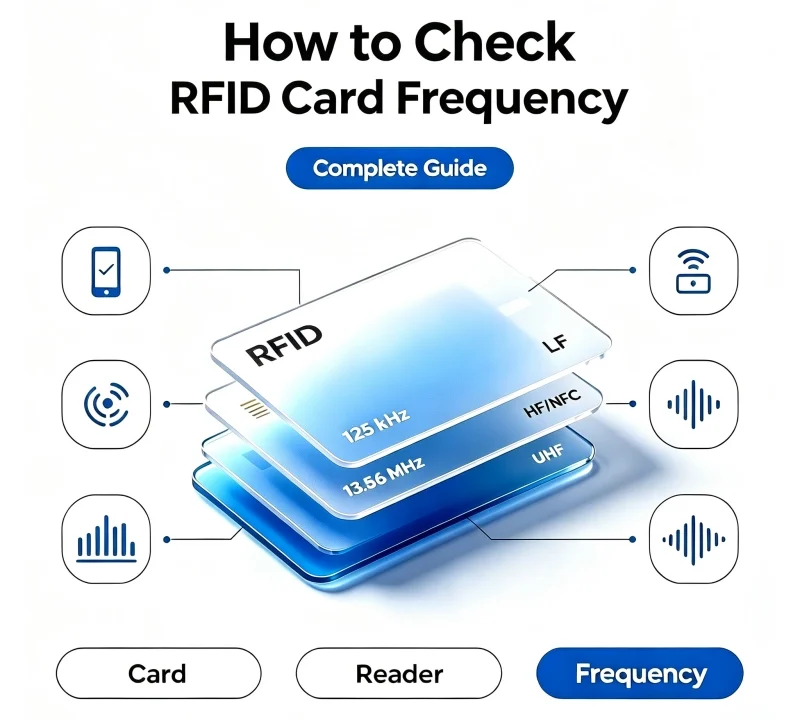
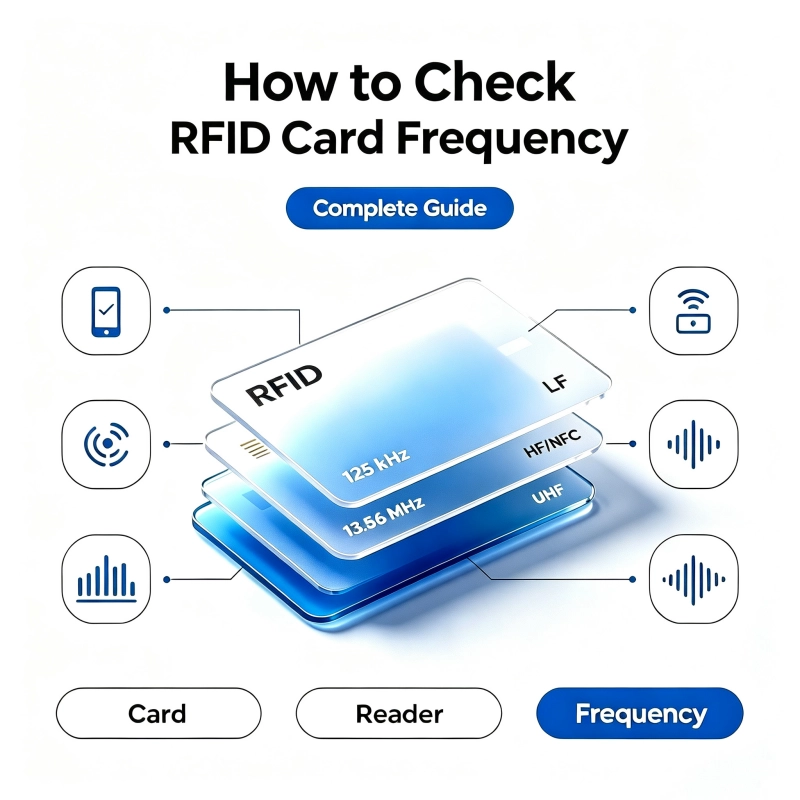
Different RFID standards are designed for different operating environments. ISO 15693 is a high-frequency RFID technology operating at 13.56 MHz and is particularly suitable for contactless identification applications.
| Technology | Typical Frequency | Main Characteristic | Potential Use |
|---|---|---|---|
| ISO 15693 | 13.56 MHz | Longer-range HF identification | RFID tokens, labels, asset identification |
| HF/NFC | 13.56 MHz | Short-range communication | NFC products, access, consumer interaction |
| UHF RFID | ~860–960 MHz | Longer-range identification | Logistics, inventory, warehouse tracking |
| LF RFID | ~125–134 kHz | Short-range identification | Access control, animal identification |
The best RFID technology depends on the application’s required range, reader design, data capacity, tag size, environment, and cost.
For poker chips and gaming tokens, HF RFID can provide a useful balance between compact antenna design, contactless communication, and controlled read areas.
Security and Memory Protection
The ICODE SLI technology provides several mechanisms that can help protect RFID configuration and memory areas.
The chip includes a lock mechanism for individual user memory blocks. It also supports locking for DSFID, AFI, and EAS-related functions.
These features allow system designers to make selected information read-only after programming.
For example, information that should not change during normal operation can be written during manufacturing and subsequently locked. Application software can then use the chip’s unique identifier as the permanent reference for the physical token.
It is important to distinguish memory locking from advanced cryptographic authentication. A locked memory block prevents further writing, but it should not automatically be described as a complete anti-counterfeit security system.
For applications requiring high-value asset protection, additional system-level security measures may be necessary.
Typical Applications
Although the product is described for poker entertainment, the same RFID poker chip concept can be adapted to various gaming and token-management applications.
Poker and Table Games
RFID poker chips can be integrated into gaming tables or counting systems to provide automated identification of tagged chips.
Chip Inventory Management
Unique RFID identities can help operators associate individual chips with inventory records and production batches.
Gaming Equipment Integration
RFID readers can be connected to software platforms to create automated chip detection and data collection systems.
Demonstration and Entertainment Systems
RFID-enabled chips can also be used for interactive poker demonstrations, entertainment systems, training equipment, and other token-based applications.
Custom RFID Tokens
The same embedded RFID structure can potentially be adapted to custom gaming tokens or other circular identification products when the physical dimensions and antenna design are suitable.
RFID Poker Chip Manufacturing Considerations
The RFID IC is only one part of a finished RFID poker chip. The antenna, chip material, encapsulation process, reader, and operating environment all affect the final performance.
Several factors should be considered during product development:
- Chip diameter and thickness
- RFID antenna geometry
- IC placement
- Internal metal content
- Chip material
- Reader antenna dimensions
- Reader output power
- Distance between reader and chip
- Chip orientation
- Number of chips in the field
- Required read/write speed
- Environmental temperature
Metallic materials can influence HF RFID performance, so the internal construction of the poker chip should be evaluated during prototyping.
A production sample should always be tested using the same reader, antenna, software, and physical configuration planned for the final application.
Read and Write Performance
The ICODE SLI specification supports a write distance equal to the read distance under the relevant operating conditions. The memory is rated for up to 100,000 write cycles.
For a gaming application, however, not every system needs to rewrite the chip frequently.
A practical architecture may use the RFID chip primarily as a permanent identifier while storing dynamic gaming information in a backend database.
This can reduce unnecessary writes and allow the same physical chip to work as a long-term identification token.
Temperature and Durability
The stated operating temperature range for the product is -20°C to +85°C.
The RFID IC itself is designed for contactless operation, which means there are no exposed electrical contacts that can wear out through repeated insertion or connection.
Nevertheless, the mechanical durability of the finished poker chip depends on its complete construction. The IC’s electrical specifications should therefore not be treated as a guarantee of the finished product’s resistance to impact, bending, abrasion, water, chemicals, or long-term casino use.
If the chips will be used in demanding commercial environments, mechanical and environmental testing should be performed on production-equivalent samples.
Why Choose ISO 15693 RFID Poker Chips?
For applications that require physical gaming tokens with electronic identification, ISO 15693 RFID poker chips offer several practical advantages.
Contactless operation: Chips can be detected without direct electrical contact.
Unique identification: Each RFID device has its own identifier, making individual chip recognition possible.
Multiple-tag reading: Anti-collision technology supports applications involving multiple chips in the reader field.
Rewritable memory: The 1024-bit EEPROM provides space for application-specific data.
Long write endurance: The memory is specified for up to 100,000 write cycles.
No battery: Passive operation reduces maintenance requirements.
System integration: RFID data can be connected to software, databases, gaming equipment, and inventory systems.
Choosing the Right RFID Reader
Selecting the correct reader is just as important as selecting the RFID poker chip.
The reader should support the same RFID frequency and protocol as the embedded IC. For this product, the relevant technology is 13.56 MHz ISO/IEC 15693.
The reader antenna should also match the intended application. A small reader field may be appropriate for controlled chip detection at a gaming position, while a larger antenna may be more suitable for bulk identification or inventory operations.
| Requirement | Recommended Consideration |
|---|---|
| Individual chip detection | Small controlled reader field |
| Multiple chip identification | ISO 15693 anti-collision support |
| Short-range table integration | Compact HF antenna |
| Bulk chip management | Larger reader antenna |
| Database integration | Reader with suitable communication interface |
| High-frequency operation | 13.56 MHz compatibility |
Before purchasing readers in quantity, testing should be conducted with the actual poker chip design.
RFID Poker Chip System Architecture
A complete RFID gaming solution can be structured into four layers:
RFID chip: Stores the unique identifier and selected application data.
RFID reader: Creates the RF field and exchanges information with the chip.
Controller or computer: Receives RFID data from the reader and processes it.
Software/database: Associates RFID identifiers with gaming, inventory, or operational records.
This architecture allows the physical poker chip to remain simple while the software system handles more complex information.
For example, the chip’s UID can act as a permanent key, while the database stores the current status or history associated with that chip.
Frequently Asked Questions
What frequency do these RFID poker chips use?
The product operates at 13.56 MHz and uses the ISO/IEC 15693 RFID standard.
What RFID chip is embedded in the poker chip?
The product specification identifies the embedded RFID IC as ICODE SLI-X.
How much memory does the RFID poker chip have?
The chip provides 1024 bits of EEPROM, organized into 32 blocks of 4 bytes.
Does the RFID poker chip need a battery?
No. The ICODE SLI RFID interface uses contactless transmission of both energy and data, so the chip operates as a passive RFID device.
What is the read range?
The product page specifies a nominal read range of 0–10 cm. Actual range depends on the reader, antenna, chip construction, orientation, and operating environment.
Can multiple poker chips be read at the same time?
The ICODE SLI technology supports anti-collision, allowing systems to identify multiple RFID devices within the reader field. Actual simultaneous reading performance depends on the complete RFID system.
Can the RFID memory be rewritten?
Yes. The EEPROM is specified for up to 100,000 write cycles.
Can RFID memory be locked?
Yes. The ICODE SLI technology supports lock mechanisms for individual user memory blocks as well as DSFID, AFI, and EAS functions.
Is ISO 15693 the same as NFC?
No. ISO 15693 and NFC are related to 13.56 MHz contactless technology, but they are not interchangeable terms. Compatibility depends on the specific IC, protocol, reader, and application.
Can the RFID poker chips be customized?
Customization depends on the required chip material, dimensions, printing, antenna structure, RFID IC, and production requirements. A sample-based engineering evaluation is recommended before mass production.
Conclusion
ISO 15693 RFID poker chips add contactless digital identification to a traditional gaming token. With an ICODE SLI-X RFID IC, 13.56 MHz operation, 1024-bit EEPROM, unique identification, anti-collision capability, and rewritable memory, the technology provides a practical foundation for RFID-enabled poker and gaming applications.
The most important factor when developing an RFID poker chip system is to evaluate the complete solution rather than the RFID IC alone. Chip construction, antenna geometry, reader performance, read range, chip orientation, and software architecture all influence the final result.
For applications requiring automated identification, inventory management, gaming equipment integration, or custom RFID-enabled tokens, ISO 15693 provides a flexible HF RFID platform that can be adapted to different system designs.
Ready to Upgrade Your Gaming Chips?
Contact us today for ISO 15693 RFID poker chips with customizable designs, reliable RFID performance, and flexible solutions for gaming and tracking applications. Request a quote or sample to get started.