November 3, 2026
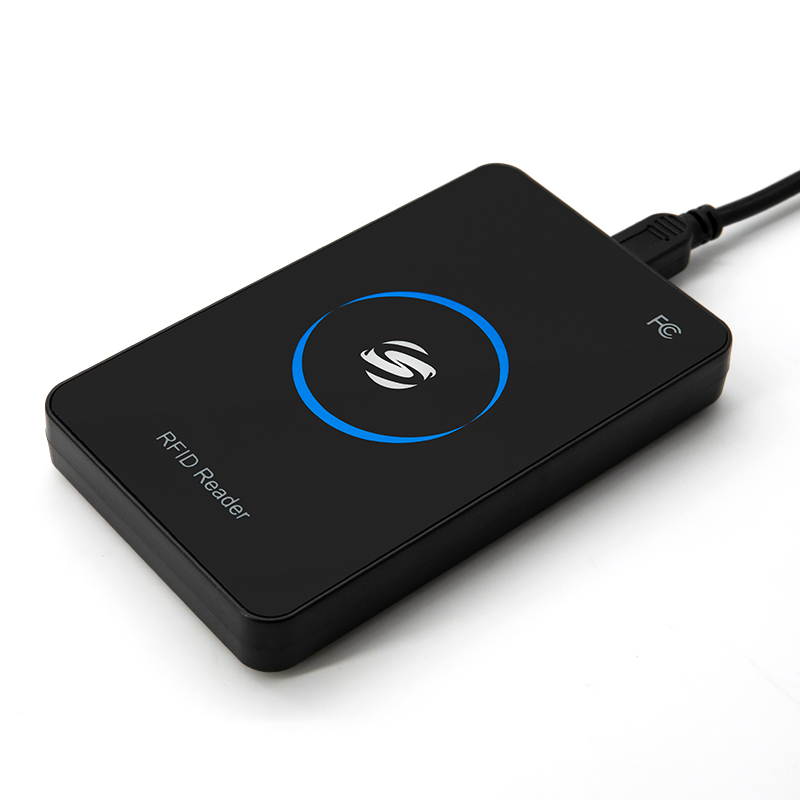
Our ISO15693 RFID contactless card reader writer is designed for reliable high-frequency RFID identification, card data access, and system integration. Operating at 13.56 MHz, this USB RFID reader writer supports the ISO/IEC 15693 protocol and compatible ICODE II and TI2048 cards, making it suitable for membership management, charging systems, and other contactless identification applications.
At DO RFID, we provide practical RFID hardware and development support to help businesses integrate contactless card reading and writing into their existing software and equipment. With USB connectivity, a compact design, and multi-platform development resources, our ISO15693 card reader offers a convenient solution for developers, system integrators, equipment manufacturers, and commercial users.
Whether you are building a new RFID application or upgrading an existing identification system, our reader writer provides a straightforward starting point for developing an efficient contactless card solution.
Specifications
| Item | Parameter |
| Frequency | 13.56mhz |
| Protocol | ISO/IEC15693 |
| Support Cards | I Code 2/TI2048 |
| Working Voltage | DC +5V(Allow user to customize 3.3V) |
| Working Current | 100mA |
| Communication Format | USB |
| Communication Speed | 106Kbit/s |
| Read range | 0mm-100mm (related to the card or the environment) |
| Store Temperature | -20℃ ~ +80℃ |
| Working Temperature | 0℃ ~ +95℃ |
| Size | 104mm×68mm×10mm |
| Size(Package) | 128mm×87mm×32mm |
| Weight | 120G |
| Development | Linux Jave、Linux QT、Delphi、VC6.0、C#、VB |
Device instruction
Provided multi-platform routines for secondary development library, and there is a PC software we provided for testing, the name of software is “Demo.exe”.
Suitable for
Member management systems, charging systems and so on.


Key Features of Our ISO15693 RFID Reader Writer
Our 13.56 MHz RFID reader writer combines contactless card communication, convenient computer connectivity, and development flexibility in one compact device.
- ISO15693 protocol support: Designed for communication with compatible ISO/IEC 15693 RFID cards.
- 13.56 MHz operating frequency: Suitable for high-frequency RFID identification applications.
- USB communication interface: Connects the reader to a compatible computer or host system.
- Up to 100 mm read range: Supports contactless card reading at a distance determined by the card and operating environment.
- Low-voltage operation: Uses a standard DC 5 V supply, with a customizable 3.3 V option.
- Multi-platform development support: Development resources are available for Linux Java, Linux Qt, Delphi, VC6.0, C#, and VB.
- PC testing software: We provide Demo.exe software for testing and evaluating reader functions.
- Compact enclosure: The 104 × 68 × 10 mm form factor supports desktop installations and equipment integration.
These features help simplify RFID deployment for businesses that need dependable card identification and an accessible development path.
How Does an ISO15693 RFID Card Reader Work?
ISO15693 is a high-frequency RFID air-interface standard used for contactless identification and communication between compatible reader and tag devices. At 13.56 MHz, an ISO15693 reader communicates with supported cards through radio frequency coupling rather than a physical electrical connection.
Our reader writer provides an interface between compatible RFID cards and a host computer. When a card enters the reader’s operating field, the system can communicate with the card according to the supported protocol and application commands.
A typical RFID identification process includes three steps:
- Card presentation: The user places a compatible RFID card within the reader’s operating range.
- Card communication: The reader communicates with the card using the supported ISO15693 protocol.
- Host processing: The connected computer or application processes the returned information and performs the relevant business operation.
Depending on the card, permissions, software implementation, and supported commands, an RFID application may use card identification data or access available card memory. This makes ISO15693 technology useful for identification, data collection, and controlled card-based workflows.
Why Choose a 13.56 MHz ISO15693 Reader Writer?
Selecting an RFID reader involves more than choosing a frequency. Protocol compatibility, card availability, host connectivity, software development requirements, and installation conditions all affect the final solution.
Our ISO15693 reader writer is intended for projects that use compatible high-frequency RFID cards and require a practical USB connection to a computer-based system.
Contactless Identification
RFID technology enables users to present a card without inserting it into a slot or establishing direct electrical contact. This simplifies routine identification tasks in membership systems, service counters, and equipment interfaces.
Convenient USB Connectivity
The USB interface provides a familiar connection method for computer-based applications. It helps system integrators incorporate RFID functionality into desktop software, testing stations, and compatible host equipment.
Flexible Software Integration
We provide multi-platform development resources and PC testing software to support the integration process. Developers can use these resources as a starting point for evaluating reader communication and building application-specific workflows.
Compact Physical Design
With dimensions of 104 × 68 × 10 mm, the reader is suitable for installations where available space matters. Its compact format can support desktop use and integration into selected equipment designs.
ISO15693 vs. ISO14443 RFID Readers
ISO15693 and ISO14443 are both high-frequency contactless RFID standards operating at 13.56 MHz, but they serve different communication and application requirements. Choosing the appropriate standard helps improve compatibility between the reader, card, and software system.
| Comparison Item | ISO15693 | ISO14443 |
|---|---|---|
| Operating Frequency | 13.56 MHz | 13.56 MHz |
| Typical Application Focus | Vicinity card identification and related applications | Proximity cards and contactless smart card applications |
| Common Use Cases | Asset identification, libraries, inventory, and compatible identification systems | Access control, payment-related systems, and NFC-related applications |
| Communication Characteristics | Designed for vicinity-card communication | Designed for proximity-card communication |
| Read Distance | Depends on reader, card, antenna, and environment | Depends on reader, card, antenna, and environment |
| Card Compatibility | Requires ISO15693-compatible cards | Requires compatible ISO14443 cards |
| Suitable Reader Choice | ISO15693 reader for ISO15693 card projects | ISO14443 reader for ISO14443 card projects |
The two standards are not interchangeable simply because they use the same frequency. An ISO15693 reader should be selected for compatible ISO15693 cards, while an ISO14443 reader is appropriate for applications based on the corresponding ISO14443 card technology.
For projects using ICODE II or TI2048 cards, our ISO15693 RFID reader writer provides a relevant hardware option.
Supported RFID Cards and Compatibility
Our reader writer supports ICODE II and TI2048 cards for applications based on the ISO15693 protocol.
When planning an RFID system, card compatibility should be evaluated at the chip and protocol level rather than by frequency alone. Two cards operating at 13.56 MHz may use different standards, memory structures, commands, or access-control mechanisms.
We recommend considering the following factors when selecting cards for your project:
- Protocol: Choose cards compatible with ISO/IEC 15693.
- Chip type: Match the card IC to the reader’s supported card types.
- Memory requirements: Determine whether your application needs identification data, user memory, or specific memory operations.
- Read distance: Consider card antenna size, orientation, mounting materials, and the intended presentation method.
- Software requirements: Confirm that the application supports the commands and data structures required by your workflow.
By matching the card and reader to the project requirements at the beginning of development, you can simplify integration and create a more consistent RFID user experience.
USB RFID Reader Writer for Easy System Integration
USB connectivity makes our ISO15693 reader writer a practical choice for applications that use a computer as the main processing platform.
A typical configuration consists of the RFID reader, a compatible ISO15693 card, a host computer, and application software. The reader handles contactless communication, while the host application manages business rules, user interfaces, data storage, and integration with other systems.
Common integration tasks include:
- Reading card information for user identification.
- Connecting RFID events to membership or service records.
- Incorporating card operations into existing desktop software.
- Evaluating compatible cards during system development.
- Building RFID-enabled testing and data collection workflows.
The exact software architecture depends on the host operating system, development environment, and required reader functions. Our development resources help developers begin the integration process and adapt the reader to their intended application.
SDK and Software Development Support
Software compatibility is an important consideration when selecting an RFID reader writer. To support integration, we provide multi-platform development resources and PC testing software.
Our listed development environments include Linux Java, Linux Qt, Delphi, VC6.0, C#, and VB.
Supported Development Environments
| Development Environment | Typical Project Role |
|---|---|
| Linux Java | Linux-based application development |
| Linux Qt | Desktop applications and Qt-based interfaces |
| Delphi | Windows desktop application development |
| VC6.0 | Legacy Windows software integration |
| C# | Windows applications and business software |
| VB | Existing Visual Basic application integration |
These environments provide options for developers working with different software architectures and legacy systems. The appropriate development approach depends on the host platform and the requirements of the target application.
PC Testing with Demo.exe
We provide Demo.exe software to help users evaluate the reader on a PC. A testing application can be useful during initial setup, card compatibility evaluation, and development planning.
A typical evaluation workflow is to connect the reader, prepare a compatible card, launch the test software, and perform the available card operations. Developers can then use their evaluation results to plan the integration into their own application.
For custom projects, our team can discuss the intended operating system, development language, card type, and required functions to help identify an appropriate integration approach.
Applications of the ISO15693 RFID Reader Writer
Our ISO15693 reader writer is suitable for a range of contactless identification and card-based management applications.
1. Membership Management Systems
Membership systems can use compatible RFID cards to identify registered users and connect card presentation events to membership records. A host application can manage member information, service eligibility, visit history, or other business rules.
This approach is useful for organizations seeking to streamline routine member identification.
2. Charging and Billing Systems
In charging systems, an RFID card can serve as an identification medium associated with a customer, account, or service record. The host software can process the identification data and apply the relevant billing rules.
The reader supports the card communication component of the system, while the application manages transaction logic and account information.
3. Asset Identification
ISO15693 technology can be used in compatible asset identification workflows. When suitable cards or tags are attached to equipment or inventory items, a reader-based system can help staff retrieve identification information and associate it with asset records.
Actual suitability depends on the selected tag, mounting conditions, and required reading distance.
4. Library and Document Management
Compatible RFID technology can support identification workflows for tagged books, documents, and other items. A connected application can associate card or tag information with catalog records and circulation processes.
For these projects, the selected tags, system architecture, and required operations should match the library management software.
5. Desktop Identification Stations
The USB interface makes the reader a practical candidate for computer-connected identification stations. Potential configurations include registration desks, service counters, testing benches, and other locations where users present compatible RFID cards.
The host application can combine RFID communication with existing forms, databases, and business workflows.
6. Custom RFID Equipment
Equipment manufacturers and system integrators can evaluate the reader for selected RFID-enabled devices. The compact dimensions and available development resources provide a starting point for projects that combine contactless identification with custom software.
For embedded or specialized equipment, electrical, mechanical, environmental, and software requirements should be considered during system design.
Read Range and Installation Considerations
Our ISO15693 reader writer has a specified read range of 0–100 mm. Actual performance depends on the RFID card, antenna characteristics, reader placement, and surrounding materials.
To achieve consistent results, we recommend evaluating the reader under conditions that resemble the final installation.
Card selection: Use a compatible card with an antenna appropriate for the intended reading distance.
Positioning: Test different card orientations and presentation positions to identify a reliable reading area.
Installation materials: Metal surfaces and nearby electronic equipment can affect RF performance. Test the complete installation rather than relying only on a bench setup.
Reading workflow: Consider whether users will present cards manually, place them on a fixed surface, or use the reader as part of an automated process.
Environmental conditions: Evaluate the operating environment against the product’s specified temperature range and the requirements of the complete system.
These practical checks help developers establish realistic performance expectations and create a smoother card-reading experience.
Product Dimensions, Power, and Physical Integration
The reader’s compact size supports a range of desktop and equipment-integrated applications.
| Physical Parameter | Value |
|---|---|
| Reader Dimensions | 104 × 68 × 10 mm |
| Package Dimensions | 128 × 87 × 32 mm |
| Product Weight | 120 g |
| Standard Working Voltage | DC 5 V |
| Optional Working Voltage | Customizable 3.3 V |
| Working Current | 100 mA |
| Operating Temperature | 0°C to +95°C |
| Storage Temperature | -20°C to +80°C |
The standard DC 5 V configuration provides a straightforward power requirement for compatible host setups. For projects requiring a customized 3.3 V power option, we can discuss the intended electrical design during product selection.
When integrating the reader into an enclosure or workstation, allow sufficient space for the reader, card presentation area, cable routing, and service access.
How to Choose the Right ISO15693 RFID Reader
Before purchasing an RFID reader writer, we recommend reviewing the following project requirements.
| Selection Factor | What to Consider |
|---|---|
| Card Protocol | Confirm ISO/IEC 15693 compatibility |
| Card IC | Check support for the intended card chip |
| Host Interface | Determine whether USB meets the system requirements |
| Operating Voltage | Select the appropriate power configuration |
| Read Range | Evaluate the card and installation environment |
| Development Platform | Match the available development resources to your software |
| Application Functions | Define the required identification and card data operations |
| Integration Format | Consider desktop use or equipment installation |
| Customization | Identify any special electrical or application requirements |
A clear specification helps align the reader, card, software, and installation design. For projects with unique integration needs, sharing these details with our team can help streamline product selection.
Why Work with DO RFID?
At DO RFID, we focus on RFID readers, tags, cards, and customized identification solutions. We work with businesses and system integrators seeking hardware that fits their application requirements.
Our approach emphasizes practical product selection, development support, and project-oriented communication.
- RFID product experience: We specialize in RFID reader, tag, and card solutions.
- Development resources: We provide software examples and PC testing tools for supported applications.
- Flexible project discussions: We can discuss interface, power, card compatibility, and integration requirements.
- Application-oriented support: We work with customers to understand how RFID hardware fits into their wider system.
- Custom solution options: We can discuss suitable customization possibilities based on the project specification.
Whether you are developing membership software, a charging system, or a specialized RFID device, we aim to help you identify a practical solution for your application.
Frequently Asked Questions
1. What is an ISO15693 RFID reader writer?
An ISO15693 RFID reader writer is a device designed to communicate with compatible high-frequency RFID cards using the ISO/IEC 15693 protocol. It can support card identification and applicable card data operations according to the card and reader capabilities.
2. What frequency does this RFID reader use?
Our ISO15693 RFID reader writer operates at 13.56 MHz, a frequency commonly used for high-frequency contactless RFID systems.
3. Which RFID cards does the reader support?
The listed supported card types are ICODE II and TI2048. For a project involving a different card IC, compatibility should be matched to the required protocol and card functions.
4. What is the maximum reading distance?
The specified read range is 0–100 mm. Actual performance depends on the card, antenna, reader positioning, and surrounding environment.
5. How does the reader connect to a computer?
The reader uses a USB communication interface. It is intended for integration with compatible computer-based applications and development environments.
6. Which programming languages are supported?
The listed development environments include Linux Java, Linux Qt, Delphi, VC6.0, C#, and VB. These options provide a starting point for software integration across different project environments.
7. Is testing software available?
Yes. We provide PC testing software named Demo.exe for reader evaluation and development workflows.
8. Can the working voltage be customized?
The standard working voltage is DC 5 V. A 3.3 V option is available for customization, making it possible to discuss alternative power requirements for suitable projects.
9. Can the reader be used in a membership management system?
Yes. The reader is suitable for membership management applications using compatible ISO15693 cards. The connected software can associate card information with member records and manage the related business processes.
10. Can it be used for charging or billing applications?
Yes. Our reader is suitable for charging system applications in which compatible RFID cards are used for identification. Billing calculations, account management, and transaction records are handled by the host application.
11. What is the difference between ISO15693 and ISO14443?
Both standards operate at 13.56 MHz, but they define different contactless communication approaches and card compatibility requirements. The reader and card must support the same relevant standard.
12. How can I select the right configuration for my project?
Start by identifying the card IC, required card operations, host operating system, interface, power requirements, and intended installation. Share these details with our team so we can discuss the appropriate reader configuration and development approach.
Request a Quote for Our ISO15693 RFID Reader Writer
Looking for an ISO15693 RFID contactless card reader writer for your next project? Our team can help you evaluate card compatibility, development requirements, power options, and system integration needs.
When contacting us, please include your target card type, application, host platform, estimated quantity, and any customization requirements. These details help us understand your project and provide more relevant product information.

Do RFID is a leading China-based manufacturer with over 15 years of experience. We specialize in customized RFID readers, tags, and cards, delivering high-quality, tailored solutions that meet your unique business needs and drive seamless, efficient identification.