September 14, 2026
As cities around the world accelerate the development of smart city infrastructure, waste management systems are undergoing a major technological transformation. Traditional garbage collection methods are increasingly being replaced by intelligent tracking, automated monitoring, and data-driven management systems. At the center of many of these smart waste solutions is RFID technology.
Among the most important RFID products used in modern waste management is the ISO18000-6C Gen2 ABS RFID on metal tag. Designed specifically for harsh outdoor environments and metal waste containers, these RFID tags enable accurate identification, tracking, billing, route optimization, and lifecycle management of trash bins and waste assets.
Compared with ordinary RFID labels, ABS RFID on metal tags are built for durability, weather resistance, impact protection, and stable signal performance even when mounted directly on metal surfaces. This makes them ideal for smart trash management systems used in municipalities, recycling centers, industrial waste stations, residential communities, and commercial waste collection networks.
This comprehensive guide explains everything about ISO18000-6C Gen2 ABS RFID on metal tags for smart trash management, including working principles, technical specifications, advantages, installation methods, applications, competitor analysis, and future industry trends.
What Is an ISO18000-6C Gen2 ABS RFID On Metal Tag?
An ISO18000-6C Gen2 ABS RFID on metal tag is a UHF RFID tag specifically designed to function efficiently when attached to metal surfaces.
The tag combines:
- ISO18000-6C EPC Gen2 RFID protocol
- ABS engineering plastic housing
- Anti-metal antenna design
- Long-range UHF RFID communication
These tags are commonly installed on:
- Metal trash bins
- Recycling containers
- Industrial waste carts
- Smart garbage stations
- Outdoor waste management equipment
Unlike standard RFID labels, on-metal RFID tags are engineered to resist signal interference caused by metal surfaces.
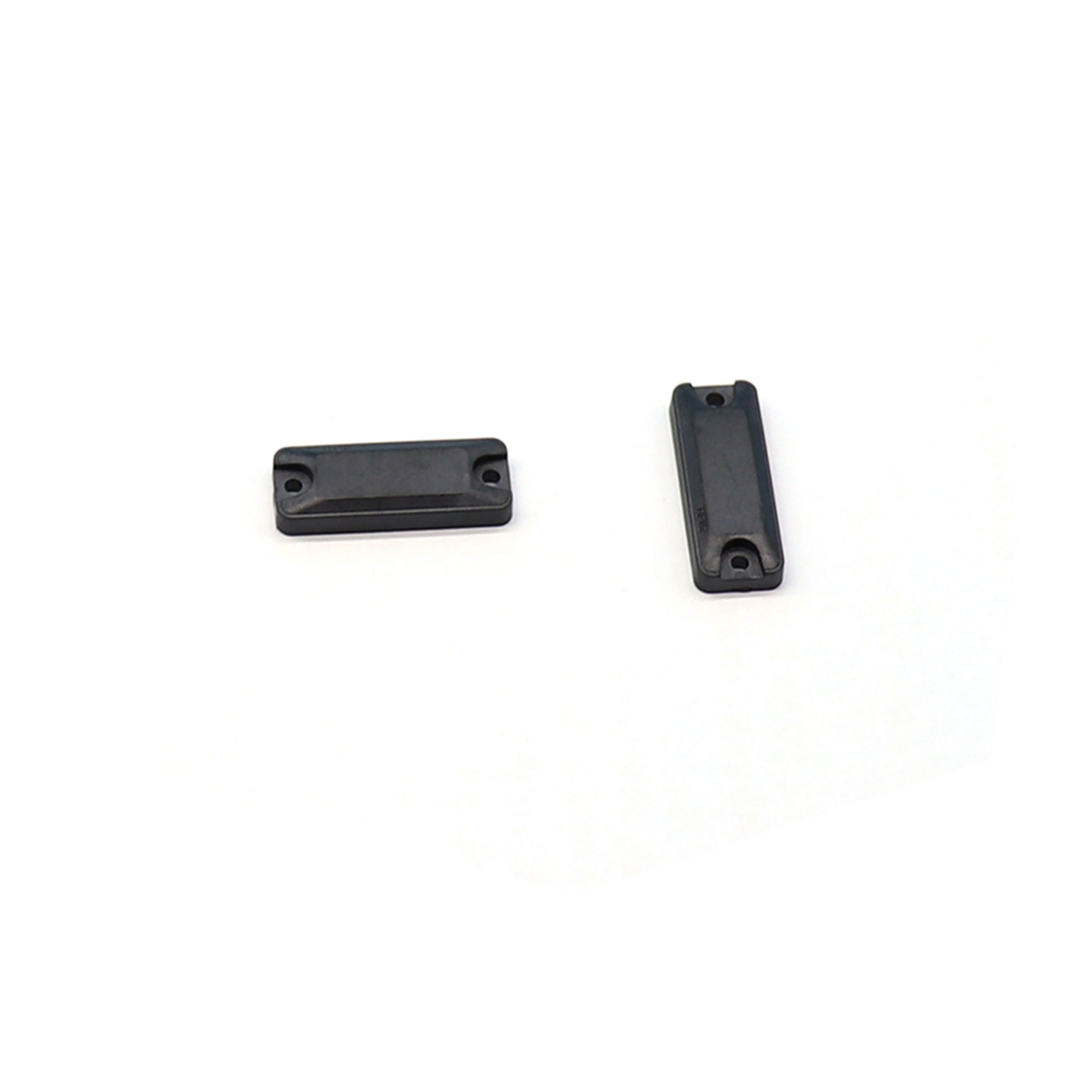
· Basic parameters | |
Model | DO-305 |
Type | UHF Passive RFID Tag |
Frequency | 860~960MHz |
Standards/Protocols | EPC CLASS1 GEN2, ISO 18000-6C |
· Physical parameters | |
Size | 135*21*12mm=5.35*0.83*0.53inch(Customized design) |
Inlay Material | PET+AL |
Outer Material | ABS/Plastic |
· Performance Parameters | |
Memory Size | Up to 512bit |
Chip | Alien Higgs-3/ Alien Higgs-4 |
Operating Mode | R/W |
Reading Distance | 0~30M(Related to reader performance and working environment) |
· Environmental parameters | |
Operating Temp | -20℃~+50℃ |
Storage Temp | -40℃~+100℃ |
· Specific applications | |
Applications | Equipments, vehicles, office supplies, computers, cable,hazardous material identification, etc. |
Understanding ISO18000-6C Gen2 Standard
The ISO18000-6C protocol, also known as EPC Class 1 Gen2, is one of the most widely used global standards for UHF RFID systems.
It supports:
- Long-range reading
- Fast multi-tag recognition
- Anti-collision technology
- High-speed data processing
- Global compatibility
Operating frequencies typically include:
- 860–960 MHz
- 865–868 MHz (Europe)
- 902–928 MHz (North America)
This standard allows RFID tags to communicate efficiently with UHF RFID readers in large-scale waste management systems.
Why Metal Surfaces Are Challenging for RFID
Standard RFID tags often fail on metal surfaces because metal interferes with radio frequency signals.
Problems include:
- Signal reflection
- Frequency detuning
- Reduced reading distance
- Reading instability
This is why ordinary paper RFID labels perform poorly on metal trash bins.
On-metal RFID tags solve this problem using:
- Specialized antenna structures
- Isolation layers
- Anti-metal shielding design
This allows reliable RFID communication even when mounted directly on steel waste containers.
What Is ABS Material?
ABS stands for Acrylonitrile Butadiene Styrene, a durable engineering plastic commonly used in industrial RFID tags.
Advantages of ABS include:
- Strong impact resistance
- Waterproof protection
- UV resistance
- Corrosion resistance
- High mechanical strength
- Outdoor durability
ABS housing protects the RFID chip and antenna from harsh environmental conditions.
Trash management systems are not exactly gentle environments. Between rain, heat, impacts, and heavy handling, RFID tags need to survive conditions that would quickly destroy standard labels.
Main Specifications of ABS RFID On Metal Tags
Specifications vary depending on manufacturer and application requirements.
Typical Specifications Table
| Item | Specification |
|---|---|
| RFID standard | ISO18000-6C EPC Gen2 |
| Frequency | 860–960 MHz |
| Material | ABS engineering plastic |
| Mounting surface | Metal compatible |
| Reading distance | 1–10 meters |
| Chip type | Alien / Impinj / NXP optional |
| Waterproof rating | IP67 / IP68 |
| Operating temperature | -40°C to +85°C |
| Installation method | Screw / rivet / adhesive |
| Memory | EPC + User Memory |
These specifications make the tags suitable for long-term outdoor deployment.
How RFID Smart Trash Management Works
Smart trash management systems use RFID technology to identify and track waste containers automatically.
Typical Workflow
- RFID tag is attached to trash bin
- Waste truck RFID reader scans the tag
- Bin information is uploaded to cloud software
- Collection time and location are recorded
- Data is analyzed for route optimization and billing
This system improves:
- Waste collection efficiency
- Accountability
- Operational transparency
- Asset tracking
Municipalities can manage thousands of waste bins in real time.
Main Advantages of ABS RFID On Metal Tags
1. Reliable Performance on Metal Trash Bins
The biggest advantage is stable RFID performance directly on metal surfaces.
This ensures:
- Consistent reading
- Reduced signal interference
- Better tracking accuracy
Traditional RFID labels often fail in these environments.
2. Long Reading Distance
UHF RFID technology supports reading distances up to:
1–10 meters depending on:
- Reader power
- Antenna type
- Installation environment
This allows:
- Fast waste truck scanning
- Non-contact identification
- Automated bin tracking
Long-range reading improves collection efficiency dramatically.
3. Waterproof and Weather Resistant
Outdoor waste systems face:
- Rain
- Snow
- UV exposure
- Mud
- Chemical exposure
ABS RFID tags with IP67 or IP68 protection provide excellent environmental durability.
4. Strong Impact Resistance
Trash bins experience:
- Rough handling
- Collisions
- Compression
- Transportation stress
ABS housing protects the RFID chip from physical damage.
5. Long Service Life
High-quality RFID on metal tags can operate for:
5–10 years or more
Long-term durability reduces replacement costs significantly.
6. Improved Waste Collection Efficiency
RFID systems help municipalities:
- Optimize collection routes
- Reduce fuel consumption
- Monitor pickup schedules
- Prevent missed collections
Data-driven waste management lowers operational costs while improving service quality.
Main Applications of RFID Smart Trash Tags
1. Municipal Waste Collection
Cities use RFID tags to:
- Track garbage bins
- Monitor collection frequency
- Improve route planning
This enables smarter urban sanitation systems.
2. Pay-As-You-Throw (PAYT) Systems
RFID systems support volume-based or frequency-based billing models.
Residents are charged according to:
- Waste volume
- Pickup frequency
- Recycling participation
This encourages waste reduction and recycling.
3. Recycling Management
RFID tags help track:
- Recycling containers
- Material sorting
- Collection history
This improves recycling efficiency and accountability.
4. Industrial Waste Tracking
Factories and industrial parks use RFID systems for:
- Hazardous waste management
- Asset tracking
- Compliance reporting
RFID improves traceability and operational transparency.
5. Smart Community Waste Systems
Residential communities use smart RFID bins for:
- Automated management
- Resident accountability
- Overflow monitoring
Modern smart cities increasingly integrate RFID into community infrastructure.
Competitor Analysis: RFID vs Barcode Systems
Barcodes are one of the biggest competitors to RFID waste management systems.
Comparison Table
| Feature | RFID | Barcode |
|---|---|---|
| Reading method | Contactless | Line-of-sight |
| Reading speed | Fast | Slower |
| Multi-tag reading | Yes | No |
| Durability | High | Lower |
| Outdoor performance | Excellent | Limited |
| Automation level | High | Medium |
Competitor Analysis Summary
RFID systems provide:
- Better automation
- Faster operation
- Improved durability
- Higher efficiency
Barcodes remain cheaper initially but require:
- Manual scanning
- Cleaner surfaces
- Closer operator interaction
For large smart city projects, RFID is generally the superior long-term solution.
RFID On Metal Tags vs Standard RFID Labels
Comparison Table
| Feature | On Metal Tag | Standard RFID Label |
|---|---|---|
| Metal compatibility | Excellent | Poor |
| Durability | High | Low |
| Waterproof capability | Strong | Limited |
| Outdoor lifespan | Long | Short |
| Cost | Higher | Lower |
Competitor Analysis
Standard RFID labels work well on:
- Cardboard
- Plastic
- Packaging
On-metal tags are necessary for:
- Metal bins
- Industrial containers
- Outdoor infrastructure
Choosing the wrong tag type may completely destroy reading performance.
RFID Chip Competitor Analysis
Different RFID chip brands offer different performance characteristics.
Alien RFID Chips
Advantages:
- Cost-effective
- Widely available
- Stable performance
Impinj RFID Chips
Advantages:
- Excellent sensitivity
- Long reading distance
- Strong anti-collision performance
NXP RFID Chips
Advantages:
- High security
- Strong memory options
- Industrial-grade reliability
The best chip depends on project requirements and budget.
Installation Methods
ABS RFID on metal tags support several installation methods.
Screw Mounting
Advantages:
- Maximum durability
- Strong attachment
- Outdoor reliability
Best for:
- Municipal trash bins
- Industrial containers
Rivet Installation
Advantages:
- Tamper resistance
- Permanent attachment
Industrial Adhesive
Advantages:
- Faster installation
- No drilling required
Best for:
- Lightweight containers
- Indoor systems
Important Factors When Choosing RFID Trash Tags
Before purchasing, buyers should evaluate:
- Reading distance requirements
- Environmental conditions
- Metal compatibility
- Waterproof rating
- Installation method
- RFID chip performance
- Regional frequency compatibility
Selecting the wrong tag may create serious operational issues later.
Future Trends in Smart Waste Management
RFID waste management systems are evolving rapidly alongside smart city technologies.
Future trends include:
- IoT integration
- AI route optimization
- Real-time cloud monitoring
- Smart fill-level sensors
- Carbon emission reduction systems
RFID will continue playing a major role in automated waste infrastructure worldwide.
China vs European vs USA RFID Tag Manufacturers
Manufacturing location affects price and quality.
Chinese Manufacturers
Advantages:
- Competitive pricing
- OEM customization
- Large-scale production
Typical pricing:
USD 0.50–USD 5 per tag
European Manufacturers
Advantages:
- Advanced engineering
- Premium industrial standards
Typical pricing:
USD 3–USD 15 per tag
USA Manufacturers
Advantages:
- Specialized industrial solutions
- Strong technical support
Typical pricing:
USD 2–USD 12 per tag
Many global municipalities choose Chinese RFID suppliers for large-volume projects.
Final Thoughts
The ISO18000-6C Gen2 ABS RFID on metal tag is one of the most important components in modern smart trash management systems.
It combines:
- Long-range UHF RFID communication
- Durable ABS housing
- Reliable metal-surface performance
- Waterproof industrial protection
Compared with barcodes and standard RFID labels, ABS on metal RFID tags provide:
- Better automation
- Higher durability
- Faster data collection
- Improved operational efficiency
For municipalities, recycling centers, industrial parks, and smart city projects, these RFID tags help create more efficient, accountable, and data-driven waste management systems.
As global cities continue investing in smart infrastructure, RFID-enabled trash management solutions will play an increasingly important role in improving sustainability, reducing operational costs, and modernizing urban sanitation networks.

Do RFID is a leading China-based manufacturer with over 15 years of experience. We specialize in customized RFID readers, tags, and cards, delivering high-quality, tailored solutions that meet your unique business needs and drive seamless, efficient identification.