July 16, 2026
Introduction to UHF RFID Nail Tag for Tree Management
Managing thousands or even millions of trees requires accurate identification, reliable data collection, and long-term tracking. Traditional methods such as printed labels, metal plates, and manual records often face challenges including damage, loss, weather exposure, and inefficient maintenance.
The UHF RFID Nail Tag for Tree Management provides a modern digital identification solution by embedding an RFID chip directly into trees, wooden materials, or forestry assets. Based on the ISO18000-6C and EPC Class 1 Gen2 communication protocol, this RFID nail tag enables organizations to create a unique digital identity for each tree and connect physical assets with management databases.
By using an embedded RFID tree tag, forestry companies, urban landscaping departments, botanical gardens, and environmental organizations can improve tree inventory management, maintenance efficiency, and wood traceability.
A complete RFID tree management system usually includes:
- RFID nail tags installed inside trees
- UHF RFID handheld readers
- Mobile data collection applications
- Cloud-based tree management databases
- GIS mapping and maintenance platforms
This combination transforms traditional tree management into a smart and data-driven process.
What Is an RFID Nail Tag for Tree Management?
An RFID nail tag is a small electronic identification device designed to be inserted into tree trunks or wooden objects. Unlike visible labels, RFID nail tags are hidden inside the material, providing long-term protection against environmental damage and unauthorized removal.
The tag contains a unique RFID chip ID that can be read wirelessly using a compatible UHF RFID reader. Once scanned, the system can retrieve detailed information about the tree, including species, planting date, location, health records, and maintenance history.
Basic Working Process
RFID Nail Tag Installation

        ↓

Tree Receives Unique Electronic ID

        ↓

RFID Reader Scans Tag

        ↓

ID Data Connects With Database

        ↓

Tree Information Is Retrieved
This simple process allows every tree to become a digitally managed asset.
ISO18000-6C UHF RFID Nail Tag for Tree Management
Features:
1)Fast, secure installation – ISO18000-6C UHF RFID Nail Tag for Tree Management are easily driven into place, and are nearly impossible to remove.
2)Reliability – high resistance to moisture, thermal fluctuation, vibration, and shock.
3)Recording– ISO18000-6C UHF RFID Nail Tag for Tree Management can Record all information from sapling to towering trees.
4)Tracking– Furniture factory can know the wood from which place is the best choice.
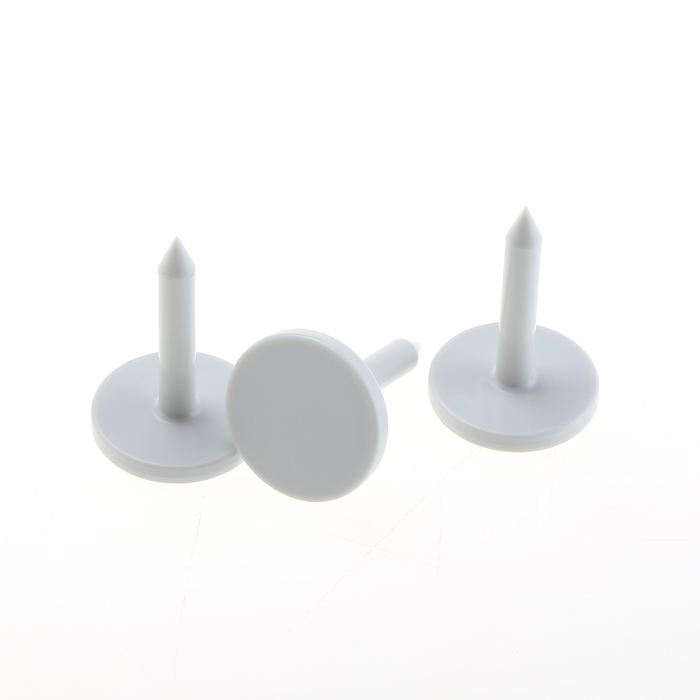

ISO18000-6C UHF RFID Nail Tag for Tree Management of Technical Specification:
| Material | ABS Plastic | |
| Color type | Blue,red ,black, white,yellow,gray, customised | |
| Chip Available | LF chip | TK4100,EM4102,EM4200,T5577,etc |
| HF chip | F08,classic S50,classic S70, nfc 213 215 216 etc | |
| UHF chip | GEN2 ALIEN H3 IMPINJ M4, etc | |
| Frequency | 125KHz(LH),13.56MHz(HF),860-960MHz(UHF) | |
| Protocol | ISO 14443A, ISO15693, ISO 18000-6C, | |
| Dimensions(DxL) | 36*6mm | |
| Reading Distance | 1-10cm(depend on reader) | |
| Packing | 100pcs/OPP bag, 20opp bag/ carton | |
| Working temperature | -40℃ to +85℃ | |
| Application range | Nail into all kinds of wooden items, and waterproof and anti chemical etching – Item identificaty(Tree,garbage can,furniture wood,etc) – Security – Logistic & inventory -People can use it to manage non-metal articles packages, parks,forests, wooden furnitures etc. | |
| Installation | 1. Make a hole in the wood or tree(diameter 36*6mm) 2. Insert Nex-211 nail tag with a rubber plastic hammer 3.Avoid drilling nail tag in the wood or tree directly, which will damage nail tag | |
Product shows

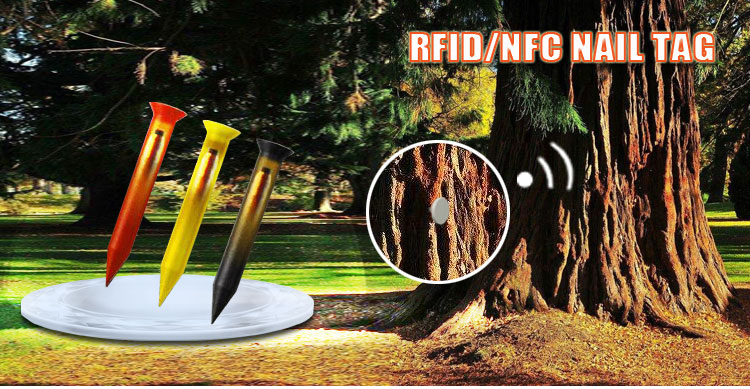


Key Features of ISO18000-6C UHF RFID Nail Tag
1. Permanent Tree Identification
One of the biggest advantages of an RFID nail tag is its ability to provide a permanent identity for trees.
Unlike traditional signs attached outside the tree, embedded RFID tags remain protected inside the trunk. They are less affected by:
- Rain and humidity
- Sunlight exposure
- Physical impact
- Human interference
- Long-term outdoor conditions
This makes RFID nail tags suitable for long lifecycle applications such as forests, parks, and urban green spaces.
2. ISO18000-6C UHF RFID Technology
The tag uses the ISO18000-6C standard, also known as EPC Class 1 Gen2, which is widely adopted in global UHF RFID applications.
Main advantages include:
| Feature | Benefit |
|---|---|
| Standardized communication protocol | Compatible with many RFID readers |
| Fast identification | Suitable for large-scale inventory |
| Unique electronic ID | Prevents duplicate identification |
| Passive RFID technology | No battery replacement required |
| Long service life | Designed for years of outdoor use |
3. Hidden Installation and Anti-Tampering Design
Traditional tree labels are usually installed on the surface, making them easy to remove or replace.
RFID nail tags solve this problem by being inserted into the tree trunk. After installation, the tag becomes difficult to detect visually and difficult to remove without damaging the tree.
This provides additional security for:
- Valuable trees
- Protected forests
- Rare species management
- Commercial timber tracking
RFID Nail Tag vs Traditional Tree Identification Methods
Different tree identification methods have different levels of reliability. RFID technology provides advantages in long-term management and automation.
| Comparison | RFID Nail Tag | Metal Tree Plate | QR Code Label | Manual Records |
|---|---|---|---|---|
| Digital Identification | Yes | No | Limited | No |
| Hidden Installation | Yes | No | No | No |
| Weather Resistance | Excellent | Medium | Low | N/A |
| Automated Data Collection | Yes | No | Limited | No |
| Risk of Loss | Very Low | Medium | High | High |
| Database Integration | Excellent | Limited | Possible | Difficult |
For organizations managing large numbers of trees, RFID provides a more scalable solution compared with traditional identification methods.
Applications of RFID Tree Tags
Urban Tree Management
Cities often manage thousands of roadside trees, parks, and public green areas. Manual inspections can be time-consuming and difficult to maintain accurately.
With RFID tree tags, municipal departments can quickly access:
- Tree species information
- Planting records
- Maintenance schedules
- Inspection history
- Disease treatment records
Workers can scan a tree using a handheld RFID reader and instantly update information through a mobile application.
Forest Resource Management
Forestry organizations need reliable methods to monitor large forest areas. RFID nail tags help create accurate digital inventories.
Applications include:
- Forest asset registration
- Tree growth monitoring
- Conservation projects
- Protected forest management
- Environmental research
Each tree can have a unique identity throughout its lifecycle.
Wood Traceability and Supply Chain Management
RFID technology is increasingly used for timber traceability. By attaching RFID tags during forestry operations, companies can track wood materials from origin to final products.
A typical process:
Forest Source

↓

Tree Identification

↓

Harvest Record

↓

Transportation Tracking

↓

Processing Factory

↓

Finished Wood Product
This improves transparency and helps verify responsible sourcing practices.
How to Install an RFID Nail Tag into Trees
Proper installation is important to ensure stable performance and long-term durability. RFID nail tags are usually installed by creating a small hole in the tree trunk and inserting the tag securely inside.
Standard Installation Process
Step 1: Select Installation Location
The installation area should be:
- Healthy tree tissue
- Away from damaged bark
- Easy for future RFID scanning
- Suitable for the size of the tag
The recommended position depends on tree species, trunk diameter, and management requirements.
Step 2: Drill an Installation Hole
A small hole is drilled into the tree trunk using professional tools.
Important considerations:
- The hole diameter should match the RFID nail tag size
- Avoid unnecessary damage to the tree
- Installation depth should provide sufficient protection
Step 3: Insert the RFID Nail Tag
After drilling, the RFID tag is inserted into the hole and fixed securely.
Once installed, the tag becomes part of the tree management system and can remain in place throughout the tree’s lifecycle.
Step 4: Register Tree Information
After installation, the RFID tag ID should be linked with a database containing tree information.
Example database record:
| Data Field | Example Information |
|---|---|
| RFID ID | 300833B2DDD9014000000001 |
| Tree Species | Maple Tree |
| Location | City Park Area A |
| Planting Year | 2018 |
| Height | 12 meters |
| Health Status | Good |
| Last Inspection | March 2026 |
This creates a complete digital profile for each tree.
RFID Nail Tag Compared with QR Code Tree Labels
QR codes are widely used for simple identification, but they have limitations in outdoor environments. RFID technology provides additional benefits for professional tree management applications.
| Feature | UHF RFID Nail Tag | QR Code Label |
|---|---|---|
| Reading Method | Wireless scanning | Visual scanning |
| Need Direct Visibility | No | Yes |
| Works in Poor Lighting | Yes | Limited |
| Bulk Inventory | Possible | Difficult |
| Hidden Installation | Yes | No |
| Durability | Long-term | Depends on label material |
| Data Security | Higher | Lower |
| Professional Forestry Use | Excellent | Basic |
QR codes can be useful for small gardens or educational projects, while RFID nail tags are more suitable for large-scale professional management.
Benefits of Using RFID Tree Management Systems
Improve Inventory Efficiency
Traditional tree surveys often require workers to manually record information. This process is slow and can introduce human errors.
With RFID technology:
- Trees can be identified instantly
- Records can be updated digitally
- Inspection time can be reduced
- Data accuracy can be improved
For large parks or forests, this significantly improves operational efficiency.
Support Smart City Development
Modern cities are increasingly adopting digital management systems for public resources.
RFID tree identification can connect with:
- Smart city platforms
- GIS mapping systems
- Environmental monitoring systems
- Municipal asset management software
Urban trees become measurable digital assets instead of unmanaged resources.
Reduce Long-Term Management Costs
Although RFID installation requires initial investment, the long service life and improved efficiency can reduce operational costs.
Cost-saving benefits include:
- Fewer manual inspections
- Reduced record errors
- Faster maintenance planning
- Better resource allocation
RFID Tree Tag System Architecture
A complete tree management solution usually contains several layers.
Hardware Layer
Includes:
- RFID nail tags
- UHF RFID handheld readers
- Mobile devices
- GPS positioning equipment
The hardware collects identification data from trees.
Data Collection Layer
The RFID reader communicates with software applications to transfer information.
Typical functions:
- Scan RFID ID
- Capture location
- Upload inspection data
- Add photos
- Record maintenance activities
Management Software Layer
The database stores and manages tree information.
Common features include:
| Function | Description |
|---|---|
| Tree Database | Stores all tree records |
| GIS Map | Shows tree locations |
| Maintenance Management | Tracks service history |
| Inspection Reports | Generates management reports |
| User Management | Controls system access |
Factors to Consider When Choosing an RFID Nail Tag
Selecting the correct RFID nail tag depends on application requirements.
1. RFID Chip Performance
Different chips provide different levels of sensitivity and memory capacity.
Important factors:
- Read reliability
- Memory size
- Global compatibility
- Environmental performance
2. Tree Environment
Trees are challenging RFID environments because moisture and biological materials can affect signal performance.
Testing should consider:
- Tree species
- Trunk thickness
- Installation position
- Reader type
A professional field test is recommended before large-scale deployment.
3. Reader Compatibility
The RFID tag should match the reader equipment.
Common reader options include:
- Handheld UHF RFID scanners
- Fixed RFID readers
- Mobile RFID devices
The system should be tested as a complete solution rather than evaluating the tag alone.
RFID Nail Tag Applications in Different Industries
| Industry | Application |
|---|---|
| Municipal Landscaping | Urban tree inventory |
| Forestry Companies | Forest resource tracking |
| Botanical Gardens | Plant identification |
| Research Institutions | Tree growth studies |
| Timber Industry | Wood traceability |
| Environmental Organizations | Conservation projects |
| Parks and Resorts | Landscape management |
The flexibility of RFID technology allows the same identification concept to be adapted for different industries.
Why Choose an Embedded RFID Tag Instead of Surface Labels?
Surface labels are convenient but often have limitations in long-term outdoor environments.
| Factor | Embedded RFID Tag | Surface Label |
|---|---|---|
| Installation Location | Inside tree | Outside tree |
| Protection Level | High | Medium |
| Visual Impact | Invisible | Visible |
| Replacement Frequency | Low | Higher |
| Long-Term Tracking | Excellent | Limited |
For permanent asset identification, embedded RFID technology provides stronger reliability.
Frequently Asked Questions About RFID Nail Tags
What is an RFID nail tag used for?
An RFID nail tag is used to assign a unique digital identity to trees, wooden materials, and forestry assets. It helps organizations track location, maintenance records, ownership information, and lifecycle data.
How long can an RFID tree tag last?
A high-quality RFID nail tag can typically operate for many years because it is a passive RFID device without a battery. Its lifespan mainly depends on housing material, installation quality, and environmental conditions.
Can RFID nail tags be removed after installation?
RFID nail tags are designed for secure installation. Because they are embedded inside the tree, unauthorized removal is difficult compared with external labels or signs.
Can RFID tags work on all tree types?
Most tree types can be managed with RFID tags, but performance may vary depending on trunk structure, moisture content, and installation conditions. Field testing is recommended for large projects.
Do RFID nail tags require batteries?
No. Most UHF RFID nail tags are passive devices and receive energy from RFID readers during scanning. This eliminates battery replacement requirements.
Conclusion: Building a Smarter Tree Management System with RFID Technology
The UHF RFID Nail Tag for Tree Management provides a reliable solution for organizations that need long-term tree identification, asset tracking, and forestry data management.
Compared with traditional labels and manual records, RFID nail tags offer:
- Permanent digital identification
- Hidden and secure installation
- Better outdoor durability
- Easy database integration
- Improved management efficiency
Whether used for urban landscaping, forest management, or wood traceability, ISO18000-6C RFID nail tags help transform trees into connected digital assets.
By combining RFID hardware, mobile applications, GIS technology, and cloud databases, organizations can build a smarter and more sustainable tree management system.