July 16, 2026
| Product Type: | PVC RFID signal blocking sleeves for credit card, passport |
| Material: | PVC+ PET aluminum |
| Blocking Frequency | Blocking RFID 13.56 MHz, anti-magnetic |
| Feature: | Tear-resistance, waterproof |
| Size:
| For credit card: 62*92mm (vertical type) For Passport: 103*135mm (vertical type) |
| Printing: | Custom LOGO Printing, Silk screen printing |
| Package: | Standard package:20pcs/opp bag, 4800pcs/ctn, G.W/ctn: 20KG, Carton Size: 46*32*24CM |
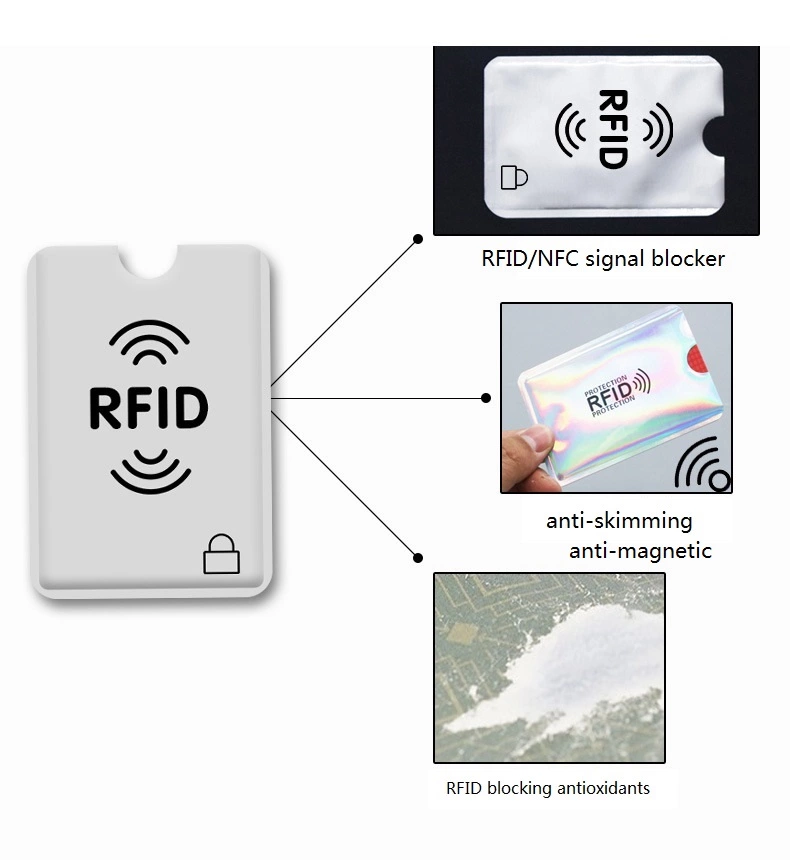
* Advanced RFID secure sleeve designed to protect credit cards, money cards, identification cards from electronic fraud or theft; RFID shields are a superb debit card protector, RFID blocking to provide superior travel security
* Made from special RFID blocking material, this credit cards holder is thin and lightweight; certified secure sleeves for credit cards protect against scanning of digital and electronic chips by thieves, tear- and water-resistant
* RFID sleeve with electronic armor is the identity theft protection for your bank cards; this credit card and ID holder prevents electronic access to your cards; valuable credit card protection, an ID card protector RFID to block scanning and skimming
* Credit card protection sleeve designed with color coding system to find each card easily and quickly; RFID credit card holder have different colors for superior convenience; the special high quality rigid aluminum foil coating of these tiny slim RFID blocking wallets ensures you will never be a victim of high-tech crime
* RFID credit card protector sleeves protect your drivers license, subway or green card, hotel keys and all family travel documents; you don’t need to carry an RFID blocking wallet with you, just several of these lightweight credit card protective sleeves

In today’s contactless payment era, millions of people use RFID-enabled credit cards, debit cards, access cards, transportation cards, and NFC payment devices every day. While contactless technology offers convenience and speed, it also raises concerns about unauthorized scanning, digital theft, and electronic pickpocketing.
As a result, PVC Blank NFC Signal Blocking Card Sleeves have become increasingly popular among consumers, financial institutions, corporations, and security-conscious travelers. These lightweight protective sleeves are designed to shield RFID- and NFC-enabled cards from unauthorized radio-frequency scanning while remaining affordable and easy to use.
Whether used for bank cards, employee badges, hotel key cards, or identification documents, NFC signal-blocking sleeves provide a simple yet effective layer of protection against modern electronic threats.
This comprehensive guide explains everything you need to know about PVC NFC signal-blocking card sleeves, including their structure, working principles, benefits, applications, and comparisons with competing RFID protection products.
What Is a PVC Blank NFC Signal Blocking Card Sleeve?
A PVC Blank NFC Signal Blocking Card Sleeve is a protective card holder designed to prevent RFID and NFC signals from reaching contactless smart cards stored inside.
The sleeve is typically manufactured using:
- PVC outer layer
- Aluminum shielding layer
- Metalized film
- Conductive shielding materials
- Protective laminated coating
The primary purpose of the sleeve is to create an electromagnetic barrier that blocks radio frequency communication between RFID/NFC cards and external readers.
Common protected cards include:
- Credit cards
- Debit cards
- ATM cards
- Contactless payment cards
- Employee ID cards
- Access control cards
- Hotel key cards
- Transportation cards
- Government identification cards
The sleeve works without batteries, software, or maintenance.
Why RFID and NFC Protection Is Important
Modern payment cards increasingly utilize contactless technology.
Popular systems include:
- Visa PayWave
- Mastercard Contactless
- American Express Contactless
- NFC mobile payments
- Smart access cards
These cards communicate wirelessly using radio frequencies.
While secure under normal circumstances, cards may be compromised by unauthorized readers attempting to detect or communicate with them without the owner’s knowledge.
Potential risks include:
- Unauthorized card scanning
- Identity theft attempts
- Data harvesting
- Corporate badge cloning attempts
- Privacy concerns
Although modern payment systems employ strong encryption, many consumers still prefer additional physical protection.
What Are RFID and NFC Technologies?
RFID Technology
RFID (Radio Frequency Identification) uses radio waves to identify objects wirelessly.
Common RFID frequencies include:
- Low Frequency (125 kHz)
- High Frequency (13.56 MHz)
- Ultra High Frequency (860-960 MHz)
NFC Technology
NFC (Near Field Communication) is a subset of RFID technology operating at:
13.56 MHz
NFC is commonly used for:
- Contactless payments
- Smartphone communication
- Access control
- Smart cards
Both technologies rely on radio-frequency communication, making them susceptible to unauthorized scanning attempts.
How an NFC Signal Blocking Sleeve Works
The protection mechanism is based on electromagnetic shielding principles.
Step 1: RFID Reader Generates a Radio Signal
An RFID reader emits radio frequency energy.
This energy attempts to communicate with nearby RFID or NFC cards.
Step 2: Shielding Material Creates a Barrier
The metallic layer embedded within the card sleeve acts as a conductive shield.
The shield reflects and absorbs radio frequency energy.
Step 3: Signal Is Blocked
The RFID signal cannot penetrate the shielding material.
As a result:
- The card remains inactive.
- No communication occurs.
- No data is transmitted.
Step 4: Card Remains Protected
The card cannot be scanned while inside the sleeve.
Protection remains active at all times without requiring user intervention.
The Science Behind RFID Blocking Technology
Faraday Cage Principle
Most RFID-blocking sleeves operate using a principle known as a Faraday cage.
A Faraday cage is an enclosure made from conductive materials that blocks external electromagnetic fields.
When radio waves encounter the conductive layer:
- Energy is reflected
- Energy is dispersed
- Communication signals are interrupted
This prevents the RFID chip from receiving sufficient power to operate.
Electromagnetic Isolation
The conductive layer effectively isolates the card from surrounding radio frequency environments.
This simple physical barrier provides highly reliable protection.
Structure of a PVC RFID Blocking Card Sleeve
PVC Outer Layer
PVC provides:
- Durability
- Flexibility
- Water resistance
- Low manufacturing cost
Aluminum Shielding Layer
The aluminum layer serves as the primary RF blocking component.
Functions include:
- Signal reflection
- Electromagnetic shielding
- RFID protection
Laminated Protective Film
The protective coating improves:
- Wear resistance
- Moisture resistance
- Product lifespan
Internal Card Pocket
The card compartment securely holds:
- Payment cards
- Identification cards
- NFC credentials
Key Features of PVC NFC Blocking Card Sleeves
RFID Protection
Blocks most common RFID frequencies.
NFC Protection
Prevents unauthorized NFC communication.
Lightweight Design
The sleeve adds minimal bulk to wallets and cardholders.
No Battery Required
Protection is entirely passive.
Reusable
The sleeve can be used repeatedly for years.
Printable Surface
Blank PVC sleeves allow:
- Custom branding
- Logo printing
- Promotional graphics
- Corporate identification
Applications of NFC Blocking Card Sleeves
Credit Card Protection
One of the most common uses.
Consumers protect:
- Visa cards
- Mastercard cards
- American Express cards
Debit Card Security
Helps safeguard banking credentials.
Travel Protection
Travelers often carry multiple contactless cards.
Blocking sleeves provide additional peace of mind.
Corporate Security
Companies use RFID-blocking sleeves for:
- Employee ID cards
- Building access cards
- Security credentials
Government Identification
Many government-issued cards contain RFID chips.
Examples include:
- National IDs
- Residence permits
- Smart licenses
Hotel Key Cards
Hotels may issue RFID-enabled room access cards.
Transportation Cards
Used with:
- Metro cards
- Transit cards
- Smart travel cards
Benefits of Using RFID Blocking Sleeves
Enhanced Privacy
Prevents unwanted card detection.
Improved Security
Adds a physical layer of protection.
Affordable Solution
Significantly cheaper than many electronic security devices.
Easy to Use
No configuration required.
Universal Compatibility
Works with most RFID and NFC cards.
Portable Design
Fits easily into wallets and purses.
PVC RFID Blocking Sleeves vs RFID Blocking Wallets
Many consumers compare card sleeves and RFID-blocking wallets.
| Feature | RFID Sleeve | RFID Wallet |
|---|---|---|
| Cost | Lower | Higher |
| Portability | Excellent | Good |
| Card Protection | Excellent | Excellent |
| Bulk | Minimal | Greater |
| Custom Branding | Easier | More Limited |
Winner
For cost-effective protection, RFID sleeves often provide better value.
RFID Blocking Sleeves vs RFID Blocking Cards
RFID blocking cards are another popular solution.
RFID Blocking Card
A special card placed inside a wallet.
Advantages:
- No individual sleeves required
- Easy deployment
Limitations:
- Protection effectiveness varies
- Positioning matters
RFID Blocking Sleeve
Advantages:
- Direct card protection
- Consistent performance
Winner
Individual sleeves generally offer more reliable shielding.
RFID Blocking Sleeves vs Metal Card Holders
Metal wallets naturally block RFID signals.
| Feature | RFID Sleeve | Metal Holder |
|---|---|---|
| Weight | Light | Heavier |
| Cost | Lower | Higher |
| Flexibility | Better | Limited |
| Capacity | Individual Cards | Multiple Cards |
Winner
For simplicity and affordability, sleeves remain highly attractive.
RFID Blocking Sleeves vs Digital Security Apps
Some consumers rely solely on banking applications.
Digital Security Benefits
- Transaction monitoring
- Fraud alerts
- Account control
Limitations
Apps do not physically block RF signals.
Winner
The best approach combines both physical and digital protection.
Custom Branding Opportunities
PVC blank card sleeves are widely used for promotional purposes.
Bank Marketing
Banks distribute branded RFID-blocking sleeves to customers.
Corporate Gifts
Businesses use custom sleeves as promotional products.
Event Giveaways
Popular for:
- Trade shows
- Conferences
- Security awareness campaigns
Travel Industry Promotions
Airlines and travel agencies often provide branded sleeves.
Factors to Consider When Choosing an RFID Blocking Sleeve
Shielding Effectiveness
Verify support for:
- 13.56 MHz NFC
- Common RFID frequencies
Material Quality
Look for:
- Durable PVC
- High-quality metal shielding
Printing Requirements
Choose suppliers offering:
- Full-color printing
- Custom logos
- Variable data printing
Durability
Ensure long-term resistance to:
- Wear
- Moisture
- Folding
Future Trends in RFID Protection Products
The market continues evolving due to increasing contactless payment adoption.
Emerging trends include:
Eco-Friendly Materials
Manufacturers are introducing recyclable shielding materials.
Smart Security Accessories
Integration with digital identity systems.
Premium Custom Designs
More brands are using RFID sleeves as marketing tools.
Increased Consumer Awareness
Growing concerns about privacy continue driving demand.
Corporate Security Programs
Organizations increasingly protect employee access credentials.
Conclusion
PVC Blank NFC Signal Blocking Card Sleeves provide a simple, affordable, and highly effective solution for protecting contactless bank cards, identification cards, access credentials, and NFC-enabled smart cards from unauthorized radio frequency scanning. By utilizing conductive shielding materials and Faraday cage principles, these sleeves block RFID and NFC signals without requiring batteries, software, or maintenance.
Compared with RFID-blocking wallets, metal card holders, blocking cards, and purely digital security solutions, PVC RFID-blocking sleeves offer an excellent balance of portability, affordability, convenience, and protection. As contactless payment technologies continue expanding worldwide, these anti-RFID card holders will remain an essential security accessory for consumers, travelers, businesses, and organizations seeking enhanced privacy and peace of mind.