November 3, 2026
RFID Nail Tag is a compact identification tag designed to be installed directly into wood, trees and other suitable non-metallic objects. By combining an RFID inlay with a nail-style ABS housing, it provides a practical way to assign a unique electronic identity to physical assets that are difficult to label with conventional stickers or hanging tags.
Our RFID nail tags are available with LF, HF and UHF RFID technologies, allowing customers to select a suitable frequency, chip and reading method according to the application. Typical uses include tree identification, forestry management, timber tracking, furniture production, waste container identification, logistics and inventory management.
With a compact 36 × 6 mm design, customizable colors and operating temperatures from -40°C to +85°C, the tag can be configured for different identification projects and environmental conditions.
What Is an RFID Nail Tag?
An RFID nail tag is an embedded RFID identification tag with a nail-shaped structure. Instead of being attached to the surface of an object with adhesive, it is installed into a pre-drilled hole in wood or another compatible material.
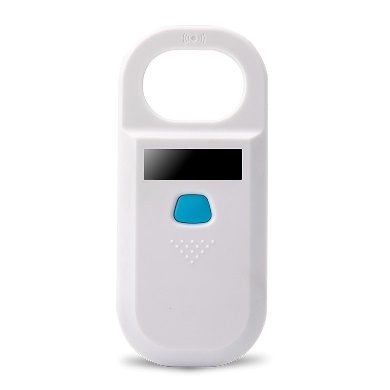
Once installed, the RFID tag can be read using a compatible RFID reader. The reader captures the tag’s unique identification information, which can then be associated with asset records in a database or management system.
This installation method is particularly useful when labels may become dirty, wet, scratched or detached during long-term use. For applications such as tree identification and wood traceability, an embedded tag also provides a more permanent identification method than a conventional adhesive label.
Features
1)Fast, secure installation – RFID Nail tags are easily driven into place, and are nearly impossible to remove.
2)Reliability – high resistance to moisture, thermal fluctuation, vibration, and shock.
3)Recording– RFID Nail Tag can Record all information from sapling to towering trees.
4)Tracking– Furniture factory can know the wood from which place is the best choice.
RFID Nail Tag of Technical Specification
| Material | ABS Plastic | |
| Color type | Blue,red ,black, white,yellow,gray, customised | |
| Chip Available | LF chip | TK4100,EM4102,EM4200,T5577,etc |
| HF chip | F08,classic S50,classic S70, nfc 213 215 216 etc | |
| UHF chip | GEN2 ALIEN H3 IMPINJ M4, etc | |
| Frequency | 125KHz(LH),13.56MHz(HF),860-960MHz(UHF) | |
| Protocol | ISO 14443A, ISO15693, ISO 18000-6C, | |
| Dimensions(DxL) | 36*6mm | |
| Reading Distance | 1-10cm(depend on reader) | |
| Packing | 100pcs/OPP bag, 20opp bag/ carton | |
| Working temperature | -40℃ to +85℃ | |
| Application range | Nail into all kinds of wooden items, and waterproof and anti chemical etching – Item identificaty(Tree,garbage can,furniture wood,etc) – Security – Logistic & inventory -People can use it to manage non-metal articles packages, parks,forests, wooden furnitures etc. | |
| Installation | 1. Make a hole in the wood or tree(diameter 36*6mm) 2. Insert Nex-211 nail tag with a rubber plastic hammer 3.Avoid drilling nail tag in the wood or tree directly, which will damage nail tag | |
Product shows

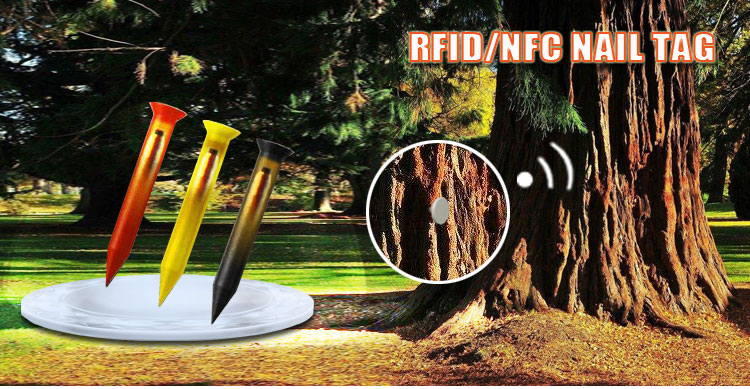


LF vs. HF vs. UHF RFID Nail Tags
Choosing the correct RFID frequency is one of the most important decisions when specifying an RFID nail tag. The three main options have different operating characteristics.
| RFID Type | Frequency | Typical Chips | Typical Applications | Main Consideration |
|---|---|---|---|---|
| LF RFID | 125 kHz | TK4100, EM4102, EM4200, T5577 | Animal/tree identification, basic asset identification | Short-range identification |
| HF RFID | 13.56 MHz | F08, S50, S70, NTAG213/215/216 | NFC-related applications, asset identification, close-range scanning | Requires close reader interaction |
| UHF RFID | 860–960 MHz | Alien H3, Impinj M4, Gen2 | Logistics, inventory and faster identification | Reader and environment strongly affect range |
LF and HF tags are often considered when the user wants controlled, relatively close-range identification. UHF can be considered when the application requires faster scanning or the ability to read tags from a greater distance.
There is no universal RFID frequency that is best for every application. The appropriate option depends on the reader, required reading distance, tag orientation, installation material and data-management system.
Which RFID Chip Should You Choose?
The RFID chip determines how the tag communicates with the reader and what type of system it can work with.
LF RFID Chips
Common LF options include TK4100, EM4102, EM4200 and T5577. These chips can be considered for basic identification applications where close-range reading is sufficient.
LF RFID is useful when the project already uses 125 kHz readers and requires a compatible embedded tag rather than a long-range inventory solution.
HF RFID Chips
HF options include F08, MIFARE Classic S50, MIFARE Classic S70, NTAG213, NTAG215 and NTAG216.
HF technology operates at 13.56 MHz and is widely used for close-range identification and NFC-related applications. The exact chip should be selected according to the reader and software system being used.
UHF RFID Chips
UHF options can include Alien H3, Impinj M4 and other EPC Gen2-compatible chips.
UHF is commonly considered for logistics, inventory and asset identification applications where multiple tags may need to be scanned efficiently.
If you are unsure which chip is appropriate, provide the RFID reader model, required reading distance, target material and intended application. These details allow the tag specification to be matched to the project.
RFID Nail Tag for Tree Identification
Trees can be difficult to identify and manage using conventional paper labels or surface stickers. An RFID tree tag provides a machine-readable identification method that can be associated with a tree record in a digital management system.
For example, a forestry organization may assign an RFID ID to each tree and connect that ID with information such as:
- Tree identification number
- Species
- Planting date
- Location
- Growth records
- Inspection history
- Maintenance records
- Harvest or management status
The RFID tag itself does not need to contain the complete tree record. Instead, its unique identifier can act as a link to information stored in a database or forestry management platform.
This approach can make field identification more efficient because workers can scan the tag and retrieve the corresponding digital record.
RFID Tags for Wood and Timber Tracking
RFID nail tags can also be used to identify wood products and timber-related assets throughout different stages of processing.
A manufacturer may associate a tag ID with information such as material source, batch number, processing date, production line or finished-product information.
For furniture manufacturers, this can provide an electronic identification point for selected wooden components or products. For timber-related operations, RFID can help connect physical materials with digital records.
However, RFID identification is only one part of a traceability system. The tag, reader, software and database need to work together to create a complete tracking workflow.
RFID Nail Tags for Furniture Manufacturing
Furniture manufacturers often handle large quantities of wooden components during cutting, assembly, storage and shipment.
A nail-style RFID tag can provide a compact identification method for suitable wooden items.
For example, a furniture factory could use RFID identification to associate a wooden component with:
| Information | Example |
|---|---|
| Product ID | FUR-2026-00125 |
| Material Type | Oak |
| Production Batch | B260924 |
| Production Date | September 2026 |
| Processing Line | Line 03 |
| Quality Status | Inspected |
| Warehouse Location | A-12-04 |
The actual data is stored in the management system, while the RFID tag provides the physical identification link.
RFID Nail Tags for Waste Containers and Bins
RFID nail tags can also be used for suitable plastic or wooden waste containers, bins and other assets where a permanent identification point is useful.
An RFID ID can be associated with information such as container number, location, service history, inspection records and maintenance status.
For waste-management operations, RFID can help distinguish individual containers and improve asset records without relying solely on printed labels.
Before selecting a tag, the container material and installation method should be evaluated to ensure that the RFID system performs reliably in the actual environment.
RFID Nail Tag vs. Traditional Labels
Different identification methods have different advantages. RFID nail tags are most useful when the project requires embedded identification rather than a simple visual label.
| Identification Method | Embedded Installation | Machine Readable | Requires Line of Sight | Suitable for Long-Term Tracking |
|---|---|---|---|---|
| Printed Label | No | No | Yes | Limited |
| Adhesive Barcode | No | Yes | Usually yes | Depends on surface |
| Hanging Tag | No | Sometimes | Depends on technology | Depends on environment |
| RFID Sticker | No | Yes | No | Depends on surface |
| RFID Nail Tag | Yes | Yes | No | Suitable for selected applications |
A printed label remains useful when low cost and human-readable information are the primary requirements. An RFID nail tag becomes more attractive when automated identification and embedded installation are important.
RFID Nail Tag vs. RFID Sticker
RFID stickers are convenient because they can be attached quickly to a clean surface. However, they depend on adhesive performance and surface conditions.
RFID nail tags use a different installation approach.
| Feature | RFID Nail Tag | RFID Sticker |
|---|---|---|
| Installation | Insert into prepared hole | Stick onto surface |
| Adhesive Required | No | Yes |
| Appearance | Mostly concealed after installation | Visible on surface |
| Wood Applications | Well suited | Suitable for clean, flat surfaces |
| Replacement | Requires physical removal | Usually easier |
| Long-Term Embedded Use | Suitable | Less suitable in some environments |
For wooden products, trees or other applications where an embedded identification point is preferred, the nail format can offer a practical alternative to surface-mounted RFID labels.
How to Install an RFID Nail Tag
Correct installation is important for both physical protection and RFID performance.
Step 1: Prepare the Hole
Create a suitable hole in the wood or tree using the required installation dimensions. The original product specification identifies the tag format as 36 × 6 mm.
The actual hole size and depth should be confirmed through a sample installation because material density and installation equipment can affect the final fit.
Step 2: Position the RFID Nail Tag
Place the RFID nail tag into the prepared hole. Make sure the tag is correctly aligned and positioned before applying force.
Step 3: Use a Rubber or Plastic Hammer
Gently drive the tag into position using a rubber or plastic hammer.
Avoid using a drill or drilling directly through the RFID tag. Direct drilling can damage the housing or internal RFID component.
Step 4: Test the RFID Reading
After installation, scan the tag using the intended RFID reader. Testing after installation helps confirm that the tag can be read correctly in the actual material and installation position.
How to Improve RFID Nail Tag Reading Performance
RFID reading distance is influenced by more than the tag specification. Reader power, antenna design, chip type, tag orientation and surrounding material can all affect performance.
For best results:
- Select the RFID frequency according to the existing reader system.
- Test the tag inside the actual target material.
- Confirm the installation depth before mass production.
- Keep the reader and tag orientation consistent where possible.
- Test multiple samples rather than relying on a single prototype.
- Consider environmental conditions such as moisture, temperature and mechanical impact.
The listed reading distance of 1–10 cm should therefore be treated as an application-dependent reference rather than a guaranteed distance for every RFID configuration.
Custom RFID Nail Tag Manufacturing
Different projects may require different RFID chips, colors or identification systems. We can support customization based on the project requirements.
Available customization options can include:
- LF, HF or UHF RFID technology
- Different RFID chip models
- Custom colors
- Custom identification requirements
- Packaging quantities
- OEM/ODM project requirements
For custom RFID nail tags, it is useful to provide the following information when requesting a quotation:
| Project Requirement | Information to Provide |
|---|---|
| Application | Tree, timber, furniture, logistics, waste container, etc. |
| RFID Frequency | LF, HF or UHF |
| Reader | Existing reader model, if available |
| Reading Distance | Required scanning distance |
| Material | Wood, plastic or other material |
| Installation | Hole size, depth and installation method |
| Color | Standard or custom color |
| Quantity | Trial order or estimated annual quantity |
| Environment | Indoor, outdoor, moisture, temperature, chemicals |
This information helps determine a suitable RFID nail tag configuration instead of selecting a chip based only on nominal frequency.
Why Work With an RFID Nail Tag Factory?
Buying directly from an RFID nail tag manufacturer can be useful for projects that require specific chip configurations, colors, packaging or OEM requirements.
A manufacturing partner can help coordinate the RFID inlay, housing, assembly and quality-control process as one product.
For larger projects, direct communication with the factory can also simplify sample testing and specification adjustments before mass production.
The most important step is to validate the complete RFID solution with your actual reader and target material. A successful laboratory test does not always guarantee identical performance after installation in a real environment.
RFID Nail Tag Quality and Application Testing
Before production, samples can be tested for:
- RFID reading performance
- Chip compatibility
- Physical dimensions
- Housing quality
- Installation fit
- Temperature requirements
- Environmental exposure
- Reader compatibility
For outdoor forestry or timber applications, testing should reflect the actual environment as closely as possible.
For example, if the final tags will be installed in outdoor wooden assets, testing only loose tags in an indoor environment may not provide enough information. Installing samples into the actual material and then testing them with the intended reader gives more useful results.
Frequently Asked Questions
What is an RFID nail tag used for?
An RFID nail tag is used to provide machine-readable identification for suitable wooden and non-metallic assets. Common applications include tree identification, forestry management, timber tracking, furniture manufacturing, waste containers, logistics and inventory management.
What materials can RFID nail tags be installed into?
They are primarily designed for suitable wood and other compatible non-metallic materials. The actual installation method should be tested according to the material density, thickness and environmental conditions.
What RFID frequencies are available?
The available options include 125 kHz LF, 13.56 MHz HF and 860–960 MHz UHF. Different chip options are available within these frequency ranges.
How far can an RFID nail tag be read?
The listed reference reading distance is approximately 1–10 cm, depending on the RFID reader. Actual performance varies according to the chip, antenna, reader, tag orientation, installation depth and surrounding material.
Can the RFID nail tag be customized?
Yes. Available options can include RFID chip selection and housing color. Custom requirements should be confirmed according to the project quantity and application.
Can RFID nail tags be used outdoors?
The specified operating temperature is -40°C to +85°C, and the product is designed for applications where resistance to moisture and environmental exposure is required. For long-term outdoor projects, application-specific environmental testing is recommended.
Can I use a UHF chip for tree or wood tracking?
UHF can be considered when the application requires faster identification or a longer reading distance than typical close-range LF/HF applications. The final choice should be based on the reader, installation conditions and required workflow.
How should the tag be installed?
A suitable hole should first be prepared in the target material. The RFID nail tag can then be inserted and gently driven into position using a rubber or plastic hammer. Do not drill directly through the RFID tag.
Choose the Right RFID Nail Tag for Your Project
An RFID nail tag provides a practical embedded identification solution for trees, timber, furniture, containers and other suitable non-metallic assets. Its compact ABS housing, multiple RFID frequency options and nail-style installation make it adaptable to a range of identification and tracking projects.
The most suitable RFID nail tag depends on your reader, required reading distance, target material, installation method and environmental conditions. LF, HF and UHF versions each have different characteristics, so selecting the RFID technology based on the complete application is more reliable than choosing a tag by frequency alone.
If you are developing a new RFID tree identification, timber tracking, furniture traceability or asset-management project, contact us with your application details, reader model and estimated quantity. We can help identify a suitable RFID chip and nail tag configuration for sample testing and production.