August 13, 2026
RFID Wristbands: The Complete Guide to Technology, Working Principles, Applications, Manufacturing, and Market Comparison
RFID wristbands have become one of the fastest-growing identification technologies across healthcare, events, hospitality, amusement parks, fitness centers, cashless payment systems, and industrial access control. Unlike traditional paper tickets or barcode wristbands, RFID wristbands provide contactless identification, secure authentication, real-time tracking, and automated data collection.
As digital transformation accelerates worldwide, RFID wristbands are replacing manual registration systems, reducing operational costs, improving customer experiences, and strengthening security. From music festivals serving over 100,000 visitors to hospitals tracking patients in real time, RFID wristbands have proven their value in thousands of applications.
This comprehensive guide explains everything about RFID wristbands, including how they work, their types, manufacturing process, applications, advantages, challenges, competitive comparison, and future innovations.
What Are RFID Wristbands?
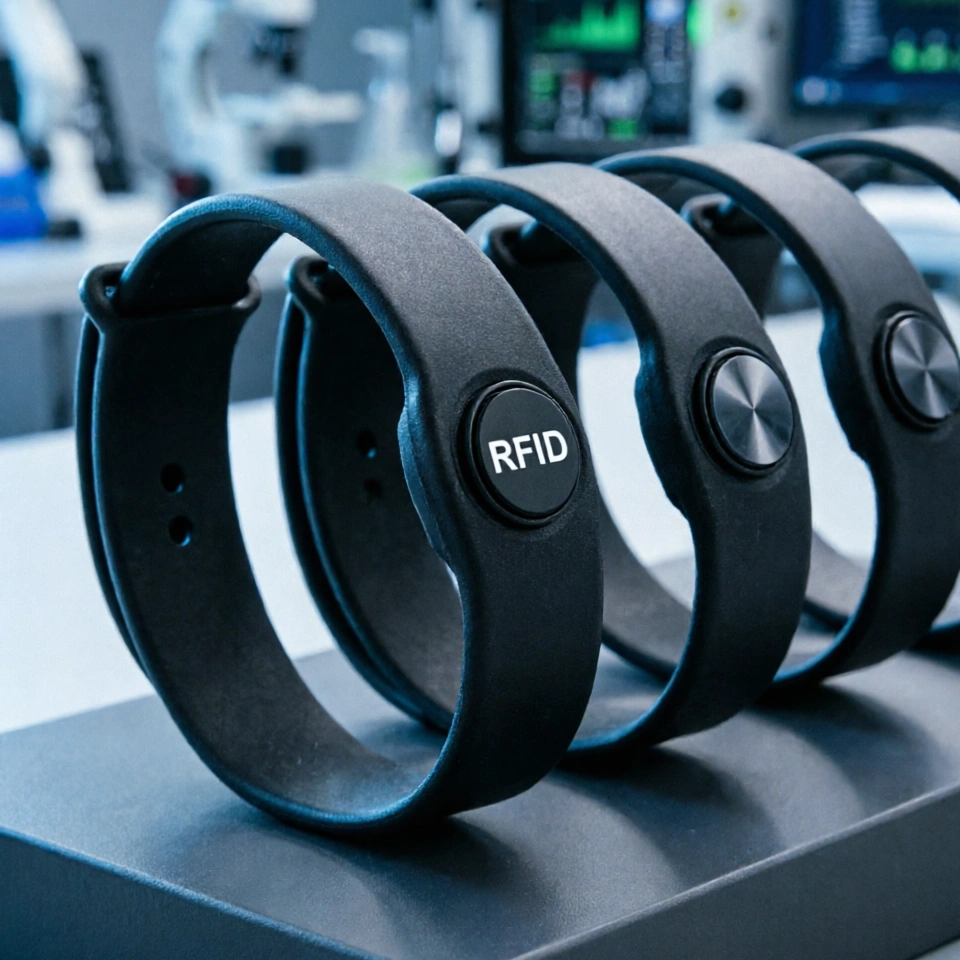
RFID (Radio Frequency Identification) wristbands are wearable identification devices embedded with an RFID chip and antenna. The wristband communicates wirelessly with an RFID reader using radio waves, allowing users to be identified without physical contact.
Unlike barcode wristbands that require line-of-sight scanning, RFID wristbands can be read instantly even when covered by clothing or moving through an entrance.
Each RFID wristband contains a unique digital identity, making it suitable for secure identification and automated management.
The wristband itself may be made from:
- Silicone
- PVC
- Fabric
- Woven polyester
- Paper
- TPU
- Vinyl
- ABS plastic
- Eco-friendly biodegradable materials
Depending on the application, RFID wristbands may be disposable or reusable.
How RFID Wristbands Work
The working principle of RFID wristbands is based on electromagnetic communication.
The system consists of three components:
- RFID wristband
- RFID reader
- Management software or cloud database
The complete workflow is as follows:
Step 1: Registration
The user’s information is written into the RFID chip.
Examples include:
- Patient ID
- Event ticket
- Hotel guest profile
- Gym membership
- Employee ID
- Payment account
Step 2: Radio Frequency Activation
When the wristband enters the reader’s electromagnetic field, the chip is activated.
Passive RFID wristbands receive energy directly from the reader.
Active RFID wristbands use an internal battery.
Step 3: Data Transmission
The RFID chip sends back:
- UID (Unique Identifier)
- Stored memory
- Authentication information
The transmission occurs in milliseconds.
Step 4: Software Verification
The backend software checks the information against the database.
Possible responses include:
- Access granted
- Payment approved
- Attendance recorded
- Location updated
- Patient identified
Step 5: Action Execution
The system automatically performs tasks such as:
- Opening gates
- Unlocking lockers
- Completing payments
- Recording attendance
- Tracking movements
- Updating inventory
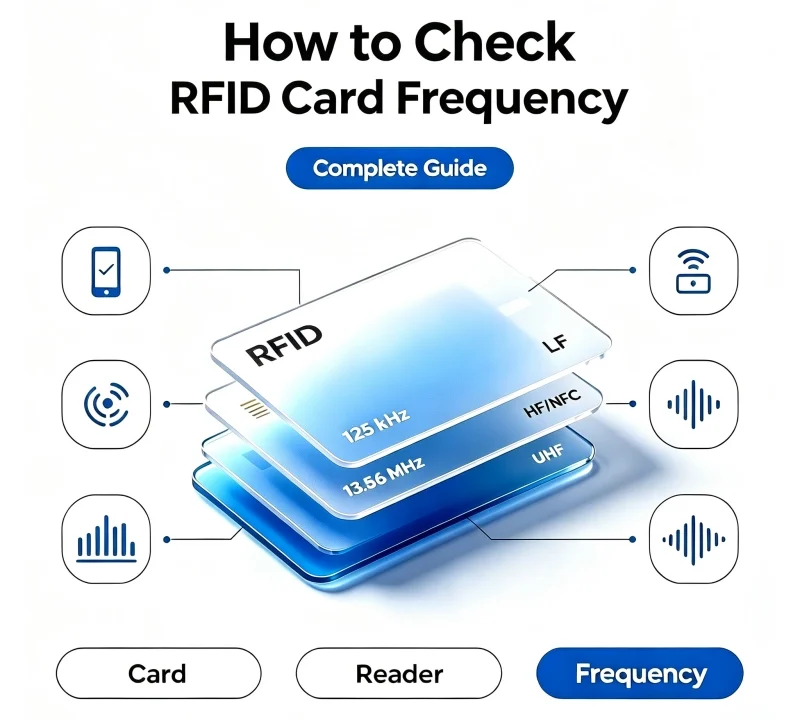
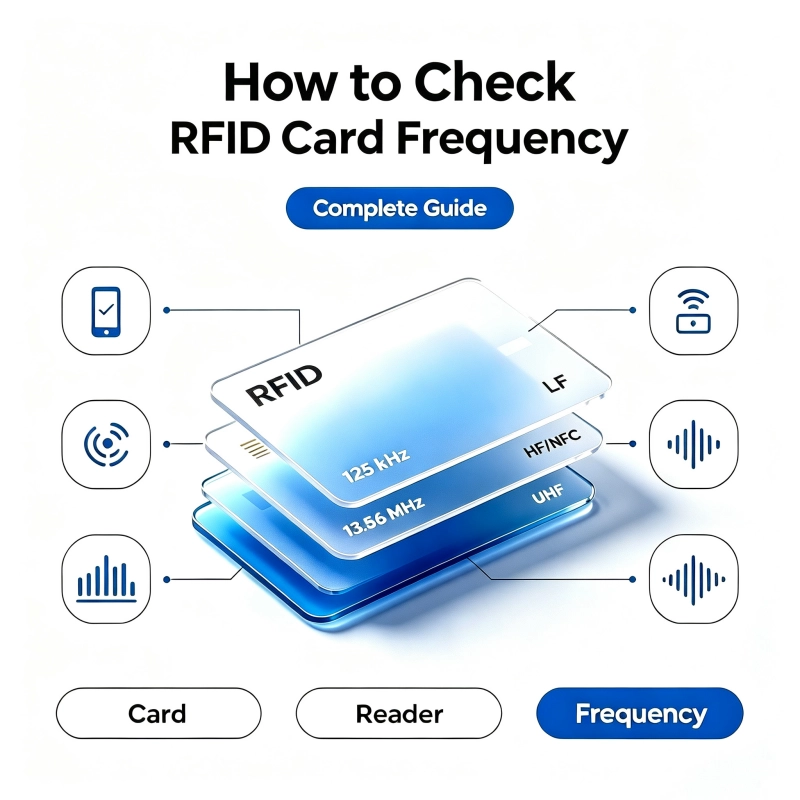
RFID Frequency Types
RFID wristbands are available in different frequency ranges.
Low Frequency (LF)
Frequency:
125 kHz
Features:
- Short reading distance
- Excellent water resistance
- Low cost
- Simple access control
Applications:
- Animal identification
- Basic attendance
- Access control
High Frequency (HF)
Frequency:
13.56 MHz
Reading distance:
Up to 10 cm
Popular chips include:
- MIFARE Classic
- MIFARE DESFire
- NTAG213
- NTAG215
- NTAG216
- ICODE
- NFC chips
Applications:
- Hotels
- Cashless payment
- Events
- Healthcare
- Transportation
HF RFID wristbands are the most popular worldwide.
Ultra High Frequency (UHF)
Frequency:
860–960 MHz
Reading distance:
1–10 meters
Advantages:
- Long-range identification
- Bulk reading
- Logistics management
Applications:
- Warehouses
- Industrial personnel tracking
- Construction sites
- Manufacturing
Main Types of RFID Wristbands
Silicone RFID Wristbands
Advantages:
- Waterproof
- Durable
- Comfortable
- Reusable
Applications:
- Gyms
- Swimming pools
- Resorts
- Hospitals
Fabric RFID Wristbands
Features:
- Comfortable
- Difficult to remove
- Excellent for multi-day events
Applications:
- Music festivals
- Conferences
- VIP events
PVC RFID Wristbands
Advantages:
- Low cost
- Waterproof
- Printable
Applications:
- Hotels
- Theme parks
- Membership cards
Disposable Paper RFID Wristbands
Advantages:
- Lowest cost
- Single-use
- Lightweight
Applications:
- One-day events
- Temporary access
- Visitor management
Eco-Friendly RFID Wristbands
Made from:
- Bamboo fiber
- Recycled PET
- PLA biodegradable materials
- Organic fabrics
Increasingly popular among environmentally conscious brands.
Major Applications of RFID Wristbands
Healthcare
Hospitals use RFID wristbands for:
- Patient identification
- Medication verification
- Infant protection
- Surgery confirmation
- Emergency response
- Patient tracking
Benefits include reducing medical errors and improving patient safety.
Music Festivals
Large events benefit from:
- Fast entry
- Cashless payment
- VIP access
- Anti-counterfeiting
- Crowd management
Visitors enjoy shorter queues and a smoother event experience.
Hotels and Resorts
RFID wristbands can replace room cards.
Functions include:
- Room access
- Restaurant payment
- Spa booking
- Swimming pool access
- Loyalty programs
Guests only need to wear one wristband throughout their stay.
Theme Parks
Leading amusement parks use RFID wristbands for:
- Ticket verification
- Fast pass access
- Ride reservations
- Cashless purchases
- Family tracking
The result is a more seamless guest experience.
Fitness Centers
Gyms use RFID wristbands for:
- Member check-in
- Locker access
- Equipment reservation
- Class attendance
- Membership management
Schools
Applications include:
- Student attendance
- Library management
- Campus access
- Cafeteria payment
- School bus tracking
Manufacturing
Industrial facilities deploy RFID wristbands for:
- Worker identification
- Hazardous area authorization
- Time attendance
- Equipment access
- Safety monitoring
Water Parks
Because silicone RFID wristbands are waterproof, they are ideal for:
- Locker access
- Food payment
- Ride admission
- Visitor tracking
Cruise Ships
Cruise operators use RFID wristbands as an all-in-one digital identity.
Passengers can:
- Unlock cabins
- Purchase drinks
- Book entertainment
- Board the ship
- Verify identity
Innovative Applications of RFID Wristbands
The evolution of IoT and AI is creating new possibilities.
Smart Healthcare Monitoring
Future RFID wristbands integrate:
- Temperature sensors
- Heart rate monitoring
- Blood oxygen monitoring
- Fall detection
Digital Identity
Governments are exploring RFID-based wearable IDs for:
- Public services
- Secure authentication
- Disaster response
- Emergency identification
Smart Factories
Workers equipped with RFID wristbands enable:
- Real-time positioning
- Machine authorization
- Production analytics
- Safety compliance
Contactless Payments
RFID wristbands increasingly replace:
- Cash
- Credit cards
- Paper tickets
Users simply tap the wristband to complete transactions.
Smart Tourism
Tourist attractions combine RFID wristbands with mobile apps for:
- Personalized recommendations
- Queue optimization
- Interactive experiences
- Digital souvenirs
Sports Analytics
Professional sports organizations use RFID wearables to collect:
- Athlete positioning
- Speed
- Performance data
- Training statistics
Pain Points Solved by RFID Wristbands
Long Queues
Traditional ticket verification can take several seconds per visitor.
RFID verification typically takes less than one second.
Lost Tickets
Paper tickets are easily damaged or lost.
RFID wristbands remain securely worn throughout the event.
Counterfeit Tickets
Each RFID chip has a unique ID that is difficult to duplicate, significantly reducing ticket fraud.
Manual Data Entry
Attendance and identification are automated, eliminating repetitive manual work.
Cash Handling
Cashless RFID payments reduce:
- Theft
- Counting errors
- Transaction time
Poor Customer Experience
Visitors appreciate:
- Faster entry
- Contactless interaction
- Reduced waiting
- Personalized services
Security Risks
Only authorized users gain access to restricted areas.
Real-time logs improve accountability and incident investigation.
RFID Wristbands vs Competing Technologies
| Technology | Reading Method | Speed | Security | Reusable | Cost |
|---|---|---|---|---|---|
| RFID Wristbands | Contactless | Excellent | High | Yes | Medium |
| Barcode Wristbands | Optical Scan | Medium | Low | Limited | Low |
| QR Code Wristbands | Camera Scan | Medium | Medium | Limited | Low |
| Magnetic Cards | Swipe | Slow | Medium | Yes | Medium |
| NFC Wristbands | Contactless | Excellent | High | Yes | Medium |
| Bluetooth Wearables | Wireless | Excellent | Very High | Yes | High |
| Facial Recognition | Camera | Fast | High | No Device Needed | High |
RFID vs Barcode
RFID advantages:
- No line of sight required
- Faster scanning
- Multiple tags read simultaneously
- Better durability
Barcode advantages:
- Lower cost
- Simpler infrastructure
RFID vs QR Code
QR codes require:
- Camera
- Proper lighting
- User positioning
RFID works automatically.
RFID vs NFC
NFC is actually a subset of HF RFID technology.
NFC wristbands are excellent for smartphone interaction, while general RFID solutions offer broader industrial compatibility and longer read ranges depending on the frequency used.
RFID vs Bluetooth
Bluetooth provides longer communication distances and richer data exchange but requires batteries, increasing maintenance and overall cost.
How RFID Wristbands Are Manufactured
The production process combines electronics, material science, and precision manufacturing.
Step 1: Chip Selection
Manufacturers choose the appropriate RFID integrated circuit based on:
- Frequency
- Memory size
- Security level
- Read distance
Step 2: Antenna Production
Copper or aluminum antennas are produced using:
- Etching
- Printing
- Laser processing
The antenna design directly influences reading performance.
Step 3: Chip Bonding
The RFID chip is attached to the antenna using automated flip-chip bonding equipment.
Electrical testing verifies proper connectivity.
Step 4: Inlay Lamination
The completed RFID inlay is encapsulated within the wristband material.
Material options include:
- Silicone molding
- PVC lamination
- Fabric weaving
- TPU injection molding
This protects the electronics from moisture, dust, and physical wear.
Step 5: Printing and Customization
Manufacturers can add:
- Company logos
- Event branding
- QR codes
- Sequential numbering
- Barcodes
- Variable data
- Laser engraving
Step 6: Encoding
Each wristband is programmed with:
- UID
- Encryption keys
- Customer data
- Application-specific information
Step 7: Quality Inspection
Manufacturers test:
- Reading distance
- Waterproof performance
- Bending resistance
- Tensile strength
- Chip functionality
- Data integrity
Step 8: Packaging
Products are sorted, labeled, packed, and shipped according to customer specifications.
Customization Options
Professional RFID wristband manufacturers typically offer:
- Custom colors
- Pantone matching
- OEM branding
- Private label production
- Multiple chip options
- Variable serial numbers
- Laser engraving
- QR code printing
- NFC programming
- Waterproof designs
- Anti-tamper locks
- Adjustable sizes
Future Trends
Several technologies are shaping the next generation of RFID wristbands.
AI Integration
Artificial intelligence can analyze RFID-generated data to optimize crowd flow, staffing, and customer behavior.
IoT Connectivity
RFID wristbands will increasingly connect with smart buildings, wearable sensors, and cloud platforms for real-time automation.
Blockchain Security
Blockchain can enhance authentication by creating tamper-resistant records of identity and transactions.
Sustainable Materials
Manufacturers are introducing recyclable, biodegradable, and bio-based wristband materials to reduce environmental impact.
Sensor Fusion
Future wristbands may integrate RFID with sensors such as temperature, motion, and biometrics to support healthcare, industrial safety, and personalized services.
How to Choose the Right RFID Wristband
Selecting the best RFID wristband depends on your application and operational needs. Consider:
- Frequency: HF (13.56 MHz) for payments, access control, and NFC; UHF for long-range tracking; LF for simple identification.
- Material: Silicone for durability, fabric for multi-day events, PVC for hospitality, paper for disposable use, or eco-friendly materials for sustainability.
- Chip Compatibility: Ensure compatibility with your existing readers and software platform.
- Security Requirements: Choose encrypted chips such as MIFARE DESFire for high-security environments.
- Environmental Conditions: Consider waterproofing, chemical resistance, UV exposure, and operating temperature.
- Customization Needs: Evaluate branding, color options, variable data printing, and pre-encoding services.
- Supplier Capabilities: Look for manufacturers with automated production, strict quality control, international certifications, and strong OEM/ODM experience.
Conclusion
RFID wristbands have evolved far beyond simple identification tools. They are now an essential component of smart healthcare, cashless payments, event management, hospitality, industrial automation, education, and IoT ecosystems. By combining contactless communication, secure authentication, real-time data collection, and durable wearable designs, RFID wristbands help organizations reduce operational costs, improve security, enhance customer experiences, and automate complex workflows.
Compared with barcode labels, QR codes, magnetic cards, and even some Bluetooth-based solutions, RFID wristbands deliver a compelling balance of speed, reliability, scalability, and cost-effectiveness. As AI, IoT, blockchain, and sustainable manufacturing continue to advance, RFID wristbands will become even more intelligent, environmentally friendly, and integrated into everyday digital life. For businesses seeking a future-proof identification and access solution, investing in high-quality RFID wristbands from an experienced manufacturer is a strategic decision that supports long-term operational efficiency and innovation.

Do RFID is a leading China-based manufacturer with over 15 years of experience. We specialize in customized RFID readers, tags, and cards, delivering high-quality, tailored solutions that meet your unique business needs and drive seamless, efficient identification.