October 21, 2026
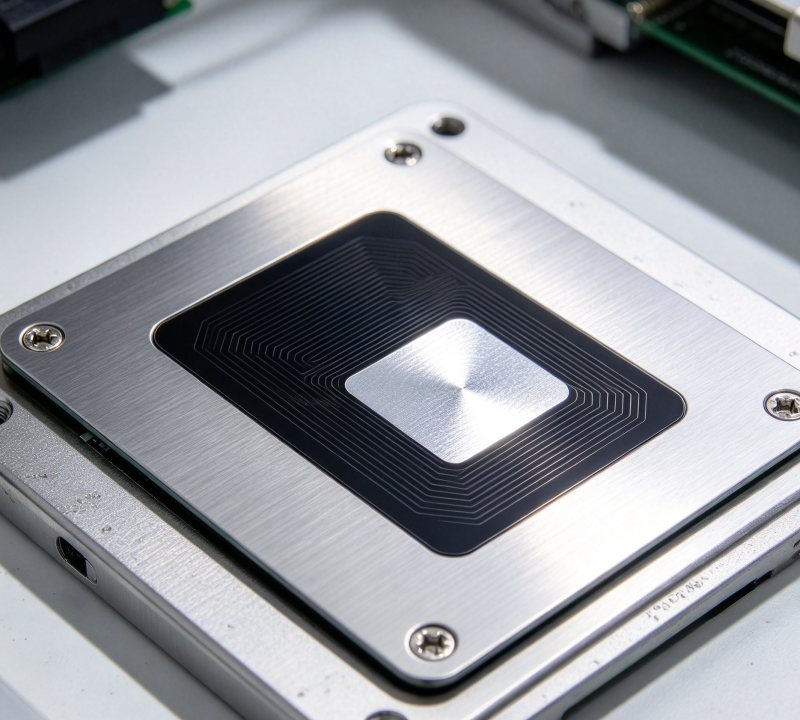
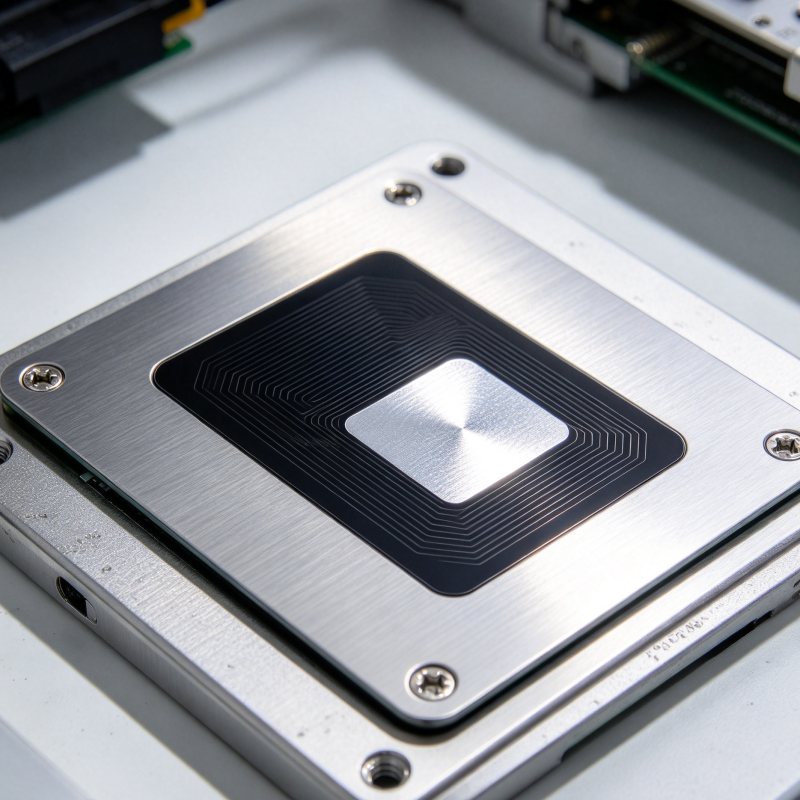
Small micro fpc ntag213 on metal mini dia10mm nfc tag
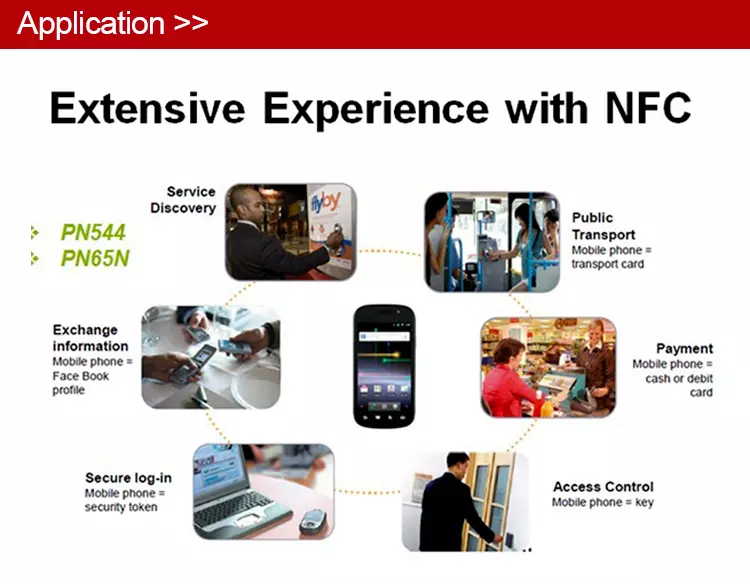
Small micro fpc ntag213 on metal mini dia10mm nfc tag is widely used in electronic products, like for toys, food, tobacco, wine, drug,cosmetic, accessories and other high-end products trace-ability, security and home entertainment applications, wearable smart application and some insert applications.
Features
1: Normal size or mirco size can less than 10mm, 8.7mm etc
2: Aluminum or double copper antenna
3: PET waterproof, resistance of chemical and heating or PVC, Paper
4: Custom 4C LOGO printing or white sticker, wet inlay
5: Can be anti metal, suitable for metal surface
6: Shape and size can be customized
7: Pack by pcs or roll perfect fit your installation
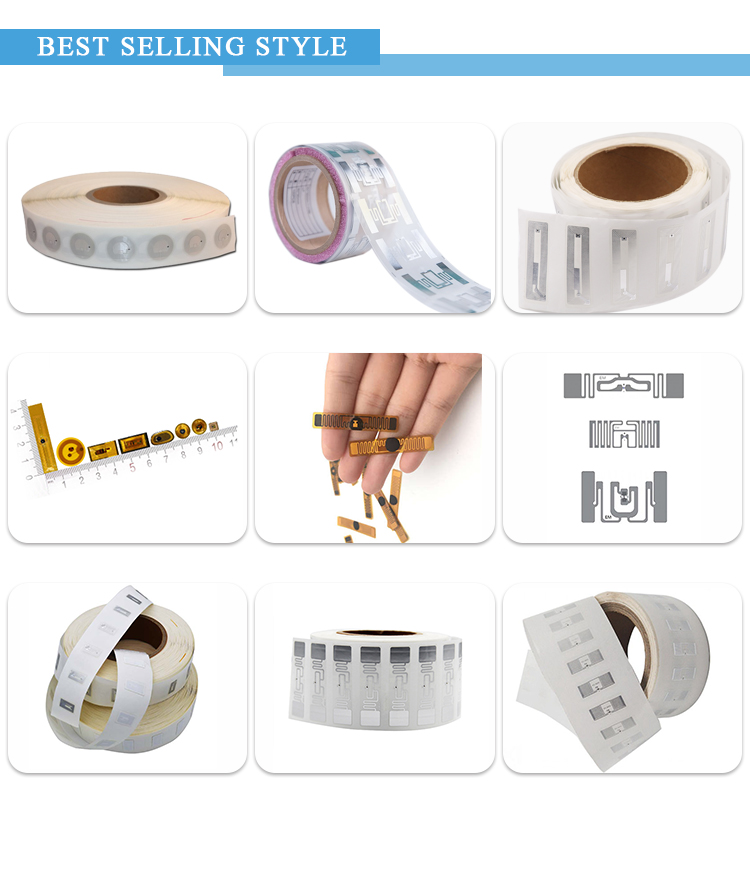
Available NFC TAG Size :Dia8mm,Dia10mm,Dia18mm,15x15mm,9x18mm,8x12mm,6x16mm etc

RFID Chip Specifications & Trademark Licensing Summary
| RFID chip | For HF we have:Protocol ISO/IEC 14443A:1: MIFARE Classic® 1K MIFARE Classic® EV1 1K MIFARE Classic® 4KMIFARE and MIFARE Classic are registered trademarks of NXP B.V. and are used under license.2: MIFARE Plus® MIFARE Plus® EV1 MIFARE Plus® SE 1KMIFARE and MIFARE Plus are registered trademarks of NXP B.V. and are used under license. 3: MIFARE® DESFire® EV1 MIFARE® DESFire® EV2MIFARE DESFire are registered trademarks of NXP B.V. and are used under license. 4: NFC Forum Type 2: 1) NTAG® 203 (144 bytes) NTAG 213 (144 bytes) NTAG® 215 (504 bytes) 2) NTAG® 216(888 bytes) NTAG® are registered trademarks of NXP B.V. and are used under license.
3) MIFARE Ultralight® (48 bytes) MIFARE Ultralight® EV1 (48 bytes) 4) MIFARE Ultralight® C(148 bytes) MIFARE and MIFARE Ultralight are registered trademarks of NXP B.V. and are used under license.
Protocol ISO 15693/ISO 18000-3: ICODE® SLIX, ICODE® SLIX-S, ICODE® SLIX-L, ICODE® SLIX 2 ICODE® are registered trademarks of NXP B.V. and are used under license. |

Industry Application Matrix
| Industry | Application | Recommended Chip | Recommended Substrate | Key Benefit |
|---|---|---|---|---|
| Luxury Goods | Handbag hardware authentication | NTAG215 + Originality Sig | PET | Invisible anti-counterfeiting |
| Automotive | Engine component traceability | NTAG213 or DESFire | PET | Survives manufacturing & service |
| Medical | Surgical instrument tracking | DESFire EV2 | PET | Autoclave-safe, encrypted records |
| Consumer Electronics | Wearable device pairing | NTAG213 | PVC | Curved surface conformity |
| Food & Beverage | Premium bottle cap verification | NTAG213 | Paper/PET | Tamper-evident authentication |
| Industrial Tools | Calibration & maintenance logging | NTAG213 | PET | Direct-on-metal without brackets |
| Aerospace | Avionics part lifecycle tracking | DESFire EV3 | PET | Decades-long durability, security |
| Smart Home | Appliance configuration tap point | NTAG215 | PVC | User-friendly setup experience |
Packaging & Deployment Formats
| Format | Quantity Per Unit | Best For | Automation Compatible |
|---|---|---|---|
| Individual Sheet | 1 tag | Prototyping, manual installation, samples | ❌ |
| Roll (Standard) | 1,000 – 5,000 tags | High-speed applicators, production lines | ✅ |
| Roll (Mini) | 200 – 500 tags | Benchtop dispensers, small-batch runs | ✅ |
| Tray/Waffle Pack | 100 – 500 tags | Pick-and-place SMT-style assembly | ✅ |
💡 Tip: Specify roll core diameter, pitch distance, and liner width when ordering roll format to ensure compatibility with your existing labeling equipment.

Why Standard NFC Tags Fail on Metal
Understanding this failure mode is essential for appreciating the value of an on-metal tag design.
- Eddy Current Generation: Metal surfaces act as shorted secondary windings when exposed to the reader’s alternating magnetic field.
- Field Cancellation: Induced eddy currents create an opposing magnetic field that destructively interferes with the reader signal.
- Resonance Detuning: The metal shifts the antenna’s resonant frequency away from 13.56 MHz, making communication impossible.
- Energy Absorption: Metal dissipates RF energy as heat rather than allowing it to power the tag’s IC.
- Solution Mechanism: This FPC tag uses controlled dielectric spacing and optimized trace geometry to isolate the antenna from the metal substrate, preserving resonance and read range.
FPC vs. Traditional Antenna Technologies
| Feature | FPC (This Product) | Etched Aluminum Inlay | PCB Antenna |
|---|---|---|---|
| Flexibility | High – conforms to curves | Moderate – can crack on sharp bends | None – rigid board |
| Conductivity | Excellent (copper traces) | Good (aluminum) | Excellent (copper) |
| Thickness | 0.1 – 0.2 mm | 0.05 – 0.1 mm | 0.8 – 1.6 mm |
| Durability | High – polymer encapsulation | Low – exposed aluminum oxidizes | High – solder mask protected |
| Cost at Micro Scale | Moderate | Low | High |
| On-Metal Performance | Optimized via design | Requires separate ferrite layer | Requires dedicated ground plane |
| Custom Shape Ease | High – photolithographic | Moderate – die-cut limitations | Low – panel-based fabrication |
Substrate Material Comparison
Choosing the right substrate is critical for environmental compatibility and RF performance.
| Material | Best For | Pros | Cons | Dielectric Constant |
|---|---|---|---|---|
| PET | Industrial, outdoor, harsh env. | Waterproof, chemical-resistant, thermally stable | Less flexible than PVC | ~3.0 |
| PVC | Consumer goods, curved surfaces | Superior printability, high flexibility | Lower thermal tolerance, plasticizer migration | ~3.4 |
| Paper | Disposable packaging, eco-friendly | Biodegradable, lowest cost, recyclable | Hygroscopic, poor moisture resistance | ~2.5–3.5 (varies with humidity) |
💡 Key Takeaway: PET is the default recommendation for on-metal industrial use. Paper should only be used in climate-controlled, dry environments. Always validate RF performance on your specific substrate choice, as dielectric constant directly affects tuning.
Supported Chip Options Quick Reference
| Chip Family | Model | Memory | Security Level | Best Use Case |
|---|---|---|---|---|
| NTAG® | 213 | 144 B | Password + ECC32 Signature | URL redirect, product ID, basic auth |
| NTAG® | 215 | 504 B | Password + ECC32 Signature | Rich data payloads, JSON, certificates |
| NTAG® | 216 | 888 B | Password + ECC32 Signature | Multi-app, complex data structures |
| MIFARE Ultralight® | EV1 | 48 B | Basic password | High-volume disposable tickets, loyalty |
| MIFARE Classic® | 1K / 4K | 720 B / 3584 B | Crypto-1 (legacy) | Legacy access control, transit |
| MIFARE DESFire® | EV2 / EV3 | 2K–32K | AES-128, mutual auth | Secure payments, encrypted credentials |
| ICODE® SLIX 2 | ISO 15693 | 256 B | Password + EAS | Inventory, library, laundry tracking |
⚠️ Note: MIFARE®, NTAG®, and ICODE® are registered trademarks of NXP B.V. Verify current chip availability and specifications with D.O RFID Group before finalizing designs, as NXP periodically updates product portfolios.
Available Size Variants
While Dia 10mm is the flagship size, the platform supports multiple form factors for different integration constraints.
| Size | Shape | Typical Application |
|---|---|---|
| Dia 8mm | Circular | Ultra-miniature wearables, jewelry |
| Dia 10mm | Circular | General-purpose on-metal tagging |
| Dia 18mm | Circular | Extended read range, larger metal assets |
| 15 × 15 mm | Square | PCB-mounted identification, flat panels |
| 9 × 18 mm | Rectangular | Narrow slots, tool handles, connectors |
| 8 × 12 mm | Rectangular | Compact electronics, medical devices |
| 6 × 16 mm | Rectangular | Ultra-narrow spaces, cable markers |
All sizes support the same chip options, substrate materials, and customization services. Custom dimensions beyond these standards are available upon request.
Customization & Branding Options
| Option | Description | Lead Time Impact |
|---|---|---|
| 4-Color Logo Printing | Full CMYK branding on face stock | +3–5 days |
| White Adhesive Label | Plain white surface for end-user printing | No additional lead time |
| Wet Inlay Delivery | Unlaminated inlays for customer conversion | Reduced lead time |
| Custom Shape/Die-Cut | Non-standard outlines per customer drawing | +5–7 days (tooling) |
| Pre-Encoding | UID recording, URL writing, password locking | +2–3 days |
| Sequential Numbering | Laser-printed or encoded serial sequences | +1–2 days |
Integration Checklist for Engineers
Before deploying, verify each item to avoid costly rework:
- Tested tag on actual target metal substrate (not just lab sample)
- Validated read range across all target smartphone models
- Confirmed adhesive compatibility with host surface material
- Verified operating temperature range exceeds worst-case environment
- Checked chemical exposure against substrate resistance chart
- Defined encoding scheme and data structure before volume order
- Established cloud/backend resolution strategy for UID lookups
- Requested and approved pre-production samples
- Confirmed packaging format matches deployment equipment
- Documented tag placement location in assembly instructions
Common Pitfalls & How to Avoid Them
| Pitfall | Consequence | Prevention |
|---|---|---|
| Using unapproved adhesive | Detuning, reduced read range | Only use manufacturer-specified adhesives |
| Assuming uniform read range on all metals | Field failures on aluminum/copper | Test on each distinct metal alloy separately |
| Ignoring smartphone antenna variation | Poor UX on certain phone models | Validate across iOS and Android device matrix |
| Skipping environmental stress testing | Premature tag failure in field | Request temp/humidity/chemical test reports |
| Overwriting factory-lockable memory areas | Irreversible data loss | Map memory layout before first encode |
| Placing tag near other metal edges | Edge effect detuning | Maintain ≥2mm clearance from metal boundaries |
| Using paper substrate in humid environment | Read range degradation over time | Switch to PET or specify moisture barrier coating |
Emerging Trends Shaping Future Micro NFC Tags
- Energy Harvesting ICs: Next-gen chips power LEDs or sensors from reader field alone, enabling batteryless visual feedback on metal surfaces.
- Blockchain-Anchored UIDs: Physical tag identifiers linked to immutable distributed ledgers for tamper-proof supply chain provenance.
- Bio-Based Substrates: Compostable polymers and recycled copper meeting ESG mandates without sacrificing RF performance.
- Chipless Resonant Tags: Silicon-free alternatives for ultra-high-volume commodity tagging where minimal data suffices.
- AI-Optimized Encoding: Machine learning adjusts encoding parameters per-device-type to maximize cross-platform read success rates.
- Multi-Protocol Single Tags: Hybrid ICs supporting both NFC Forum Type 2 and ISO 15693 simultaneously for dual-mode consumer + inventory use.
Supplier Evaluation Criteria
When sourcing micro on-metal NFC tags, assess suppliers against these benchmarks:
| Criterion | What to Ask For |
|---|---|
| RF Validation Data | S-parameter plots, read-range test reports on metal |
| Quality Certifications | ISO 9001, AQL inspection records, batch traceability |
| Custom Capability | Tooling lead times, min order for custom sizes |
| Technical Support | Access to application engineers, design review |
| Sample Program | Free or low-cost evaluation kits with mixed variants |
| Supply Chain Transparency | Chip source documentation, substrate origin |
| Post-Sale Support | Failure analysis, replacement policy, firmware guidance |
Contact & Next Steps
For technical consultation, custom quotations, sample requests, or engineering design reviews, reach out to D.O RFID Group. Their team supports projects from initial prototyping through million-unit production runs.