September 14, 2026
Introduction to Washable NTAG213 PPS RFID Laundry Tag
The Washable NTAG213 PPS RFID Laundry Tag is a durable NFC-enabled identification tag designed for textile tracking, clothing management, and industrial laundry applications. Built with a high-performance PPS (Polyphenylene Sulfide) housing and an NXP NTAG213 RFID chip, this washable RFID tag provides reliable identification even after repeated washing, drying, and chemical exposure.
Unlike traditional labels that can easily fade, tear, or become unreadable after multiple laundry cycles, PPS RFID laundry tags are engineered for harsh environments. They are widely used in hotels, hospitals, industrial laundries, uniform management systems, and textile rental services.
By attaching an RFID laundry tag to each textile item, companies can create a digital tracking system that improves inventory accuracy, reduces losses, and increases operational efficiency.
The NTAG213 chip also supports NFC communication, allowing users to read and write tag information with compatible smartphones or NFC readers.
What Is an NTAG213 PPS RFID Laundry Tag?
An NTAG213 PPS RFID laundry tag is a small, reusable RFID identification device embedded inside a waterproof PPS shell. It contains a passive NFC chip that operates without batteries and receives power from an RFID reader through electromagnetic induction.
Each tag has a unique identification number that can be connected to a database system. Businesses can use this ID to track textile information such as ownership, washing history, maintenance records, and usage frequency.
Typical information linked to an RFID laundry tag includes:
| Data Type | Example |
|---|---|
| Textile ID | Hotel towel #000258 |
| Product Category | Bed sheet, uniform, towel |
| Washing Record | 120 laundry cycles |
| Location | Hotel A / Laundry Center |
| Maintenance Status | Available / Damaged / Replaced |
The tag itself does not store large amounts of information. Instead, it works as a digital key that connects physical textiles with cloud-based management software.
Technical Specifications
Washable Ntag213 PPS RFID Laundry Tag
| Material | PPS |
| Diameter | 15/18/20/22mm/23.5/25 mm or customized |
| Thickness | 2.2mm ,2.7mm/3mm etc |
| Chips | NXP Ntag213 144byte |
| Color | Black, grey, blue etc.(customized color if >5000pcs) |
| Options | Laser serial number on the surfaceEncoding the UIDColorful printing on the surfaceCustomized products as request |
| Storage temperature | Storage temperature |
| Working temperature | -20℃~220℃ |
| Washing times | More than 150times |
| Applications | Textile rental & Dry cleaning/Track & Manage Inventory/Logistic Tracking, etc. |
| Product features | This product is made of high temperature PPS material and used double-sided PPS packaging technology, with waterproof, shockproof, moisture, high temperature and other advantages. It is easy to mosaic or sewn in clothing products. The surface can be directly silk screen, transfer, inkjet or carved number. |

With the increasing upgrading of RFID technology, RFID Laundry Tag are widely used in various laundry scenes, and the traditional manual laundry process has been transformed into a fully automatic processing and recording process. Moreover, sewing RFID Laundry tags on washing products allows users to use the globally unique code of the RFID tag to automatically identify and track the washing process, and to obtain data, so that users can specify higher quality decisions later.

Package of RFID PPS Laundry Tag
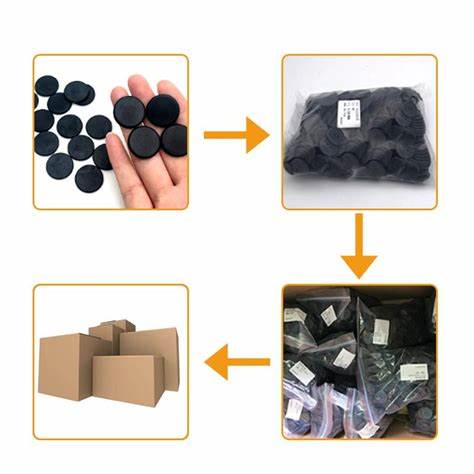
For the other hot selling RFID PPS Laundry Tag products

Key Features of NTAG213 PPS RFID Laundry Tag
The washable RFID laundry tag is designed specifically for long-term textile identification.
Durable PPS Material
PPS is a high-performance engineering plastic known for excellent chemical resistance and temperature stability.
The PPS housing protects the internal RFID chip from:
- High-temperature washing
- Industrial detergents
- Mechanical pressure
- Moisture exposure
- Repeated drying processes
This makes the tag suitable for demanding laundry environments.
Washable and Reusable Design
Unlike disposable barcode labels or paper-based identification tags, PPS RFID laundry tags can be reused throughout the entire lifecycle of a textile product.
Typical applications include:
- Hotel linen tracking
- Healthcare textile management
- Workwear tracking
- Rental textile management
The reusable design helps businesses reduce replacement costs and improve sustainability.
NFC Compatible with Smartphones
The built-in NTAG213 chip supports NFC communication, allowing quick identification using NFC-enabled devices.
Users can scan the tag with:
- Android smartphones
- iPhones with NFC support
- NFC handheld readers
- Industrial RFID terminals
This makes the tag convenient for inventory checking, maintenance inspection, and manual verification.
How Does a Washable RFID Laundry Tag Work?
A textile tracking system based on RFID technology usually follows a simple process:
1. RFID Tag Installation
A PPS RFID laundry tag is attached to each textile product through sewing, heat sealing, or embedding.
Example:
Hotel towel
↓
Install RFID laundry tag
↓
Register unique ID
↓
Connect with management software
2. Digital Registration
Each textile item is assigned a digital profile.
The database can store:
- Textile category
- Purchase date
- Current location
- Washing history
- Usage frequency
3. RFID Identification
When a reader scans the tag, the system retrieves the item’s information instantly.
For example:
RFID Tag ID:
04:A3:XX:XX

Database Information:
Product: Hospital Uniform
Wash Count: 86
Status: Available
4. Data Management
Companies can analyze textile usage and make better decisions.
Common management functions include:
- Inventory counting
- Loss prevention
- Laundry cycle tracking
- Replacement planning
Advantages of Using NTAG213 PPS RFID Laundry Tags
Improved Textile Inventory Accuracy
Manual counting methods are often slow and inaccurate, especially when thousands of textile items are processed daily.
RFID technology provides:
- Faster identification
- Reduced human errors
- Real-time inventory visibility
This is especially valuable for hotels, hospitals, and commercial laundry companies.
Reduced Textile Loss
Lost textiles create significant operational costs.
RFID laundry tags help companies identify:
- Missing items
- Incorrect transfers
- Unreturned rental textiles
By recording every scanning event, businesses can understand where losses occur.
Longer Product Lifecycle Management
A textile RFID tracking system allows companies to monitor usage frequency.
For example:
| Textile | Washing Cycles | Recommended Action |
|---|---|---|
| Towel | 80 cycles | Continue use |
| Bed sheet | 150 cycles | Inspect quality |
| Uniform | 250 cycles | Consider replacement |
This helps companies replace textiles at the correct time instead of replacing them too early or too late.
Cost Savings for Industrial Laundry Operations
Although RFID tags require an initial investment, they can reduce long-term operational expenses by improving:
- Labor efficiency
- Inventory control
- Asset utilization
- Loss management
For large-scale laundry operations, RFID systems can significantly improve workflow efficiency.
NTAG213 NFC RFID Tag vs UHF RFID Laundry Tag
Different RFID technologies are used for different textile management requirements. The NTAG213 PPS RFID laundry tag is designed for close-range identification and smartphone compatibility, while UHF RFID laundry tags are optimized for large-scale automatic inventory scanning.
Choosing the right RFID technology depends on the size of the operation, reading distance requirements, and management objectives.
| Feature | NTAG213 PPS RFID Laundry Tag | UHF RFID Laundry Tag |
|---|---|---|
| Frequency | 13.56 MHz | 860-960 MHz |
| Technology | NFC / HF RFID | UHF RFID |
| Reading Distance | Several centimeters | Several meters |
| Smartphone Support | Yes | Usually requires UHF reader |
| Data Capacity | Small | Usually larger |
| Scanning Speed | Individual scanning | Bulk scanning |
| Best For | Small and medium textile tracking | Large industrial laundry operations |
| Cost | Lower hardware investment | Higher system investment |
| Main Advantage | Easy access and NFC compatibility | Fast batch inventory |
For businesses that need smartphone-based identification, the NTAG213 PPS RFID laundry tag is an excellent solution. For automated laundry factories processing thousands of items per hour, UHF RFID systems may provide higher efficiency.
NTAG213 PPS RFID Laundry Tag Applications
Hotel Linen Management
Hotels process thousands of textile items every day, including:
- Bed sheets
- Towels
- Bathrobes
- Pillow covers
- Table linens
A washable RFID laundry tag helps hotels create a complete textile management system.
Benefits include:
- Faster inventory checking
- Reduced linen loss
- Better laundry coordination
- Accurate usage records
For example, when hotel linen is sent to an external laundry company, RFID identification ensures that every item can be tracked before and after cleaning.
Hospital Textile Tracking
Healthcare facilities require strict control of medical textiles because hygiene and availability are critical.
RFID laundry tags can be installed on:
- Patient clothing
- Medical uniforms
- Surgical textiles
- Hospital bedding
The system can record:
| Tracking Information | Example |
|---|---|
| Textile Type | Surgical gown |
| Department | Operating Room |
| Cleaning Status | Completed |
| Usage Count | 150 cycles |
| Condition | Good |
This improves hospital textile availability and reduces the risk of missing items.
Workwear and Uniform Management
Companies with large numbers of employees often struggle with uniform distribution and replacement management.
RFID-enabled uniforms allow organizations to track:
- Employee assignment
- Cleaning history
- Return status
- Replacement schedule
Industries that benefit include:
- Manufacturing
- Food processing
- Transportation
- Security services
Commercial Laundry Services
Industrial laundry companies manage thousands of customer-owned textiles.
RFID technology helps improve:
- Customer sorting accuracy
- Automated records
- Delivery management
- Loss prevention
Each customer’s textile inventory can be digitally separated and monitored.
Installation Methods for Washable RFID Laundry Tags
The installation method depends on the textile type and application environment.
Sewing Installation
Sewing is the most common method for laundry applications.
Advantages:
- Strong attachment
- Long service life
- Suitable for repeated washing
Common locations:
- Clothing labels
- Towel edges
- Bedding corners
Heat Sealing Installation
Some textile products allow RFID tags to be embedded using heat sealing technology.
Advantages:
- Cleaner appearance
- Better protection
- Reduced manual labor
This method is often used for:
- Uniforms
- Premium hotel textiles
- Rental garments
Hidden Embedding
For applications requiring a discreet appearance, the RFID tag can be placed inside textile layers.
Advantages:
- Better aesthetics
- Tamper resistance
- Protection from physical damage
RFID Laundry Management Process Example
A complete RFID textile management system usually includes four parts:
| Component | Function |
|---|---|
| RFID Laundry Tag | Provides unique textile identification |
| RFID Reader | Scans tag information |
| Software Platform | Stores and analyzes data |
| Database System | Manages textile records |
The workflow:
Textile Production
        ↓
RFID Tag Installation
        ↓
Item Registration
        ↓
Laundry Collection
        ↓
Washing Process Tracking
        ↓
Quality Inspection
        ↓
Return and Distribution
This digital process replaces traditional manual counting methods and creates a transparent textile management workflow.
Why Choose NTAG213 PPS RFID Laundry Tag?
Reliable Performance in Harsh Environments
Laundry environments are challenging because textiles experience:
- High temperatures
- Water exposure
- Chemical detergents
- Mechanical pressure
The PPS housing protects the RFID chip and ensures stable performance throughout repeated washing cycles.
Easy Integration with Existing Systems
The NTAG213 RFID chip follows international NFC standards, making integration easier with existing RFID software platforms.
Companies can connect RFID information with:
- Inventory management systems
- ERP platforms
- Asset management software
- Mobile applications
Customizable RFID Laundry Solutions
Manufacturers can provide customized options according to application requirements.
Customization may include:
| Custom Option | Description |
|---|---|
| Size | Different tag dimensions |
| Printing | Logo or identification marks |
| Encoding | Pre-programmed RFID numbers |
| Attachment Method | Sewing or embedding options |
| Packaging | Customized quantities |
NTAG213 RFID Laundry Tag vs Traditional Identification Methods
Traditional textile identification methods such as barcodes and printed labels have several limitations in industrial environments.
| Technology | RFID Laundry Tag | Barcode Label | Printed Label |
|---|---|---|---|
| Waterproof | Excellent | Limited | Poor |
| Wash Resistance | Excellent | Limited | Poor |
| Automatic Identification | Yes | Yes (scanner required) | No |
| Smartphone Reading | Yes | No | No |
| Reusable | Yes | Usually No | No |
| Data Management | Digital | Limited | None |
RFID provides a more reliable solution for businesses that require long-term textile tracking.
Frequently Asked Questions About NTAG213 PPS RFID Laundry Tags
Can NTAG213 PPS RFID tags survive washing machines?
Yes. The PPS housing is designed for textile laundry environments and can withstand repeated washing, drying, and exposure to detergents when properly installed.
Can a smartphone read an NTAG213 laundry tag?
Yes. Since NTAG213 is an NFC chip operating at 13.56 MHz, compatible smartphones can read and write information stored on the tag.
Is NTAG213 RFID laundry tag waterproof?
Yes. The sealed PPS structure provides protection against water and moisture, making it suitable for laundry applications.
How many times can the RFID laundry tag be washed?
The exact washing lifetime depends on the tag design, installation method, and laundry conditions. High-quality PPS RFID laundry tags are designed for hundreds of industrial washing cycles.
Does the RFID tag need a battery?
No. NTAG213 RFID laundry tags are passive tags. They receive energy from an RFID reader and do not require batteries.
Can the tag store washing records directly?
The NTAG213 chip has limited memory, so most professional systems store detailed washing records in a database and use the RFID tag only as an identification key.
What is the difference between NFC and RFID laundry tags?
NFC is a type of HF RFID technology. NFC tags are optimized for short-distance communication and smartphone compatibility, while other RFID technologies, such as UHF RFID, are designed for longer-range scanning.
How to Select the Right RFID Laundry Tag
Before purchasing a washable RFID laundry tag, consider the following factors:
| Requirement | Recommended Solution |
|---|---|
| Smartphone reading | NTAG213 NFC RFID tag |
| Individual textile identification | NTAG213 PPS tag |
| Large-scale automatic counting | UHF RFID laundry tag |
| Extreme washing conditions | Industrial PPS RFID tag |
| Hidden installation | Embedded RFID tag |
Selecting the correct RFID technology ensures better performance and a higher return on investment.
Conclusion: A Reliable Solution for Textile Tracking
The Washable NTAG213 PPS RFID Laundry Tag provides a practical and durable solution for modern textile management. With its waterproof PPS construction, NFC compatibility, and reliable identification capability, it helps businesses improve inventory control and reduce textile losses.
From hotels and hospitals to industrial laundry companies and uniform management systems, RFID laundry tags provide a smarter way to manage textile assets throughout their entire lifecycle.
For organizations looking for an easy-to-use, reusable, and durable textile tracking solution, NTAG213 PPS RFID laundry tags offer an effective combination of performance, flexibility, and cost efficiency.
Get a Reliable RFID Laundry Tracking Solution Today. Contact us for customized NTAG213 PPS RFID tags designed for your textile management needs.