Waterproof washable RFID PPS Laundry Tag
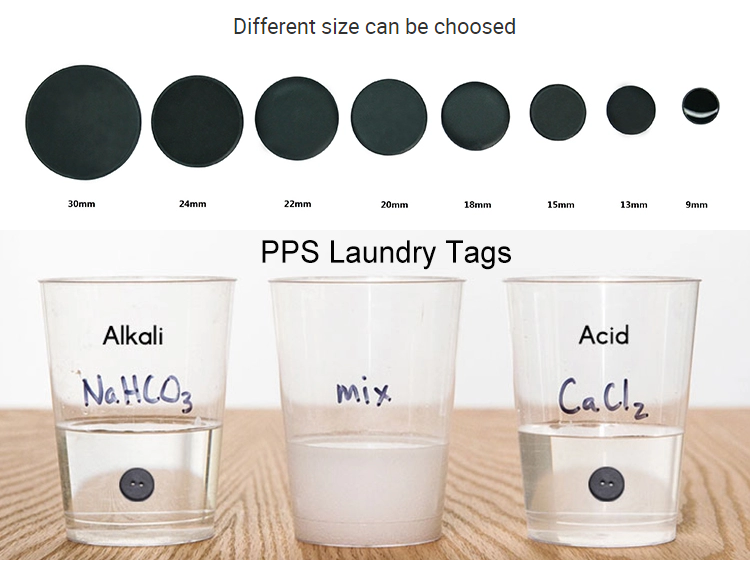
Our waterproof washable RFID PPS laundry tag is designed for textile identification, laundry management, dry cleaning, rental services, inventory tracking, and logistics applications. Manufactured with high-temperature PPS material and double-sided PPS encapsulation, the tag is built to withstand demanding textile care processes while maintaining a compact and durable form.

Available in LF, HF, and UHF RFID configurations, this washable RFID tag can be customized with different RFID chips, dimensions, colors, surface markings, and EPC encoding options. Standard diameters include 15 mm, 20 mm, and 25 mm, while customized sizes are available for specific textile applications.

With a working temperature range of -20°C to 220°C and a washing life of more than 150 cycles, the PPS RFID laundry tag provides a practical solution for businesses that need reliable identification throughout repeated washing, drying, and textile handling operations.

Key Features of the PPS RFID Laundry Tag

The RFID PPS laundry tag combines RFID identification technology with a high-temperature PPS housing. Its compact construction makes it suitable for sewing or embedding into textiles where conventional paper or plastic RFID labels may not provide sufficient durability.

Key product features include:

  • Waterproof and moisture-resistant PPS construction
  • High-temperature resistance from -20°C to 220°C
  • More than 150 washing cycles
  • Double-sided PPS encapsulation
  • Compact 15 mm, 20 mm, and 25 mm diameter options
  • LF, HF, and UHF RFID frequency options
  • Multiple RFID chip choices
  • Laser serial number marking
  • EPC encoding for UHF applications
  • Custom surface printing options
  • Suitable for sewing or embedding into textile products
  • Custom colors and product configurations available for qualified orders

The tag is particularly suitable for reusable textiles that need to be identified throughout their service life rather than only at the point of manufacture.

Waterproof washable RFID PPS Laundry Tag

QQ图片20210701105118

Available Chip: TK4100,EM4200,I CODE SLI,Mifare 1k,Ntag213,Ntag215, Ntag216, ICODESLI, Alien h3 ,MR6, U7/8 etc

RFID PPS Laundry Tag Specifications

Material PPS
Diameter15/20/25 mm or customized
Thickness 2.2mm 
Working frequencyLF: 125Khz/ HF: 13.56Mhz/UHF:860~960MHZ
ColorBlack, grey, blue etc.(customized color if >5000pcs)
OptionsLaser serial number on the surfaceEncoding the EPC Colorful printing on the surfaceCustomized products as request
Storage temperatureStorage temperature
Working temperature-20℃~220℃
Washing timesMore than 150times
ApplicationsTextile rental & Dry cleaning/Track & Manage Inventory/Logistic Tracking, etc.
Product featuresThis product is made of high temperature PPS material and used double-sided PPS packaging technology, with waterproof, shockproof, moisture, high temperature and other advantages. It is easy to mosaic or sewn in clothing products. The surface can be directly silk screen, transfer, inkjet or carved number.
uhf rfid pps laundry tags

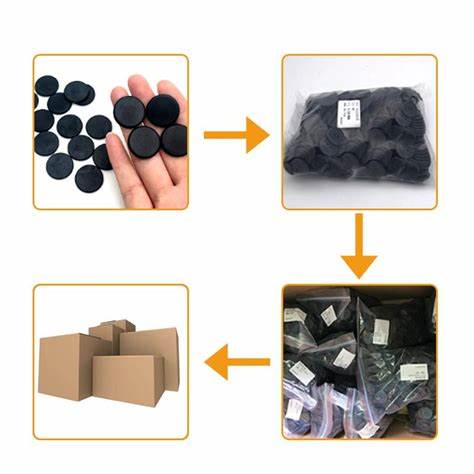
The Package of RFID PPS Laundry Tag

pps rfid tag package

For the other hot selling RFID PPS Laundry Tag products

pps-laundry-tag-50

Why Choose a PPS RFID Laundry Tag?

Textile products can pass through dozens or even hundreds of handling cycles during their useful life. A conventional identification label may become damaged, detached, faded, or unreadable after repeated washing and handling.

A PPS RFID laundry tag is designed specifically for applications where durability is important. The PPS housing provides a protective structure around the RFID inlay, while the compact design allows the tag to be integrated into different textile products.

For businesses managing large numbers of reusable garments, linens, uniforms, towels, or other textile assets, RFID identification can help create a more structured process for receiving, sorting, tracking, and managing individual items.

Instead of relying only on visual labels or manual counting, each textile can be associated with a unique RFID identity. This makes the tag suitable for automated or semi-automated textile management systems.

LF vs. HF vs. UHF RFID Laundry Tags

Different textile applications may require different RFID frequencies. Choosing the correct frequency is one of the most important steps when specifying an RFID laundry tag.

RFID FrequencyFrequencyTypical CharacteristicsSuitable Applications
LF RFID125 kHzShort-range identification and established low-frequency RFID technologyBasic identification and specialized textile applications
HF RFID13.56 MHzNear-field RFID technology suitable for close-range readingLaundry identification, NFC-related applications, controlled read points
UHF RFID860–960 MHzDesigned for longer-range and bulk RFID identificationTextile inventory, laundry sorting, asset tracking, logistics

UHF is often considered when a business needs to identify multiple textile items efficiently during inventory or sorting operations. HF may be preferred when the application requires controlled short-range interaction. LF can be selected for specific systems that already use low-frequency RFID infrastructure.

The best frequency depends on the reader, antenna configuration, textile material, reading environment, and required workflow. We recommend testing the complete RFID system rather than selecting a tag based only on frequency.

Available RFID Chips

The PPS laundry tag can be supplied with a range of RFID chips for different system requirements.

Available options listed for this product include TK4100, EM4200, ICODE SLI, MIFARE 1K, NTAG213, NTAG215, NTAG216, Alien H3, MR6, U7, U8, and other compatible chips.

Chip CategoryExample ChipsFrequencyCommon Consideration
LFTK4100, EM4200125 kHzBasic identification systems
HFICODE SLI, MIFARE 1K13.56 MHzShort-range RFID applications
HF/NFC FamilyNTAG213, NTAG215, NTAG21613.56 MHzNFC-compatible use cases
UHFAlien H3, MR6, U7/U8860–960 MHzTextile inventory and bulk identification

Chip selection should be based on your existing RFID reader, software platform, memory requirements, encoding method, and expected reading environment.

If you already have an RFID reader installed, providing the reader model before ordering can help ensure that the selected laundry tag is compatible with your system.

Durable Construction for Repeated Textile Washing

The tag uses high-temperature PPS material and double-sided PPS packaging technology. This construction is intended to protect the RFID component in demanding textile environments.

PPS, or polyphenylene sulfide, is an engineering thermoplastic known for its resistance to demanding temperature and chemical environments. In this RFID laundry tag, the PPS housing forms the external protective structure around the RFID component.

The product is specified with a working temperature range of -20°C to 220°C and a washing life of more than 150 cycles.

Actual service life can vary depending on the complete washing process, including detergent chemistry, washing temperature, mechanical stress, drying conditions, ironing, sterilization, and other textile treatment procedures.

For this reason, customers with specialized industrial laundry processes should conduct application testing before large-scale deployment.

Waterproof and Moisture-Resistant Design

Laundry RFID tags operate in environments where water and moisture are unavoidable. The tag therefore uses a protective PPS encapsulation rather than an exposed RFID inlay.

The waterproof and moisture-resistant construction makes the tag suitable for textile processes involving washing and repeated handling.

Its compact form also allows it to be integrated into textile products without requiring a large external label. Depending on the garment or textile construction, the tag can be sewn into an appropriate position or embedded into the product.

The installation method should be selected according to the textile structure and expected mechanical stress.

Compact Size for Textile Integration

Standard diameter options include 15 mm, 20 mm, and 25 mm, with a standard thickness of 2.2 mm.

DiameterTypical AdvantagePotential Application
15 mmCompact footprintGarments and smaller textile products
20 mmBalance between size and integrationUniforms, towels, linens
25 mmLarger formatIndustrial textiles and applications requiring a larger tag format
CustomizedApplication-specificOEM textile tracking projects

The appropriate diameter should be determined by the available installation space, textile construction, RFID performance requirements, and reader configuration.

A smaller tag may be useful where appearance and installation space are important, while a larger format may be preferred for particular RFID system requirements.

Surface Marking and Customization

The RFID PPS laundry tag can be customized for different identification and branding requirements.

Available options include:

  • Laser serial numbers
  • EPC encoding
  • Colorful surface printing
  • Customized product configurations
  • Custom colors for qualified quantities

Laser marking can provide a visible identification number that can be associated with the electronic RFID identity. This can be useful when staff need to identify an item visually without using an RFID reader.

For UHF RFID projects, EPC encoding can be used to assign electronic identification information to the tag according to the customer’s RFID management system.

Custom printing can also be considered when a customer needs a visible logo, code, or other identification information.

RFID Laundry Tag Applications

The PPS RFID laundry tag is designed for reusable textile and asset identification applications.

Textile Rental

Textile rental companies manage large quantities of reusable garments, uniforms, linens, towels, and other products. An RFID tag can provide each item with an electronic identity that can remain associated with the textile throughout its rental lifecycle.

This can support processes such as receiving, sorting, inventory management, dispatch, and return handling.

Commercial Laundry and Dry Cleaning

Laundry operations often process large volumes of similar-looking textile products. RFID identification can help distinguish individual items and support automated or semi-automated sorting workflows.

The washable PPS housing is designed for repeated textile processing, making it suitable for reusable laundry assets.

Hotel and Hospitality Textiles

Hotels and hospitality businesses manage significant quantities of towels, sheets, uniforms, and other linens. RFID tagging can help businesses establish more systematic inventory control for reusable textile assets.

Healthcare Textiles

Healthcare facilities may manage uniforms, patient garments, bed linens, towels, and other reusable textile products. RFID identification can be incorporated into a broader asset tracking system where appropriate.

Industrial Uniform Management

Factories, workshops, and service companies may issue reusable uniforms to employees. An RFID laundry tag can associate each garment with a unique electronic identity and support garment lifecycle management.

Inventory and Logistics Tracking

The tag can also be used for tracking reusable textile assets during storage, transportation, and distribution.

RFID Laundry Tag vs. Conventional Textile Labels

RFID is not intended to replace every type of textile label. Instead, it provides an electronic identification layer that can complement conventional labels.

FeatureConventional Textile LabelRFID PPS Laundry Tag
Human-readable identificationYesYes, with optional marking
Electronic identificationNoYes
Automated readingNoYes, with compatible RFID equipment
Bulk identificationLimitedParticularly suitable for UHF systems
Reusable textile trackingManual or semi-manualRFID-enabled tracking
Washing durabilityDepends on materialDesigned for repeated washing
Individual asset identityUsually manualRFID chip-based identity
System integrationLimitedCan integrate with RFID inventory systems

The main advantage of RFID is not simply the physical durability of the tag. Its value comes from connecting the physical textile to an electronic record in a management system.

How RFID Textile Tracking Works

A typical RFID laundry management system consists of four main components: RFID tags, RFID readers, antennas, and software.

First, a unique RFID tag is installed on each textile item. The tag stores or provides an electronic identifier that corresponds to the item in the customer’s database.

During laundry processing, an RFID reader communicates with the tags. Depending on the selected RFID frequency and system design, individual or multiple textile items can be identified.

The reader then transfers the identification data to the management software, where the information can be used for inventory, sorting, rental, return, or asset management processes.

A simplified workflow may look like this:

Tag textile → Collect RFID data → Identify textile → Update inventory → Track movement → Return to service

The actual system architecture depends on the customer’s equipment and software.

How to Choose the Right Washable RFID Tag

Before ordering RFID laundry tags, consider the following factors:

1. RFID frequency

Determine whether your system uses LF, HF, or UHF RFID.

2. Existing RFID reader

The tag must be compatible with the reader and RFID system already in use.

3. Textile type

Consider whether the tag will be installed in uniforms, towels, sheets, garments, industrial textiles, or other products.

4. Installation method

Decide whether the tag will be sewn into the textile or embedded during manufacturing.

5. Tag diameter

Choose from 15 mm, 20 mm, 25 mm, or request a customized size.

6. Washing environment

Provide information about washing temperature, drying process, detergent, sterilization, ironing, and expected washing frequency when requesting samples.

7. Encoding requirements

If you need unique IDs, EPC encoding, serial numbers, or other data structures, confirm the encoding requirements before production.

OEM and Custom RFID PPS Laundry Tags

Different laundry and textile management systems may require different tag dimensions, RFID chips, markings, colors, and encoding formats.

We support customized RFID PPS laundry tags according to project requirements. Customization may include tag diameter, RFID chip, frequency, surface marking, EPC encoding, printing, and color.

For larger orders, custom colors can be considered. The product page specifies customized colors for orders above 5,000 pieces.

For OEM projects, customers should provide as much information as possible about the intended application. This can include textile type, washing process, RFID reader model, desired chip, tag size, encoding requirements, and estimated order quantity.

Providing these details allows the tag configuration to be evaluated against the actual application rather than relying only on standard specifications.

Frequently Asked Questions

What is a PPS RFID laundry tag?

A PPS RFID laundry tag is a reusable RFID tag enclosed in PPS material and designed for textile identification. It is intended for applications where the tag needs to withstand repeated washing and demanding textile handling processes.

Is the RFID PPS tag washable?

Yes. The product is specifically designed as a washable RFID laundry tag and is specified for more than 150 washing cycles.

What material is the RFID laundry tag made from?

The tag uses PPS material with double-sided PPS encapsulation to protect the RFID component.

What RFID frequencies are available?

The product is available in LF 125 kHz, HF 13.56 MHz, and UHF 860–960 MHz configurations.

What sizes are available?

Standard diameters are 15 mm, 20 mm, and 25 mm. Customized dimensions can also be discussed for specific projects.

How thick is the RFID PPS laundry tag?

The standard thickness listed for the product is 2.2 mm.

Can the laundry tag be customized?

Yes. Options include RFID chip selection, laser serial numbers, EPC encoding, colorful printing, customized products, and selected custom colors.

Can I use the same tag for every RFID system?

Not necessarily. RFID systems use different frequencies, communication protocols, chips, readers, and antennas. The tag should be selected according to the specific RFID system.

How many times can the tag be washed?

The product is specified for more than 150 washing cycles. Actual performance can depend on the complete textile processing conditions.

Can the tag be sewn into clothing?

Yes. The product is designed to be easy to sew into or embed in textile products. The exact installation position should be selected according to the garment or textile construction.

Request a Sample or Custom RFID Laundry Tag

If you are looking for a durable RFID laundry tag for commercial laundry, textile rental, dry cleaning, hotel linen management, industrial uniforms, or reusable textile tracking, the PPS RFID laundry tag provides a flexible platform for RFID-based identification.

Choose from LF, HF, or UHF RFID configurations and select the appropriate chip, diameter, encoding method, and surface marking for your application.

For a custom quotation or sample evaluation, please provide the following information:

Project InformationRecommended Details
ApplicationLaundry, textile rental, hotel linen, uniforms, etc.
RFID FrequencyLF / HF / UHF
RFID ChipRequired chip or existing reader model
Tag Size15 / 20 / 25 mm or customized
Textile TypeGarment, towel, sheet, uniform, linen, etc.
Washing ProcessTemperature and approximate number of cycles
EncodingEPC, UID, serial number, or other requirements
Surface MarkingLaser, printing, logo, or no marking
QuantityEstimated order quantity

By matching the RFID frequency, chip, tag size, installation method, and textile processing conditions to your actual workflow, you can build a more reliable RFID textile tracking solution and reduce the risk of selecting an unsuitable tag.

Contact us to discuss your RFID laundry tag requirements, request samples, or develop a customized PPS RFID tag for your textile tracking project.