October 21, 2026
Our 13.56MHz aluminum antenna NFC dry inlay is designed for manufacturers and solution providers looking for a flexible NFC component for product identification, smart packaging, contactless applications, and embedded tag solutions. Featuring an aluminum foil antenna and a PET substrate, this NFC inlay can be integrated into a variety of finished products according to project requirements.
Available in multiple antenna sizes, this HF NFC inlay supports ISO 14443A-compatible chip configurations. Chip selection, memory capacity, antenna dimensions, and other specifications can be discussed to meet different application needs.
Whether you are developing NFC-enabled packaging, smart labels, product authentication solutions, or customized NFC devices, our team can help you evaluate suitable inlay configurations for your project.
Specification
| Chip Model | All chips available |
| Frequency | 13.56 MHz |
| Memory | Depends on the chips |
| Protocol | ISO 14443A |
| Base Material | PET |
| Antenna Material | Aluminium foil |
| Antenna Size | 26×12mm, 22mm Dia, 32×32mm, 37×22mm, 45×45mm, 76×45mm, or as requested |
| Working Temperature | −25°C ~ +60°C |
| Storage Temperature | −40°C to +70°C |
| Read/Write Endurance | >100,000 times |
| Reading Range | 3–10 cm |
| Certificates | ISO9001:2000, SGS |
What is an NFC Inlay
An NFC inlay is the most basic and cost-effective type of NFC tag. NFC inlays can be used alone or embedded and converted into other products by product manufacturers. The surface material of an NFC inlay is plastic, not paper, which makes them water resistant; however, they have no protective structure and are subject to damage due to bending or compression. Wet NFC inlays have adhesive backing like NFC stickers, but cannot be printed with color artwork like NFC stickers can. NFC inlays are delivered on a roll or in strips for small quantities. GoToTags designs NFC inlays for high performance and very large quantities of NFC inlays are kept in stock for short lead times.
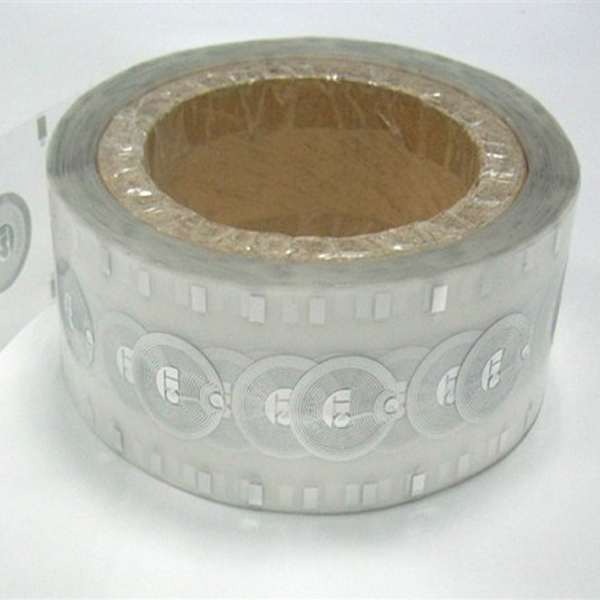
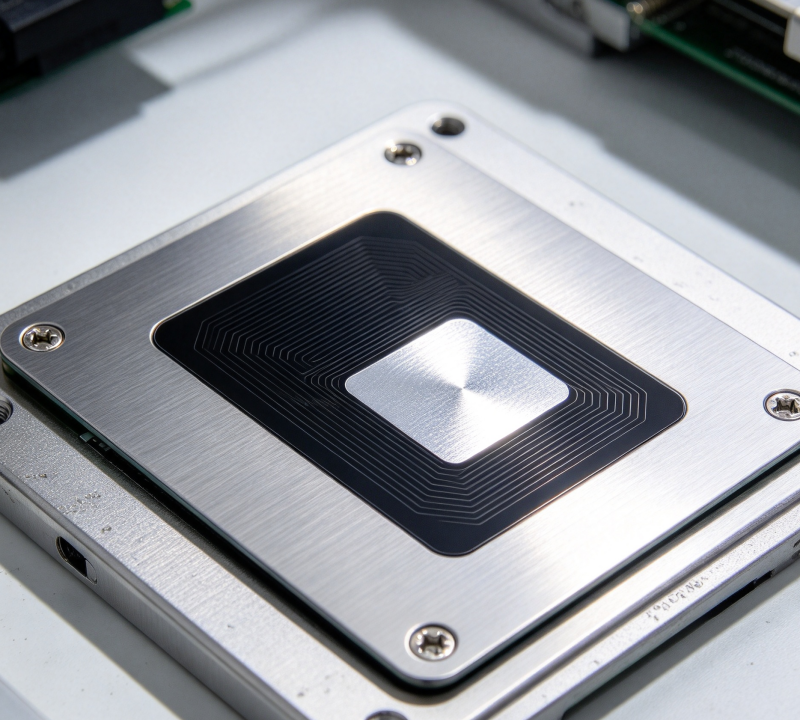
Product picture of round 13.56mhz aluminum antenna nfc dry inlay
Why Choose an Aluminum Antenna NFC Dry Inlay?
Choosing the right NFC inlay involves more than selecting an operating frequency. Antenna material, geometry, chip characteristics, and the environment in which the inlay will be used all influence the final result.
Aluminum Foil Antenna
The aluminum foil antenna is a key part of the inlay’s electromagnetic design. Its dimensions and geometry influence antenna inductance, resonance, coupling, and communication performance.
Aluminum antenna inlays can be considered for applications where the required antenna structure, product dimensions, and manufacturing process are compatible with aluminum-based antenna construction.
The antenna should be evaluated together with the selected chip and finished product rather than as an isolated component.
PET Substrate
PET provides a supporting base for the antenna and IC. Its thin-sheet structure can be suitable for applications requiring a compact NFC component that will be incorporated into another product.
Although PET can offer some resistance to moisture, the dry inlay itself should not automatically be treated as waterproof, impact-resistant, or suitable for unrestricted outdoor use. Environmental protection depends on the final enclosure, lamination, and overall product construction.
Flexible Integration
Because a dry inlay does not include a pressure-sensitive adhesive layer, it can be considered for manufacturing processes that apply their own bonding, encapsulation, or lamination methods.
This structure can be useful when the inlay is a component of a larger product rather than a finished, self-adhesive NFC label.
NFC Dry Inlay vs. NFC Wet Inlay
Dry and wet inlays are two common forms of NFC inlay used in label converting and product manufacturing. The main practical difference is the adhesive layer.
| Comparison | NFC Dry Inlay | NFC Wet Inlay |
|---|---|---|
| Adhesive Layer | Normally supplied without adhesive | Supplied with an adhesive layer |
| Integration | Requires a suitable downstream bonding or integration process | Can be adhered to a compatible surface |
| Manufacturing Use | Embedding, lamination, and custom converting | Label production and surface application |
| Installation | Requires a process appropriate to the target product | Generally more convenient for direct application |
| Additional Processing | Suitable for integration into custom structures | May be combined with label facestock or other materials |
| Best Fit | Manufacturers with their own converting or assembly process | Projects requiring a ready-to-apply adhesive inlay |
Which type should you choose?
Choose a dry inlay when you need to integrate the NFC component into a custom product or apply your own bonding process. Choose a wet inlay when a pre-applied adhesive is more suitable for your label production workflow.
The best choice depends on the substrate, surface energy, production equipment, environmental requirements, and final product design.
13.56MHz NFC Technology and ISO 14443A
NFC operates at 13.56MHz and is widely used for short-range contactless communication. Depending on the selected chip and system design, NFC tags can support applications such as reading identification data, accessing digital product information, and interacting with compatible devices.
ISO 14443A is a contactless communication standard used by many NFC-compatible cards and tags. However, the operating frequency alone does not guarantee compatibility with every reader, mobile phone, or RFID system.
Before selecting an inlay, confirm the following:
- Chip compatibility: Verify the IC model and its supported protocol.
- Reader compatibility: Check whether the intended reader supports the selected chip and communication standard.
- Memory requirements: Determine how much user memory is needed for the application.
- Data security: Evaluate whether password protection, authentication, or other security features are required.
- Operating environment: Test the inlay in the actual packaging or product assembly.
For projects involving specific mobile devices, access systems, or industrial readers, prototype testing is recommended before mass production.
Available Antenna Sizes and Customization
Antenna geometry is an important consideration when selecting an NFC inlay. Different sizes may suit different product shapes, available installation areas, and antenna design requirements.
The listed standard sizes include:
| Antenna Dimensions | Possible Design Consideration |
|---|---|
| 26 × 12mm | Compact rectangular integration areas |
| 22mm diameter | Small circular products or round label layouts |
| 32 × 32mm | Square integration areas |
| 37 × 22mm | Rectangular packaging and label designs |
| 45 × 45mm | Larger square integration areas |
| 76 × 45mm | Elongated product or packaging layouts |
| Custom dimensions | Projects with specific space or mechanical constraints |
These application examples are general design considerations, not performance guarantees. A particular size may require antenna tuning or a different IC to meet the project’s communication requirements.
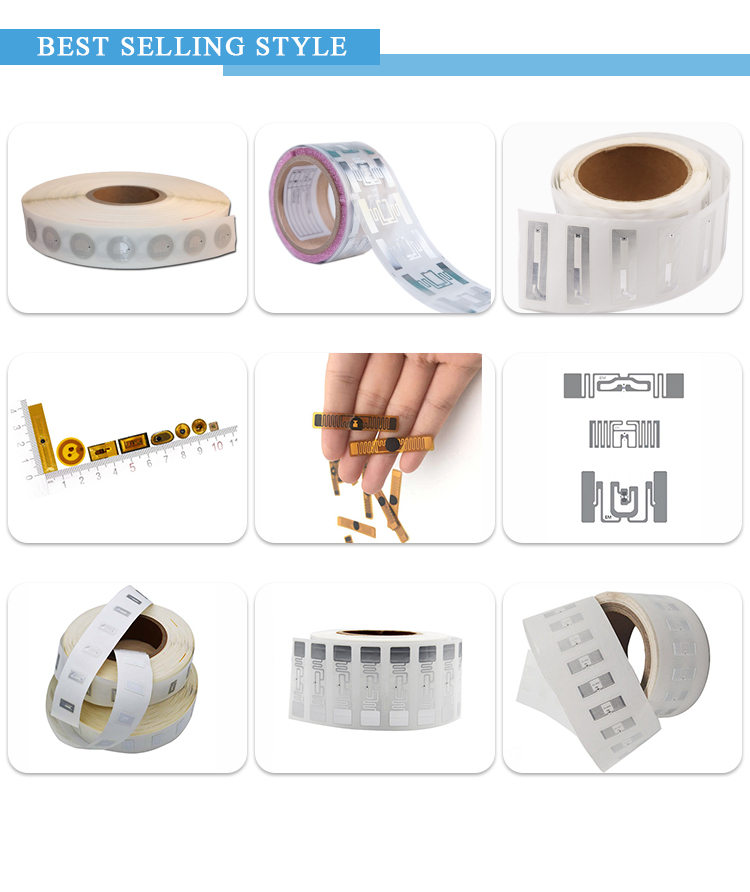
Custom NFC Inlay Options
For projects that do not match a standard configuration, custom options can be discussed according to manufacturing feasibility.
Potential customization requirements include:
- Antenna dimensions and shape
- Compatible chip model
- Required user memory capacity
- Inlay layout and integration dimensions
- Roll or sheet delivery format, subject to production capability
- Packaging and downstream converting requirements
Custom requests should be evaluated against the required performance, production volume, material constraints, and target application. Not every combination of chip and antenna dimensions will produce the same reading performance.
Available Chip Options and Memory Capacity
The chip is one of the most important components of an NFC inlay. It determines memory capacity, supported commands, available security features, and compatibility with the target system.
Our product specification lists multiple chip options, with memory capacity depending on the selected IC. The exact chip model should therefore be confirmed before an order is finalized.
When comparing chip options, consider these factors:
| Selection Factor | What to Check |
|---|---|
| Memory Capacity | Amount of user memory required for URLs, identifiers, or application data |
| Protocol | Compatibility with the intended NFC reader or device |
| Security Features | Password protection, authentication, or other supported features |
| Mobile Compatibility | Performance with the target smartphone models and operating systems |
| Availability | Current supply status and suitability for the required production quantity |
| Lifecycle Requirements | Data retention, read/write endurance, and long-term application needs |
For a simple product webpage or digital information link, a small memory capacity may be sufficient. Applications involving more data or specific security requirements may need a different chip.
Please provide your intended use case so the appropriate chip can be evaluated rather than selecting an IC based on memory capacity alone.
Reading Range and Performance Considerations
The listed reading range for this NFC dry inlay is 3–10cm. This figure should be treated as a reference specification rather than a guaranteed distance for every application.
NFC communication depends on inductive coupling between the tag antenna and the reader antenna. Actual performance can vary according to several factors:
- Antenna size, shape, and electrical characteristics
- Selected IC and antenna matching
- Reader antenna dimensions and output power
- Alignment between the reader and tag
- Nearby metal, conductive materials, or electromagnetic interference
- Product enclosure, adhesive layers, and other surrounding materials
For example, an inlay embedded inside a product may perform differently from the same inlay tested in open air. Metal surfaces can significantly affect antenna behavior unless the product is specifically designed to accommodate them.
If a minimum reading distance is critical to your application, specify the reader model, mounting arrangement, target materials, and required distance when requesting a sample. Testing the completed assembly is the most reliable way to assess suitability.
Temperature and Environmental Considerations
The listed working temperature is -25°C to +60°C, while the listed storage temperature is -40°C to +70°C.
These values should be considered alongside the temperature limits of the selected chip, antenna assembly, adhesives, encapsulation materials, and final product.
For applications involving outdoor exposure, high humidity, repeated bending, pressure, chemicals, or temperature cycling, additional validation may be necessary.
The dry inlay is a component rather than a fully protected finished tag. If your project requires waterproofing, abrasion resistance, chemical resistance, or long-term outdoor durability, describe those requirements before selecting the final construction.
A suitable enclosure or protective laminate may improve environmental protection, but it can also change the NFC antenna’s operating characteristics. Testing should therefore be performed on the completed product.
Applications of 13.56MHz NFC Dry Inlays
This aluminum antenna NFC dry inlay can be evaluated for a range of applications that require compact contactless identification or data access.
Smart Packaging
NFC inlays can be integrated into selected packaging designs to connect physical products with digital information. A compatible smartphone may be used to access a product webpage, instructions, registration information, or other online resources.
Product Identification
Manufacturers can use NFC-enabled products to associate physical items with digital identifiers. The application software and data system determine how those identifiers are used for inventory, product information, or lifecycle management.
Brand Engagement
NFC-enabled packaging or promotional products can provide a convenient way for users to access digital content. The final experience depends on the programmed tag data, mobile device compatibility, and the associated online service.
Smart Cards and Embedded Products
Depending on the selected chip, antenna design, and final mechanical structure, NFC inlays can be considered for compatible card products and embedded identification applications.
Customized NFC Labels
Label manufacturers and product converters may use dry inlays as components in a larger label assembly. The inlay can be combined with suitable facestock, adhesive systems, and protective layers according to the required production process.
Application suitability should always be confirmed through technical evaluation and prototype testing.

How to Select the Right NFC Dry Inlay
Selecting a suitable inlay is easier when the main project requirements are defined before requesting a quotation.
Step 1: Define the application. Explain whether the inlay will be used in packaging, a label, a card, or an embedded product.
Step 2: Specify the dimensions. Provide the available installation space and indicate whether a standard antenna size is suitable.
Step 3: Confirm the chip requirements. Identify the required protocol, memory capacity, mobile compatibility, and any security features.
Step 4: Describe the materials. Identify nearby metal, conductive surfaces, plastics, adhesives, or other materials that may affect antenna performance.
Step 5: Set performance targets. Define the required reading distance, temperature range, environmental conditions, and expected read/write cycles.
Step 6: Request samples and validate. Test the selected inlay using the intended reader and the actual product assembly before approving mass production.
This process helps reduce the risk of selecting a technically compatible component that does not perform as expected in the finished product.
Manufacturing, Sampling, and Quality Verification
Before moving into volume production, it is important to verify that the selected NFC inlay meets the requirements of the intended application.
A practical evaluation process may include:
- Confirming the chip model and antenna dimensions
- Checking the inlay’s physical condition and manufacturing consistency
- Testing communication with the intended reader
- Evaluating performance in the final product structure
- Verifying temperature and environmental requirements
- Confirming packaging, delivery format, and order specifications
The current product listing references ISO 9001:2000 and SGS. Buyers requiring formal compliance documentation should request the applicable certificates or test reports and verify their scope, validity, and relevance to the supplied product.
Specific quality inspection procedures, production tolerances, lead times, minimum order quantities, and available delivery formats should be confirmed with the supplier for each project.

Why Work with a Customized NFC Inlay Supplier?
A suitable supplier should be able to help you evaluate the relationship between the IC, antenna geometry, material structure, and finished application.
When comparing suppliers, consider more than the unit price. Technical support, sample availability, consistency between samples and production, specification transparency, and communication during product development can all affect the total project cost.
For customized NFC inlay projects, prepare a clear specification covering dimensions, chip requirements, target materials, performance expectations, quantity, and delivery requirements. This makes it easier to evaluate feasibility and compare quotations on a consistent basis.
Our team can discuss the available configurations for this 13.56MHz aluminum antenna NFC dry inlay and help identify the details that need confirmation before production.
Frequently Asked Questions
1. What is a 13.56MHz NFC dry inlay?
A 13.56MHz NFC dry inlay is an NFC component containing an IC, an antenna, and a supporting substrate. It is generally supplied without a pressure-sensitive adhesive layer and can be incorporated into a finished product through a suitable manufacturing process.
2. What is the difference between an NFC dry inlay and an NFC sticker?
A dry inlay normally has no adhesive backing and is intended for further processing or integration. An NFC sticker typically includes an adhesive layer and is designed for application to a compatible surface. A finished sticker may also include printed facestock and protective layers.
3. Which antenna sizes are available?
The listed sizes are 26 × 12mm, 22mm diameter, 32 × 32mm, 37 × 22mm, 45 × 45mm, and 76 × 45mm. Custom dimensions can also be discussed. The available chip and antenna combinations should be confirmed for each order.
4. Can I choose the NFC chip?
Multiple chip options are listed for this product. The exact IC model, memory capacity, protocol support, security functions, and availability should be confirmed according to your application.
5. Is this NFC inlay compatible with smartphones?
Compatibility depends on the selected chip, supported protocol, antenna design, and smartphone model. Confirm that the chip supports the intended use and test the inlay with the target devices before production.
6. What is the reading distance?
The listed reading range is 3–10cm. Actual performance depends on the reader, antenna dimensions, chip, alignment, and surrounding materials. A guaranteed reading distance should be established through testing under defined conditions.
7. Can the inlay be used near metal?
Metal can affect NFC antenna performance. If the inlay will be installed on or near metal, the design should be evaluated specifically for that environment. Do not assume that a standard inlay will work reliably on a metal surface without suitable design modifications.
8. Is the NFC dry inlay waterproof?
The PET substrate may provide some moisture resistance, but the dry inlay is not automatically waterproof. Waterproof performance depends on the complete product construction, including protective layers, bonding methods, and sealing.
9. What temperature range does the product support?
The listed working temperature is -25°C to +60°C, and the storage temperature is -40°C to +70°C. Confirm the applicable limits for the selected chip and completed assembly, particularly for applications involving temperature cycling or prolonged exposure.
10. Can I order a custom antenna size?
Custom dimensions can be requested. Feasibility depends on the antenna design, chip selection, required performance, manufacturing process, and order quantity. Provide a drawing or dimensional specification for evaluation.
11. What information is needed for a quotation?
Please provide the required antenna size, chip model or memory requirements, estimated order quantity, intended application, target materials, delivery format, and any special performance requirements. These details help the supplier evaluate a suitable configuration.
12. Can I request samples before mass production?
Sample availability should be confirmed with the supplier. For a new application, evaluating samples in the actual product assembly is recommended before approving a production order.
Request a Quote for Your NFC Dry Inlay Project
Looking for a 13.56MHz aluminum antenna NFC dry inlay for your next product?
Share your application requirements with our team, including the preferred antenna size, chip requirements, target materials, expected quantity, and any specific reading-distance or environmental targets.
We can review the requested configuration, clarify the specifications that require confirmation, and discuss suitable options for your project.