November 20, 2026
RFID card is given to the passenger and when passenger gets into the bus he has to swipe the card in the RFID reader and he has to a destination point in the device will automatically calculates the fare and deduct the money automatically.
The MIFARE Ultralight® C contactless IC is a cost effective solution using the open 3DES cryptographic standard for chip authentication and data access.
The widely adopted 3DES standard enables easy integration into existing infrastructures and the integrated authentication command set provides an effective cloning protection that helps to prevent counterfeit of tags.

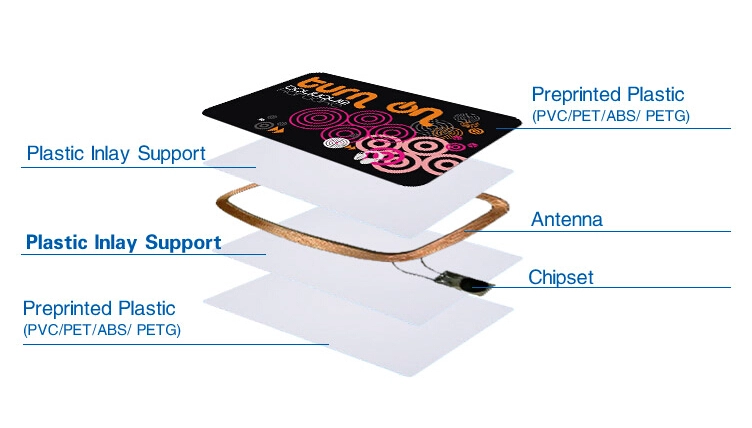
What Is a 13.56MHz RFID Transportation Card?
A 13.56MHz RFID transportation card is a contactless card that communicates with an RFID reader when it is placed within the reader’s operating range. Instead of inserting or physically contacting the card with a terminal, passengers can simply present the card to a compatible reader.
In a typical transportation application, the RFID card is associated with a passenger account, ticket, travel entitlement, or stored-value system. The transportation terminal reads the card and exchanges the required data with the ticketing system.
Depending on the system design, the card can be used for functions such as:
- Passenger identification
- Entry and exit validation
- Bus and subway ticketing
- Fare collection
- Stored-value transportation cards
- Season passes and travel passes
- Membership identification
- Access control
- Event and campus transportation
The card itself is one component of a complete transportation system. Reader hardware, ticketing software, backend systems, card personalization, encryption keys, and fare-management rules are normally
Product Details
| Product name | RFID Transportation Smart Subway Card |
| Material | PVC/PET/PETG/ABS etc. |
| Dimension | CR80 86*54MM or customized |
| Frequency | 13.56MHz RFID Card |
| Protocal | ISO14443A |
| Chip | (MIFARE Classic® EV1 1K MIFARE® and MIFARE Classic® are trademarks of NXP B.V.) |
| Printing | Offset/silk-screen printing |
| Card surface | Gloss, Matt, Frosted |
| Available Craft | 4 color offset printing, embossing number, signature panel,photo, barcode, thermal printing, gold/silver hot stamp,scratch-off, series number, hole punched, UV printing |
| Numbering | Jet ink/Thermal transfer/laser engrave |
| Barcode Printing | EAN13, code 39, code 128, 2D barcode |
Key Features
The 13.56MHz RFID transportation card combines a standard CR80 card format with contactless RFID technology, making it suitable for applications where users need a convenient card that can be read without physical contact.
Contactless RFID Communication
The card operates at 13.56MHz and can be manufactured with compatible high-frequency RFID chips. Contactless communication allows users to present the card directly to an RFID reader without inserting it into a slot.
ISO/IEC 14443A Compatibility
The standard card configuration supports the ISO/IEC 14443A protocol. This protocol is widely used for high-frequency contactless smart cards and provides a common communication interface between compatible cards and readers.
Multiple Chip Options
Different transportation projects have different requirements for memory, security, transaction processing, and cost. For this reason, several chip families can be selected, including MIFARE Classic, MIFARE Ultralight, MIFARE DESFire, MIFARE Plus, NTAG, and other RFID IC options.
Custom Card Printing
The PVC, PET, PETG, or ABS card body can be customized with company logos, transportation authority branding, passenger information, serial numbers, barcodes, and other graphic elements.
Flexible Personalization
Depending on the project, cards can be supplied with printed numbers, laser-engraved serial numbers, barcodes, photographs, signature panels, thermal printing, UV printing, and other personalization options.
RFID Chip Options
| Chip Options | |
| ISO14443A | MIFARE Classic® 1K, MIFARE Classic ® 4K |
| MIFARE® Mini | |
| MIFARE Ultralight ®, MIFARE Ultralight ® EV1, MIFARE Ultralight® C | |
| Ntag213 / Ntag215 / Ntag216 | |
| MIFARE ® DESFire ® EV1 (2K/4K/8K) | |
| MIFARE ® DESFire® EV2 (2K/4K/8K) | |
| MIFARE Plus® (2K/4K) | |
| Topaz 512 | |
| ISO15693 | ICODE SLI-X, ICODE SLI-S |
| 125KHZ | TK4100, EM4200,EM4305, T5577 |
| 860~960Mhz | Alien H3, Impinj M4/M5 |
Remark:
MIFARE and MIFARE Classic are trademarks of NXP B.V.
MIFARE DESFire is registered trademarks of NXP B.V. and are used under license.
MIFARE and MIFARE Plus have registered trademarks of NXP B.V. and are used under license.
MIFARE and MIFARE Ultralight have registered trademarks of NXP B.V. and are used under license.
MIFARE Classic vs. Ultralight vs. DESFire
Choosing the correct RFID chip is important when developing a transportation card system. Frequency alone does not determine whether a card is compatible with an existing subway or bus system.
| Feature | MIFARE Classic | MIFARE Ultralight | MIFARE DESFire |
|---|---|---|---|
| Typical Use | Transportation and access | Tickets and simple credentials | Advanced smart card systems |
| Memory | 1K / 4K options | Lower memory | 2K / 4K / 8K options |
| Application Complexity | Medium | Simple | High |
| Security Requirements | Project dependent | Project dependent | Suitable for advanced security architectures |
| Cost Level | Generally economical | Generally economical | Generally higher |
| Typical Card Type | Reusable card | Ticket / limited-use card | Secure smart card |
| Best For | General RFID projects | Simple applications | Complex transportation systems |
This comparison is a general guide rather than a replacement for the transportation system’s technical specifications. Before placing an order, the card chip should be confirmed against the existing RFID reader and ticketing infrastructure.
How Does an RFID Subway Card Work?
A contactless transportation card works together with an RFID reader and the transportation system’s software.
When a passenger presents the card to a compatible reader, the reader generates an RFID field and communicates with the chip inside the card. The card responds with the information permitted by the card’s configuration and security architecture.
A typical transportation workflow may include:
Card → RFID Reader → Ticketing System → Fare Validation → Transaction Record
For example, a passenger may use the card to enter a subway station. The reader checks the card and the ticketing system determines whether the passenger has a valid travel entitlement or sufficient balance. At an exit station, the system may validate the journey and calculate the applicable fare.
The exact fare calculation and transaction process depend on the transportation operator’s software and backend system. The RFID card is therefore part of a larger ticketing infrastructure rather than a standalone fare-management device.
Applications
The 13.56MHz RFID transportation card can be customized for a wide range of contactless identification and transportation applications.
Subway and Metro Systems
The cards can be produced for subway and metro ticketing projects where compatible 13.56MHz RFID technology is required.
They can be printed with transportation authority branding, station information, card numbers, or other project-specific graphics.
Bus Transportation
RFID cards can also be used in bus fare collection systems. Passengers can present the card to an onboard RFID reader for ticket validation or account identification.
Public Transportation Passes
The card format is suitable for reusable transportation passes, monthly passes, student transportation cards, employee transportation cards, and other fare-related credentials.
Campus Transportation
Universities, schools, and large campuses can combine RFID cards with transportation and access-control functions.
Membership and Identification
The same CR80 card format can also be used for membership identification, employee identification, visitor cards, and other contactless ID applications.
Access Control
When paired with a compatible RFID access-control system, the card can be used as a contactless credential for doors, gates, parking facilities, and restricted areas.

Card Material Options
Different card materials can be selected according to the application’s environmental conditions, appearance, durability requirements, and production specifications.
| Material | Typical Characteristics | Common Applications |
|---|---|---|
| PVC | Economical and widely used | Standard RFID cards |
| PET | Durable and flexible | Long-term card applications |
| PETG | Durable and suitable for various card designs | Transportation and identification |
| ABS | Rigid and durable | Specialized card applications |
For standard transportation projects, PVC is commonly considered when cost efficiency and conventional card production are priorities. For projects requiring different physical characteristics, PET, PETG, or ABS can be considered.
Card Printing and Customization
A transportation card is often more than an RFID chip. The visual appearance and printed identification information can be important for passenger recognition, branding, card management, and operational control.
Available customization options include:
- Full-color offset printing
- Silk-screen printing
- Company or transportation authority logo
- Passenger photograph
- Serial number
- Barcode
- QR or other 2D barcode formats
- Signature panel
- Thermal printing
- UV printing
- Gold or silver hot stamping
- Embossed numbers
- Scratch-off areas
- Laser engraving
- Custom card punching
Different personalization processes can be combined depending on the card design and production requirements.
Barcode and RFID in One Card
Combining RFID technology with printed or machine-readable identification can provide additional flexibility for transportation and identification projects.
For example, a card can contain an RFID chip for contactless reading while also displaying a printed serial number or barcode for visual inspection and alternative identification.
Supported barcode options include:
| Barcode Type | Potential Use |
|---|---|
| EAN13 | Product or card identification |
| Code 39 | Industrial and identification applications |
| Code 128 | High-density identification data |
| 2D Barcode | More information in a compact area |
The RFID chip and printed barcode can be managed as separate identification technologies or linked through a common card number in the customer’s database.
Card Surface Options
The card surface can be supplied in different finishes depending on the desired appearance.
Gloss finish provides a smooth and bright appearance and is suitable for colorful card artwork.
Matt finish creates a softer, less reflective appearance and can be selected for a more understated card design.
Frosted finish provides a distinctive semi-transparent or textured visual effect for selected card designs.
Surface selection should be confirmed during artwork and production planning.
RFID Card vs. Traditional Contact Cards
One of the main advantages of a contactless RFID transportation card is that users do not need to physically insert the card into the reader.
| Feature | Contactless RFID Card | Traditional Contact Card |
|---|---|---|
| Reading Method | Wireless | Physical contact |
| User Operation | Tap / present | Insert |
| Mechanical Contact | No | Yes |
| Convenience | High | Moderate |
| Card Design | CR80 smart card | CR80 smart card |
| Typical Applications | Transit, access, ID | Legacy systems |
For high-volume passenger environments, contactless operation can provide a convenient user experience because passengers can present the card directly to a compatible terminal.
Security Considerations
RFID security depends heavily on the selected chip and the overall system architecture.
For example, the product range includes MIFARE Ultralight C, which uses the 3DES cryptographic standard for chip authentication and data access. Other chip families, such as MIFARE DESFire, are designed for more advanced contactless applications.
However, a secure transportation system cannot be evaluated from the card chip alone. Security may also depend on:
- Card authentication
- Key management
- Reader configuration
- Data encryption
- Transaction design
- Backend software
- Card personalization
- Access permissions
- Fraud monitoring
For this reason, customers should specify their existing card technology and security requirements before selecting a replacement or new RFID card.
Why Choose a Customized RFID Transportation Card?
A transportation operator may require more than a standard blank RFID card. Customized manufacturing allows the card to match the physical and operational requirements of the project.
Customization can include the RFID chip, card material, card artwork, numbering method, barcode, surface finish, packaging, and personalization process.
This makes the product suitable for both small customized card programs and larger transportation projects requiring standardized card production.
Packaging and Delivery
The standard packaging configuration is:
- 200 RFID cards per white box
- 5, 10, or 15 boxes per carton
- Customized packaging available upon request
Packaging can be adjusted according to shipping requirements, branding requirements, and project specifications.
For large transportation projects, packaging can also be coordinated with card sorting, numbering, personalization, or other production requirements.

Normal package :
200pcs rfid cards into white box .
5 boxes /10boxes /15boxes into one carton.
Customized Package based on your request.
How to Order RFID Transportation Cards
Before requesting a quotation, it is recommended to prepare the basic card specifications.
| Requirement | Information to Confirm |
|---|---|
| Frequency | 13.56MHz or another RFID frequency |
| Protocol | ISO/IEC 14443A, ISO15693, etc. |
| Chip | MIFARE Classic, Ultralight, DESFire, etc. |
| Memory | Required memory capacity |
| Card Size | CR80 or customized |
| Material | PVC, PET, PETG, ABS, etc. |
| Printing | Artwork and printing method |
| Numbering | Inkjet, thermal transfer, laser, etc. |
| Barcode | EAN13, Code 39, Code 128, 2D barcode |
| Surface | Gloss, matt, frosted |
| Quantity | Required production quantity |
| Packaging | Standard or customized |
If the customer already has an RFID reader or existing transportation system, providing the reader model, existing card type, chip type, or technical specification can help confirm compatibility before production.
FAQ
Is this RFID subway card compatible with every 13.56MHz RFID reader?
No. The operating frequency alone does not guarantee compatibility. The reader must support the card’s protocol, chip family, communication method, and required authentication functions.
What is the standard chip for this RFID transportation card?
The product specification lists MIFARE Classic EV1 1K as the standard chip configuration. Other compatible chip options can be supplied depending on project requirements.
Can I use MIFARE DESFire instead of MIFARE Classic?
Potentially, yes. MIFARE DESFire EV1 and EV2 are included among the available chip options. However, the reader, software, card personalization process, and security architecture must all support the selected chip.
Can the RFID card include a barcode?
Yes. The card can be customized with EAN13, Code 39, Code 128, and 2D barcode printing.
Can I add a passenger photo?
Yes. Photo printing is one of the available customization options and can be combined with other card personalization features.
What card size is available?
The standard size is CR80, approximately 86 × 54 mm. Customized dimensions can be discussed for specific projects.
Can the card be customized with a logo?
Yes. Full-color printing, silk-screen printing, UV printing, hot stamping, and other customization processes can be selected according to the card design.
What materials are available?
The available materials include PVC, PET, PETG, ABS, and other options depending on the project.
Can you provide custom packaging?
Yes. The standard packaging is 200 cards per white box, while customized packaging can be arranged according to project requirements.
Get a Quote for 13.56MHz RFID Transportation Cards
If you are sourcing RFID cards for a subway, metro, bus, public transportation, access-control, or contactless identification project, provide your required chip type, card material, artwork, quantity, and personalization requirements.
Our RFID transportation card can be customized according to the technical and visual requirements of your project. If you are replacing an existing RFID card, providing the current card model or chip information is recommended so that compatibility can be evaluated before production.